Shikoku 88 Temples – Day 10
Shikokocho to Okada (Temple 65): 22km (+10km train)
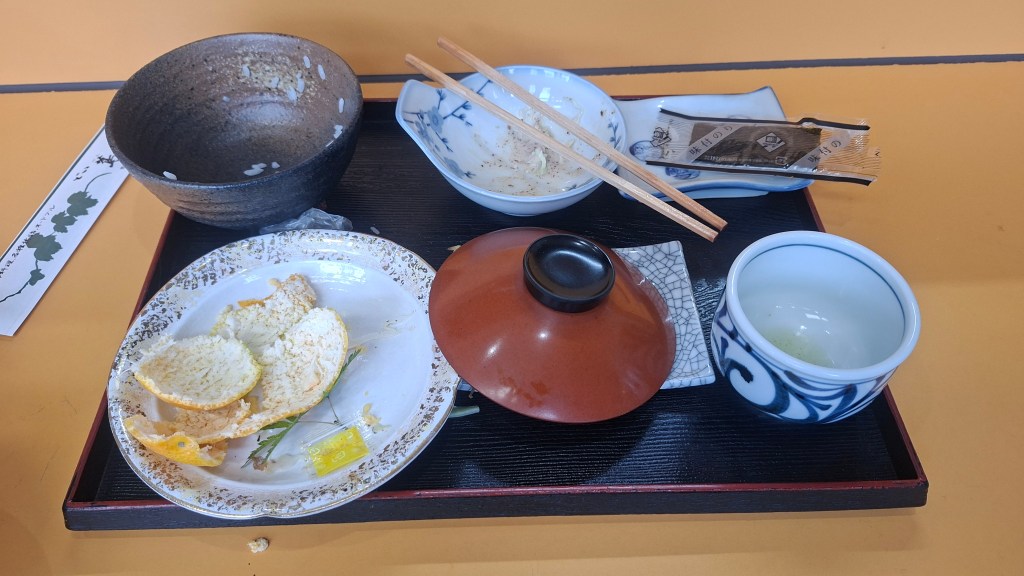
At breakfast, I have the pleasure of a long chat with Beda. And I’m more grateful than ever for my age, which has raised me above being seen as prey. Her experiences, she says, have been almost entirely good. But one bad experience can leave a mark. Still, she says, “I’ve enjoyed every day of this walk”. Fear can ruin every day. Actions just spoil a few.
After breakfast, I run for the train. I’ve decided my cheat today will be to start the day by going into the town centre, avoiding the suburbs and making a fresh start on the mountains. This also means I’ll be able to make small detours, if needed.
I get to the station in good time, and luckily, just before the train departs, I’m told I’m on the wrong one and hop across to the other platform, where I’m immediately greeted by Shimizu-san, a gentleman of eternal smiles and eternal youth. He asks me to sit with him to discuss our routes. He speaks a little English. I can say ‘beautiful’, ‘difficult’ and count to ten. We get along just fine. I should also point out that Shimizu-san has been previously referred to as Shirawaki-san, due to me mixing his name up with Sukiyaki.
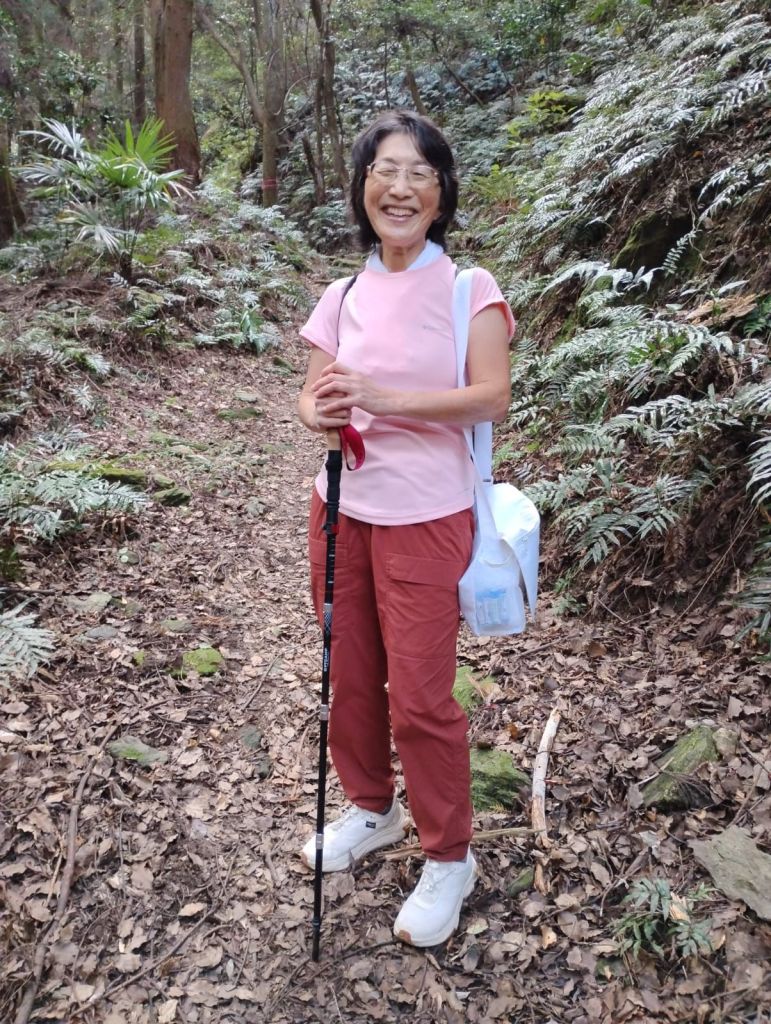
After a regulatory snack at the 7-Eleven. I set off up the hill. I soon meet with Yoko, the lady who had been sitting with Shimizu-san on the train, and who I now discover lives in Silicon Valley and speaks perfect English. She is a delight on the uphill trail. Not only is she hilariously funny, but she laughs at my jokes too.

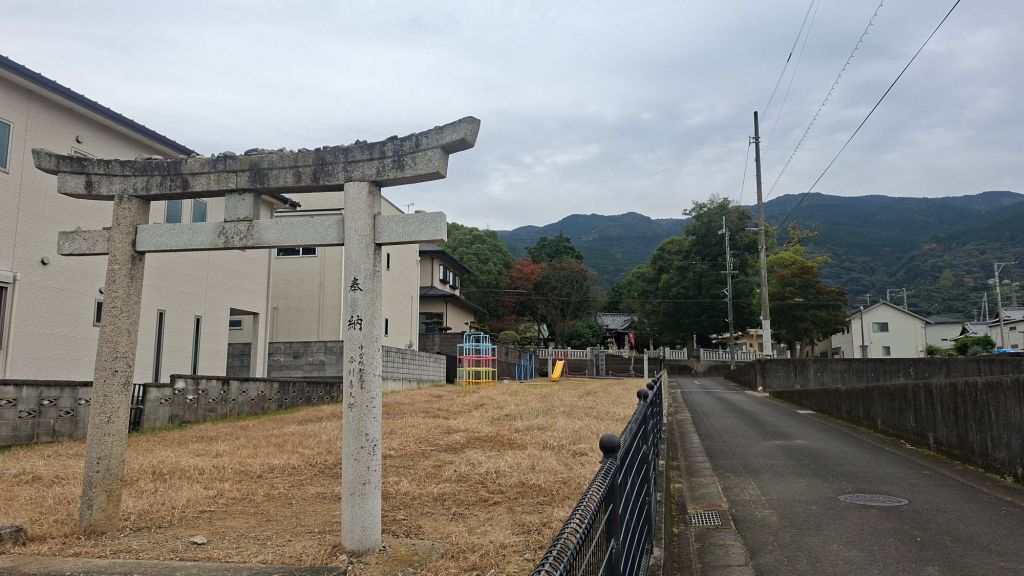
I think it’s a sign of how well we got on that I can’t remember a single thing we talked about. Rather than talking about things, we joked about things. We both hit the giant bamboo on the way up, trying to get different notes. “If you knock it down, you win a prize,” she tells me. Her answer to “I wonder how much further it is?” is always, “It’s just another 20 minutes.” She says it makes people happy when they hear this and that’s all that matters. When I talk to her about the idea of doing a detour to another temple, she says, “Why not? It’s just 20 minutes.”

We talk about Gaijin behaviour and the loveliness of Mr Shimizu. She teaches me how to say cheese in Japanese. It’s one plus one is two, which gets you saying “nyi” just at the right time. We take pictures and selfies.
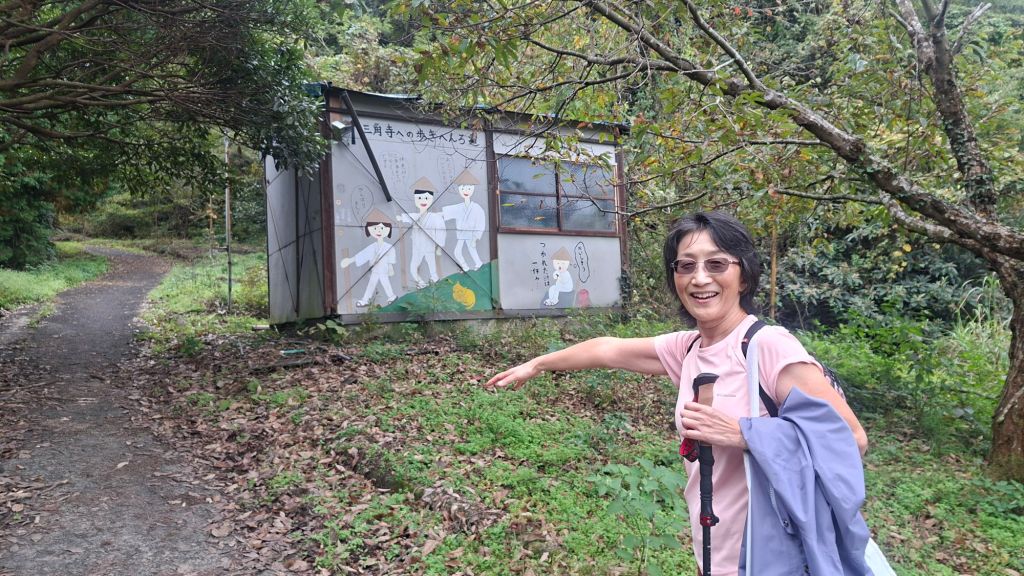
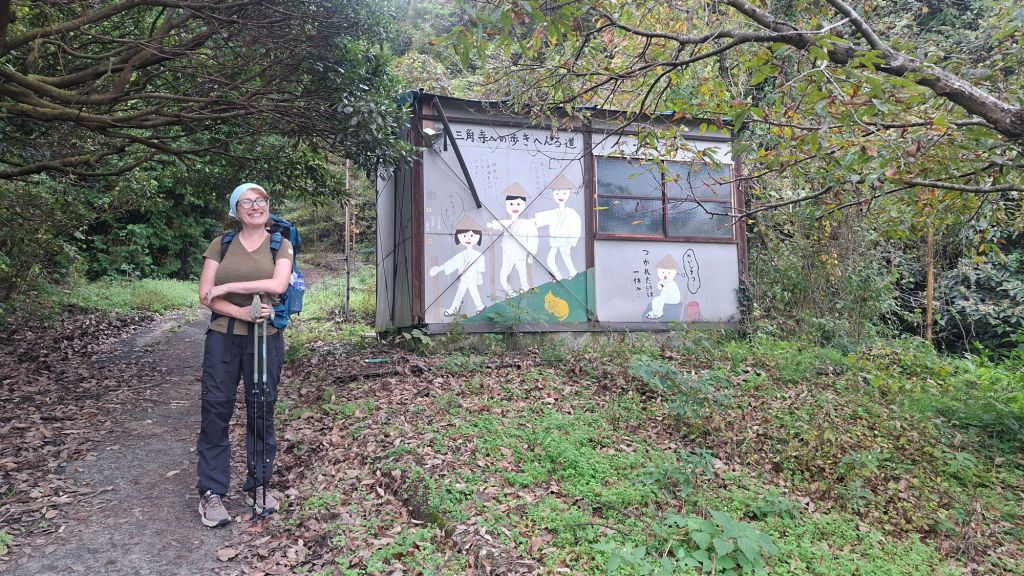
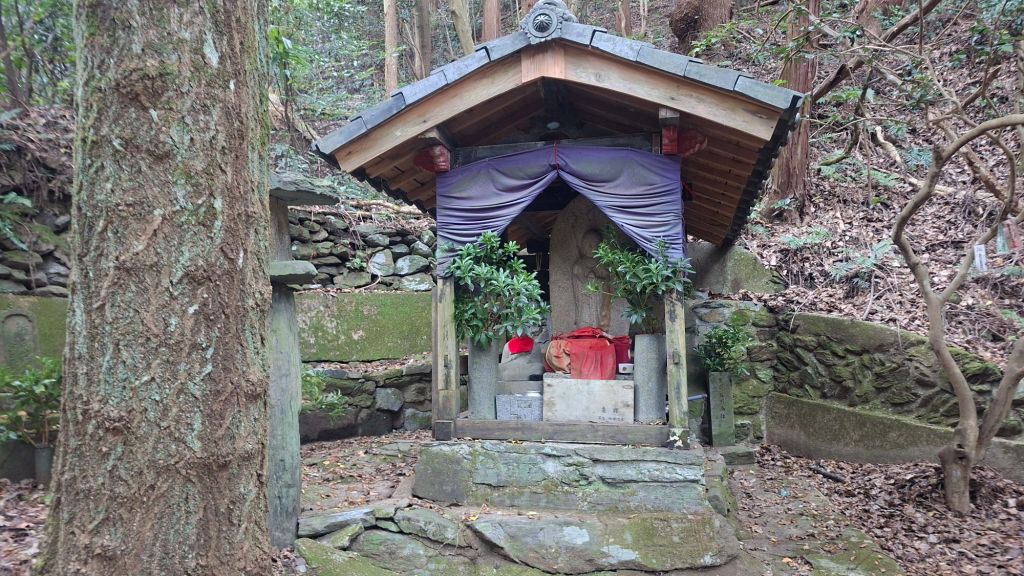
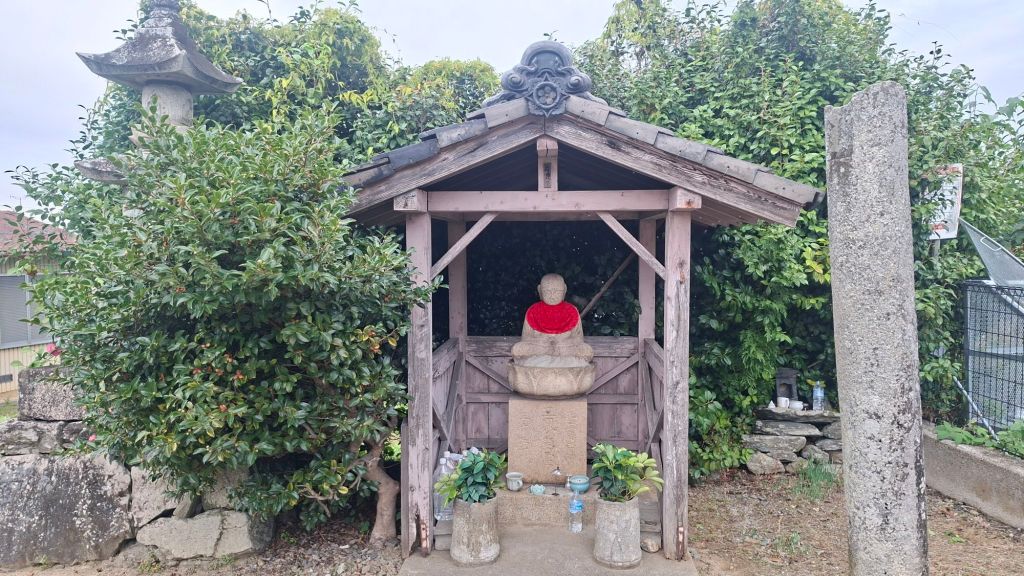
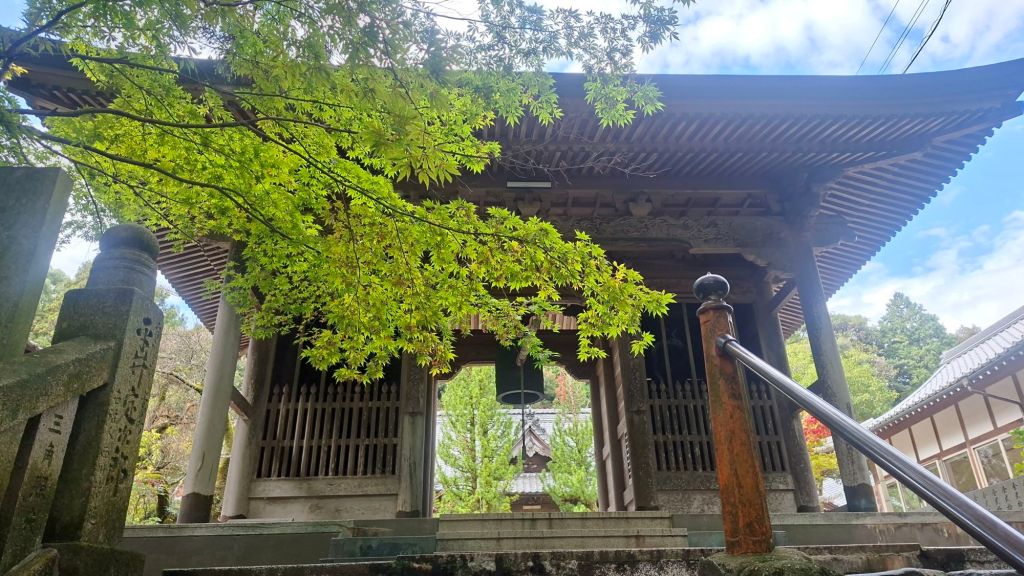
When we get to a temple, she says, “Just get your book signed and you can go.” She points out that Kobo Daishi isn’t in when she peers through the windows of his temple. When I suggest he might be having some quiet time behind the doors, she demands he come out.
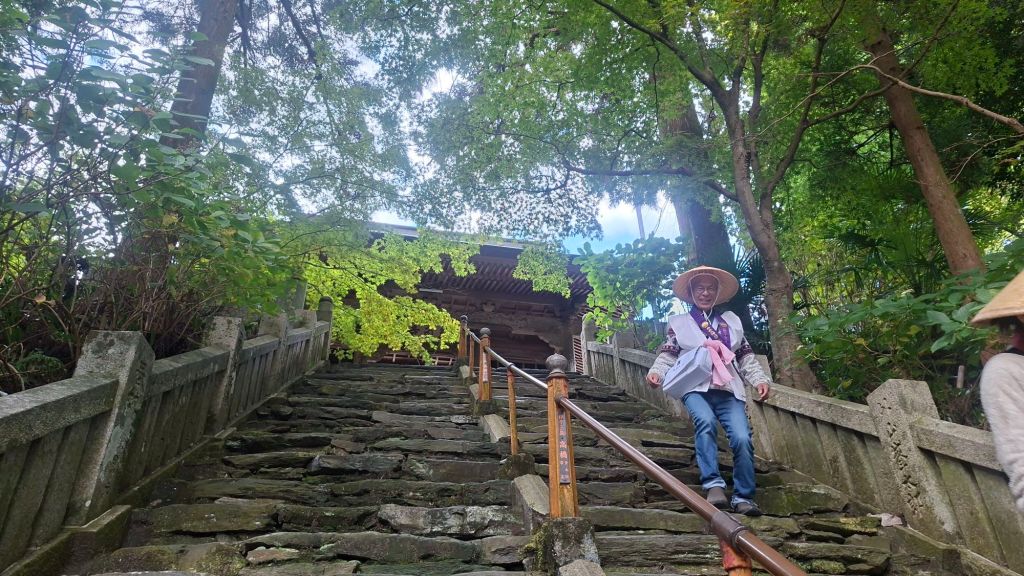
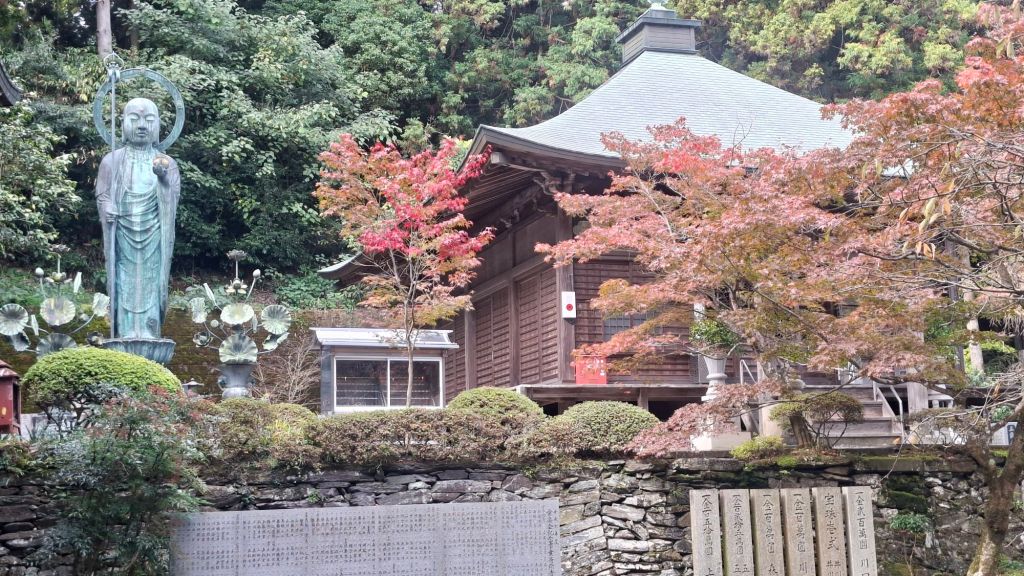
On the steps of one of the temple halls I bump into Jesse again. The first thing he tells me is that he hasn’t caught sight of Jin today. Jesse, like many other pilgrims, can’t stay at the place I’m staying tonight because it’s fully booked. This is the case for many of the places Hiro has booked for me. I’m starting to feel a bit guilty.
Yuko finishes her chanting. She tells me the chants are a bit long and she’s discovered a shortcut version. Then we hang out together in the temples, best buddies for the morning, until she goes back the way she came, and I head off, still undecided whether to do the 20-minute detour or not.
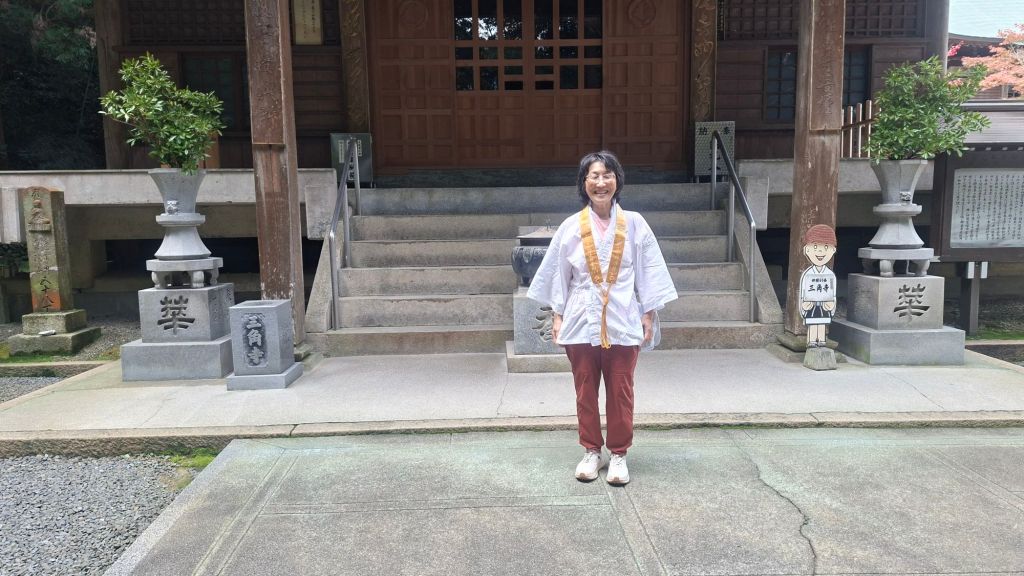
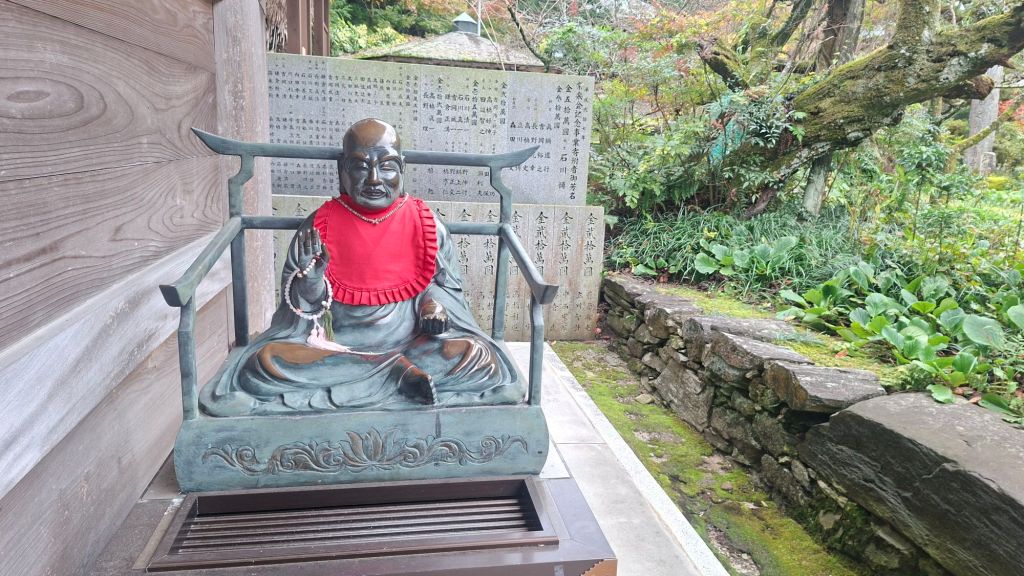
I don’t look at the route until I’ve already come down this huge flight of stairs from the temple, at which point I realise that the extra temple detour involves going back up the stairs and through the temple again. Well, I’ve just said my goodbyes. So that’s a decision made. Besides, the extra 20 minutes to the temple would, in reality, have been an extra four hours, and I almost certainly wouldn’t have reached my destination before dark.⁹
I decide not to visit the extra temple.
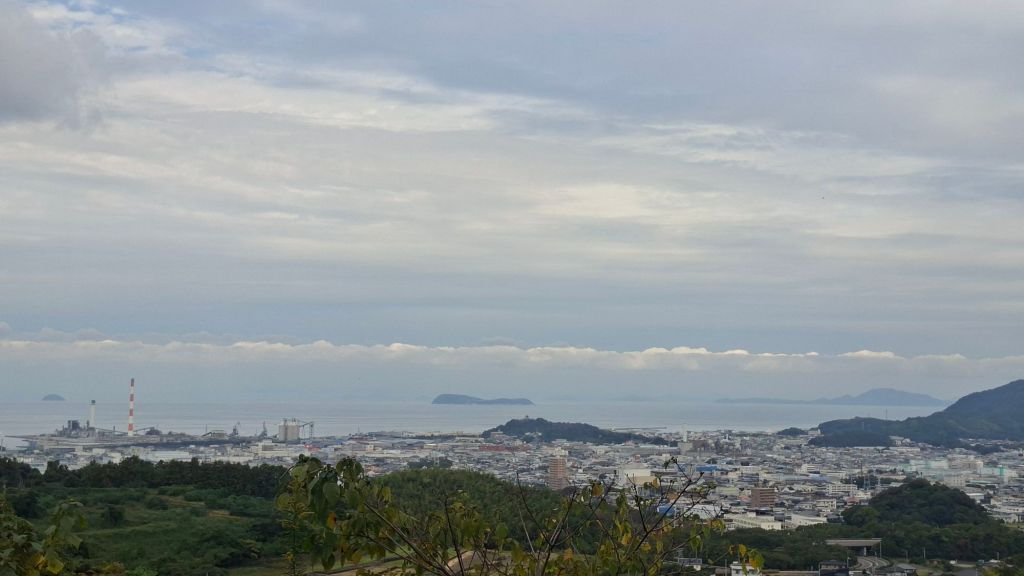
The walk is an easy one, if a long one. Country lanes along the side of a mountain lead down towards the city, which looks much better from a distance, with its massive paper factory chimneys creating clouds of their own.
A couple trimming the verges have left a few garden chairs and a table on a patch of land with the best view. And so, with the luxury of available seating, I’m able to eat my public picnic.
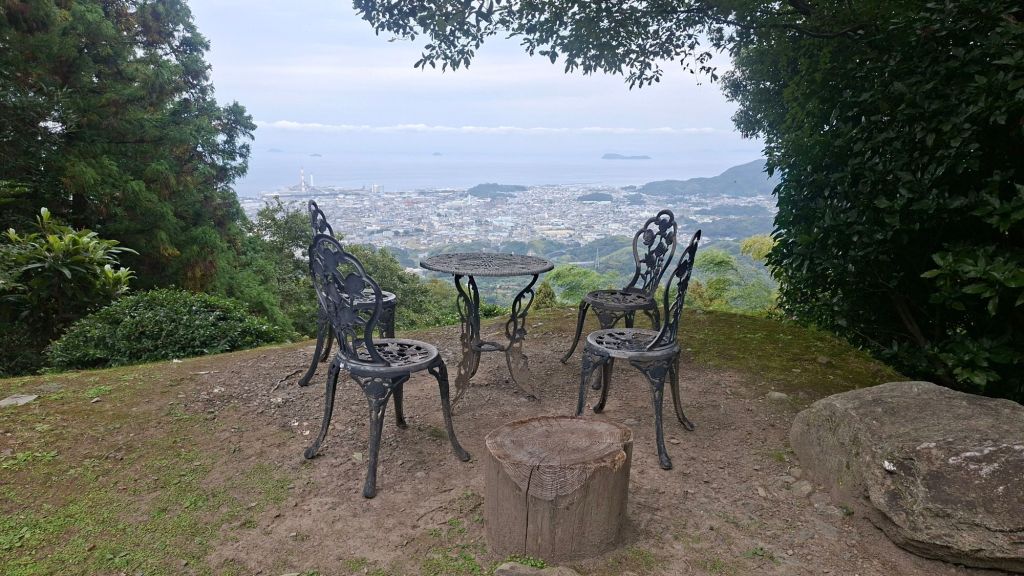
Eventually, the forest roads, with their views back over Shikokuchuo, take me back to the main road as I make my way over the mountains. Not my favourite stretches, but the distant views are as beautiful as the tunnels oʻare terrifying.
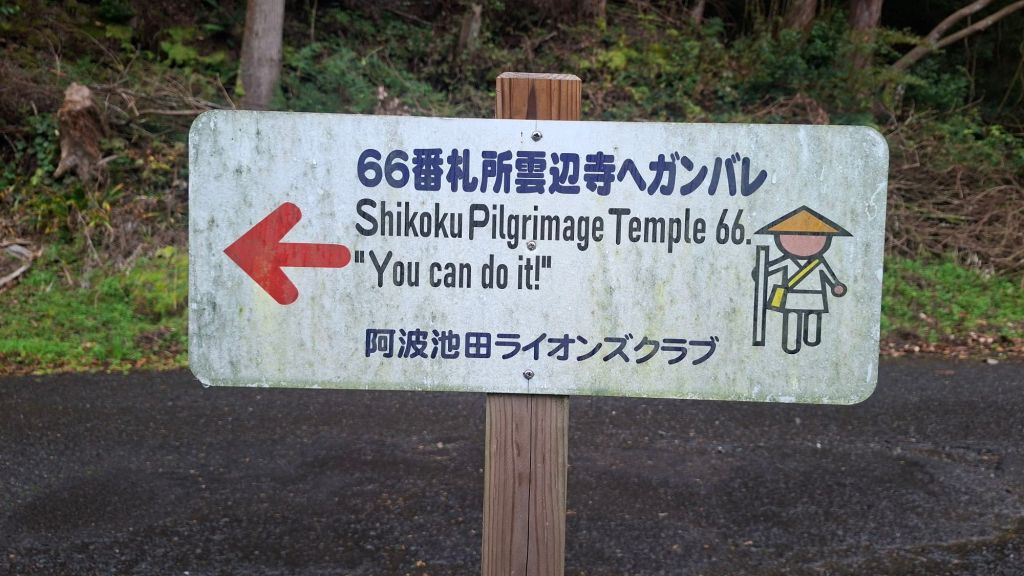
When I try to find a side route, an old man is waiting for me with an umbrella. I have absolutely no idea what he’s telling me. Go straight on? Go back? Go over the hill? He walks with me for a while, seemingly taken aback by my utter stupidity. He shows me a sign, mimics trudge, trudge, trudge, and points ahead.
I keep saying “difficult”, pointing up the hill, and “best”, which I learnt last night, poimtimh to the way ahead forward. But he’s not convinced I’ve got the message, and I eventually have to resort to Google Translate.
He’s telling me it’s nearly four o’clock and there are four kilometres to go. I knew this much. I think the main gist is that I need to follow the main road, which I’d planned to do, with just this little diversion as an exception. But anyway, it’s good to have my decision confirmed, especially as the Sashima Tunnel is not something I’d want to tackle unless I had to.
Having told me one kilometre to the tunnel, one kilometre in the tunnel, and two kilometres beyond, he hands me the umbrella he’s carrying. Before I can say no, he’s run back into shelter.
Maybe this is the only way to get rid of me, but I think it was an act of kindness. He waits on the corner, stopping people going over the hill. I even wonder if he has a stock of umbrellas to hand over in bad weather.
And so, with my gifted umbrella, I manage to get through the last four kilometres, gritting my teeth through the booming horror of the tunnel.
I’ve booked into the tiny inn, so I don’t have to catch the bus. When I arrive, Mama-san brushes the mud off my backpack and trousers, puts out my umbrella, shakes it down and takes me into the house.
I only remember half the pleasantries, and I’m tired, but she’s patient.
At six o’clock she calls us all in to dinner. There’s only five of us, and that’s a full house. Her husband sits at the head of the table, presiding. He must be at least a hundred years old, but he smiles benignly on us all.
I am delighted to find I’m sitting next to Toyoda-san, who I realise now, seeing him in the company of other Japanese people, is simply shy. It wasn’t just me. He very kindly looks after me, pouring me tea and using the little English he has to try to explain the key points being made around the table.
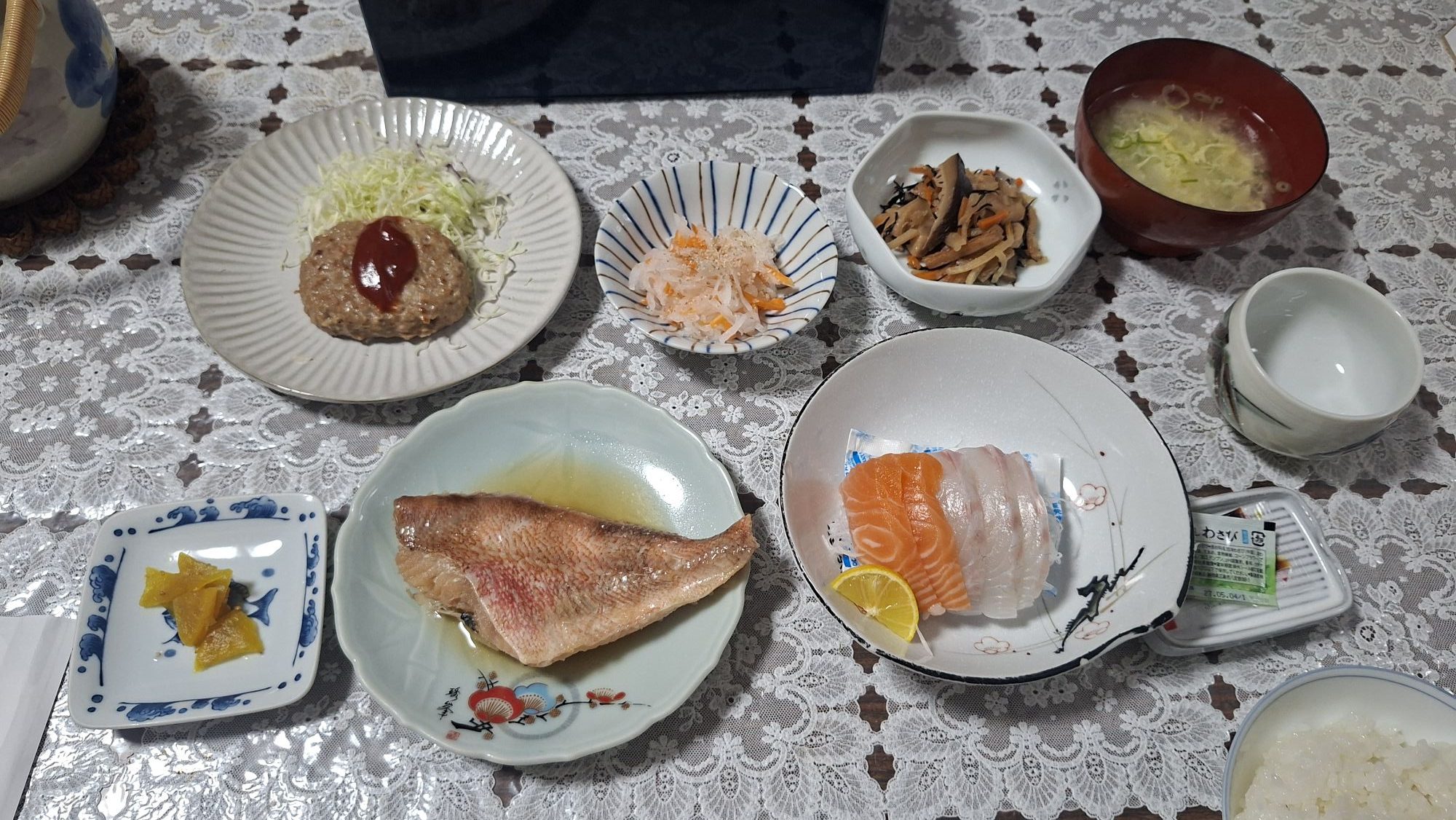
The meal is held mainly in silence, but afterwards we sit for half an hour while the old man tells us about his different journeys and hands out a map to explain every detail of the steep start we have tomorrow. Toyoda-san helps me with a few phrases so I can follow the instructions well enough.
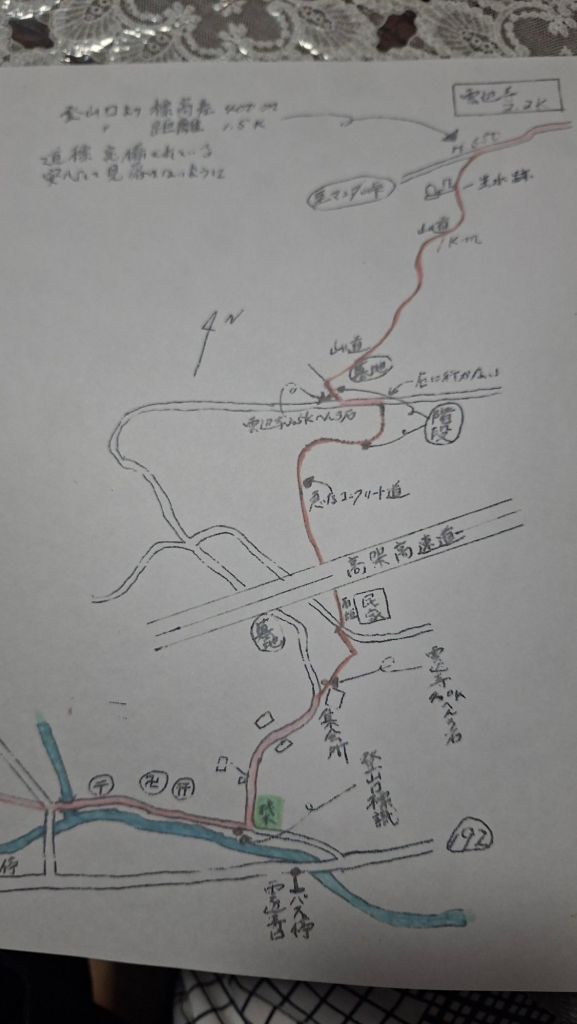
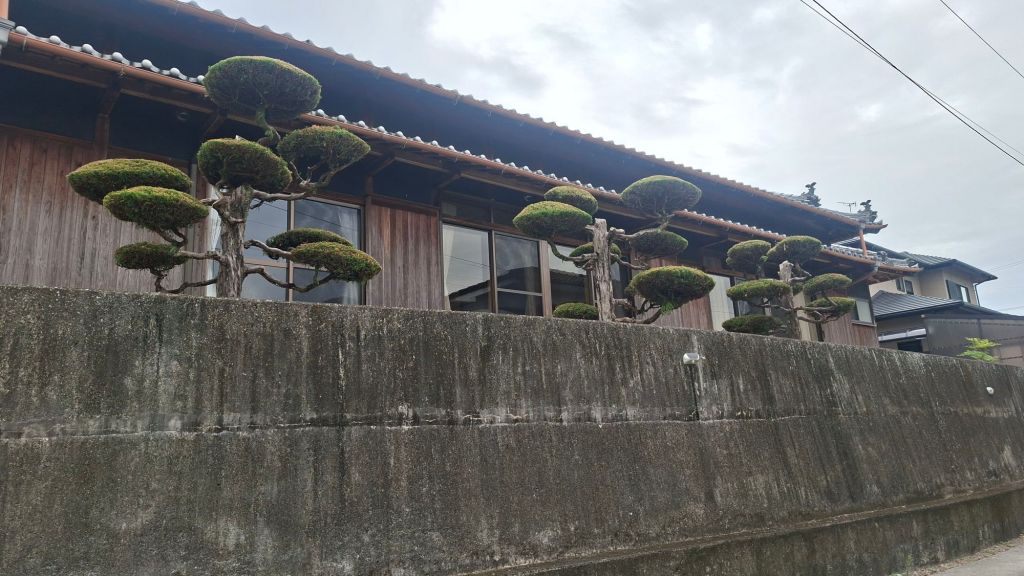
This is an extraordinary place. I feel as though I’ve come back in time. This is a real country home. Small, basic, beautiful.
My little tatami-floored room is next to the dining room. I’m too tired to write today.


Leave a Reply