Shikoku 88 Temples – Day 1
Uchiko to Yebisuya: 22km
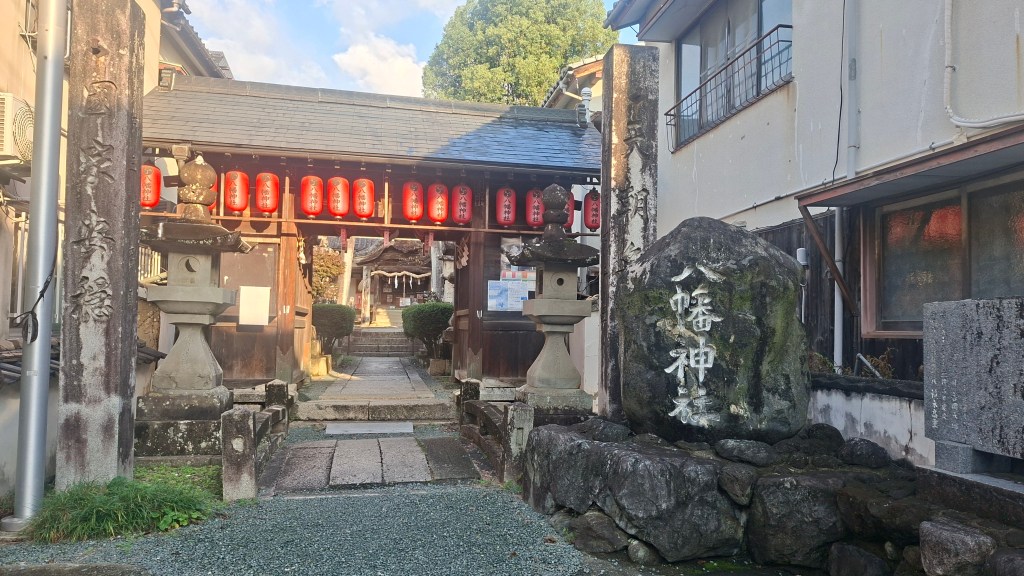
I go to the buffet breakfast, prepared to sit alone with a tray of typical breakfast items. This does come to pass.
I pick items I recognise, but this is no Western buffet here, apart from small bread rolls and the coffee machine. I decide to practise my Japanese by checking that the coffee is coffee. And, on discovering that it is, by demonstration rather than explanation, I meet my breakfast friend, Mr Tamagashi.
Mr Tamagashi points to his “husband” (wife), Yuko, sitting at a table to one side. And so I take my tray and have breakfast with Yuko and Tamagashi. My plan had been to eat quickly and leave by seven, as my itinerary from Hiro includes a noodle restaurant for lunch that closes at two. I decide that chat comes first.
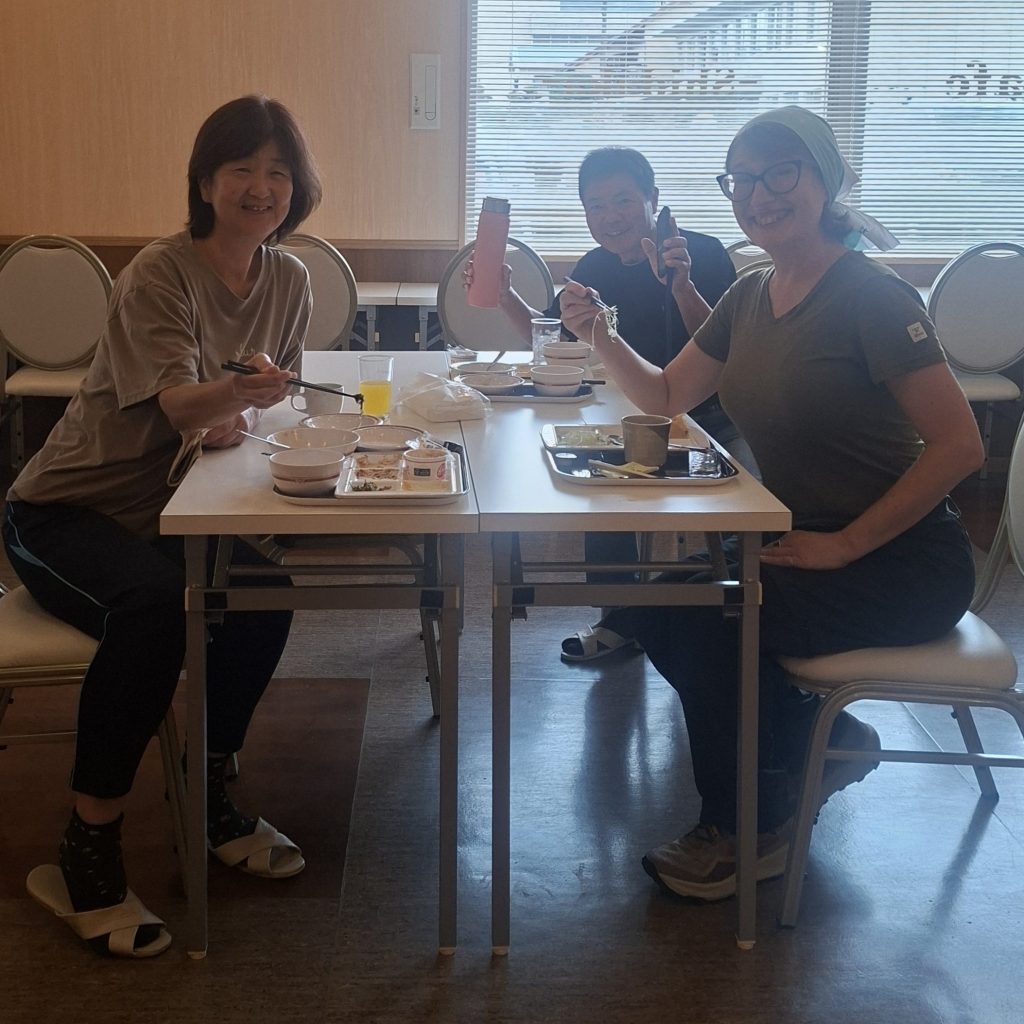
We have great fun at breakfast, with my tiny amount of Japanese, Yuko’s slightly greater amount of English, but mainly Google Translate. “You’re very brave,” they tell me. “Or naive”, I reply. I type this in. First laugh in the .
Yuko removes the raw egg from my plate. I had presumed it was hard-boiled. She shows me her natto, which Google Translate can’t deal with at all. But I’d heard about this from my teacher, another Yuko: a fermented bean breakfast dish that smells bad, but is very good for you. Yuk repeats my teacher’s phrase: “Very good for you, very good for your stomach.”
I sniff the pot once more and say, “Natto ashita” (Natto tomorrow). And my first joke in Japanese goes down a storm.
Photos are taken, and Mr Tamagashi kindly offers to drive me to the first temple. I tell him this is day one. I should probably try and walk it. But I add that if he asks me again on day forty, my answer might be different. This one’s all through Google Translate, but it ends the meal well.
I love my new friends for the morning and do not regret my decision to linger. Besides, I can walk fast and get the noodles too.
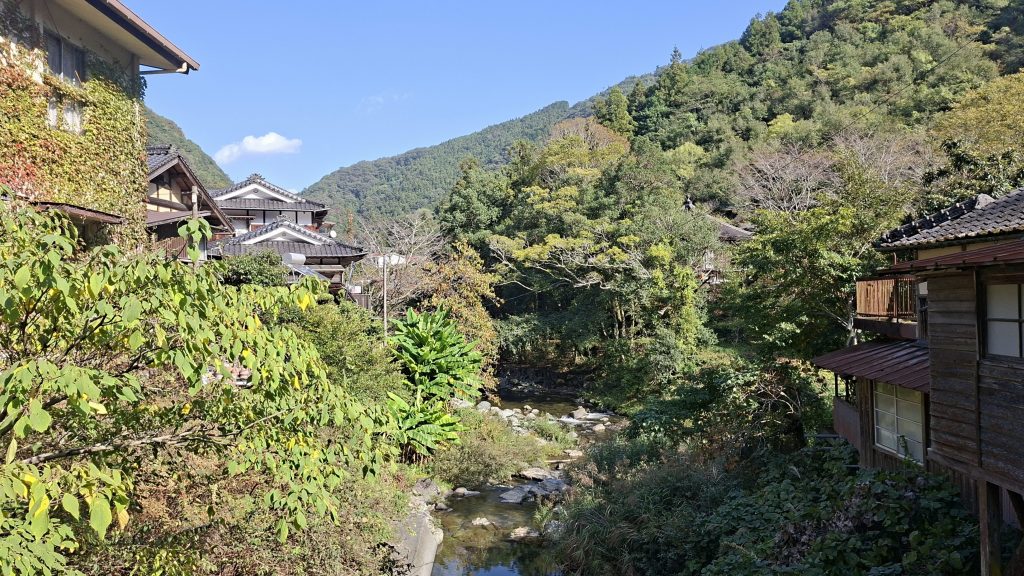
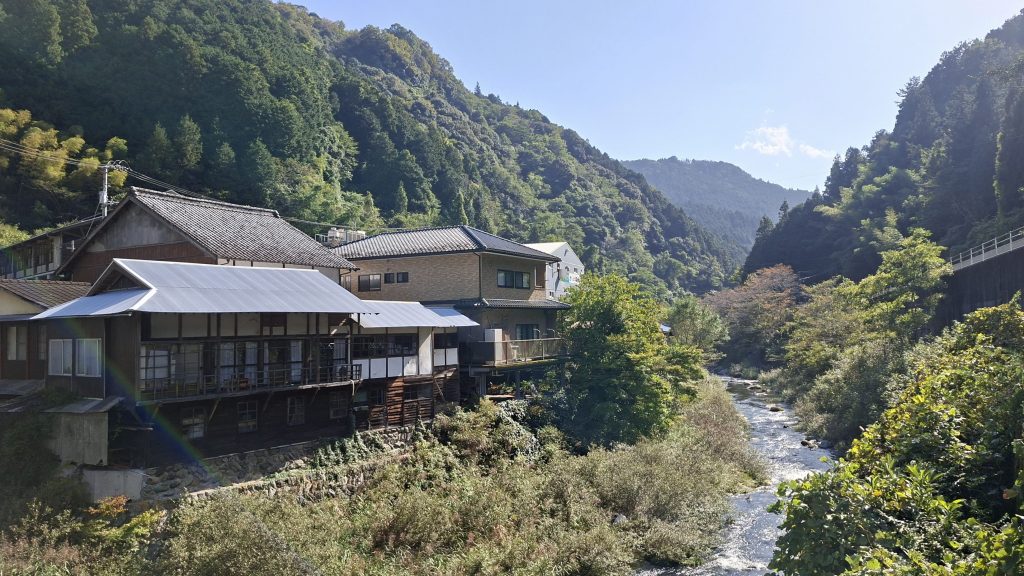
I do eventually leave the hotel. The walk is through stunning scenery, although mainly along the side of the road, occasionally diverting through roadside villages. But everything is so new and there’s so much to see. I don’t really mind about the road at all. I can also make up time. The noodles are a constant consideration, but there are so many things to look at and enjoy as you go along.
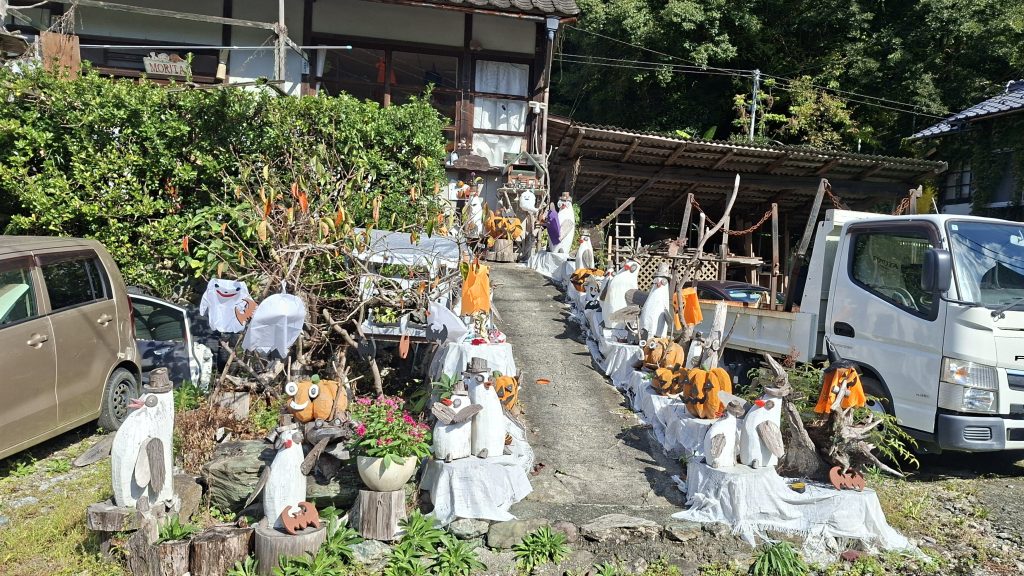
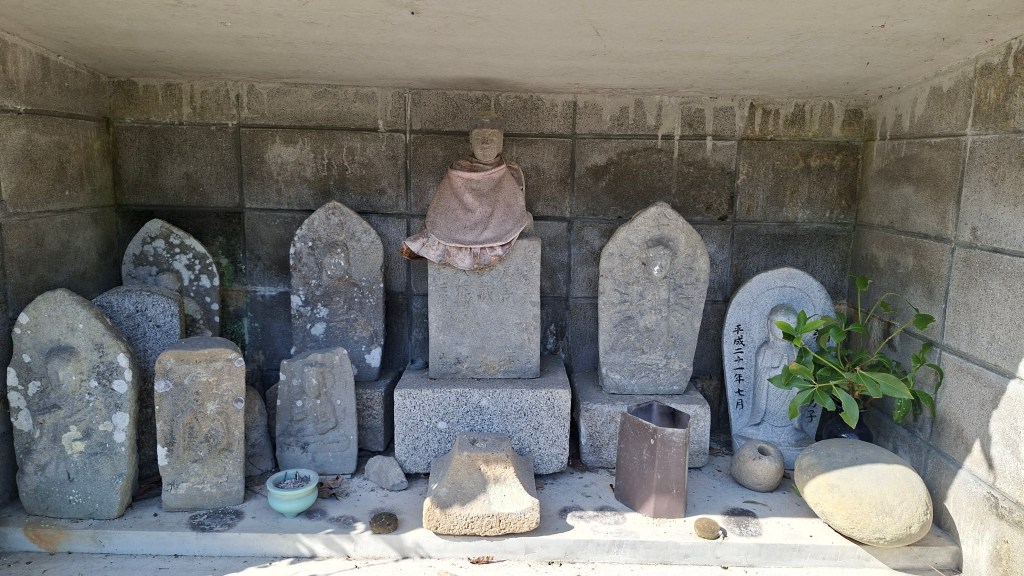
There are many little resting places decorated with pictures and hung with name papers. I thought the papers were just for temples, but you write your name and nationality and the date on these pieces of paper and leave them anywhere where you’re thankful. I’ve seen them in toilets too. This I fully understand.
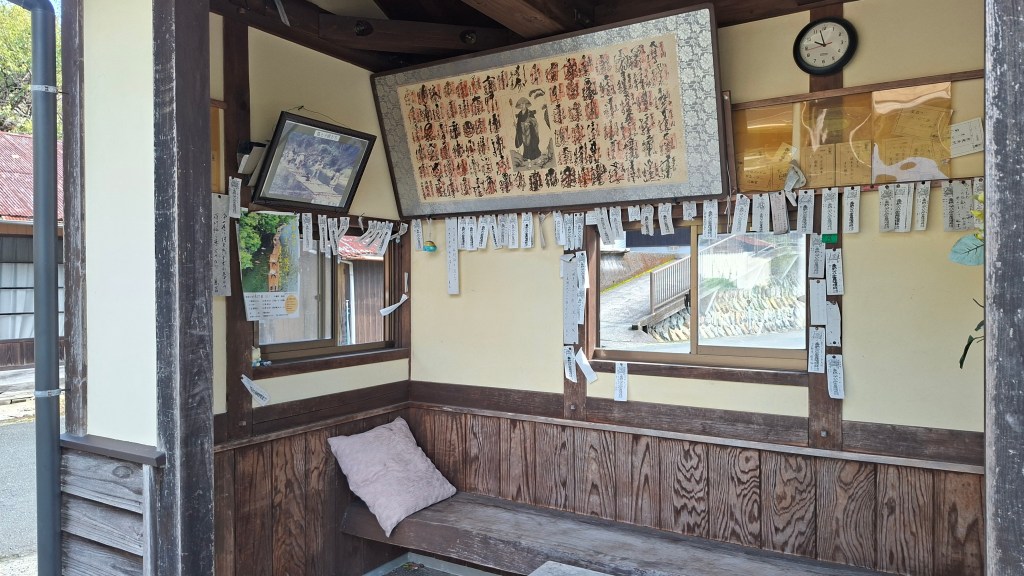
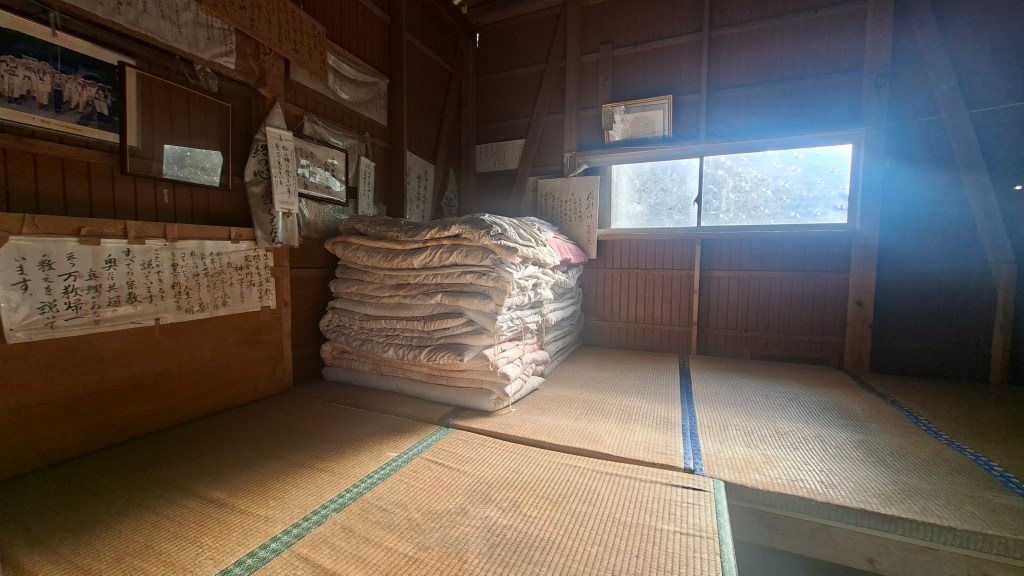
There are sleeping areas with tatami flooring and duvets piled up, which can be used if asked for, public toilets at regular intervals, houses in the traditional style, rice fields, towering mountains, roaring rivers. And then my first osettai, or pilgrim gift.
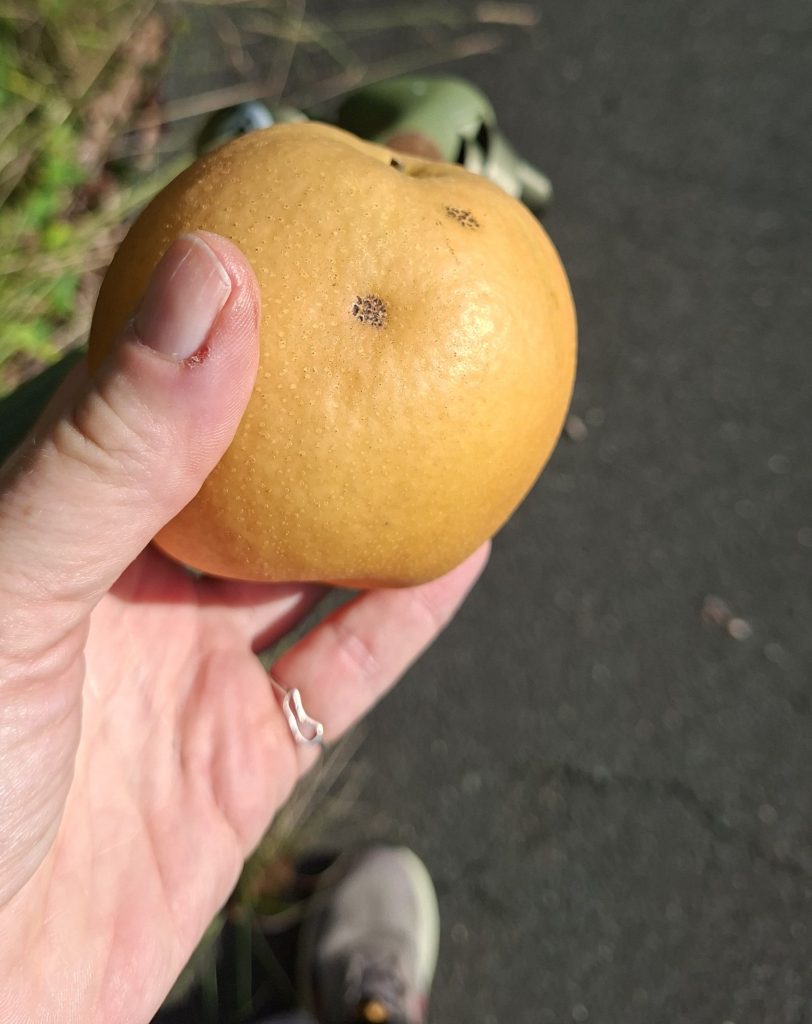
As I’m about to approach my first tunnel, I call out “Ohayou gozaimasu!” (good morning!) to two women at a fruit stand. As I walk on, I hear one of the women shouting behind me, “Ohayou gozaimasu!” She has chased me out to give me an apple, which will prove to be the juiciest apple I’ve ever had. For now, it’s yet more weight for the backpack, but a happy weight.
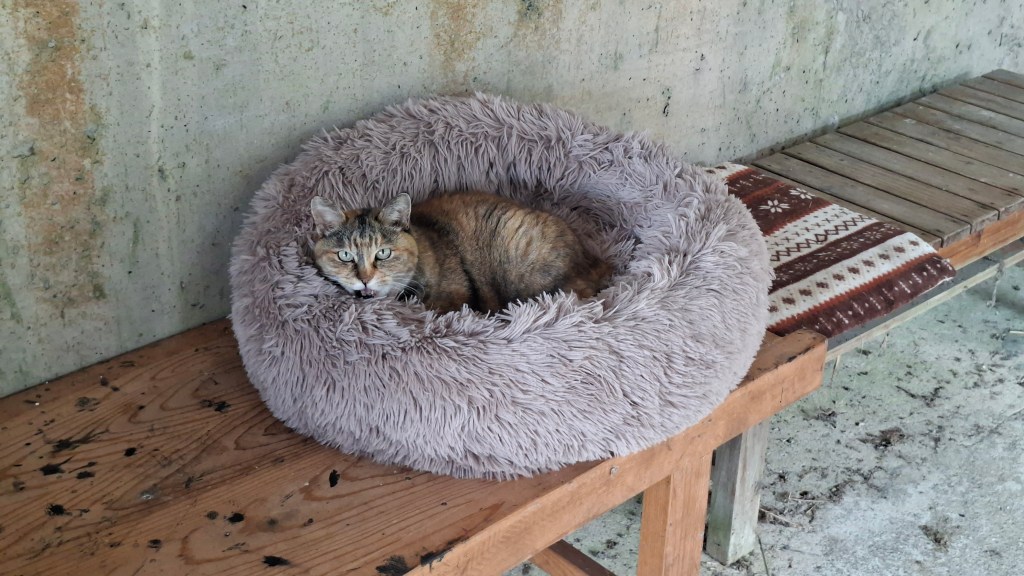
A little further along, another toilet, this time with a handy cat placed outside for petting. And two pilgrims pass me by, not stopping at this point but giving a friendly hello in Canadian accents.
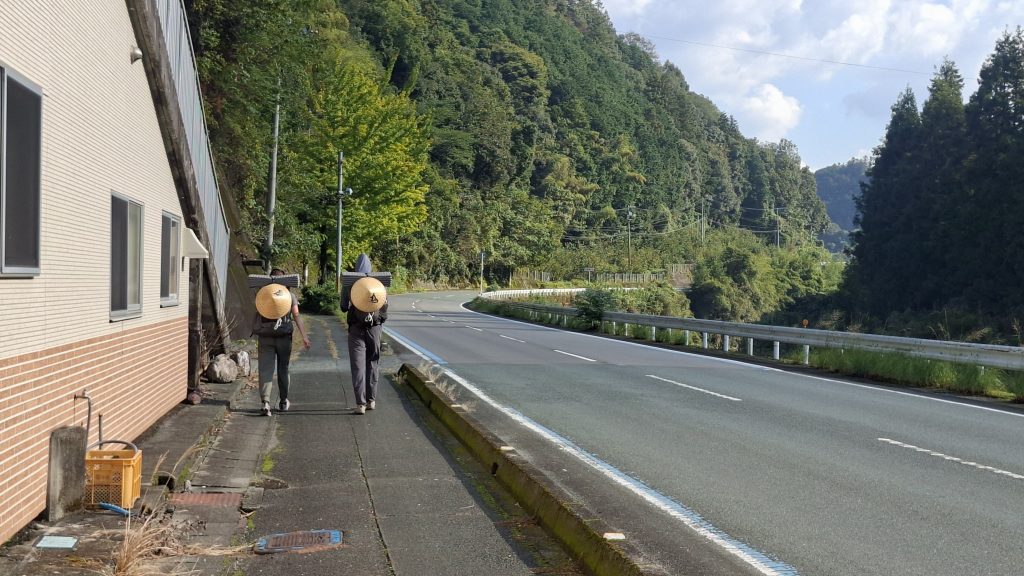
Not long after,I see them sitting, chatting with an old man on a veranda in a village street. I go and join them. The old man is Dondon, a retired businessman, who spends his days sitting out here meeting pilgrims. An excellent way to spend your retirement.
I think, at first, he’s offering to take a photo, but he isn’t, as the Canadians explain. He’s offering me coffee, “hotto” or “coldo”. I opt for “hotto” and sit down.
He prepares a persimmon for us. I’ve never had one before, but in this area they are everywhere, bags of them by the side of the road, being offered for a donation of 200 yen, trees full of them. Dondon tells us, tomorrow will be the Persimmon Festival. What a time to arrive!
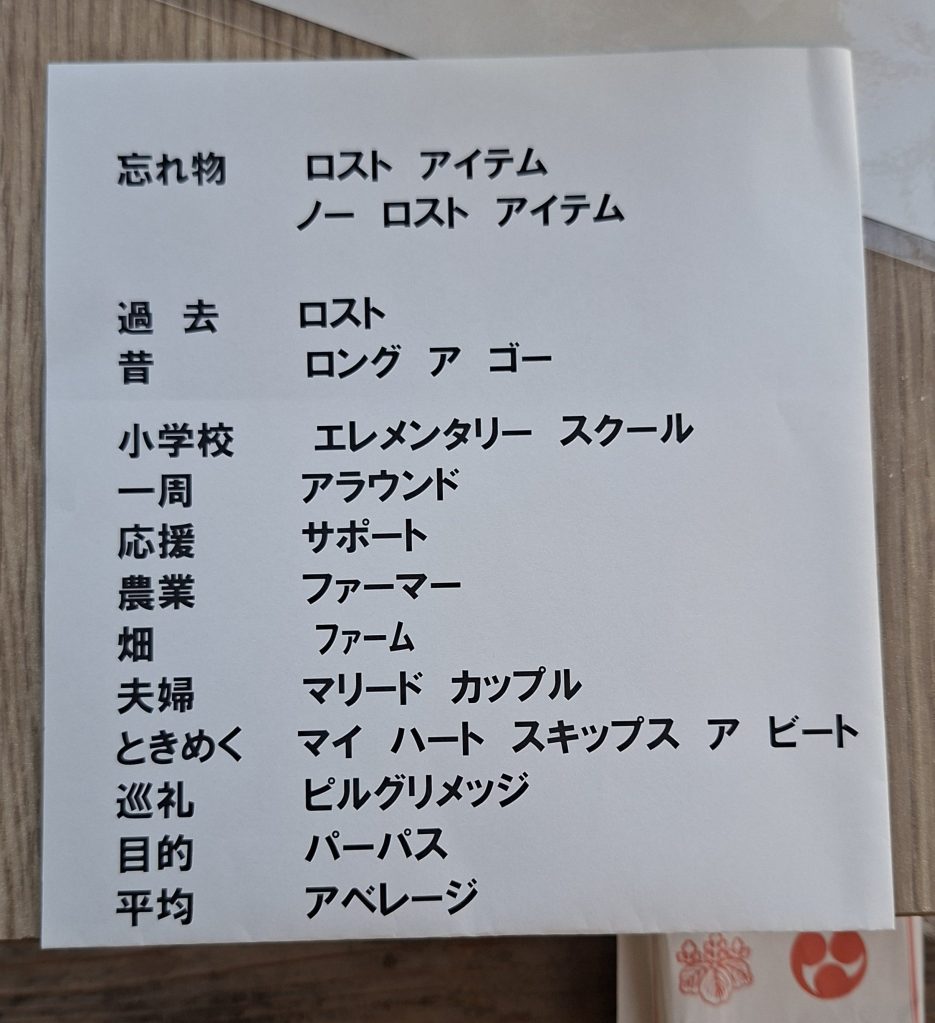
When the Canadians, Pierre and Justin, leave, I’m left alone with Dondon. We chat. He records some useful words for me in Japanese and shows me his own little cheat sheet of English phrases with pronunciation in hiragana. “Lost items. Where are you going today? My heart skips a beat”. I decide it’s a very useful list and take a photograph for myself.
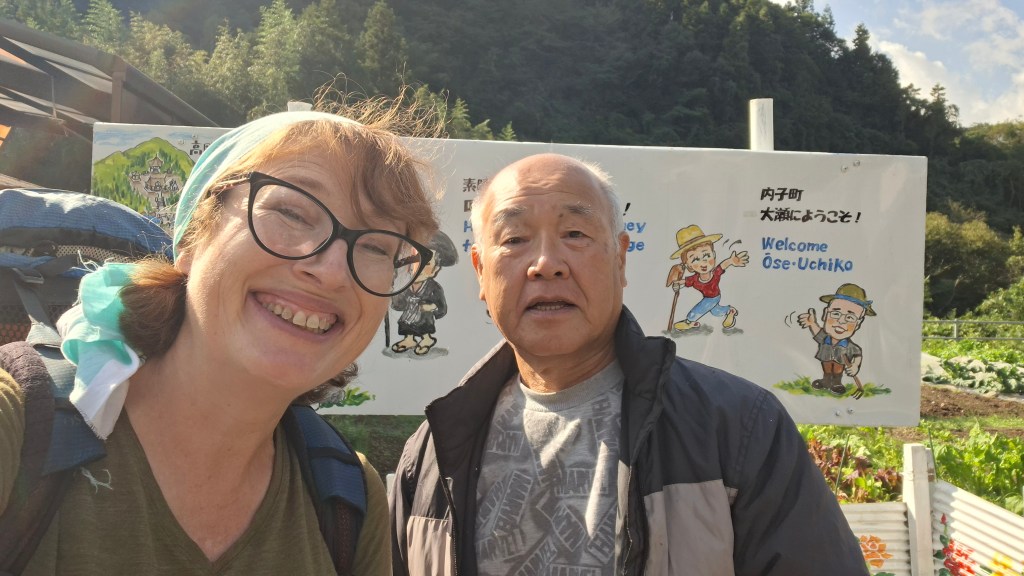
As I leave, Dondon takes photos of us by his notice boards, and these will go into his album. I’ve seen his album: pages and pages of happy pilgrims with their name slips next to their pictures. This man is blessed a hundred times over and a blessing to everyone that .
And now it’s full speed on to Nahemai .
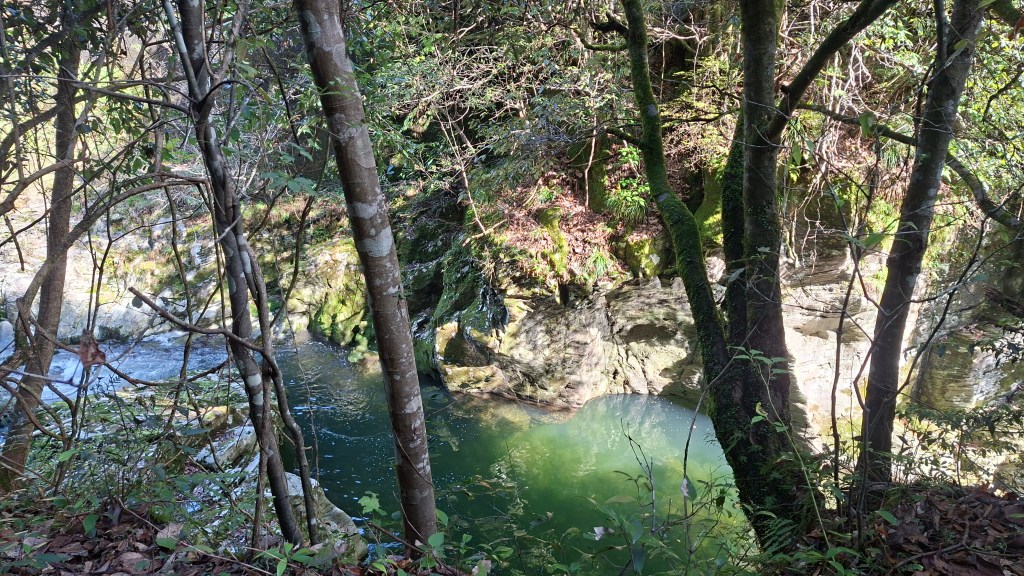
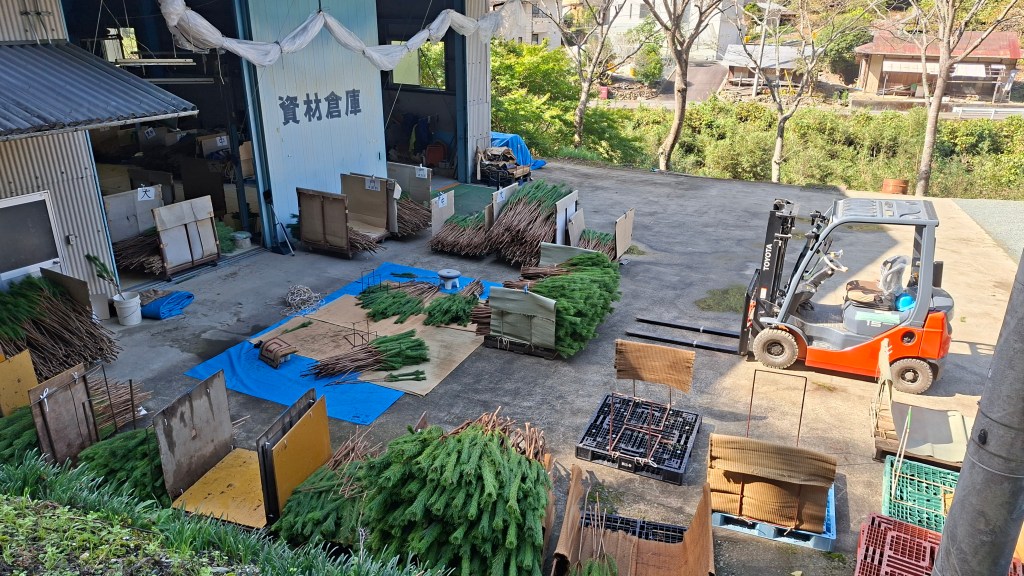
Despite the occasional distracting temple, I arrive there in time to eat and show my order, written by Hiro, to the lady in the restaurant. The udon are very good, and the little sweet buns which I’ve been wondering about over the last few weeks are as delicious as Hiro had promised and I had hoped.
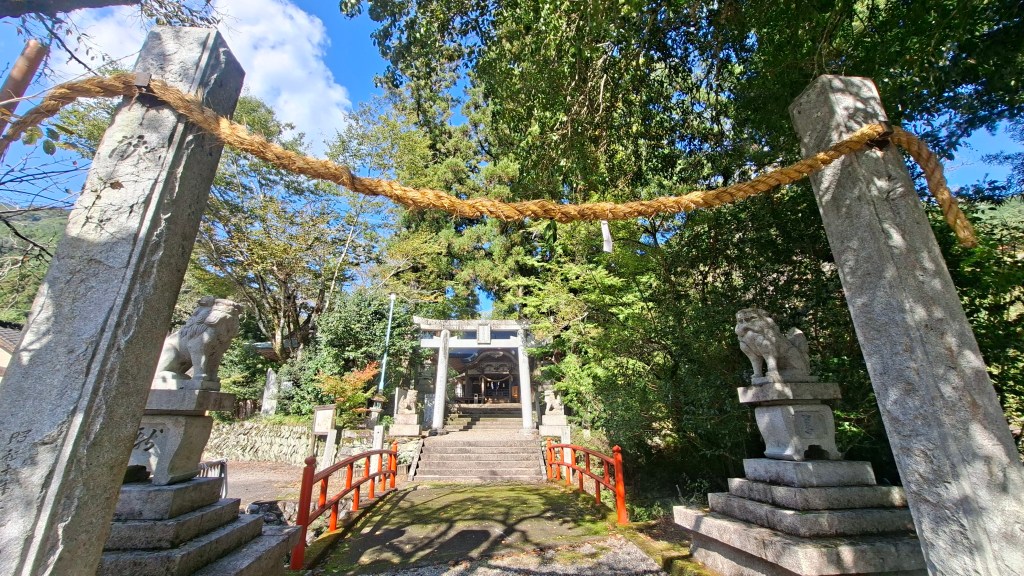
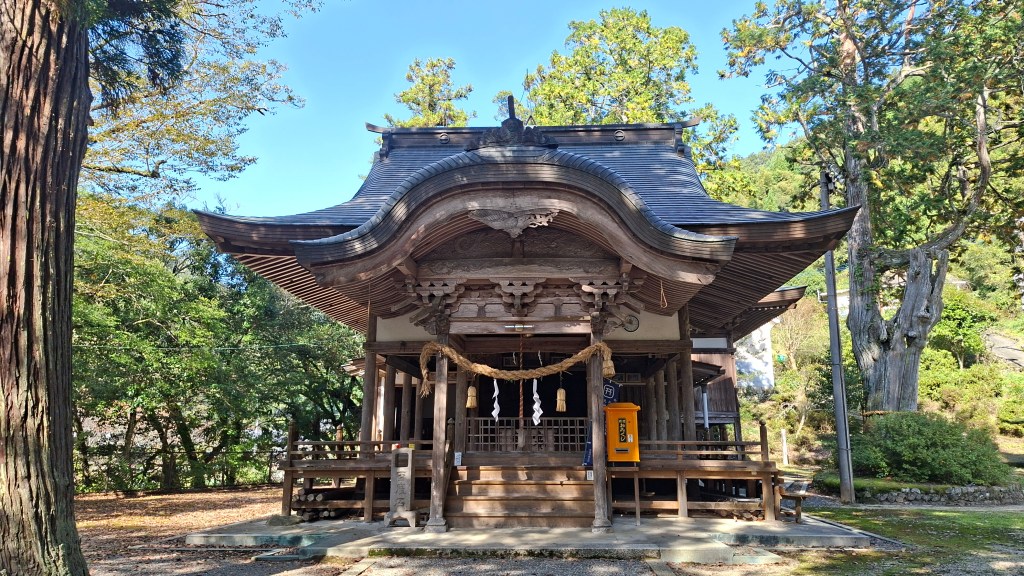
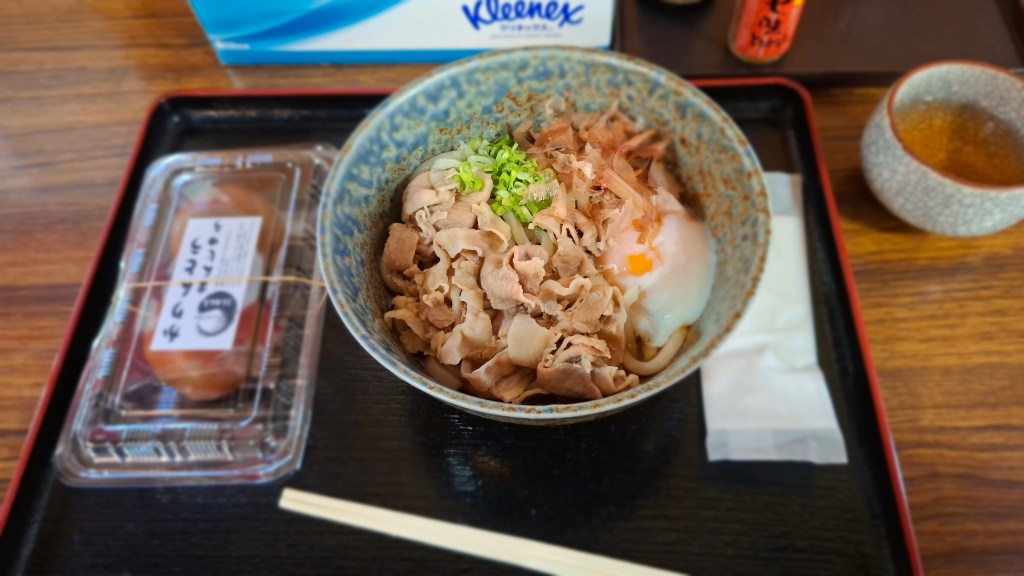
My destination is nearby. It takes me a while to realise I have reached my Japanese inn. I’ve discovered I have absolutely no internet coverage when I’m walking. The SIM card I bought in Osaka is as useless as Hiro had thought it would be. So I can’t translate any of the signs outside. This leads me to talk to people in the village. And with my few words and a lot of pointing, I find my way. I even understand a man saying “right”, and I’m disproportionately pleased.
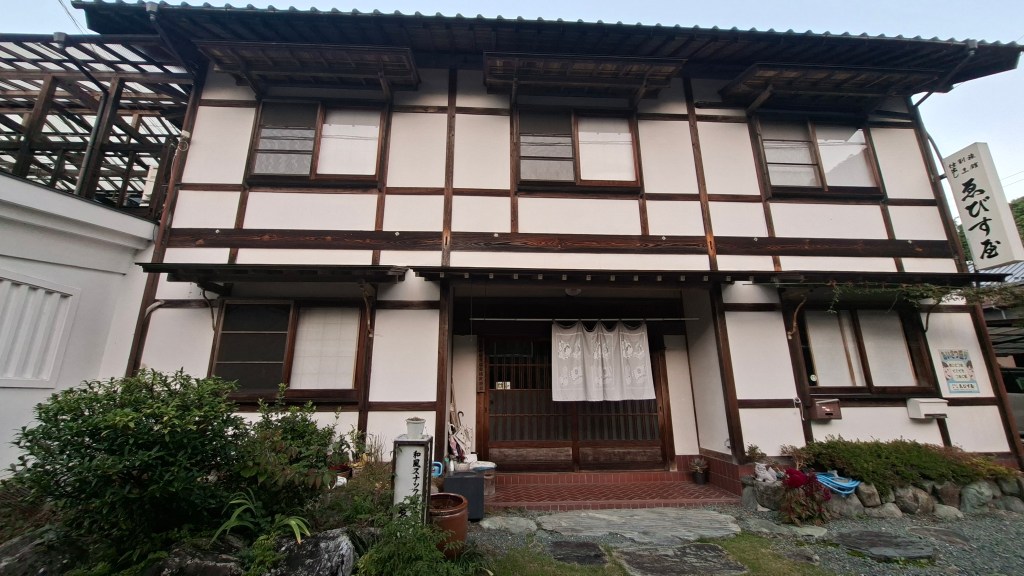
The inn itself is as traditional as they get. It’s a baptism of fire. I am greeted by Yumiko, my delightful 77-year-old hostess.
First, there are the slipper rituals. As soon as I walk in, I’m given a little stool and put into my hall slippers. But as I attempt to leave the hall, more slippers need to be put on. Yumiko is horrified as I do not realise that these too must be removed in the bedroom.
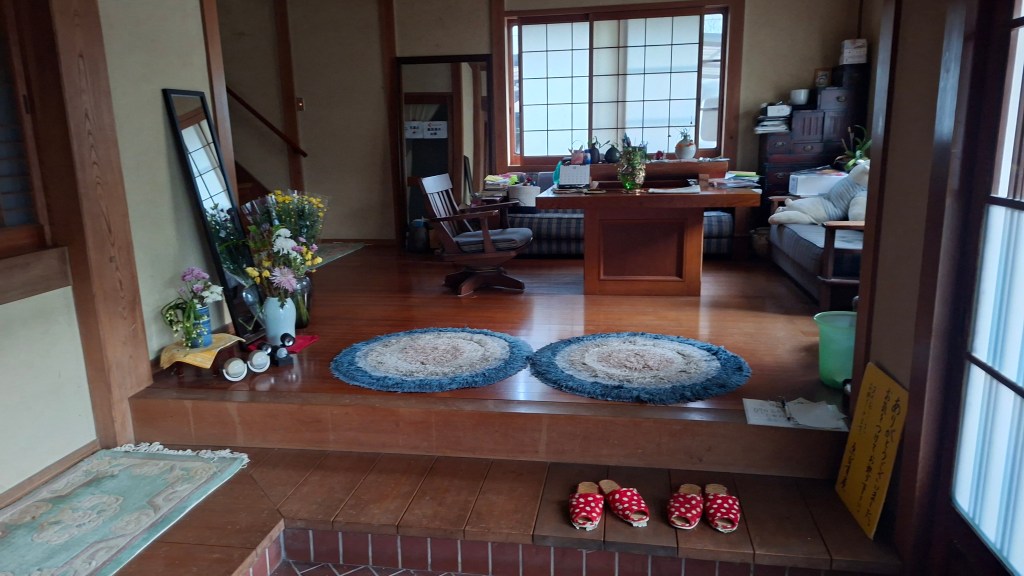
Yumiko, 77, asks me if I’d like a shower or a bath. “Shower,” I say, thinking that would be normal. Her reaction is ne of . She asks me again, “Shower?” And she mimes shivering, looking uncomfortable, tentatively pouring the water on her head. This is exactly how I feel about showers, so I understand exactly what she’s getting at.And then she mimes bath, luxuriating in warm water. And I’m in.
In my room with its tatami floors and futon in the corner Yumiko lays out my clothes for the inn. I have no idea what to do with these. And she comes back up. I am wearing the overgarment only. She looks at me as if I am mad and shows me the robe which is worn underneath.
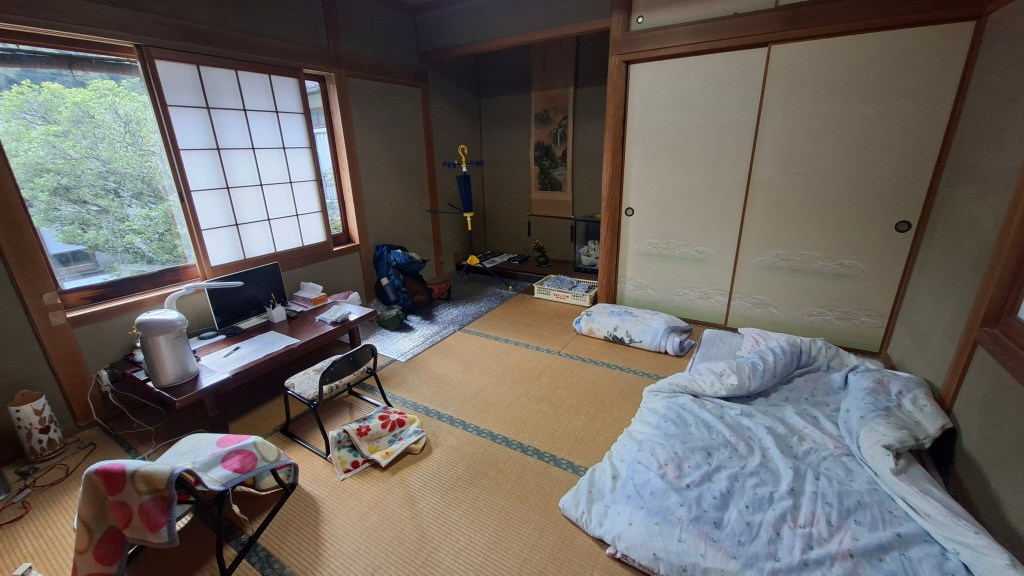
Next she shows me through a beautiful courtyard into the bath area, where she reveals a sunken bath filled to the brim with hot water. My instructions are to put all my clothes in this little basket and put the fresh Japanese clothes on when I have finished. She mimes a person happy in clean clothes. Then I’m left to luxuriate, just as she had mimed .
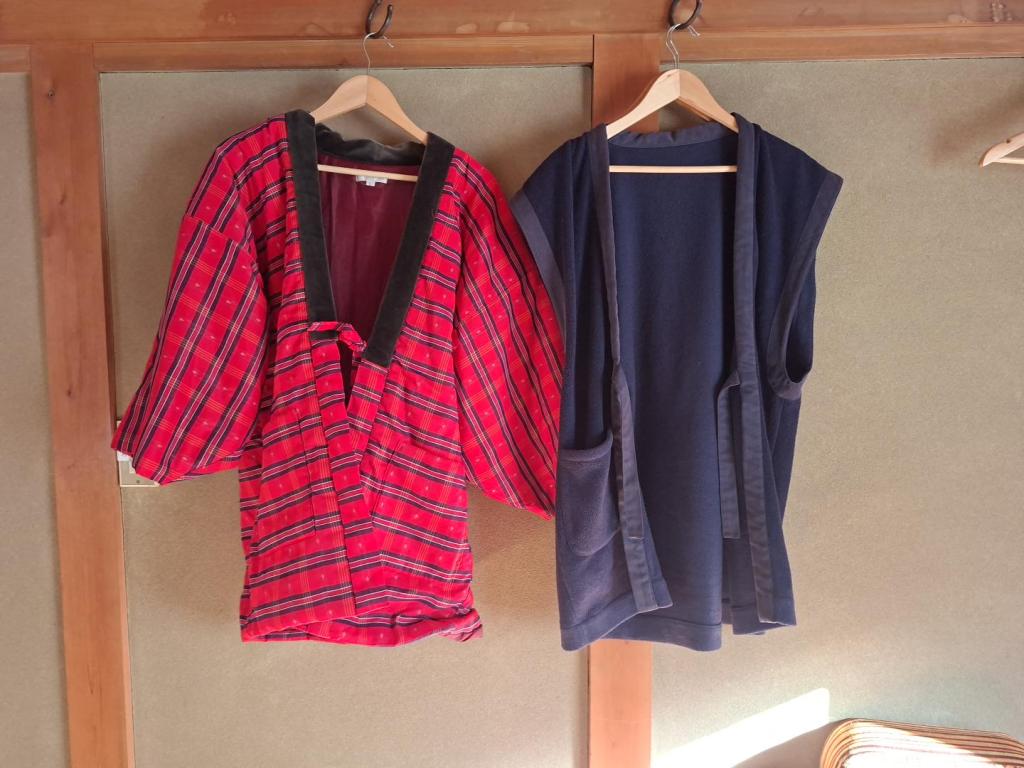
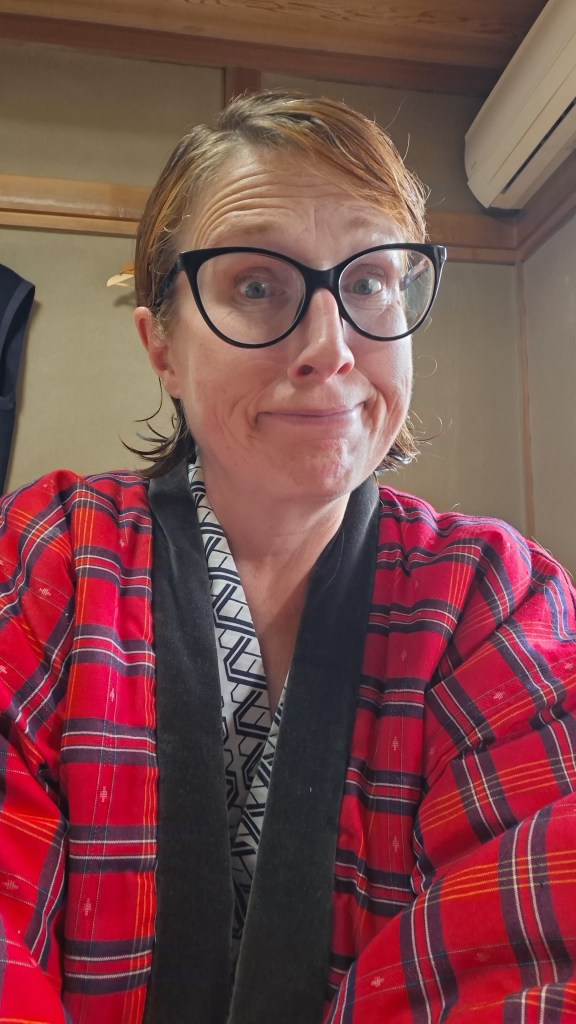
Back in my room at half past five, she comes to tell me that dinner is ready and looks at me in my robe. She cannot quite work out how I’ve got it so wrong. She tries to adjust it, but it’s no good, and finally she resigns herself to my English styling.
Waiting in the little bar area, where we will have dinner, is Mr Toyoda, a quiet pilgrim halfway through his pilgrimage and immaculately robed. He tells me he’s nervous. I tell him “me too”.
The meal comes on the tray. I’m overwhelmed by the amount and the variety and the fact I recognise so little. But I am determined I will eat everything put in front of me. And with great enjoyment, I do. I even eat the raw tiny little whole fish which seem to be swimming in a bowl of seaweed. They’re not actually swimming. I’ve not been pushed that far.
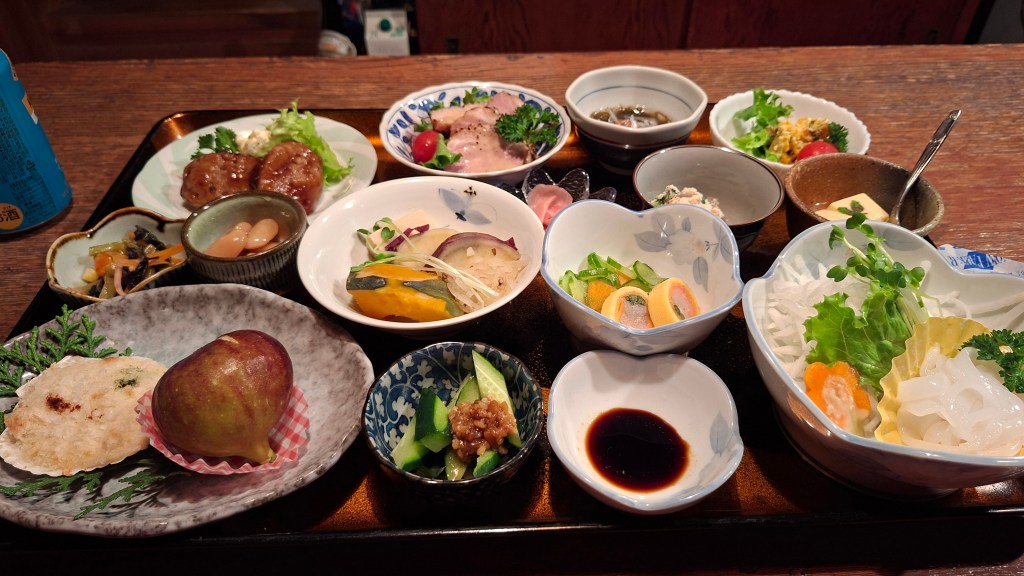
I make Google Translate conversation with Mr Toyoda until is time to retire. The language barrier is down, so long as I have WiFi. I realise that walking may not be the biggest challenge of this particular pilgrimage. But so far, so good.


Leave a Reply