Shikoku 88 Temples – Day 25
Kainan to Tokumasu Minshinku: 27km (+6km bus)
It has taken three weeks to bring me to this, but last night, when asked if I wanted a bread-based breakfast, or a rice-based breakfast, the first time this has happened on the whole trip, I requested Japanese. I’m not sure what’s come over me.
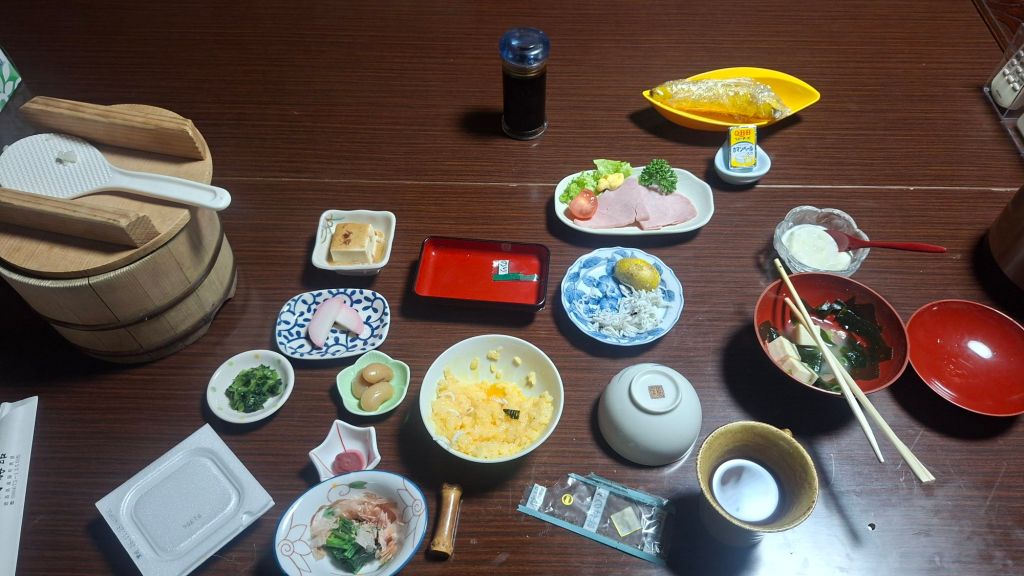
Part of me has been fighting off a cold and thinks the reason I’ve been successful so far can be put down to breakfast. Unlike the other European pilgrims, I’ve been staying in places with Japanese breakfast every morning. That is apart from yesterday, when I started to feel a little bit groggy.
Partly it’s because the dinner was such an extraordinary spread last night that I don’t want to feel I’ve missed out on anything this morning. Although I imagine a bread-based breakfast would also have been spectacular too.
Partly it is because to turn down a Japanese breakfast felt a bit like cheating.
My reward for not cheating is a beautiful breakfast with minimal fish content, just the little fish fry, which with enough lemon aren’t too bad, and some bonito flakes and seaweed, which are quite okay when mixed with soy sauce. I even ate all of my wrapped seaweed slices because I know they’re good for me.
Also in the back of my mind is Mr Sazanka telling me that Japanese food will increase my life expectancy, although 108 years is more than I need and definitely more than I’ve budgeted for. However, if I’m going to live that long, I think I would need porridge to comfort me.
As Mama-san shows me the way and waves me off the property, I feel obliged not to double back and go to the shop.
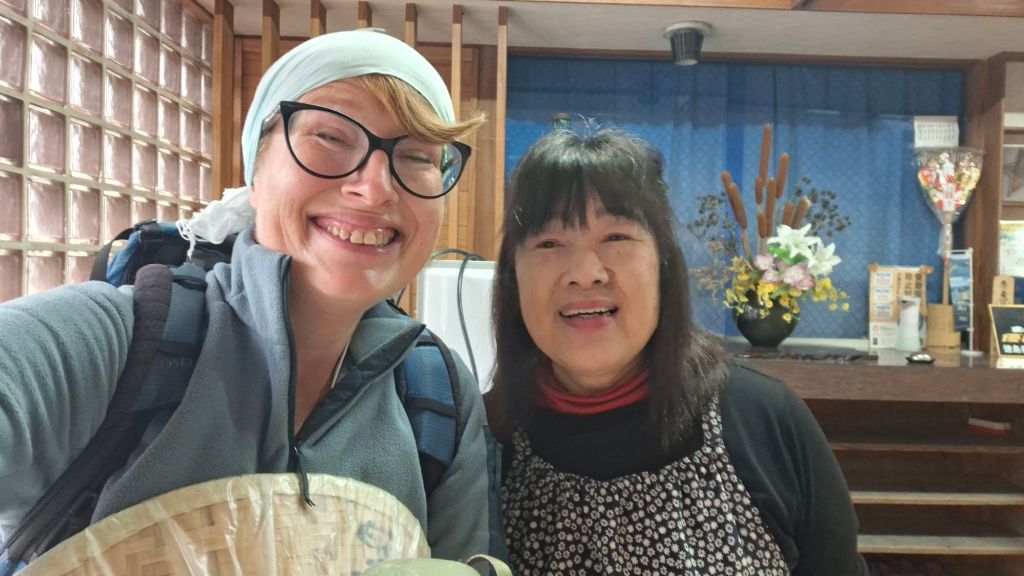
Today I have a slight panic about setting off with a large breakfast in my stomach and only a regular amount of food in my backpack: bead, cheese, a banana, some fancy jelly left over from Mr Sazanka’s bottomless snack bag, cashew nuts and the chocolate which Mama-san popped into my pocket as I was leaving. I do hope I’ll survive until five o’clock on this.
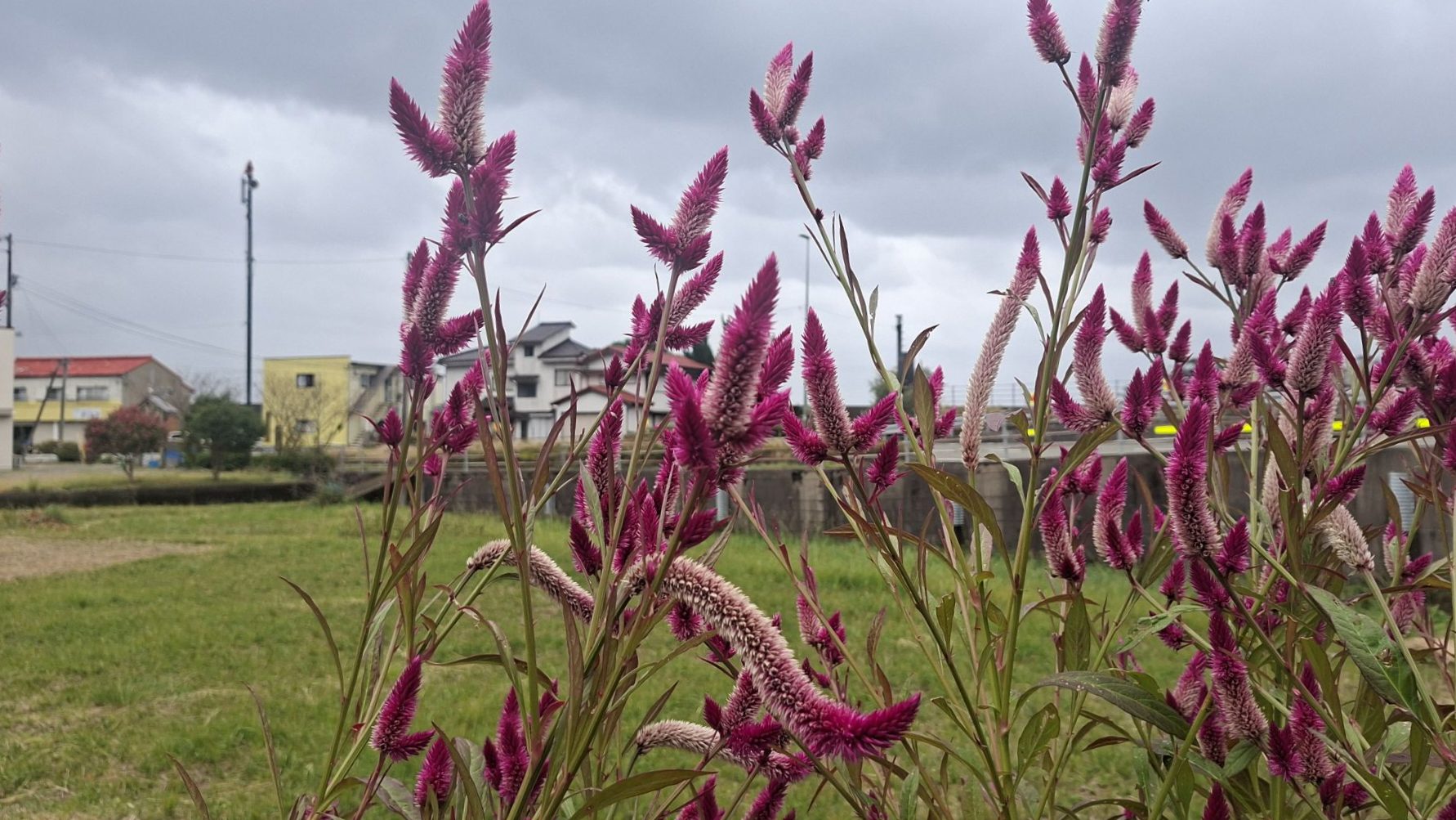
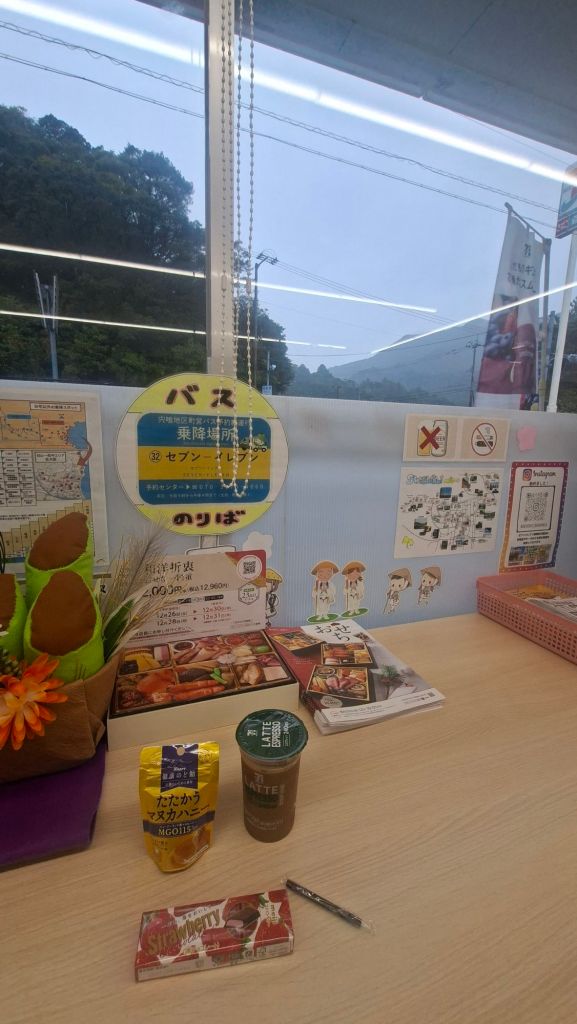
It is half ten. It is pouring with rain and I am sitting in the 7-Eleven, drinking coffee, looking out the window and listening to Starman, converted very successfully into muzak. Heavenly.
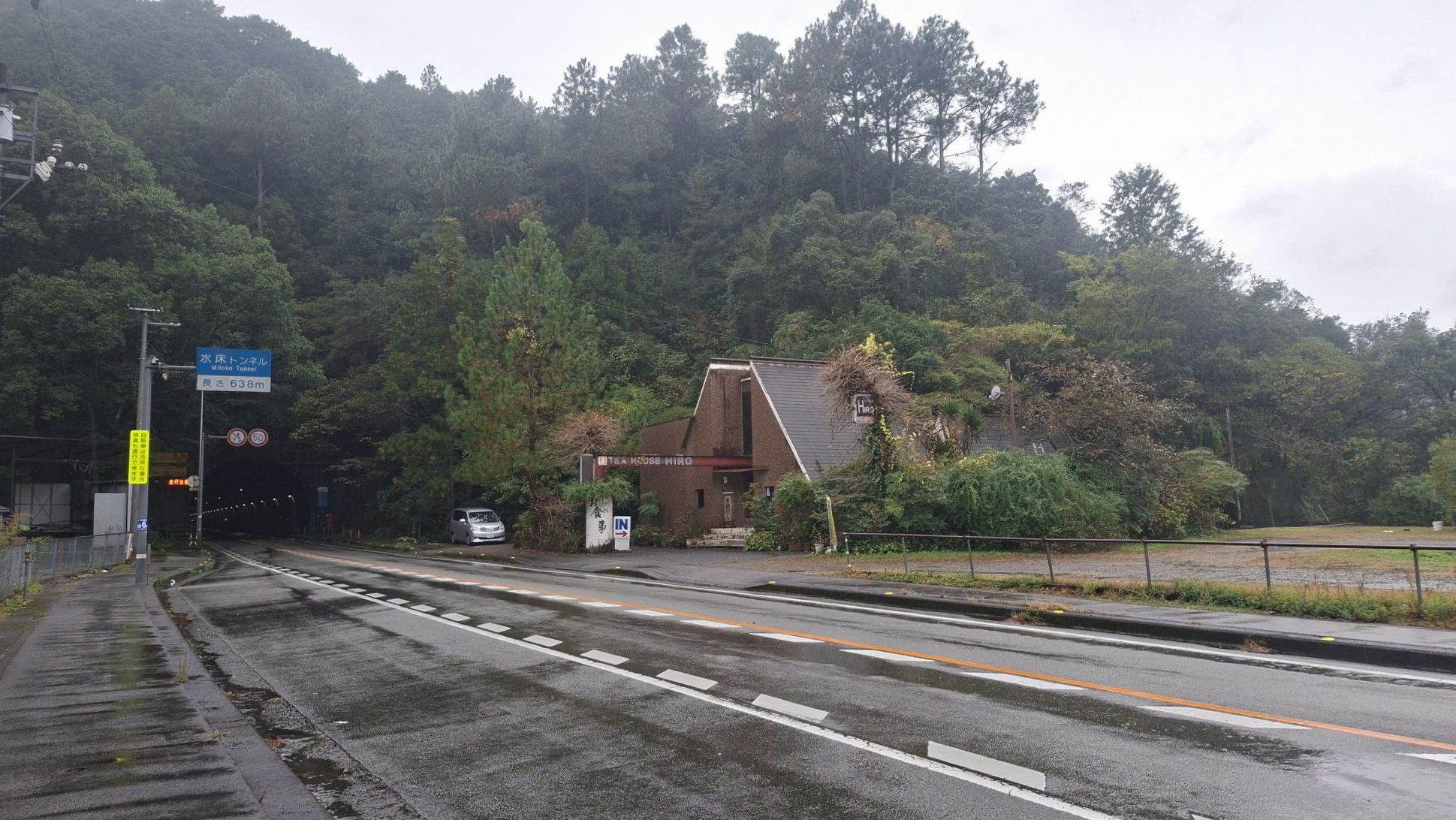
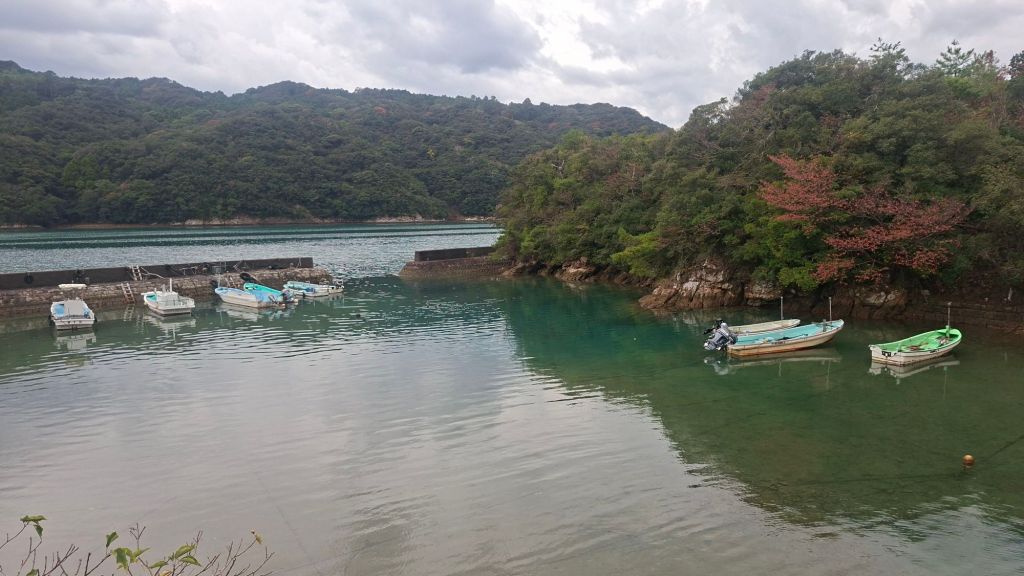
There are few towns on this stretch of the island, just fishing villages built for fishing alone. The only public information signs are signs to help pilgrims to carry on through, and signs for tsunamis, telling people to go up to the hills.
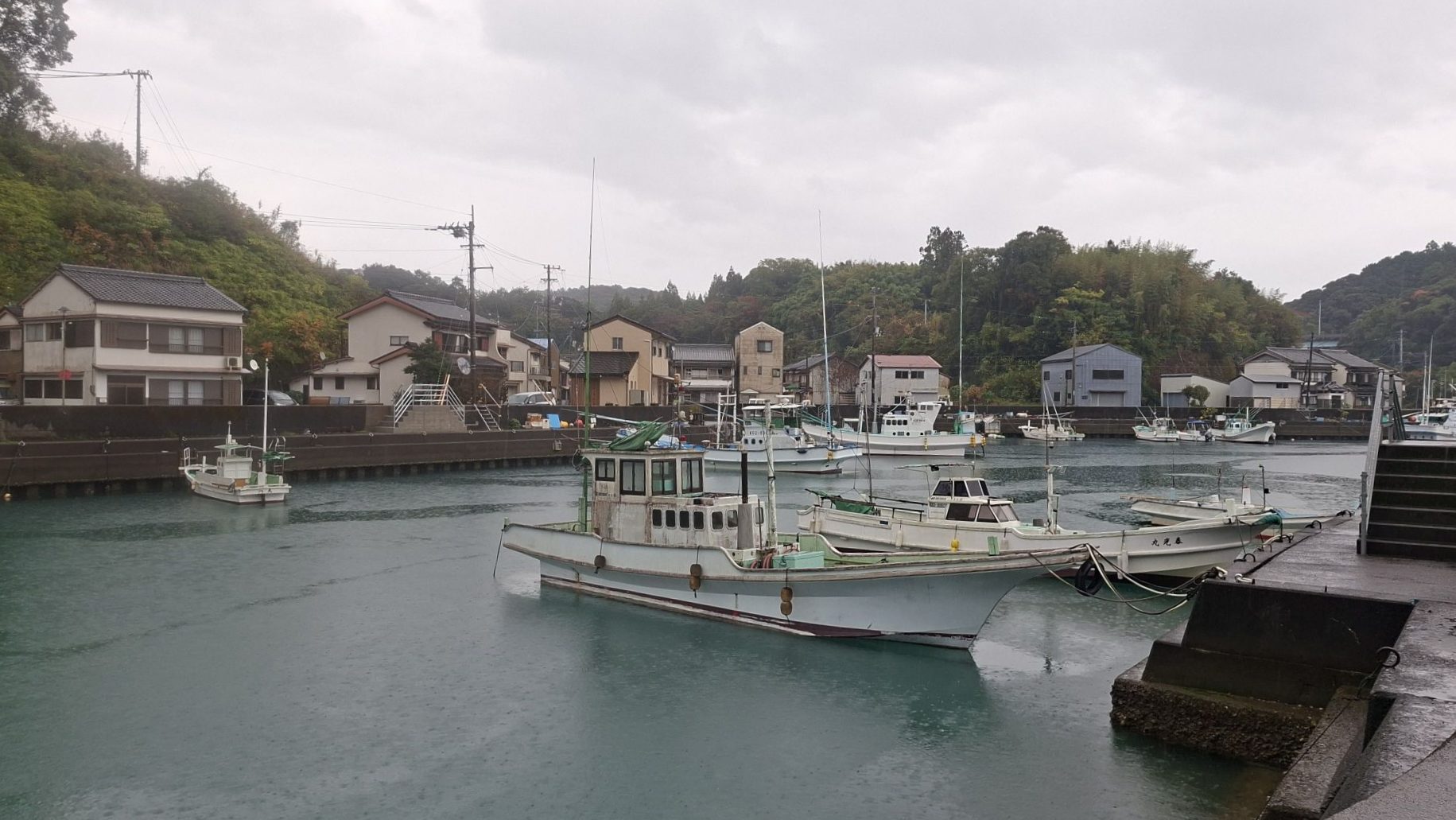
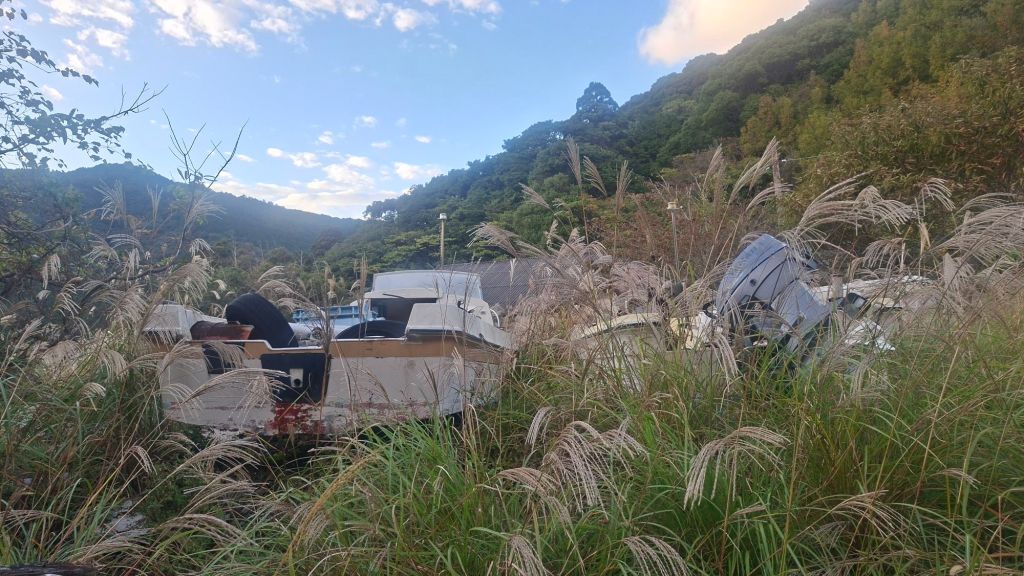
When I look at the boats, I consider that a place like this has more in common with fishing towns anywhere in the world than with places that produce people like me. I rest my History of Japan podcast for a while and find a relevant episode at The Mariner’s Mirror to educate myself. There is a podcast for all occasions.
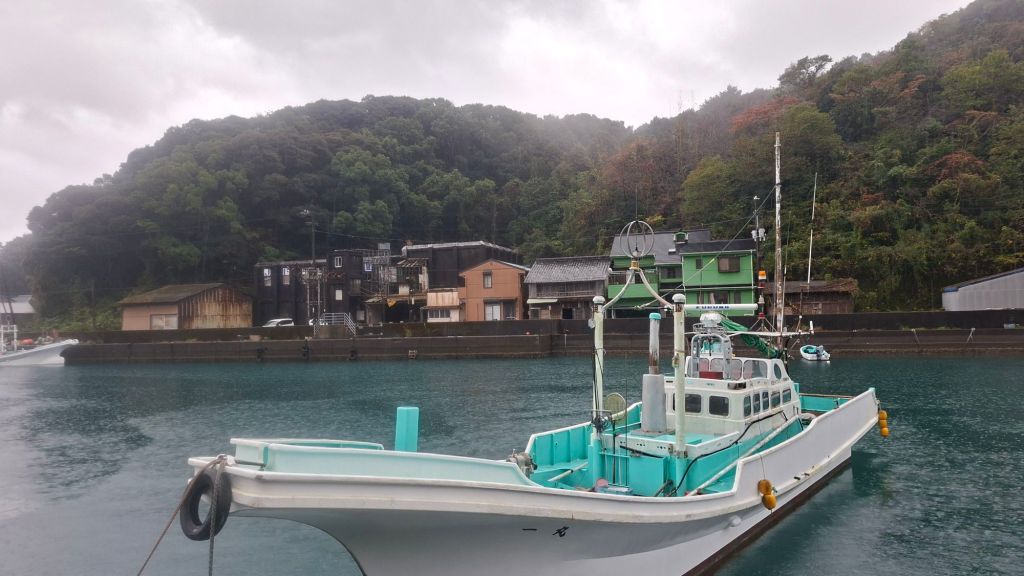
In some ways it’s much easier walking in the rain. There’s little to distract me. I’m focused on walking. I’m alone with my thoughts. Whatever outside distractions there are, I can only photograph them with difficulty, under the shelter of my hat.
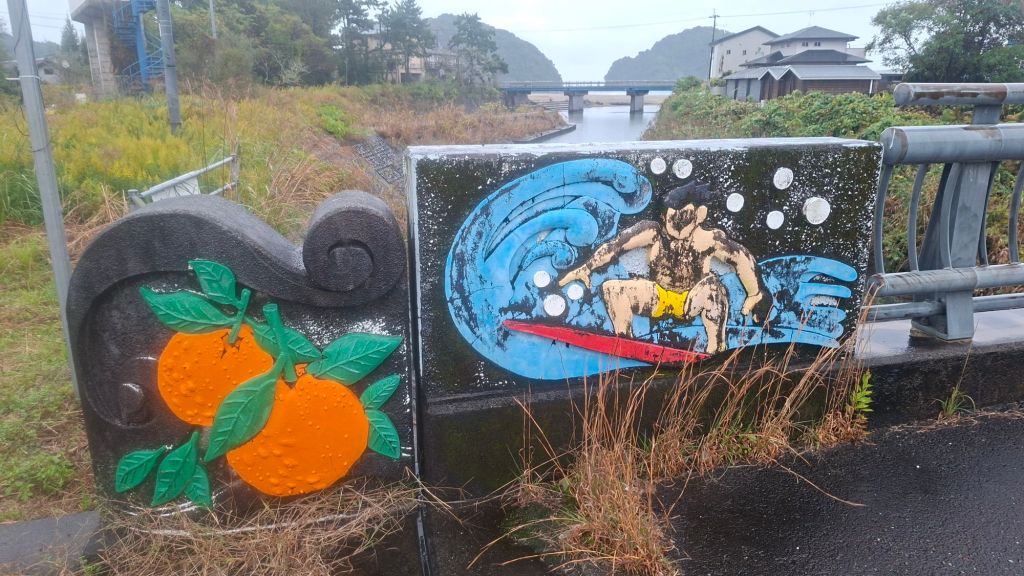
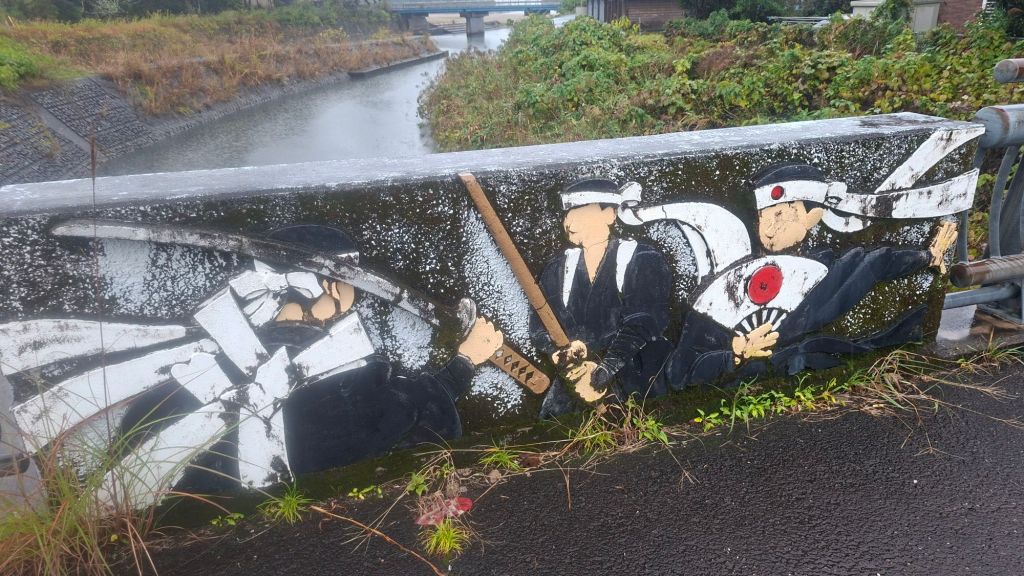
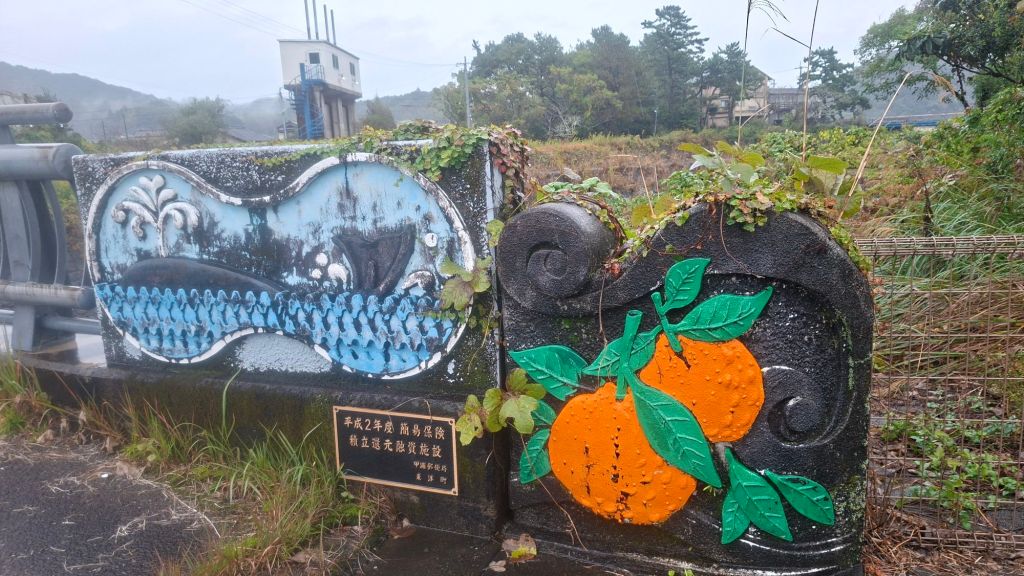
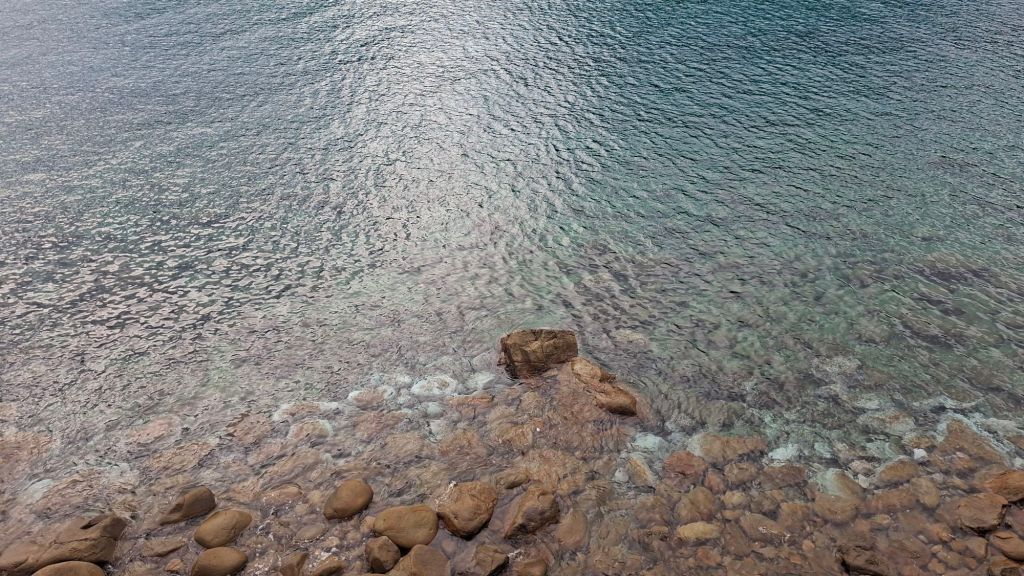
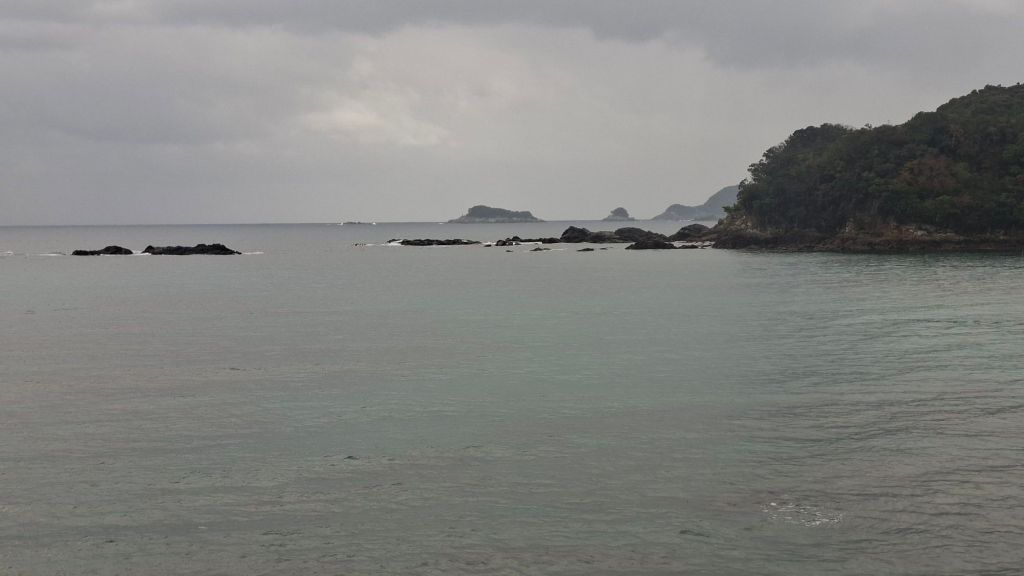
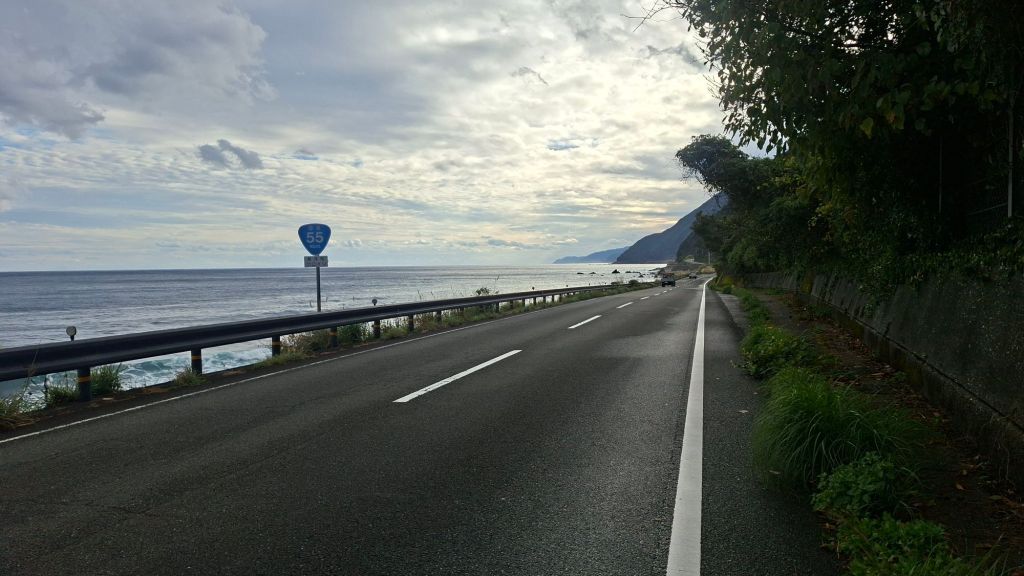
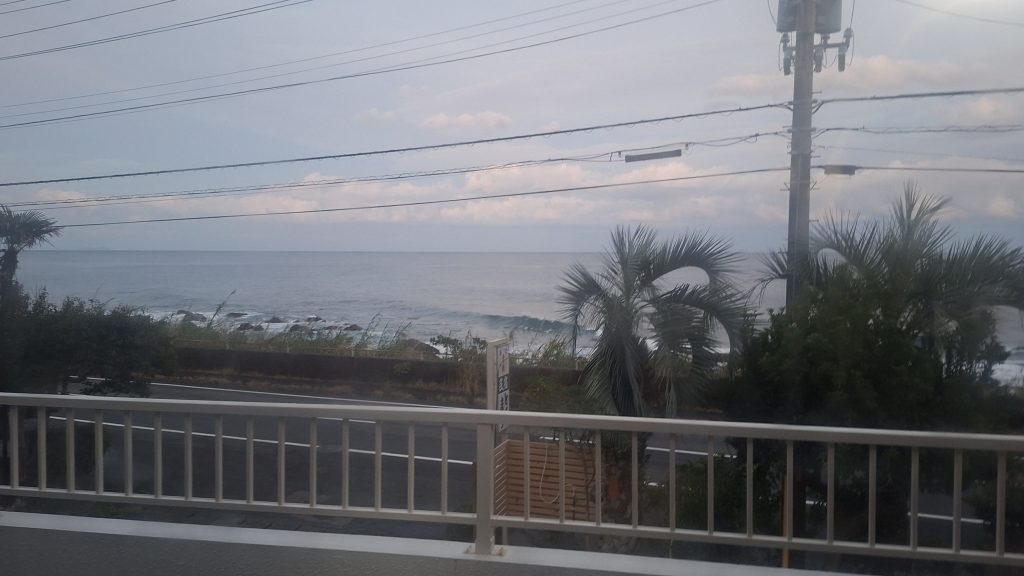
As luck would have it, today is pretty much on the road all day, main road a lot of the time. It’s good to get it done in the rain. Besides, the sea always looks good whatever the weather, and the sea is what I have on my left side throughout.
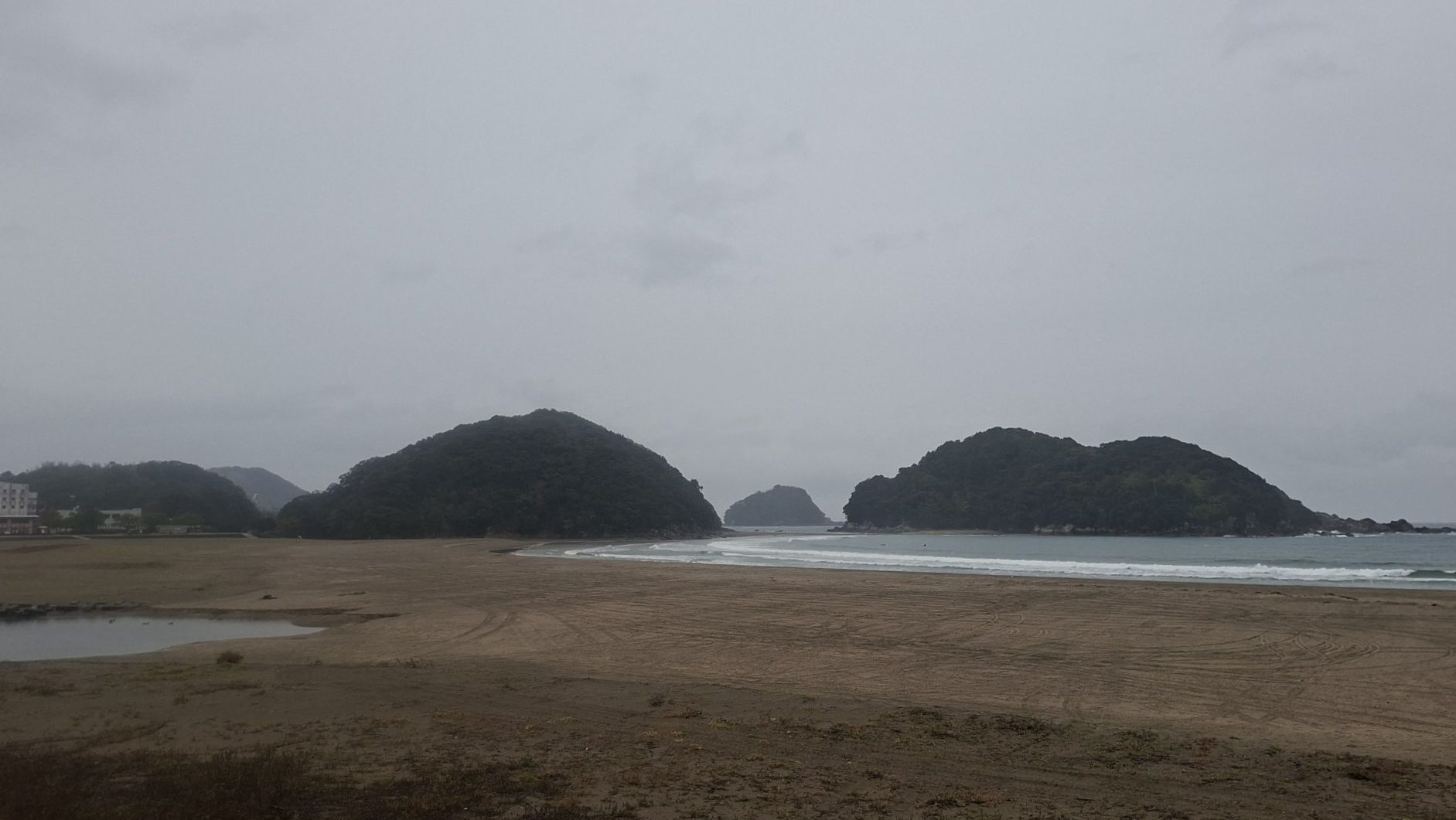
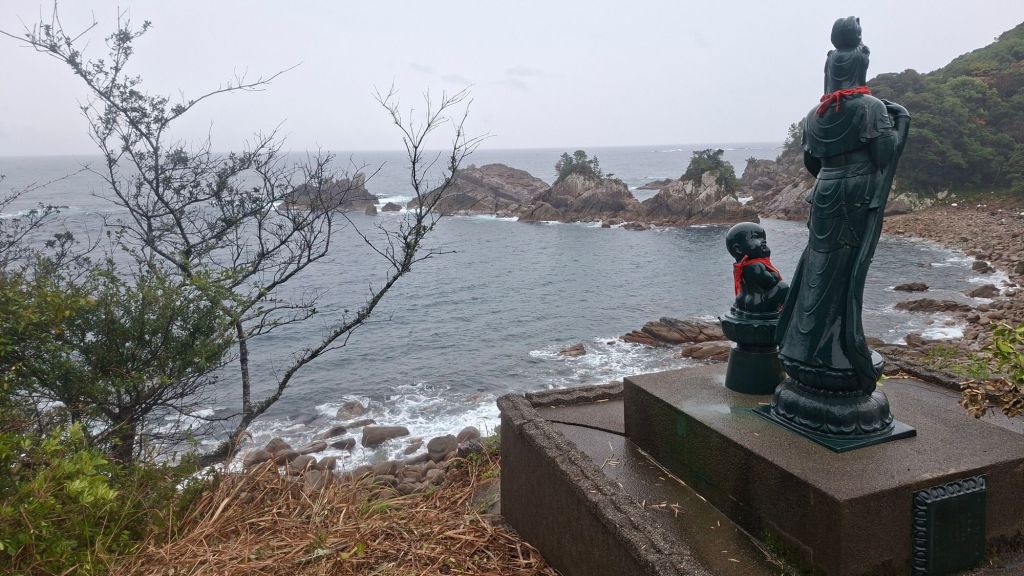
One of the ways I amuse myself while walking along the highway is working out when I enter and leave tsunami inundation zones. Signage is in English as well as Japanese, but it’s a bit vague. “Unclear orders lead to disastrous consequences”, I say to myself. Another way I’ve been amusing myself on the long stretches of road is by listening to a podcast about the Charge of the Light Brigade.
I make a note whenever there’s an arrow pointing to an evacuation area. There are some stretches where there are cliffs on one side and the sea on the other, and I can’t quite see how I could escape a tsunami. So I look up the official instructions online.
If you feel an earth tremor: make for high land. I think I can do that.
Don’t wait for the sea to retreat. Totally won’t do that.
Don’t wait until you see the first wave coming. No chance, I’m up that hill .
I think I’m covered.
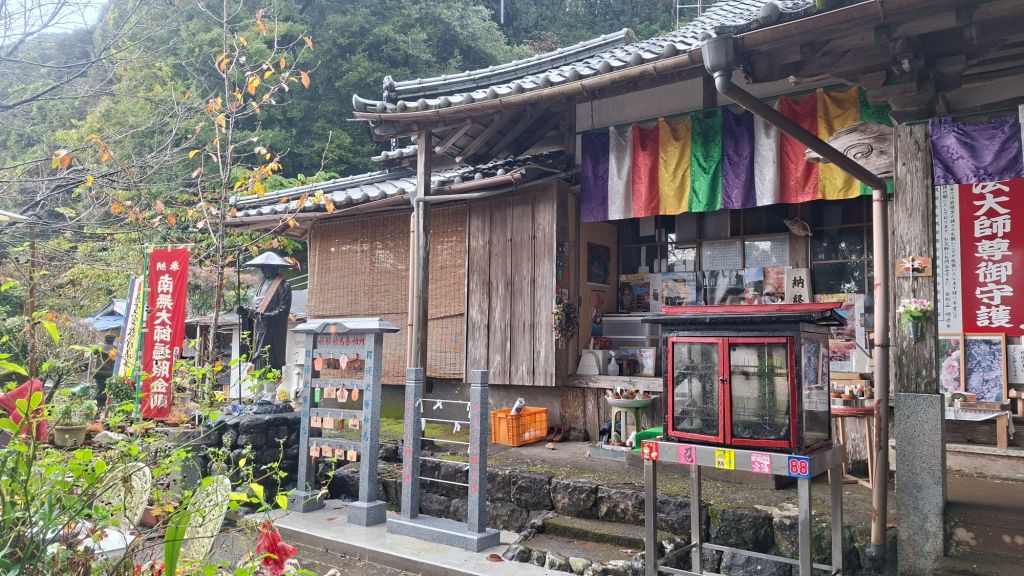
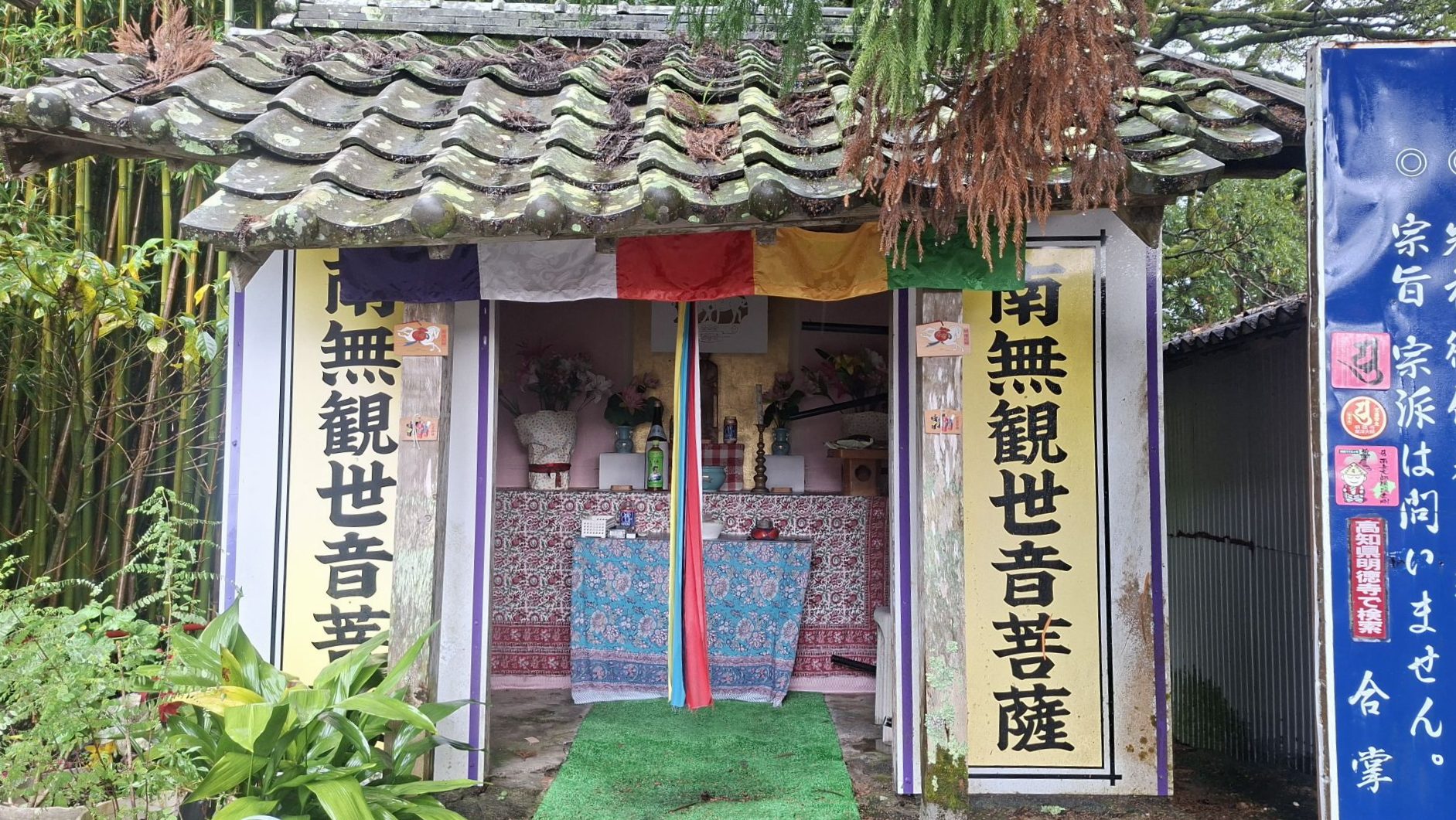
The sun finally comes out in the afternoon. And the hat finally comes off, so I have an uninterrupted view of the sky.
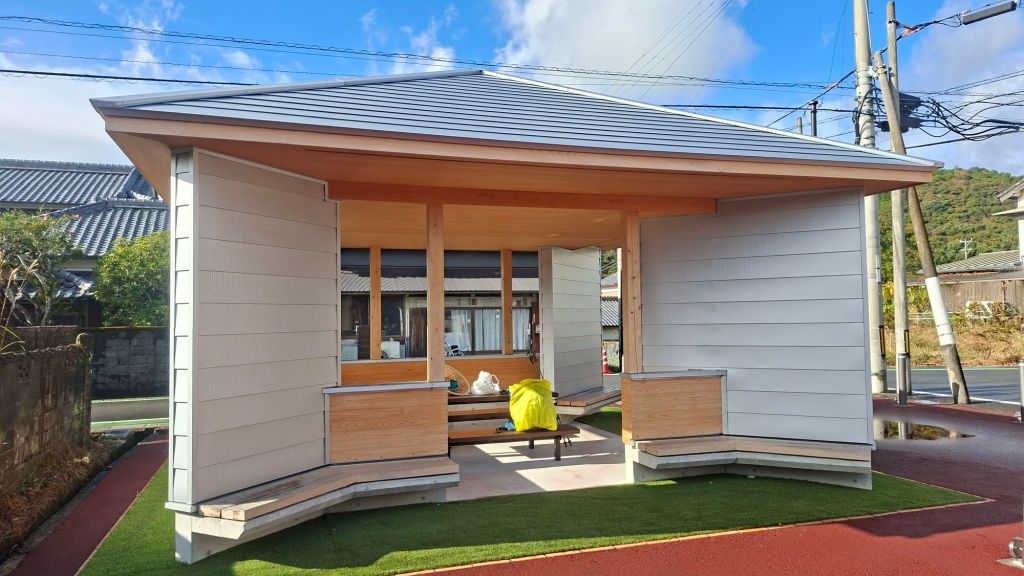
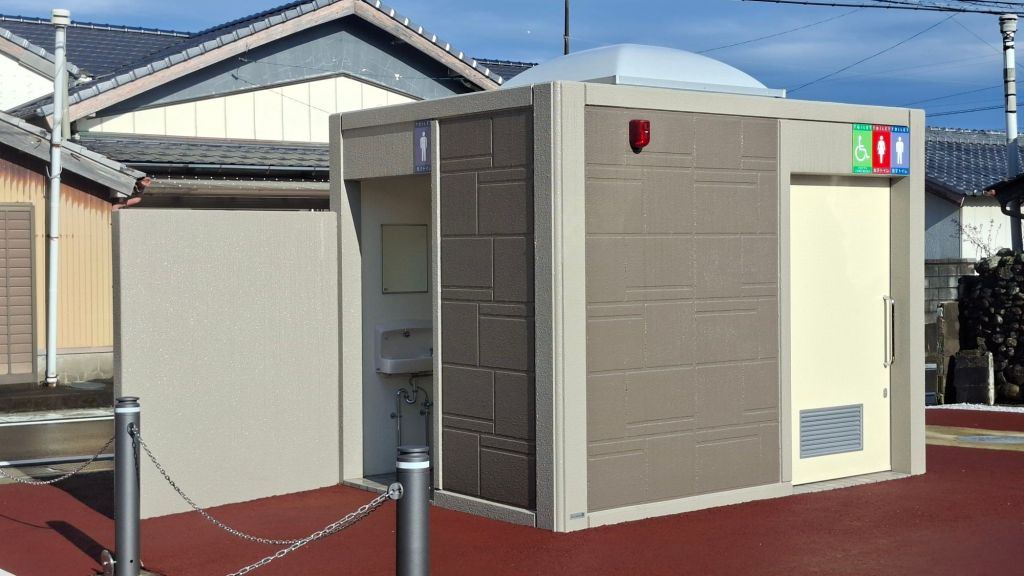
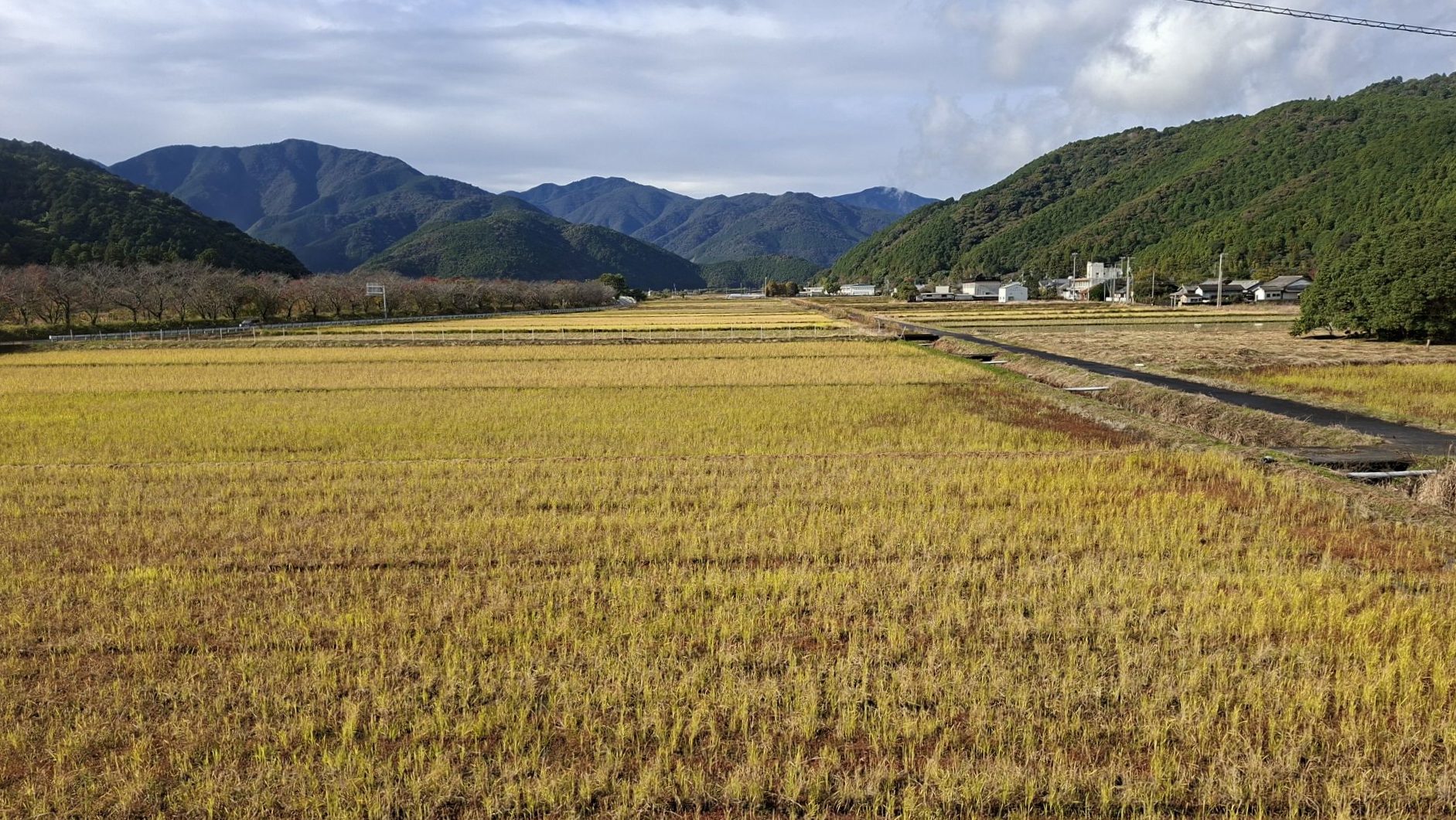
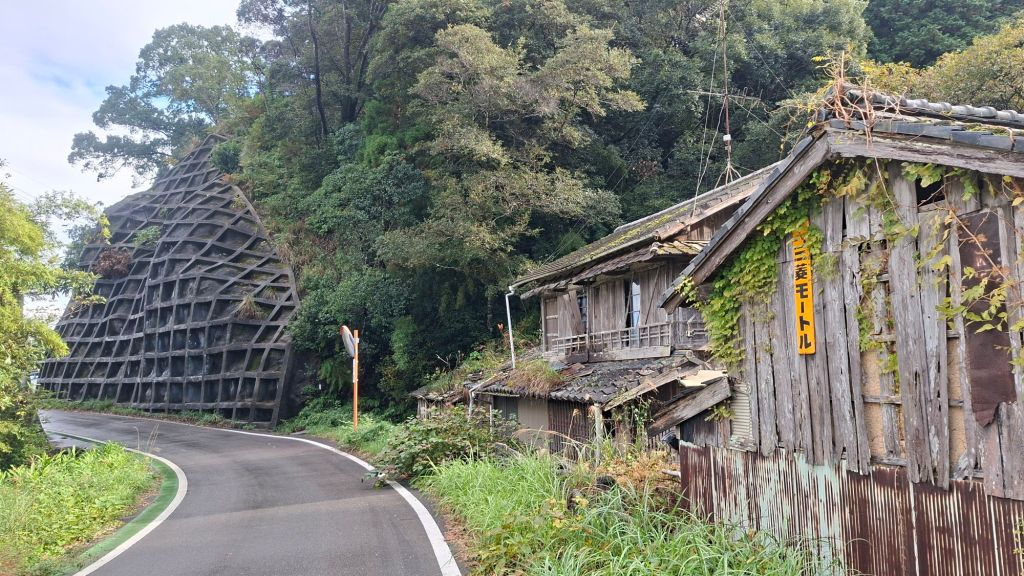
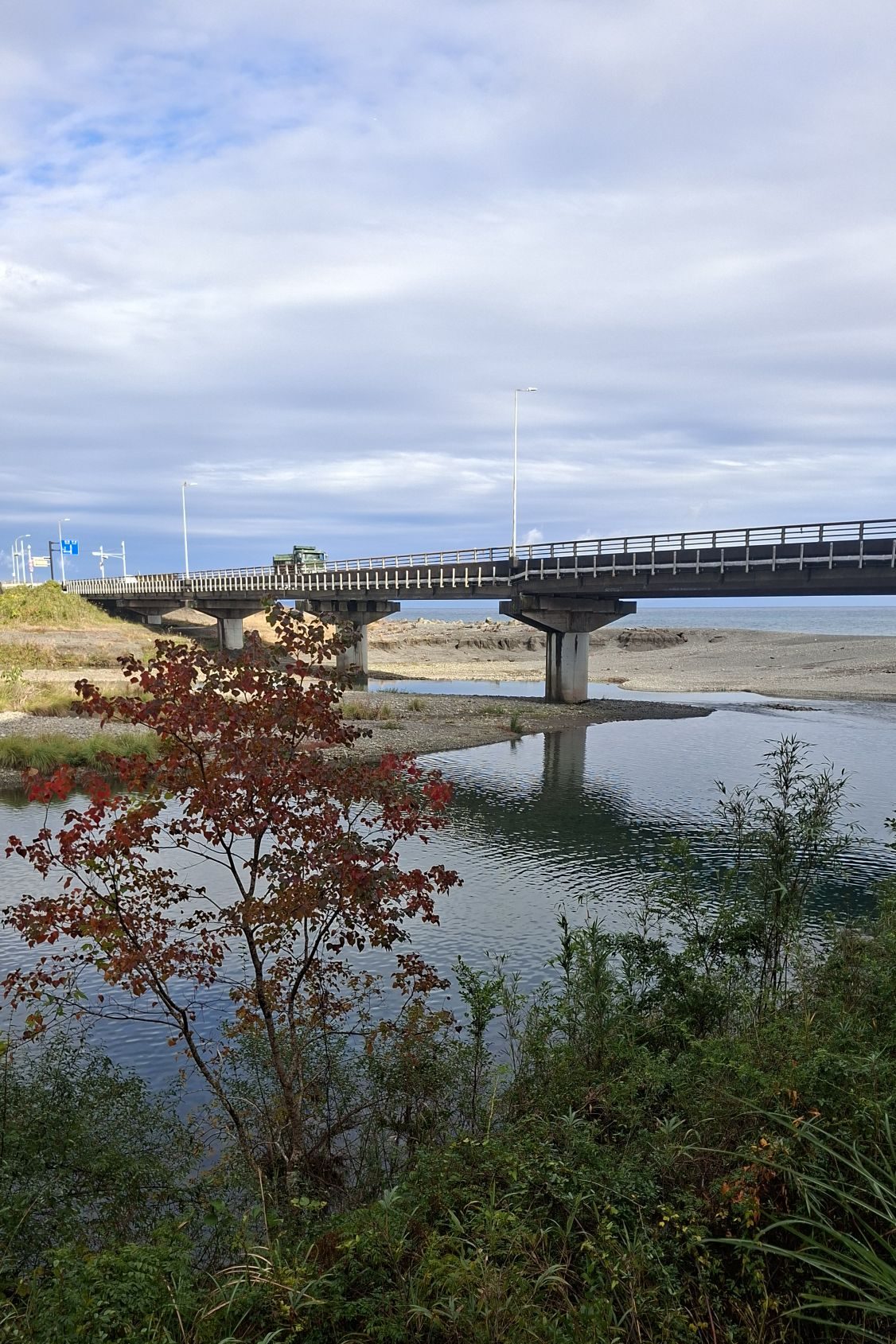
Halfway along Highway 55 and the long, long coastal stretch, I meet another pilgrim coming in the opposite direction, Goto-san. He has a similar distance to do as me. We both of us say, if it’s a problem, we get the bus. We both of us say, but I want to walk.
He speaks in Japanese. I speak in agreement, odd words and some English, ut we have a conversation. He knows where I’m going. I know where he’s going. He’s been to Scotland. Men wear kilts. Tartan is good.
Before we go, I say, “Watashi wa Rachel desu.”
To which he replies, “My name is Goto.”
“Hajimemashite,” I say.
“Nice to meet you” he replies.
Thank you, Goto-san, for being my pilgrim of the day.
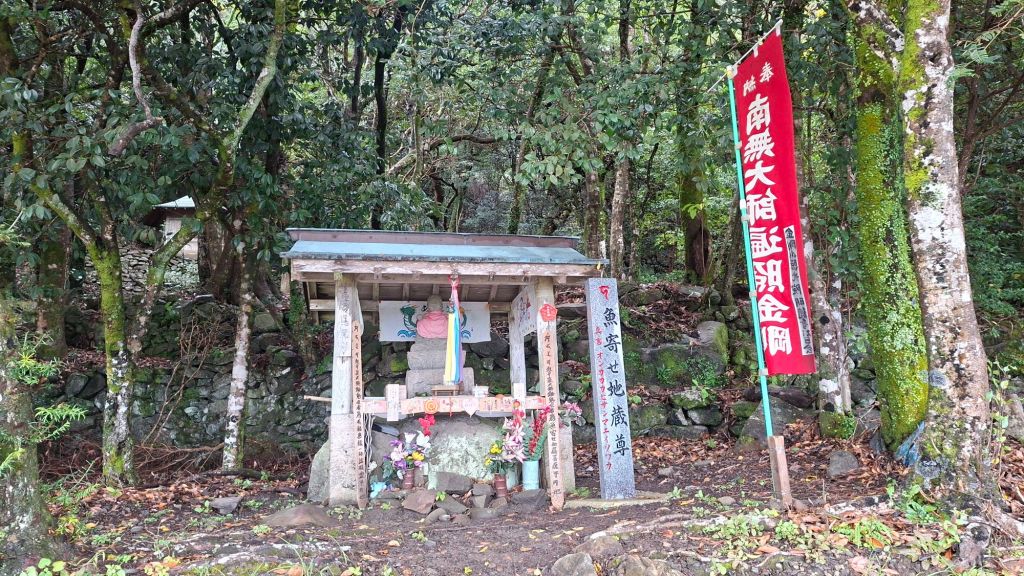
With the next and only other pilgrim I meet there are no polite exchanges. At this point, both of us are at exactly the distance from where we need to go, where a few minutes’ delay could be disastrous. We pass with a friendly “Gombatte!”
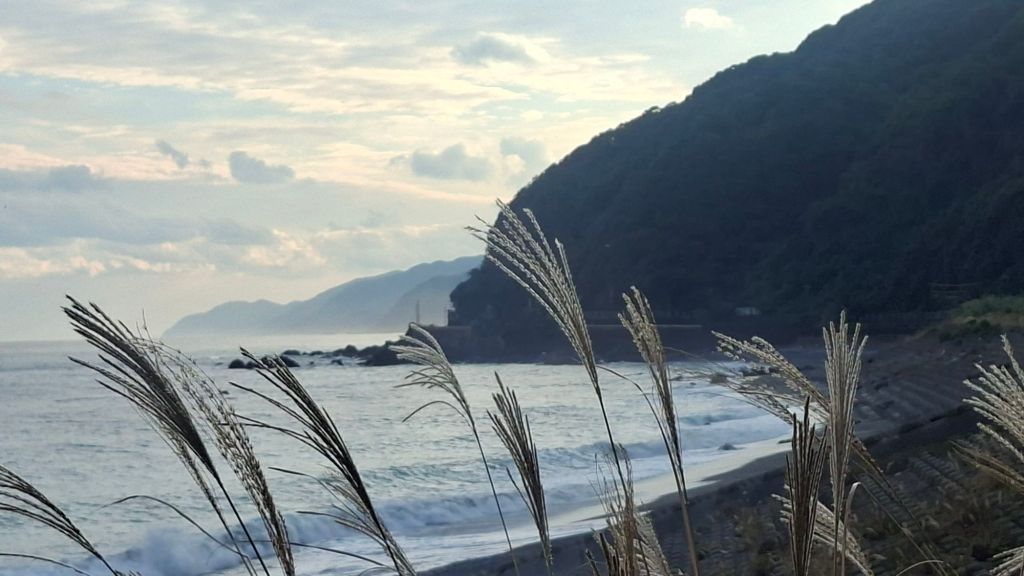
Despite my best efforts, I will not reach the inn before dark. Loo stops when you’re dressed in full wet weather gear can be complicated long breaks. So that’s what I’ll blame today. Otherwise, I’ve been making pretty good progress despite the rain, or possibly because of it.
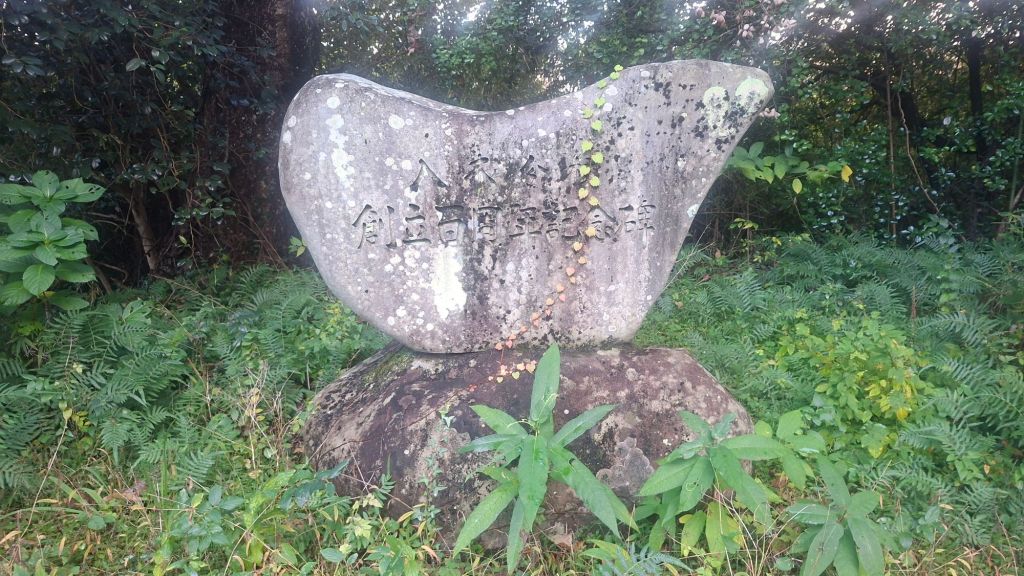
When I get on the bus for the last few kilometres down the main road, I’m happy to see a pilgrim’s hat in front of me, which belongs to a fellow pilgrim who is staying at the same place as me. It turns out, however, that he was not cheating. He’s on his sixth Shikoku pilgrimage and walking it in the other direction. He was just getting the bus back after having completed his full stage because he wanted to stay in this inn. I feel a little disappointed.
This inn feels a lot more modern than most of the others I’ve stayed in, and it’s a family affair, not just a Mama-san, Papa-san deal. It’s the son, I imagine, who greets me at the door, speaks some English and guides us both around. It’s good having the parallel translation guided tour; I pick up a few things in Japanese.
Dinner, he says, will be at the ungodly hour of half six, or thereabout, and this is where old Mama-san comes in. Son is front of house, but Mama-san works magic in the kitchen. Everything is late. She’s not as fast as she used to be. But she sends out the occasional smile from the kitchen and the most extraordinary dishes.
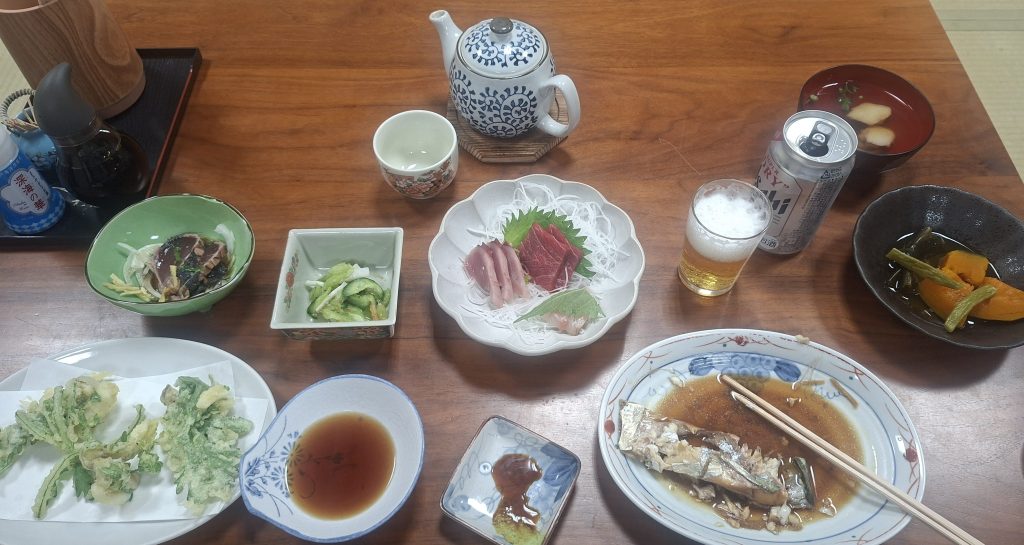
I think there are at least five different fish on the menu tonight. I enjoy every single one of them: bonito, mirror dory, tuna, and two I cannot remember. The dutifully son come out especially to show me pictures and translations.
My fellow pilgrim makes a big effort to talk to me in English, which I appreciate very much. He has worked out that referring to the guidebook and talking about routes is an excellent way to communicate with foreigners. That’s what six pilgrimages teach you, I guess.
Tonight I hear the sound of waves crashing on the rocks outside my room. Tomorrow, I am promised, will be sunshine.


Leave a Reply