Shikoku 88 Temples – Day 20
Sudachian to Ido-ji (Temples 13-15): 27km
No fish for breakfast. Toast, cheese, jam, coffee. And our three lovely hostesses hanging around to chat.
After a very tough day with very heavy rucksacks yesterday, Eva and Agne are getting a lift to the bus stop to avoid the first mountain. And they chat with one of the women who works here.
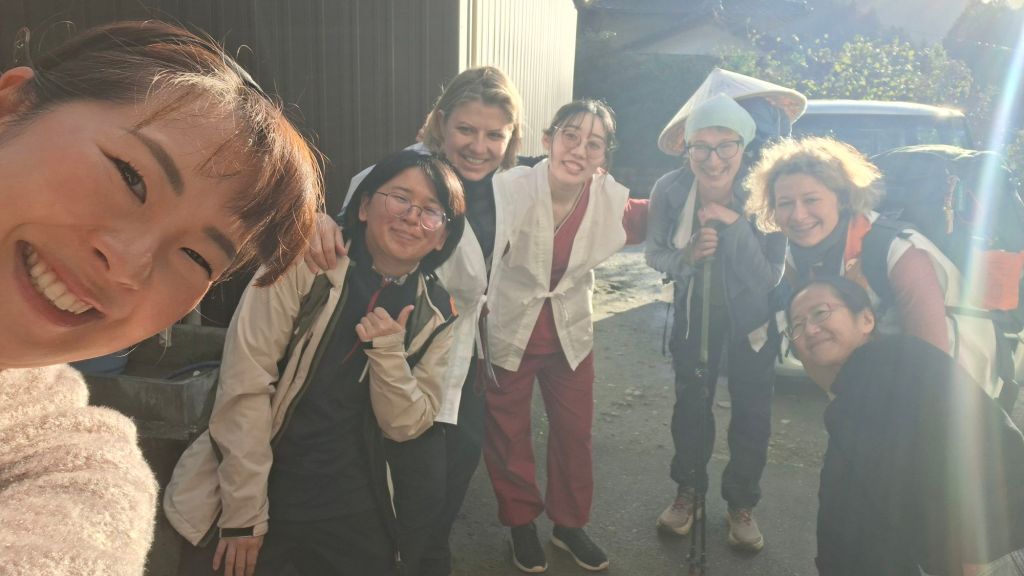
“I lived abroad in France for a,while,” she said, “and it was difficult when I came back. I felt like an outsider. But now I’m here. I’ve been here a few years and I have friends and it’s better.”
This place does feel like an oasis of outsider Japanese women. They seem to delight in the international nature of their inn. I go online and discover this inn too is a social initiative, bringing young people into rural areas, where they can host travellers and practise English. This initiative has also ensured the inn, in an area of few alternatives, stayed open when its original owners aged out.
The support to travellers involves a very thorough waving off. It is surprising how often I get waved off the premises. However, the young women of Sudiachan surpass them all. It is a very long drive and every time I look back, they are still all there waving. It is a relief to turn onto the road and free them from their waving duties.
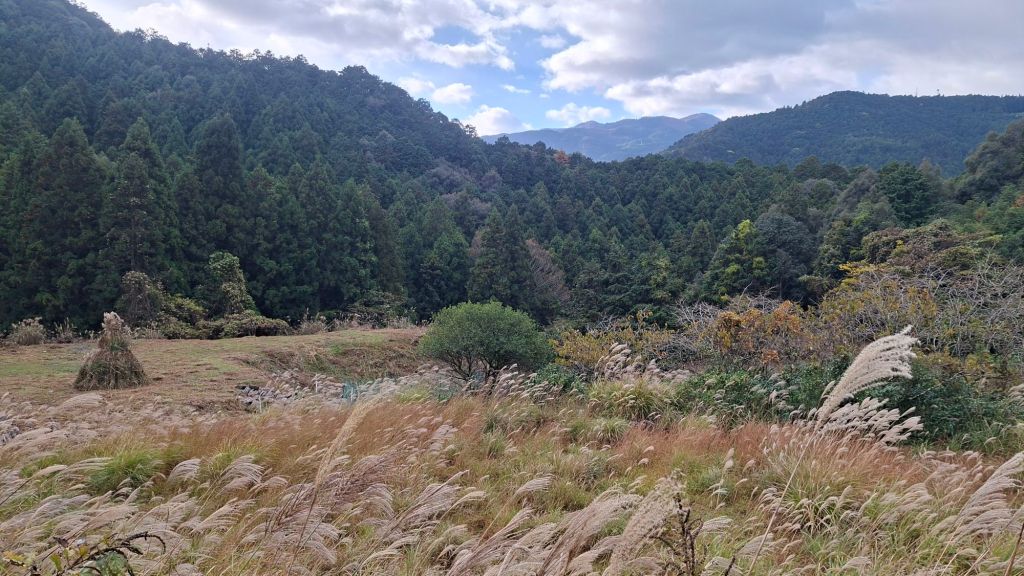
The Lithuanians were right. It is a difficult mountain to start off. I know now that a purple path means toug. This one feels like it should be a purple, but still it’s marked as intermediate blue.
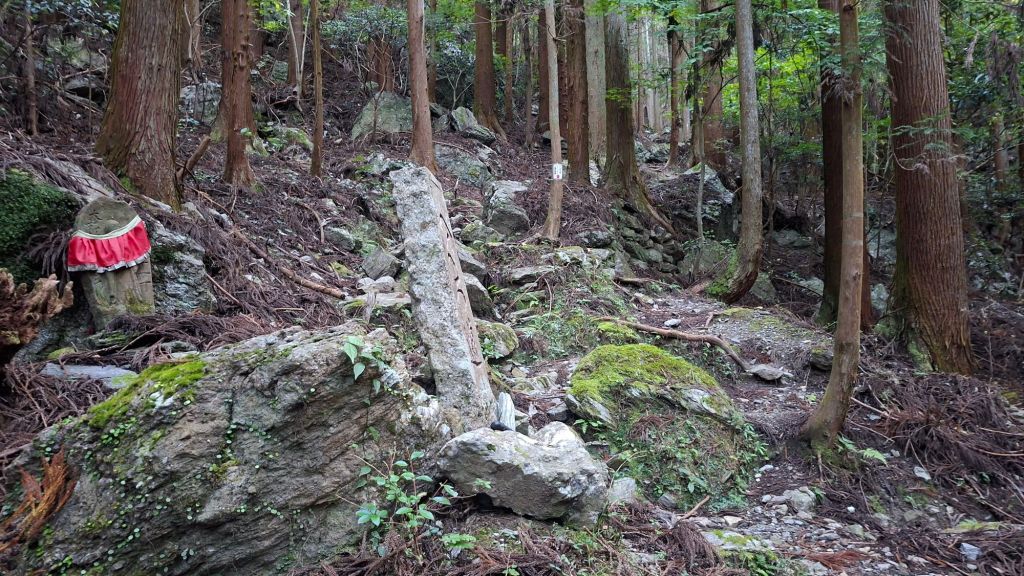
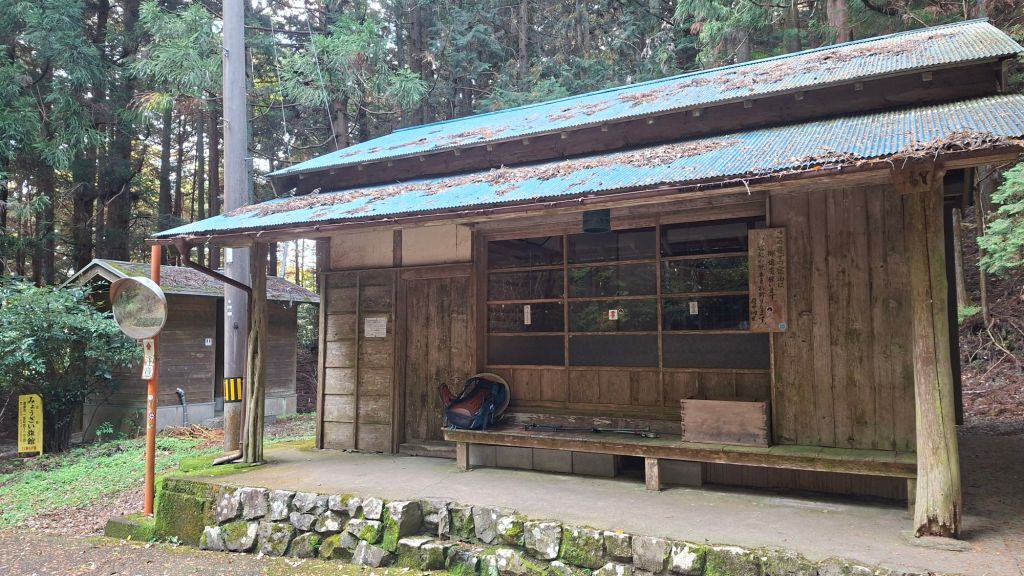
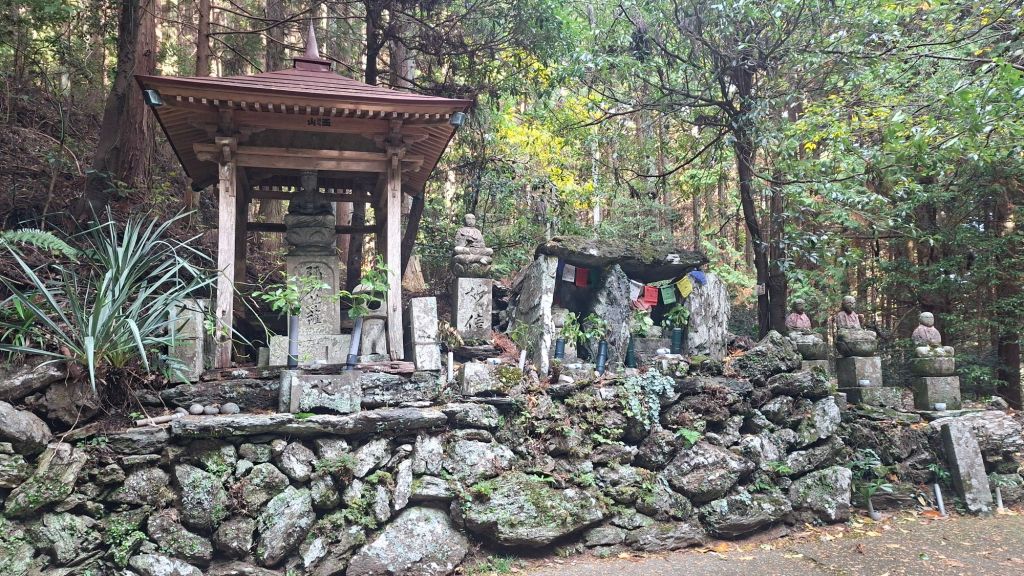
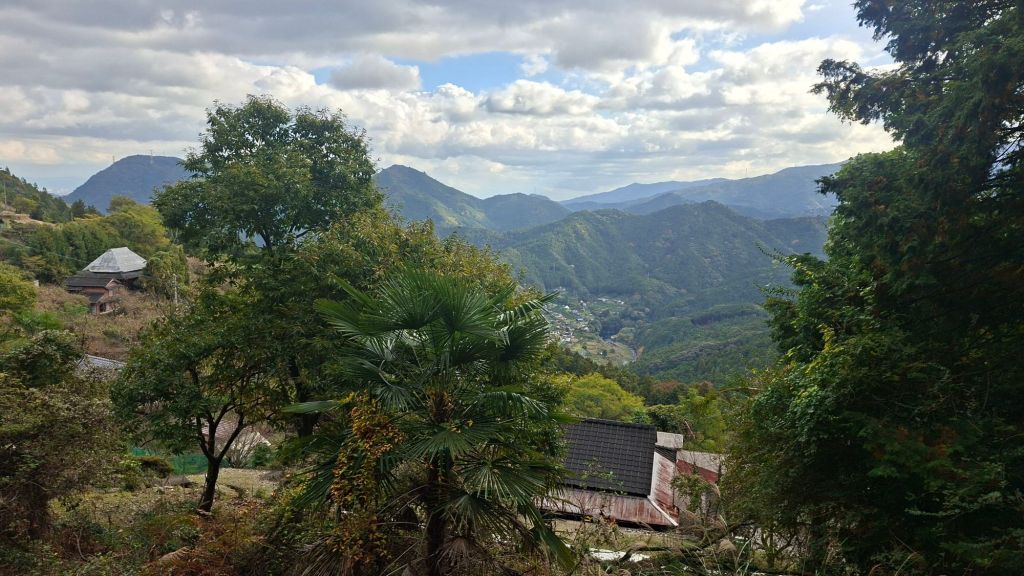
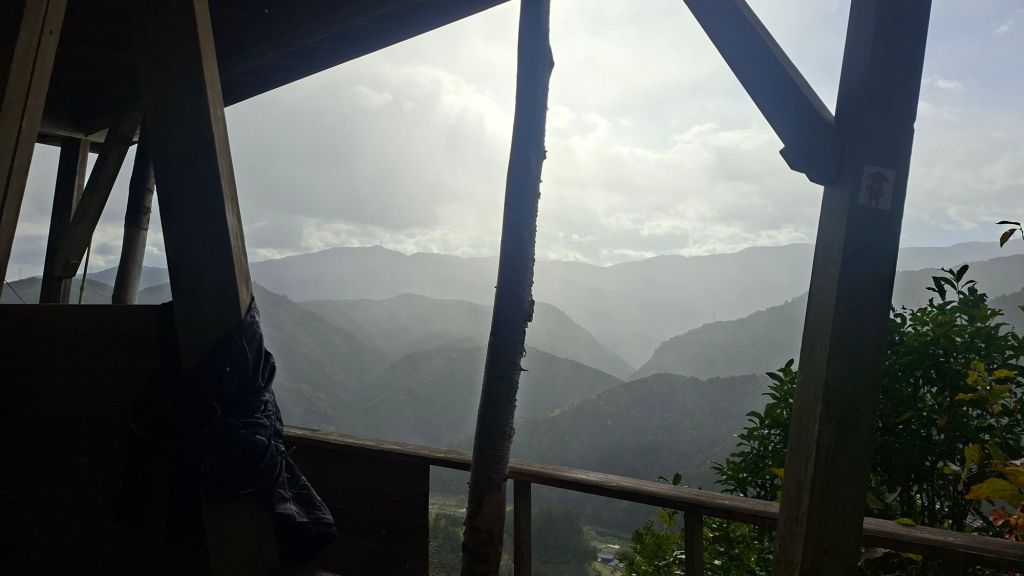
Once over the mountaim, I stop for a hot coffee and then return for my sticks, which I left at the last loo stop. Luckily, not too far behind, and there is Tomás. Rather surprisingly, behind me. He’s been trying out various routes and is having a go at the purple one. I try to warn him, but he does climbing in the Pyrenees, more suitably dressed than he is today I expect, but this is how we learn.
We chat for a while, and I discover his father’s an American, and his total lack of accent is no miracle of language learning. We talk about why he is walking Shikoku. As a spaniard, he wants to know how foreigners walking the camino feel. A good reason. I then give him an excuse to go on ahead. He’s going to need the extra time and I need to dawdle and do non-mindful things on my phone for a while.
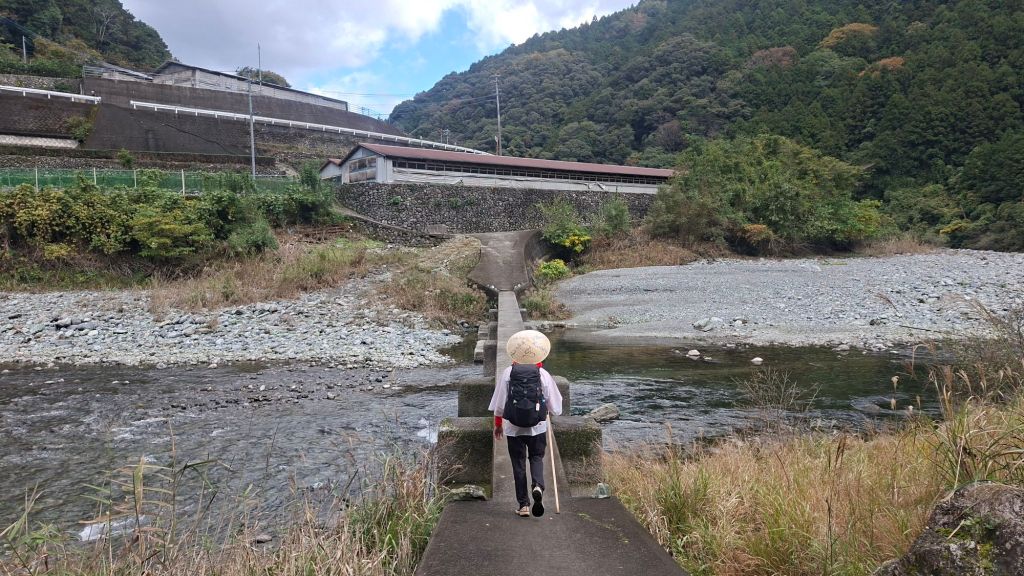
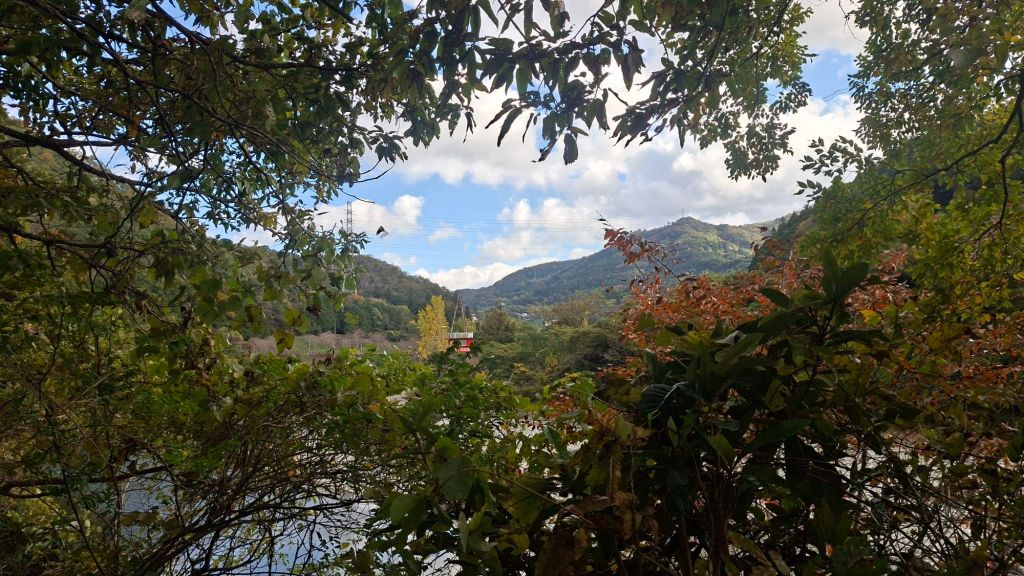
From this point the path wanders along a minor road by the river. The water is so clear that on the far side you can see the rocky riverbanks through it. The mountain doesn’t stop when it reaches the water’s edge. On the near side, little stone beaches have formed pools for ducks. Flocks of cranes are circling above
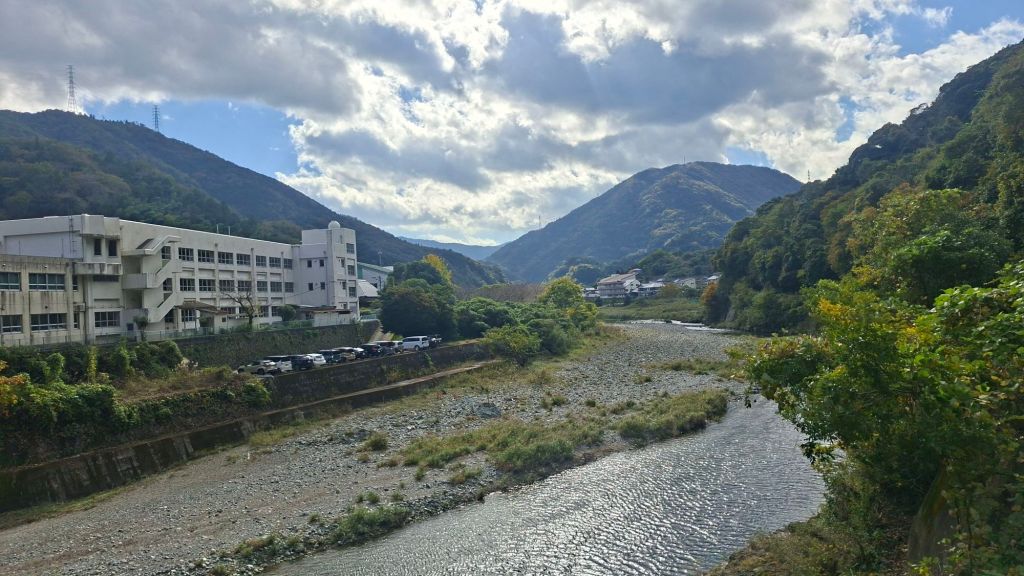
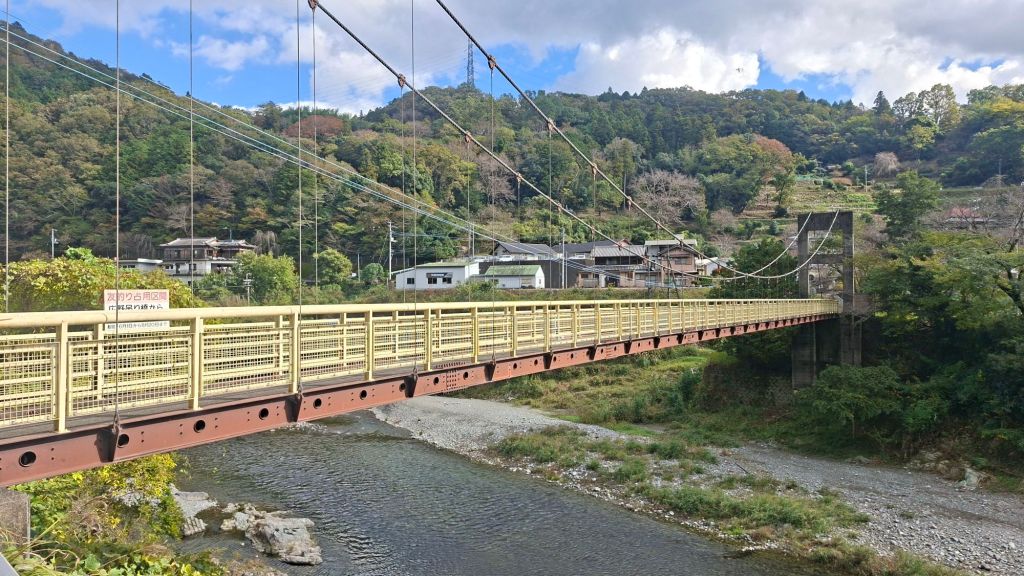
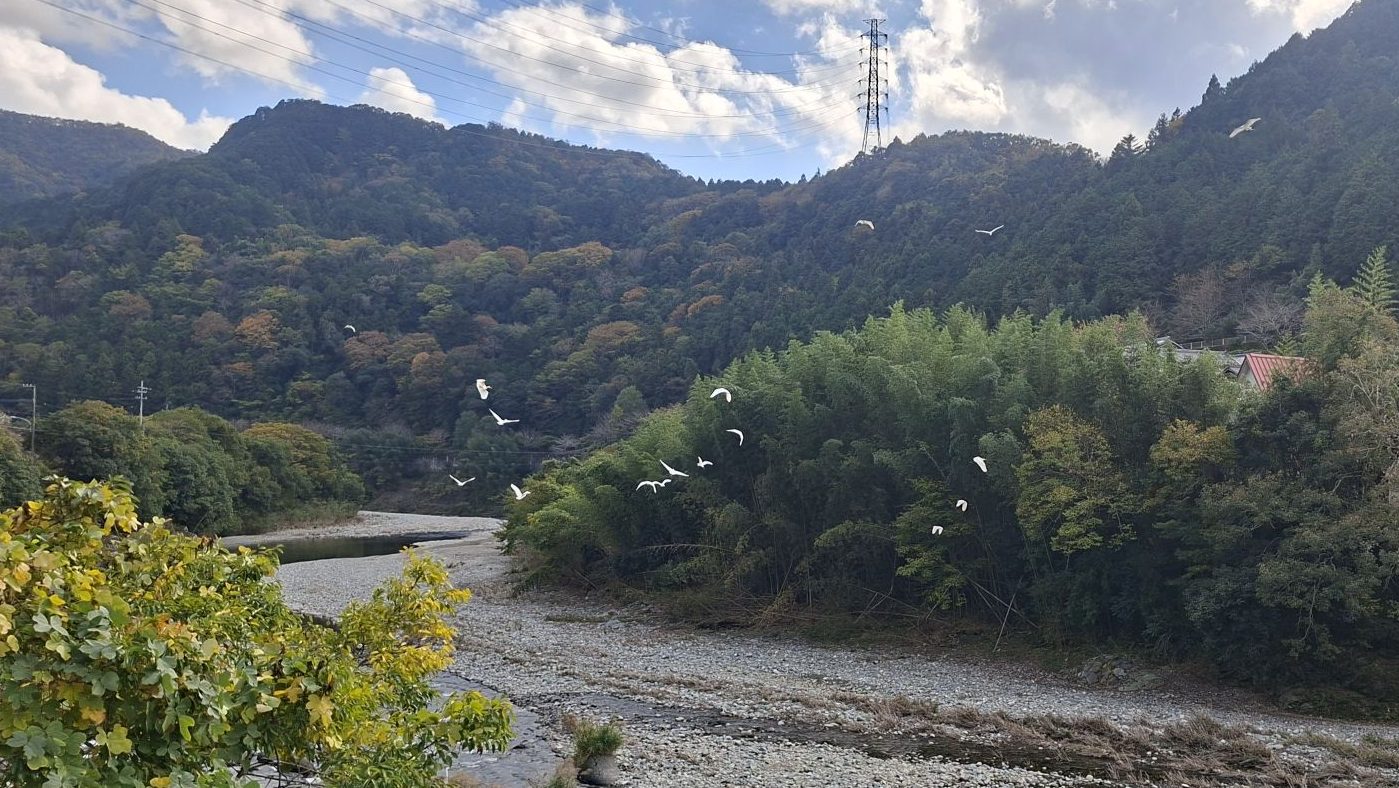
Halfway along, there’s a crossover to the main road on the other side of the river. The view is better from here and I’m amazed to see a flock of birds of prey flying overhead, Japanese kites, I discover. They’re rather disquieting. I remind myself that I am not going to be mistaken for a vole.

Temple thirteen. There’s Lena. Now she seems happy to see me. Pilgrimage companionship has slowly developed over several days. Last night we chatted in Sudachian inn. Today she has time to kill before her inn opens at three. So we chat.
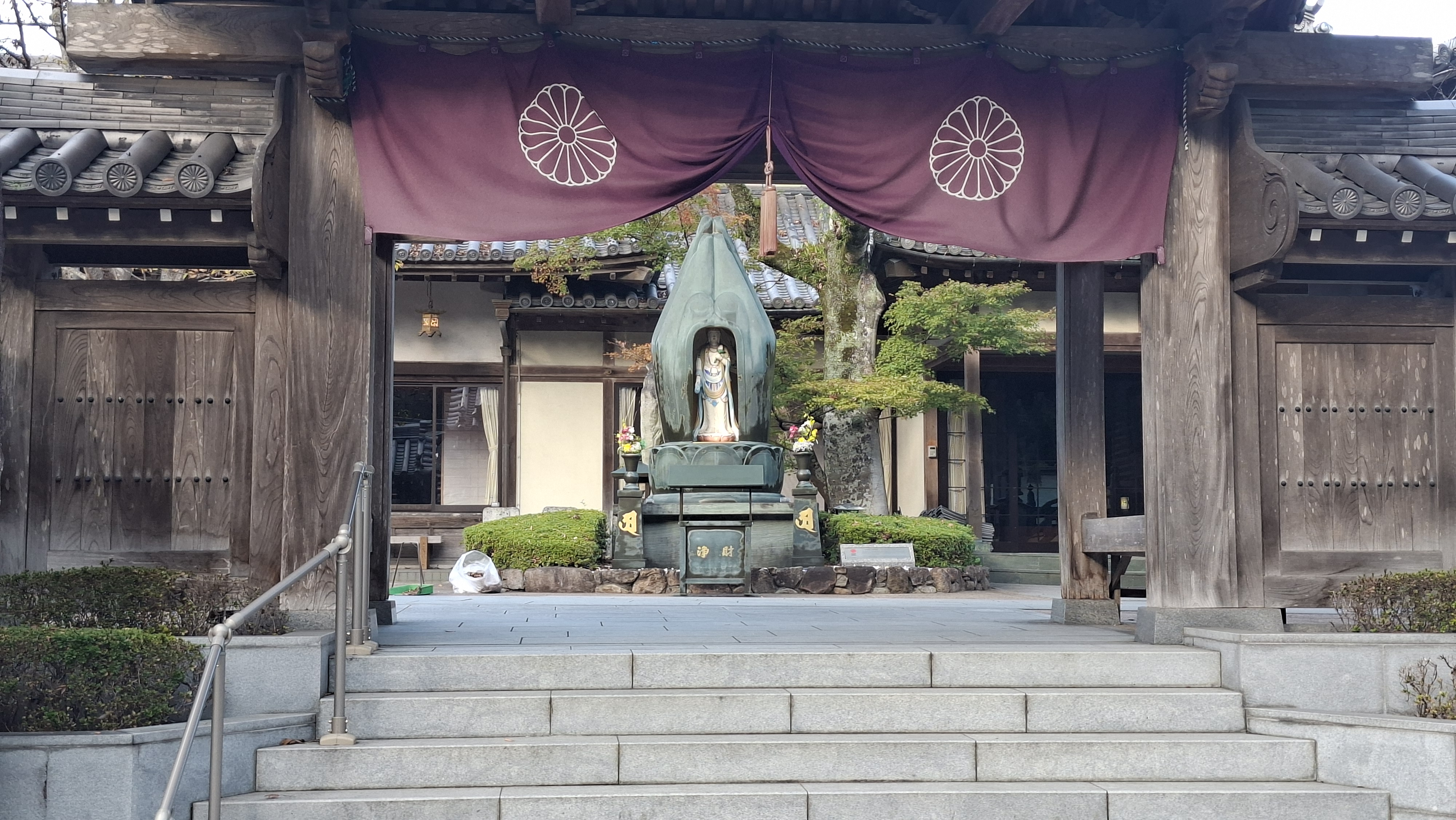
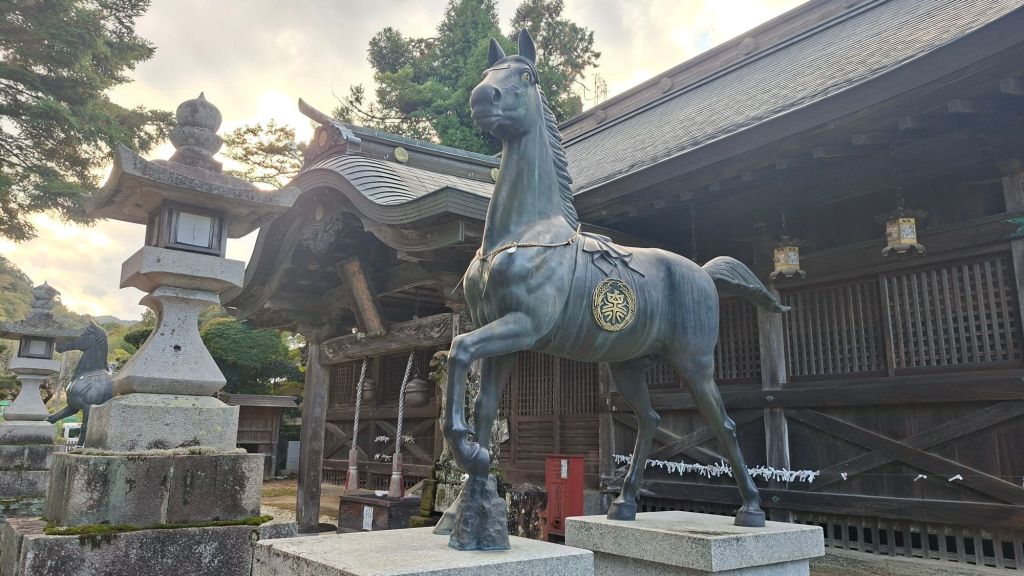
My stages will be slightly longer than hers for a couple of days and there is a good chance we will not meet again. I decline a big goodbye, then change my mind. A big goodbye ensures you’ll meet again. She gets it. She’s another old Camino hand.
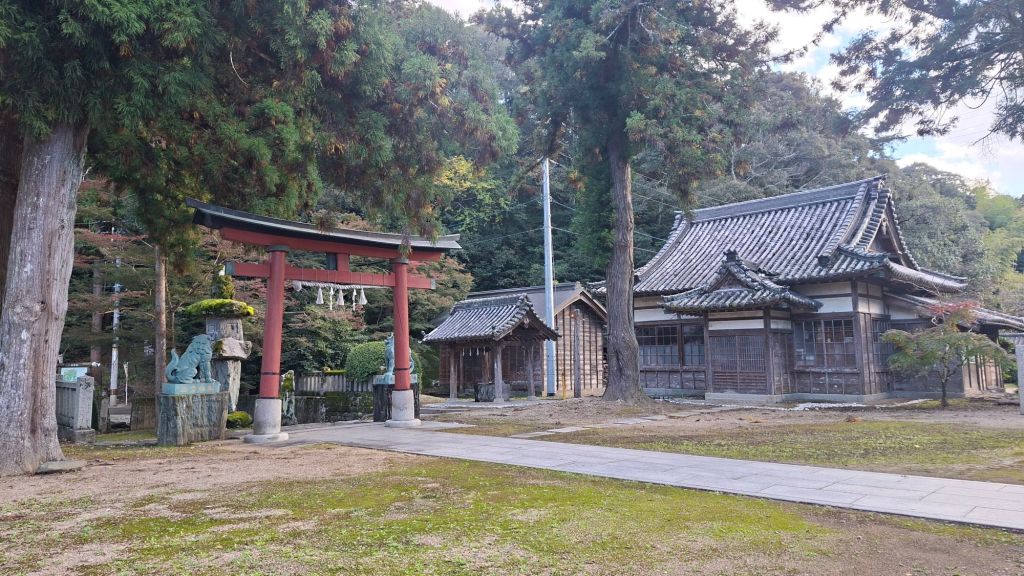
I’m alone for the last one, two, three, four… temples. Well, that’s clearly never going to happen. I decide to try for three and do the one by where I’m staying in the morning. I manage two.

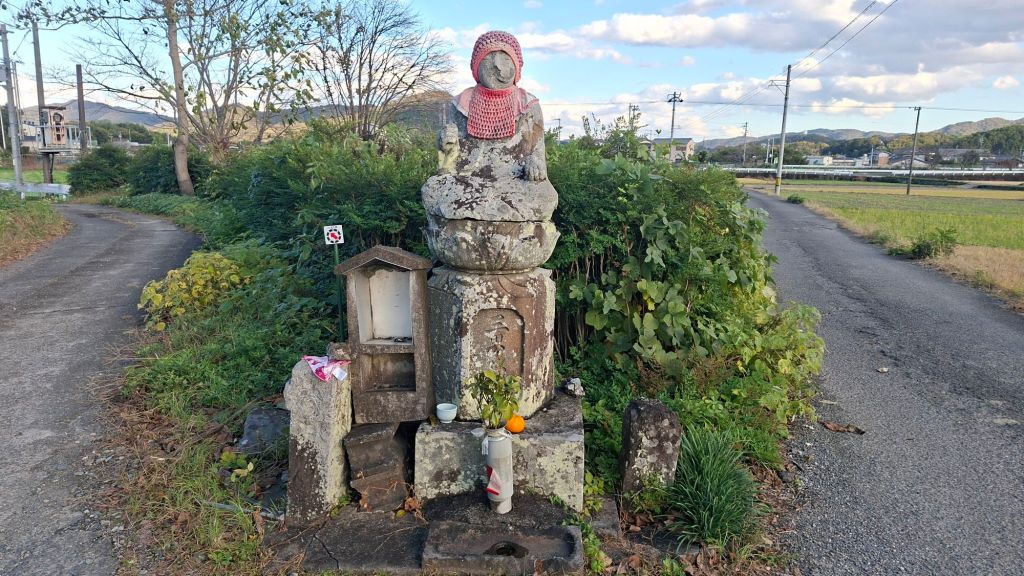
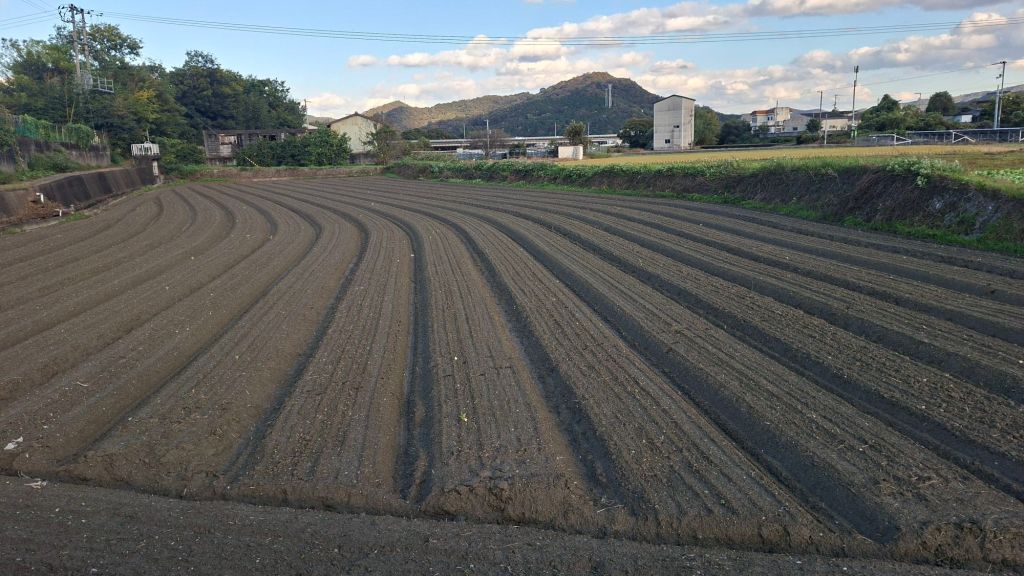
I look at the time. I might be able to squeeze in one more. I walk as fast as I can on the out-of-town roads to Temple fourteen. This one has a children’s home attached. I’m glad to see that some good is being done, but no time to linger. Loo, cleanse, bell, candle, incense, prayer paper, coin, repeat, stamps and go. I waste a few precious seconds admiring the rocks that form the precinct floor, but save minutes by skipping the chant.
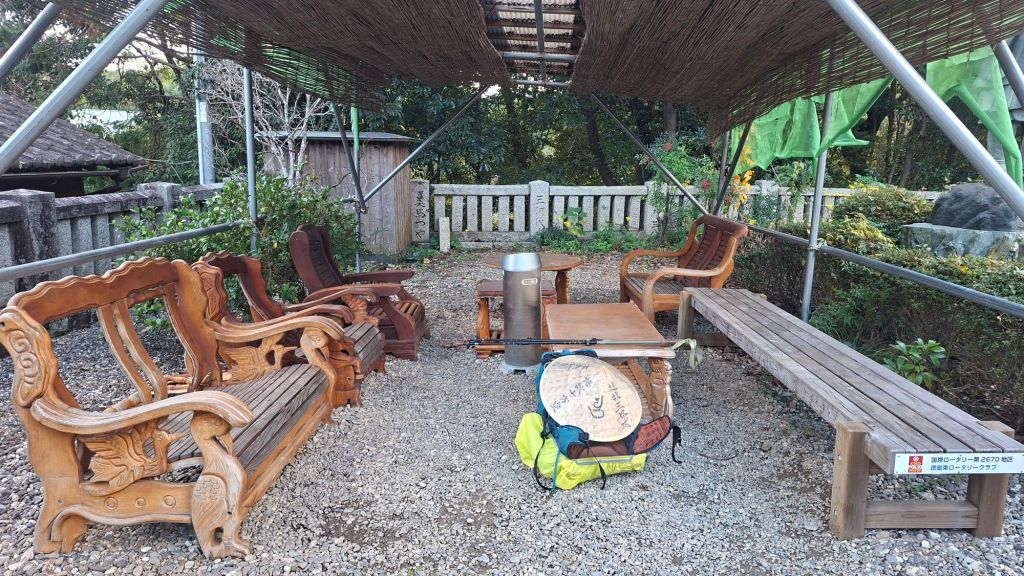
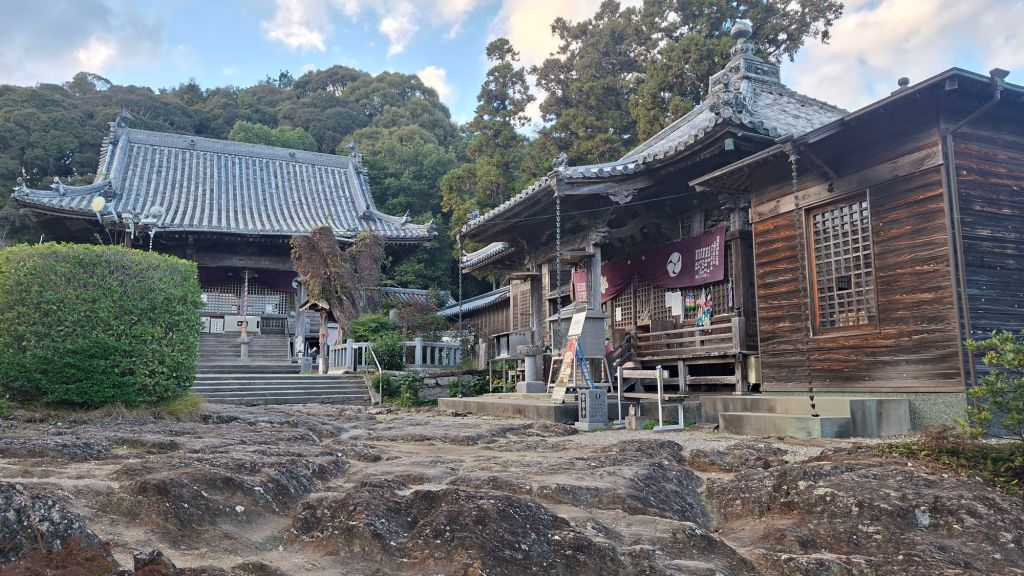
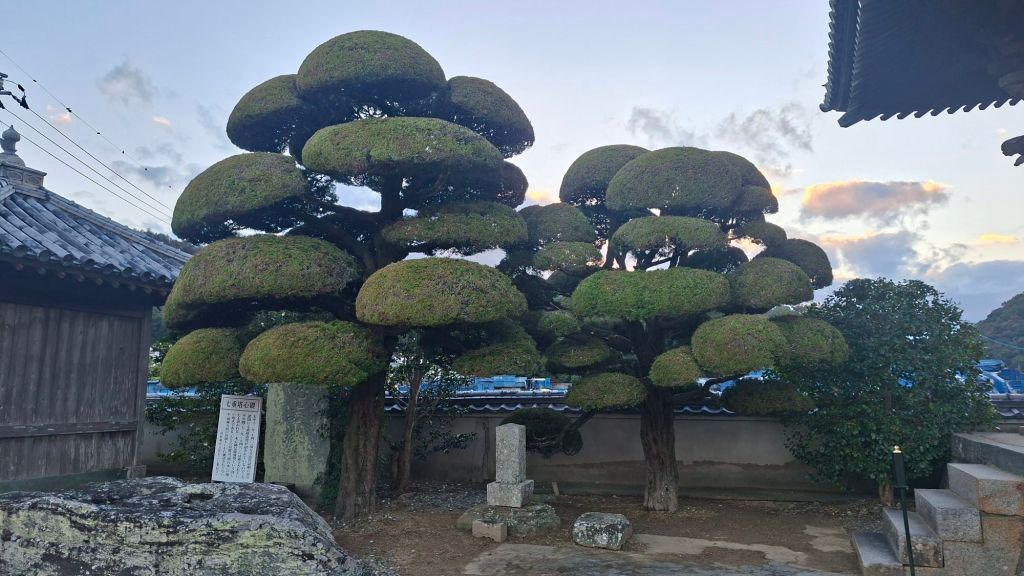
I manage Temple fifteen. It completely empty, as it’s an unassuming little place and it’s late in the day. It’s another quick round and the only thing that sets me back is the time needed to look in wonder at the precincts extraordinarily poodle-trim trees.
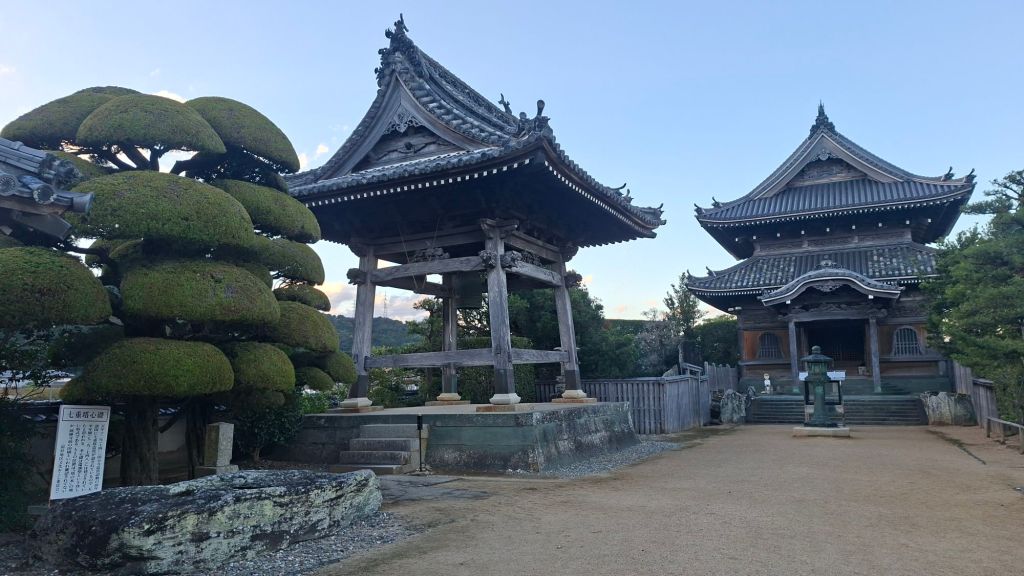
By now it’s getting dark, so dark I don’t even stop at the Family Mart convenience store. I find myself taking shortcuts on paths around rice fields and walking down almost dark side streets. At least I manage to get through on the fourth attempt to the landlady of my inn to tell her I’ll be late. “Moshi! Moshi!”
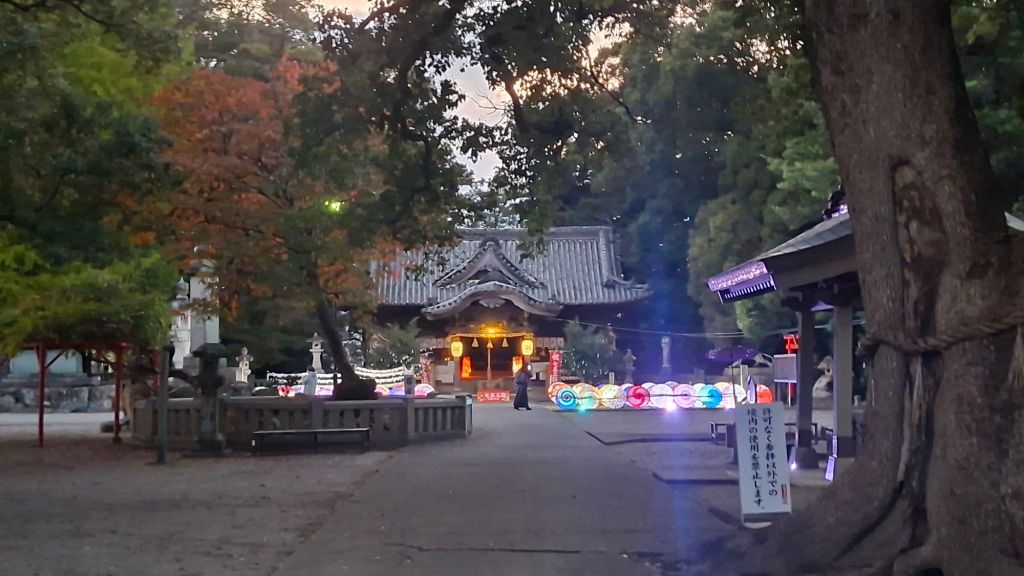
I find myself standing in the dark outside Temple seventeen, wondering where I’ve gone wrong, before realising my inn in the grounds. The landlady lets me in to a house that is perfect in every way. Not a scratch on the wooden-panelled walls or the parquet floors, tatami in the bedroom, beautiful sliding door walls, even a fresh flower arrangement in the corner of the room.
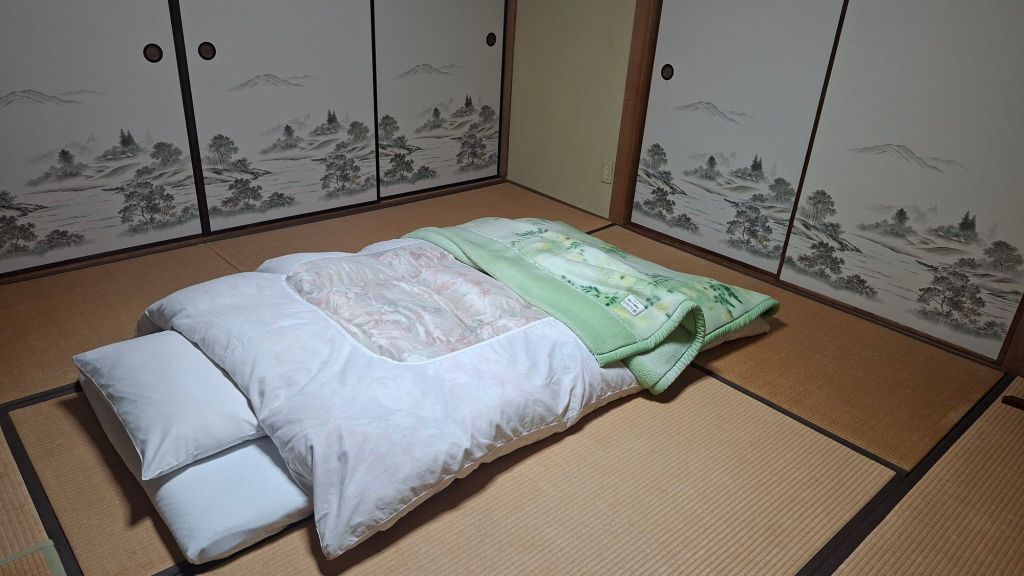
The landlady herself is beautifully turned out, hair and gown. And when she serves us dinner, she can sit on her haunches on the floor looking as elegant as the women in the old pictures on the walls.
Even the meal is a work of art. Every piece of it presented beautifully. I can barely wait to eat it. On one of the side plates, a mochi made to resemble a persimmon with stalk and leaves, all edible. When I exclaim at this, she tells me that she makes the mochi for every season. She thinks every element through.
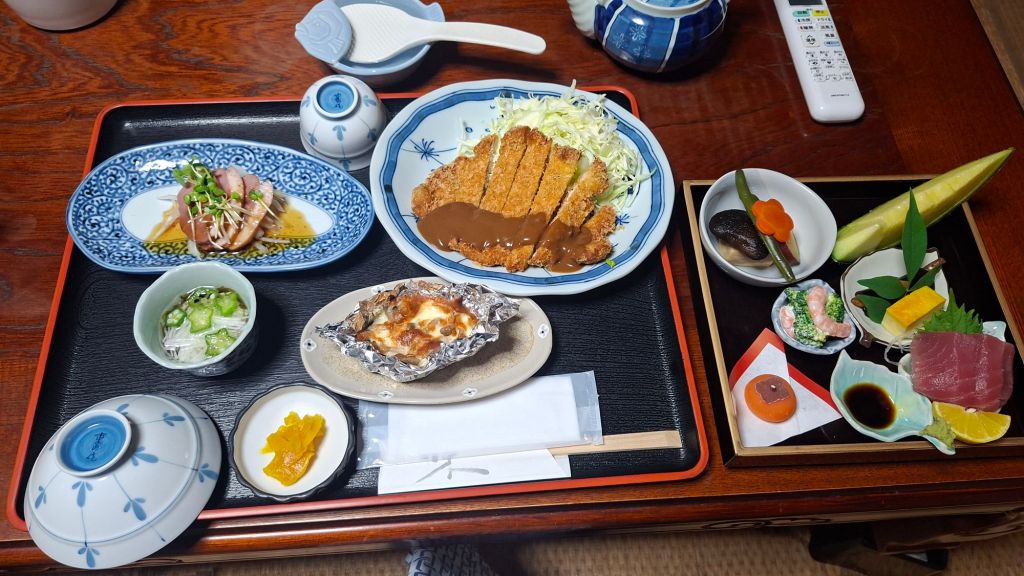
My dining companions this evening are Hiroshi and Kiri (not his full name, but as I stumbled over the fourth syllable, he let me off with two). They speak little English, but I have discovered that by saying I like breakfast natto in Japanese, a conversation can be sparked which is within my capabilities, where various foodstuffs are listed and I can reply “I like it”. I haven’t learnt “I don’t like it”, but that’s a choice. It is easier to learn to like something than it is to learn new grammar.
So now, in all honesty I can give the reply, “yes, I do like raw fish!”
Japan has changed me.


Leave a Reply