Shikoku 88 Temples – Day 12
Kanonji to Zentsuji (Temples 68-75): 20km (+9km train)
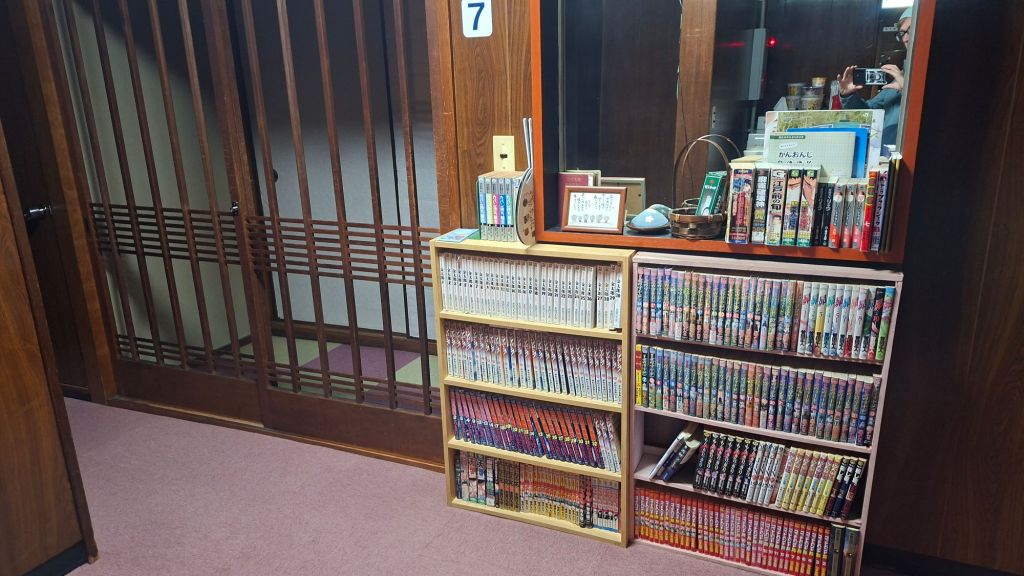
Today I have a tight schedule: eight temples to complete, a strict five o’clock cut-off point for accommodation at the temple, and a very important appointment.
If I don’t make it on time, not only will I disappoint the temple folk (and indeed Hiro, if they call him), but most importantly of all, I will disappoint a seven-year-old on her birthday. Bonnie has been promised a call. And it’s the only absolute immovable in my calendar today.
Here is the plan: three temples, no chatting, but no cutting corners. Then catch a train through the suburbs and on to the next five.
Luckily, I was able to work out all of this plan with the owner of the inn. He’s super friendly and eager to help. He approves of the train plan. “There’s no way you’ll do it otherwise,” he tells me, and he warns me that monks are pretty prompt with dinner too. This is the external justification I need.8
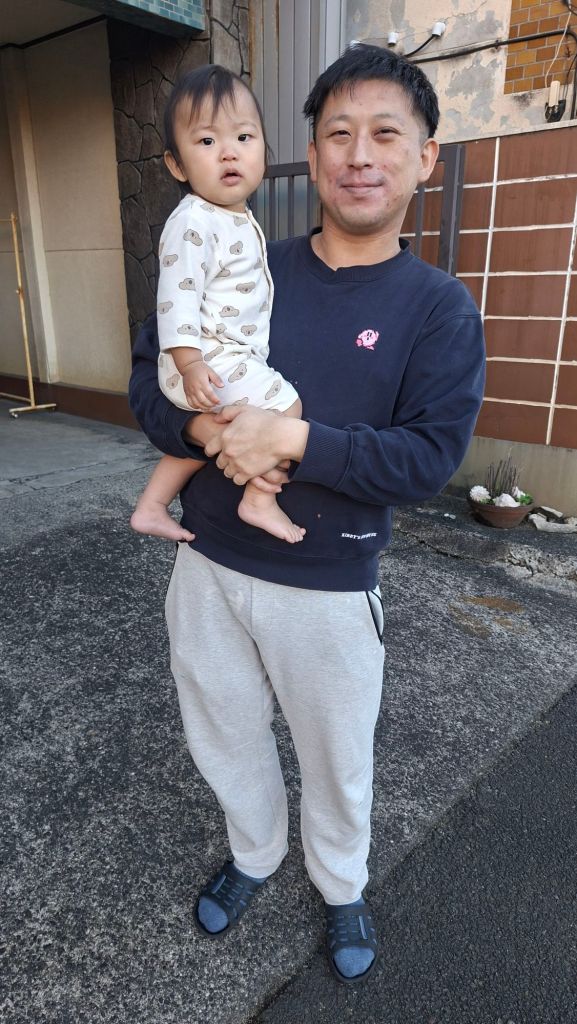
And so he ensures I’m at the door at quarter past eight, ready for temple opening time, and waves me off down the street with his baby in his arms.
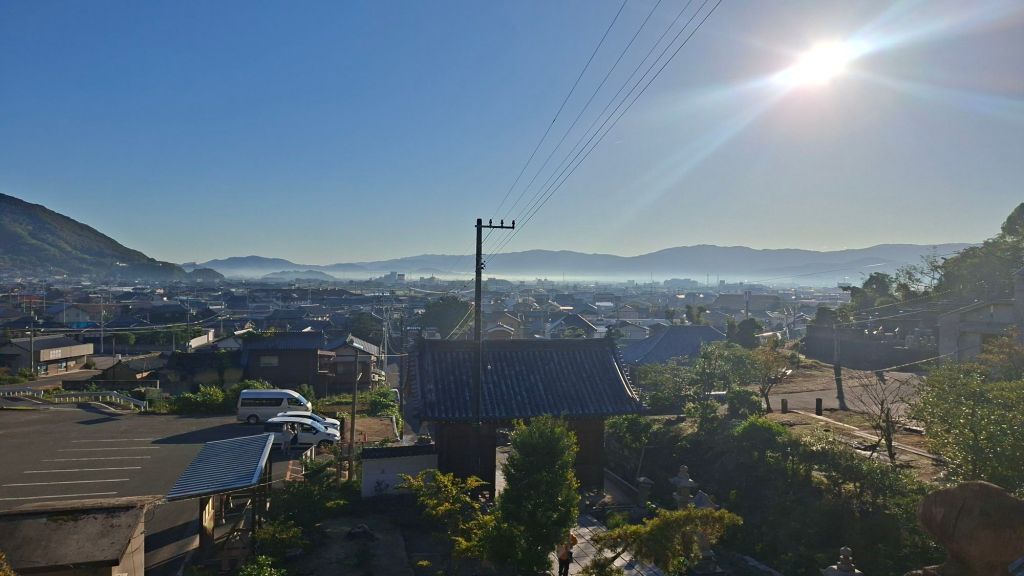
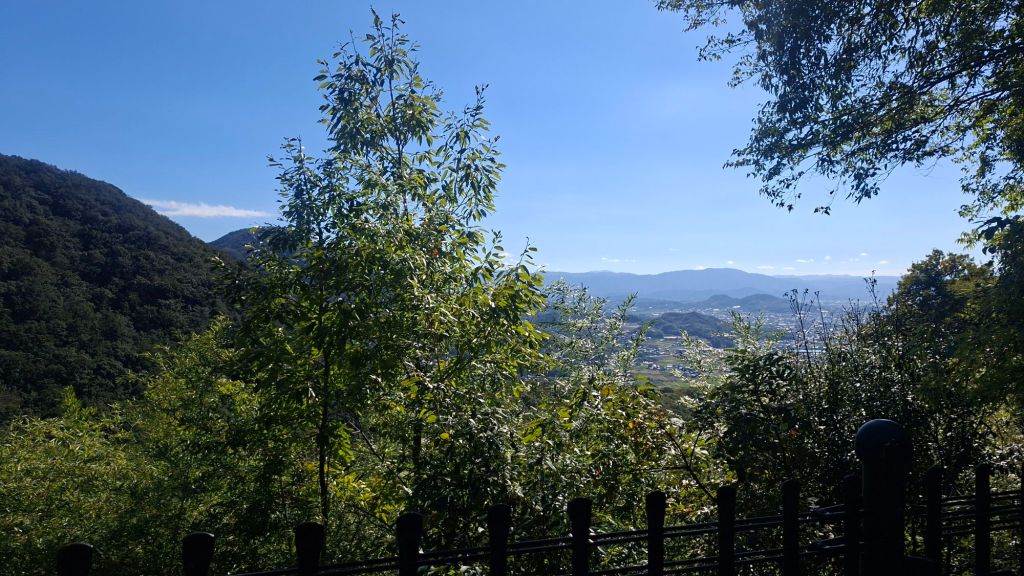
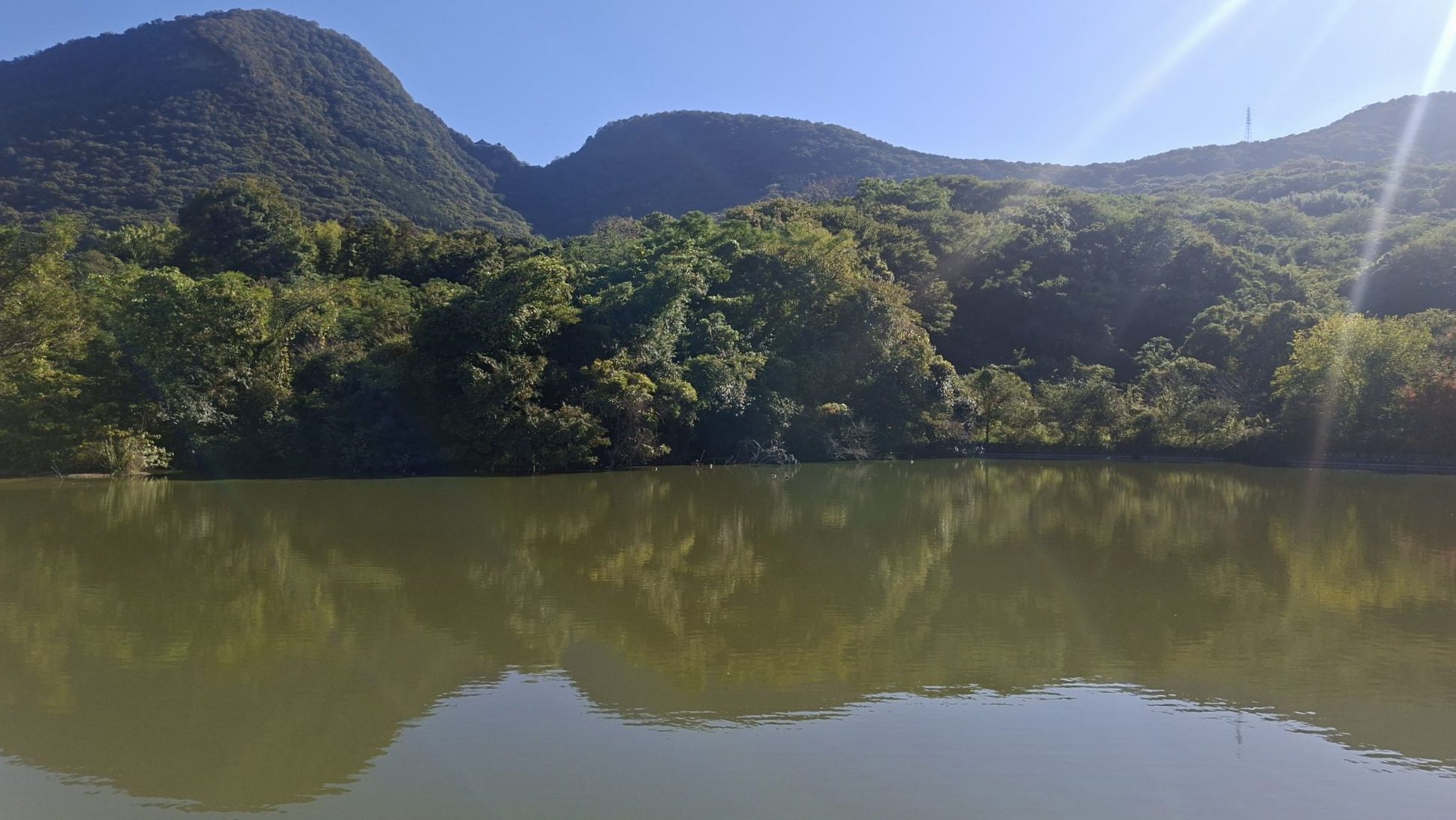
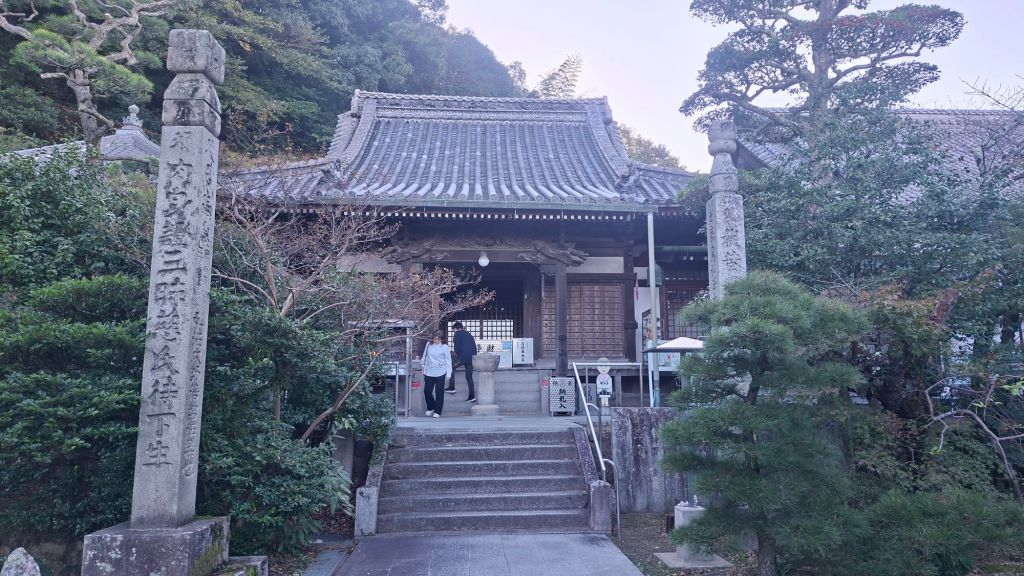
Temples 68 and 69, rather confusingly, and very handily, occupy the same site. They’re beautiful, but also not so beautiful as to take up all of my time. I decide the top optional temple is prettier from afar and enjoy the views of mist rising over the city instead.
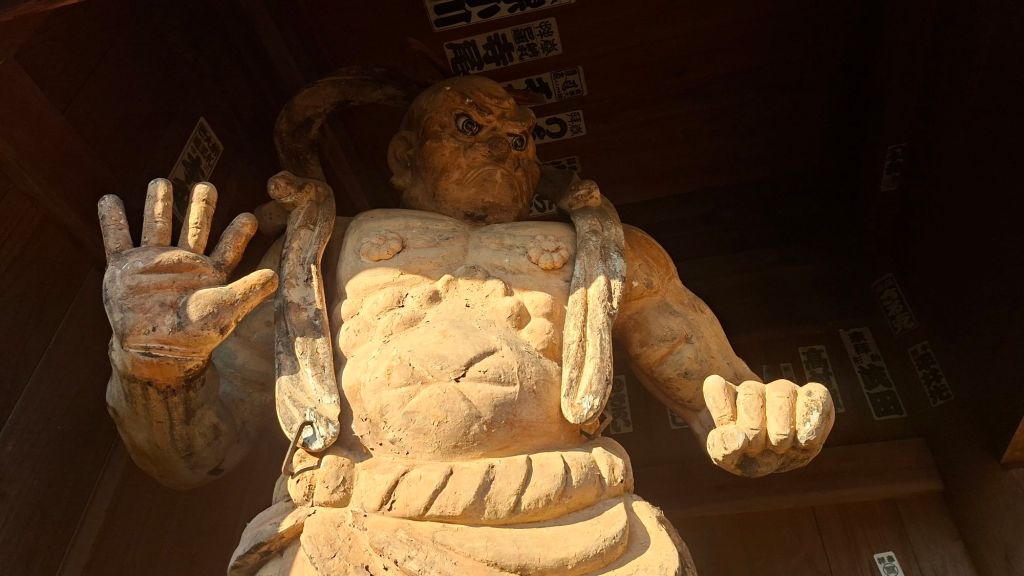
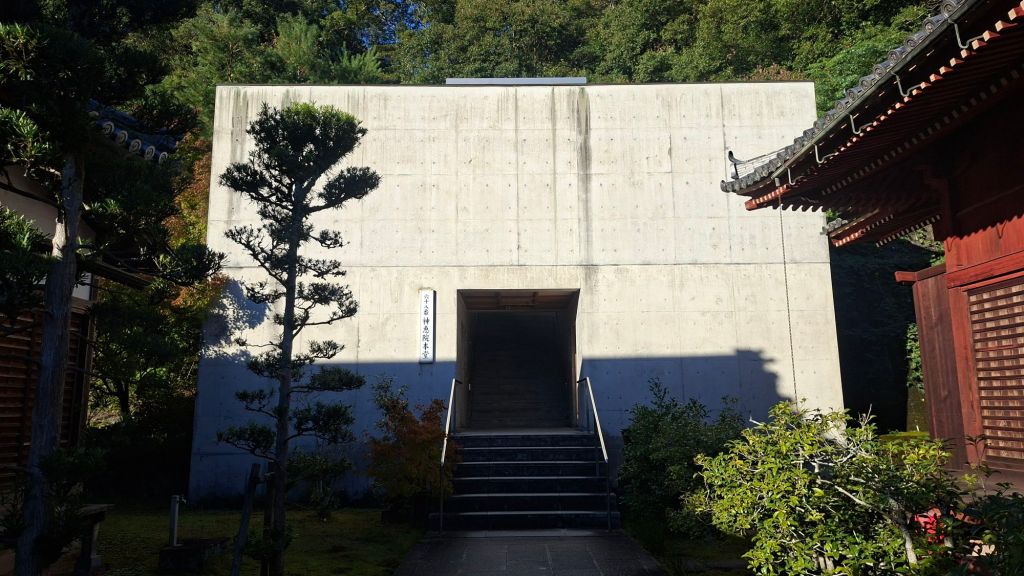
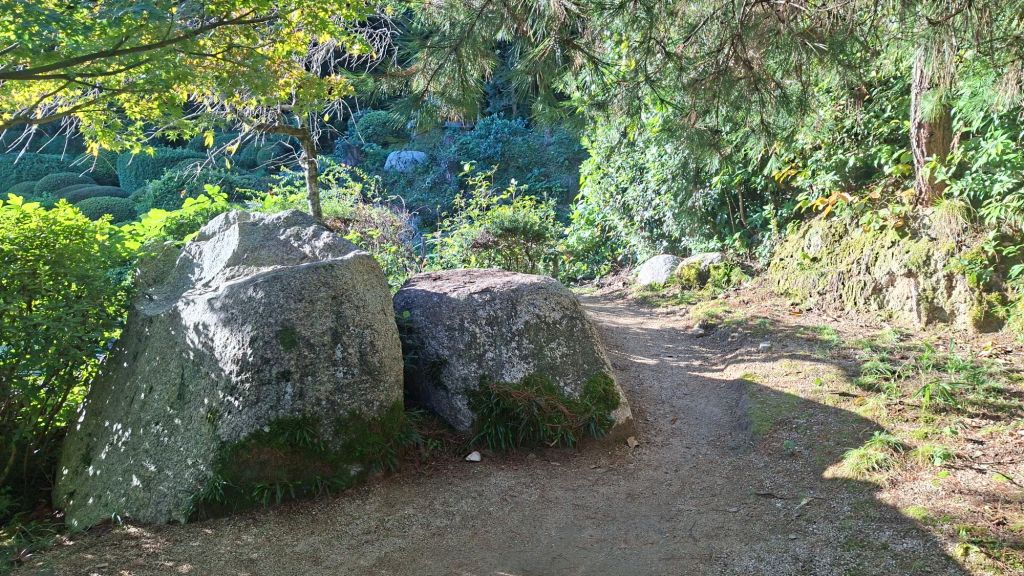
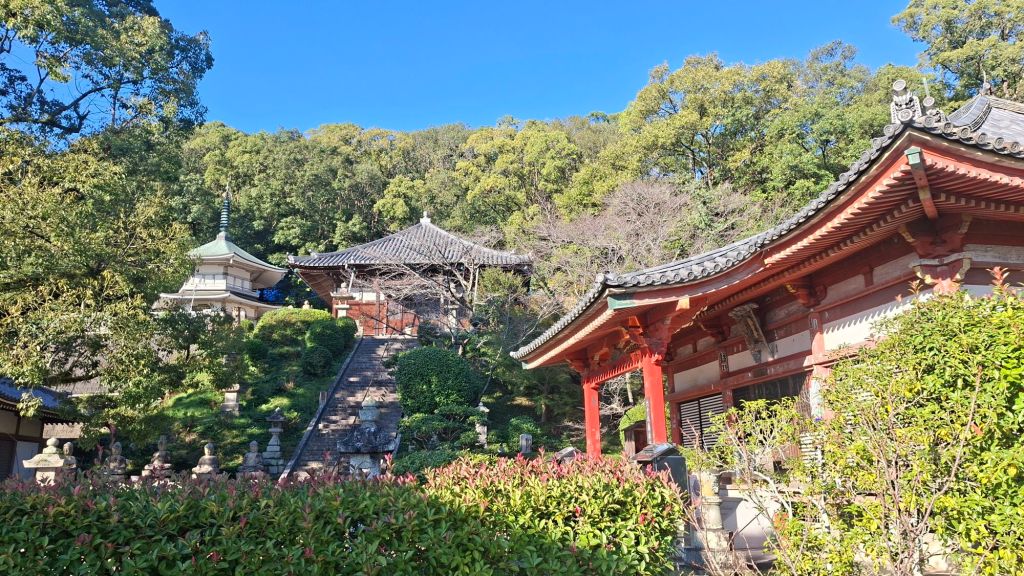
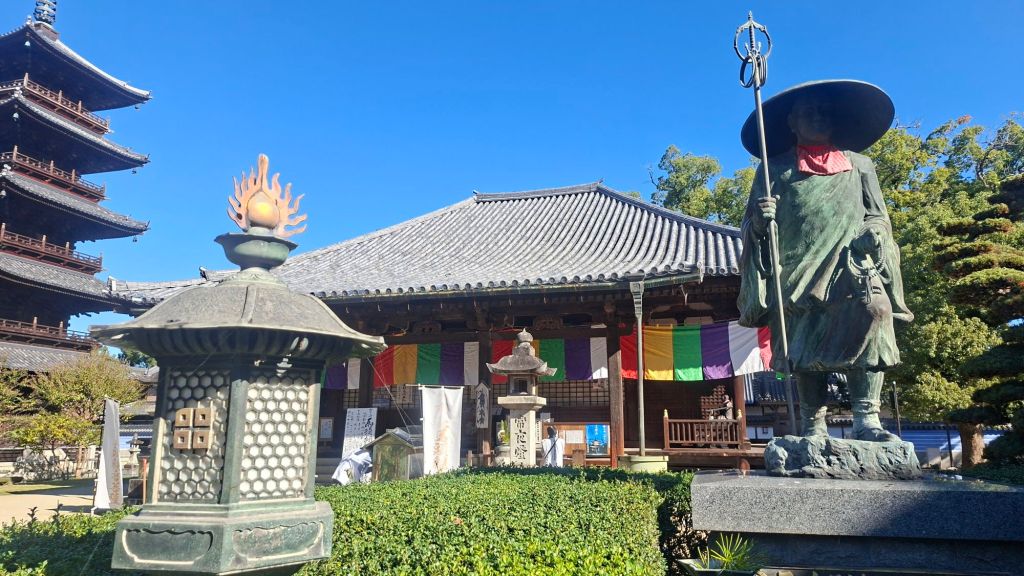
Next it’s a swift walk through the rice fields – one hour to Temple 70, with its famous pagoda. I’ve been lucky today not to bump into any acquaintances to slow me down. The only face I recognise is a man who helped me find the temple office at the last temples. He smiles and nods. Contact enough for one day.
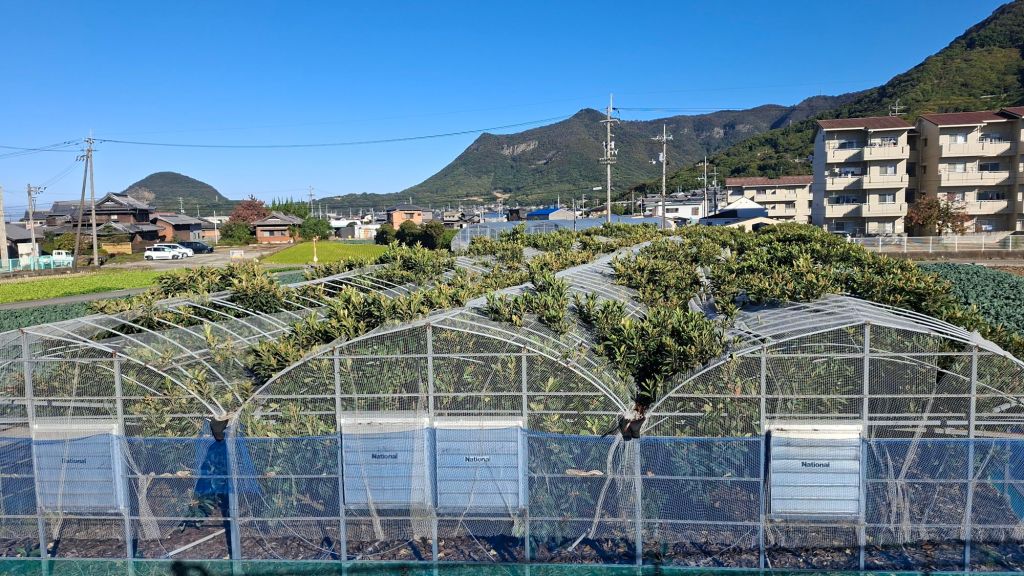
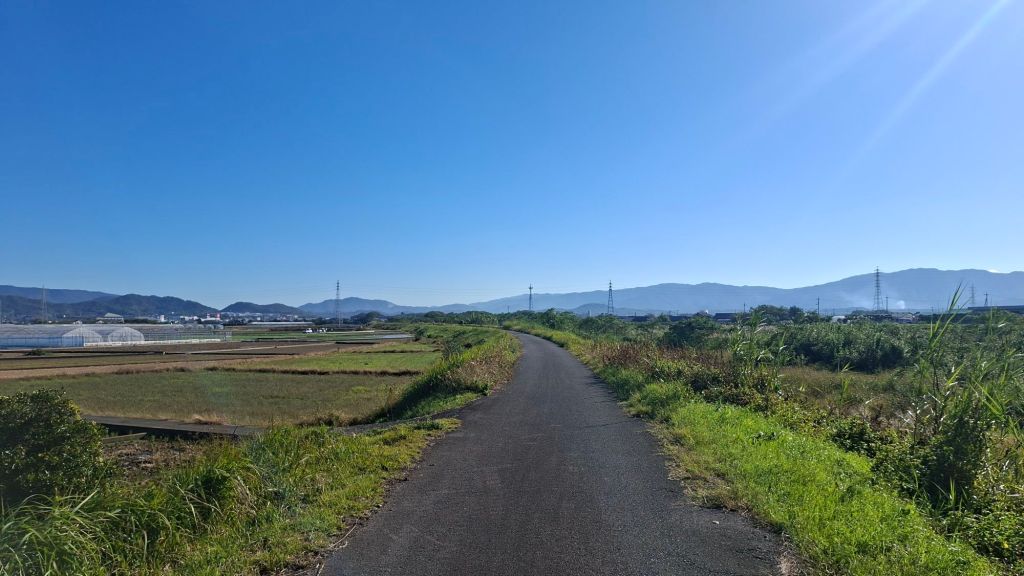
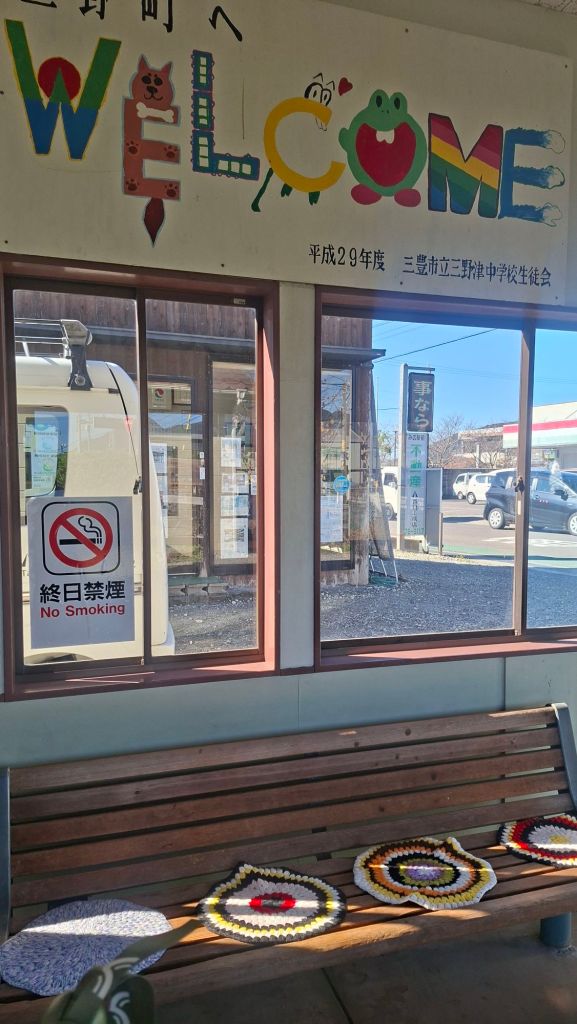
I catch the train with minutes to spare. But having gained an hour and a half with a ten-minute train ride, I know that to relax too much now would be fatal. And I head straight off to Temple 71.
As I start to go up the hill from the station, I meet pilgrims coming down. “So hard, so hard,” they say. “Muzukashii,” I say in Japanese, annoyed that they don’t use one of the few words I know. I note they none of them look like walking dead, so I guess it’s not too bad.
The temple turns out to be a hill on a hill on a hill. When I get to the top of the hill leading to the start of the temple steps, I see Jesse coming down. And for the first time in ten days, he doesn’t mention Jin. But he does ask me if I’ve seen Philip, a Portuguese pilgrim. Philip fails to appear, but I’m glad Jesse’s moved on.
He tells me he was attacked by a gang of finches on the stairs, which I do believe, as I saw a woman holding out her hand to feed them just moments earlier.
On the last and steepest flight of stairs up to the temple complex itself, I have a discussion of ailments with a Japanese woman coming down.
“Knees?” I ask.
“Back,” she replies.
And we laugh. A two-word conversation gets results.
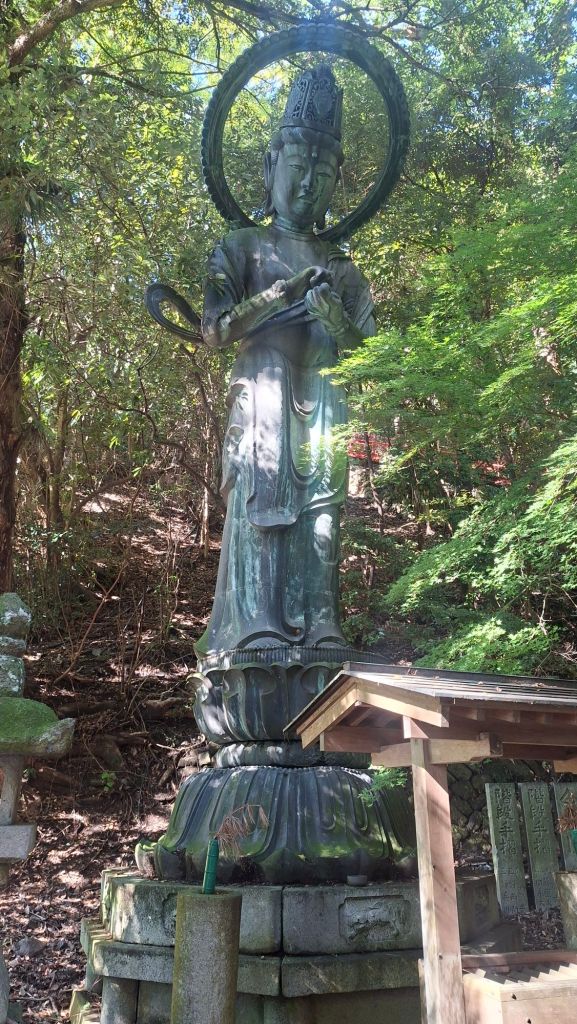
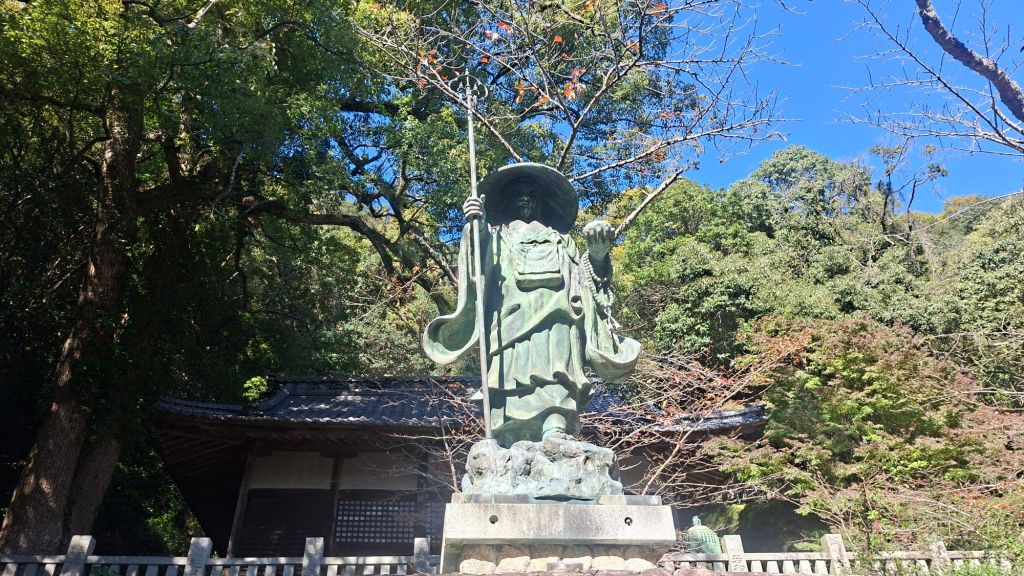
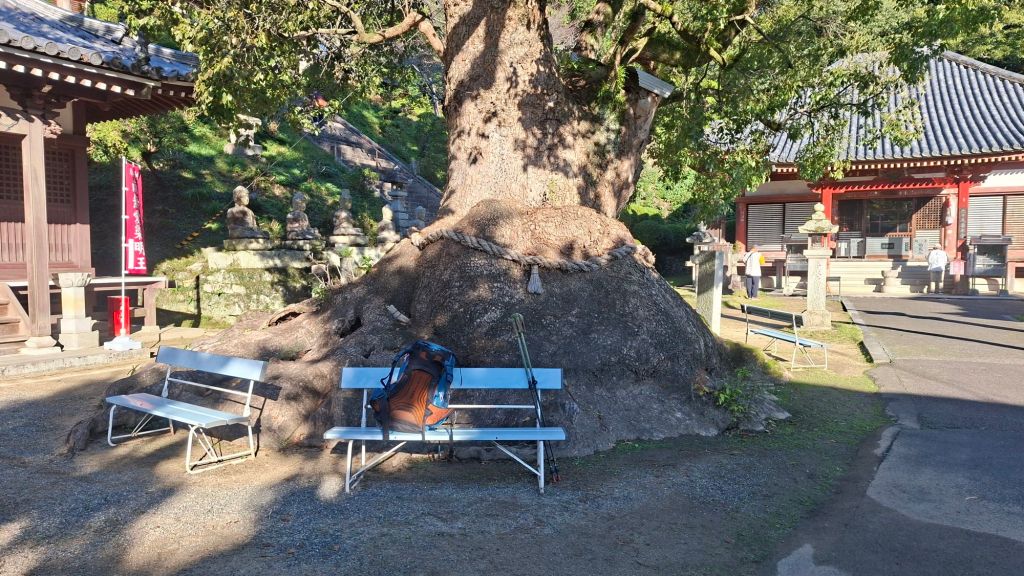
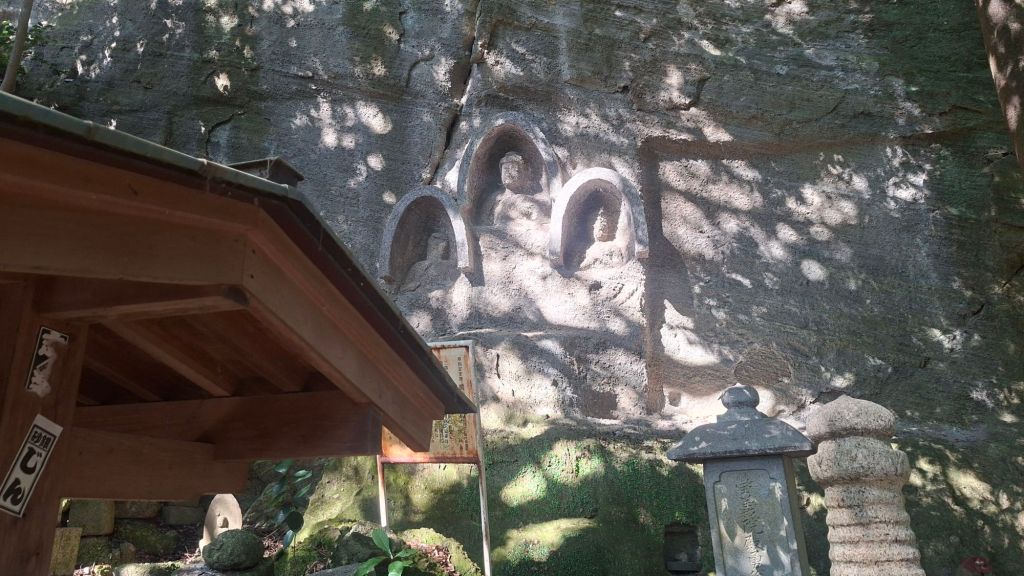
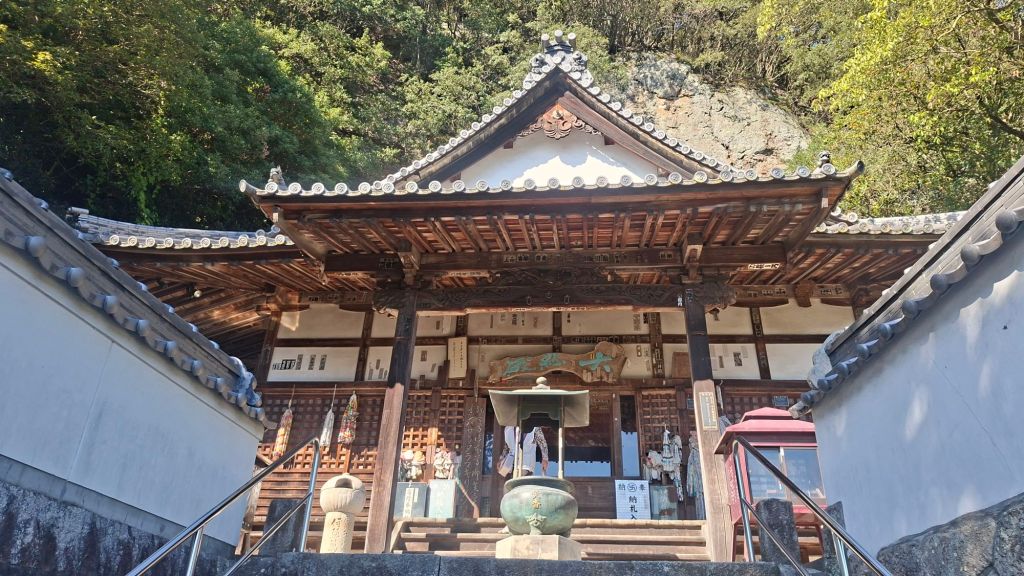
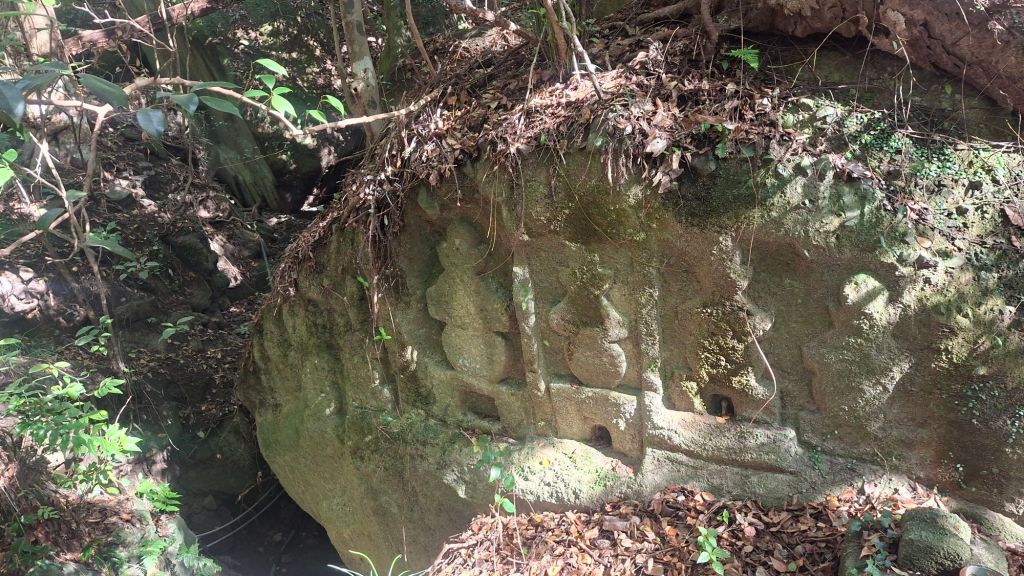
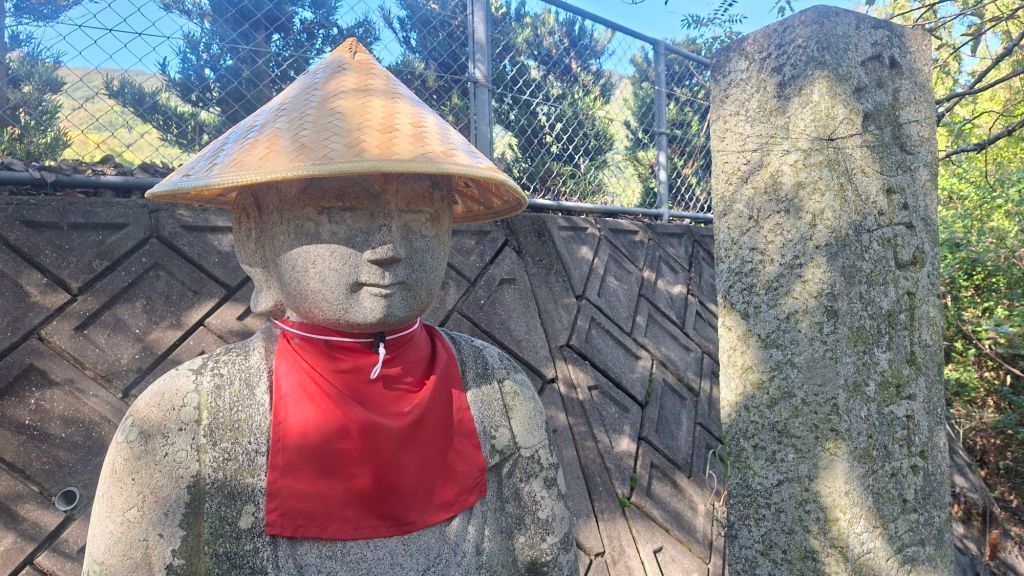
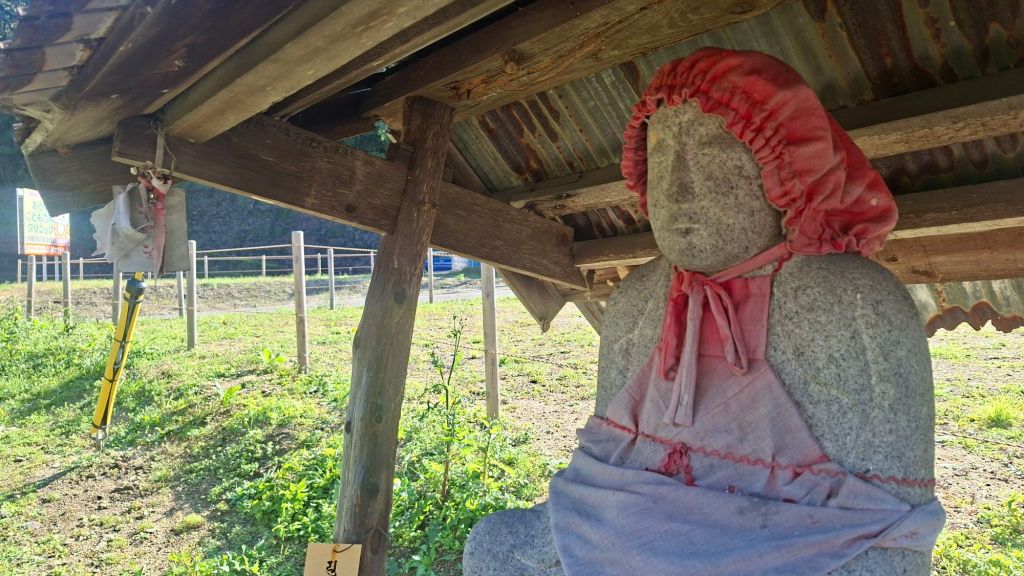
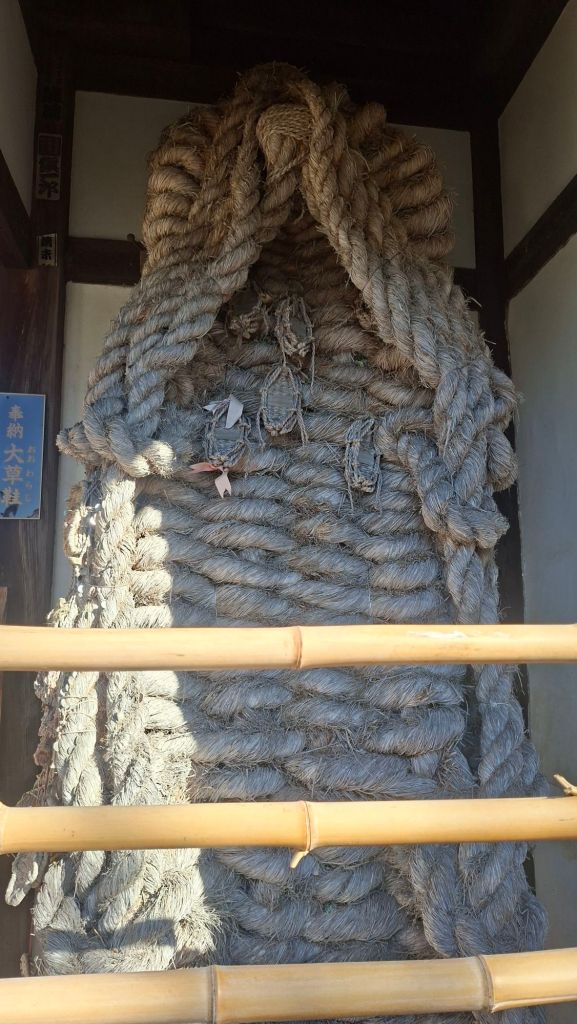
Once inside the temple complex, it doesn’t stop. More stairs up to the main temple, which is built into the mountainside and surrounded by carvings far more ancient than the temple itself. The front of the temple is covered in children’s bibs, which makes me quite emotional for a while, before descending to the Daishi Hall.
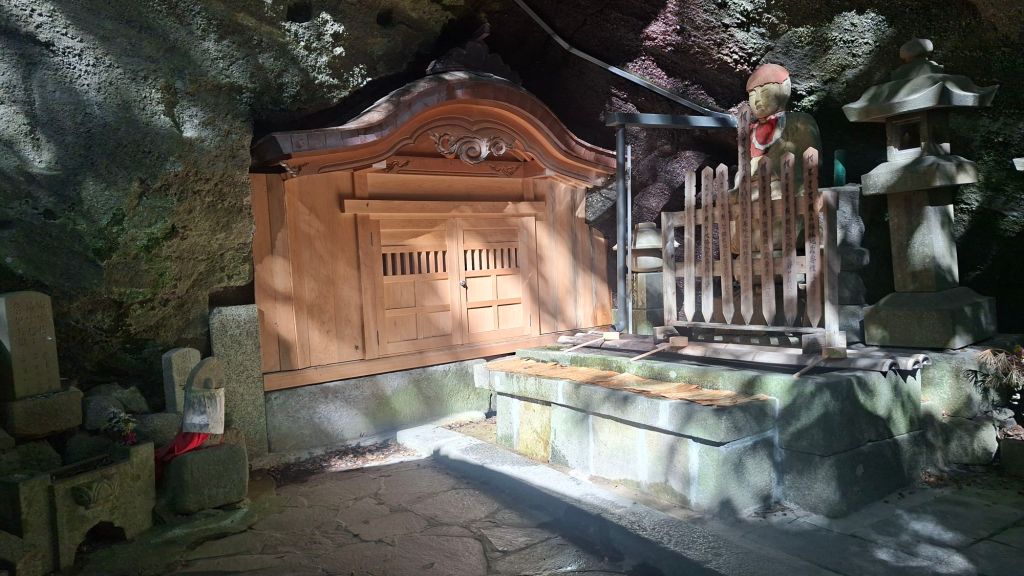
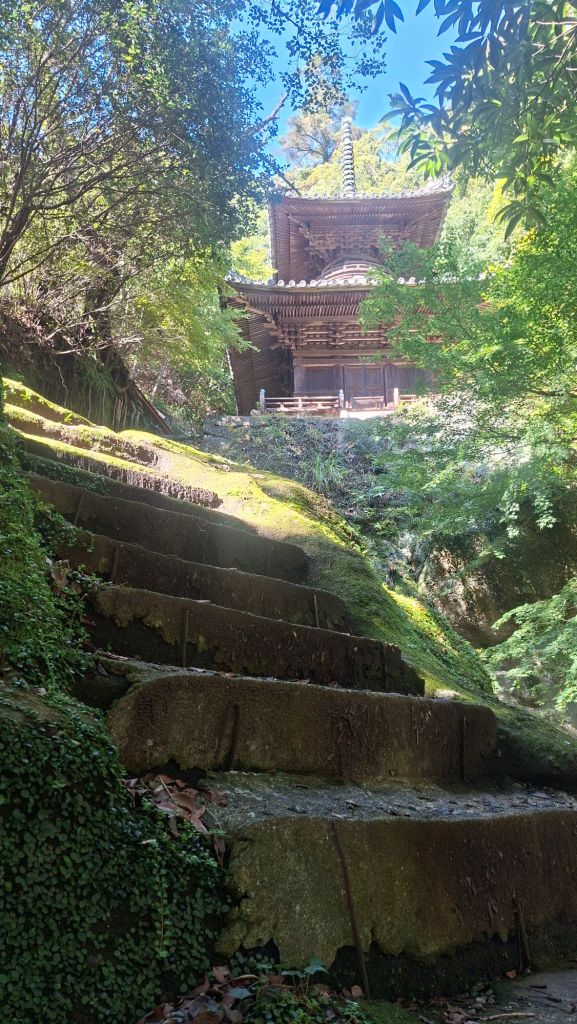
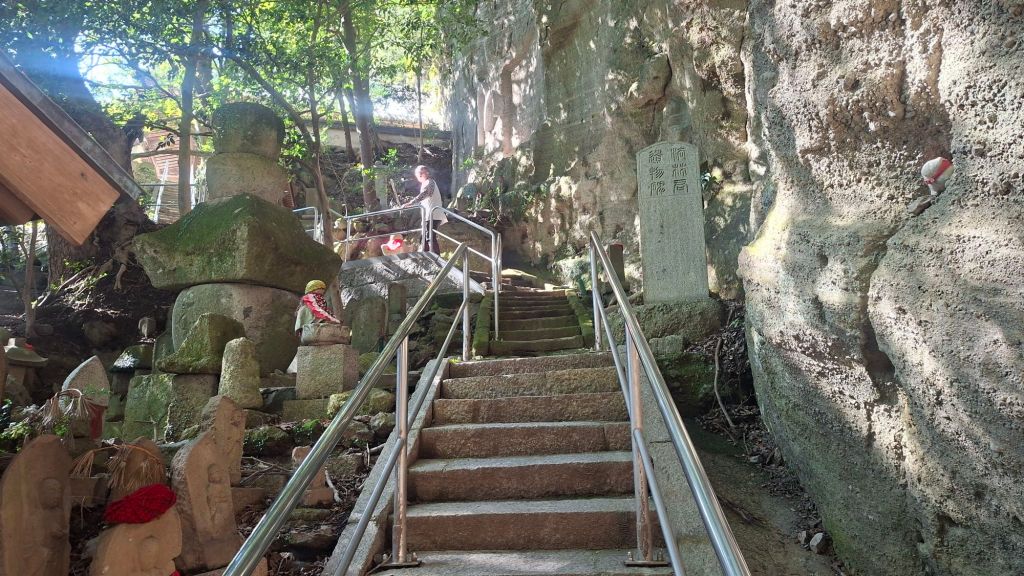
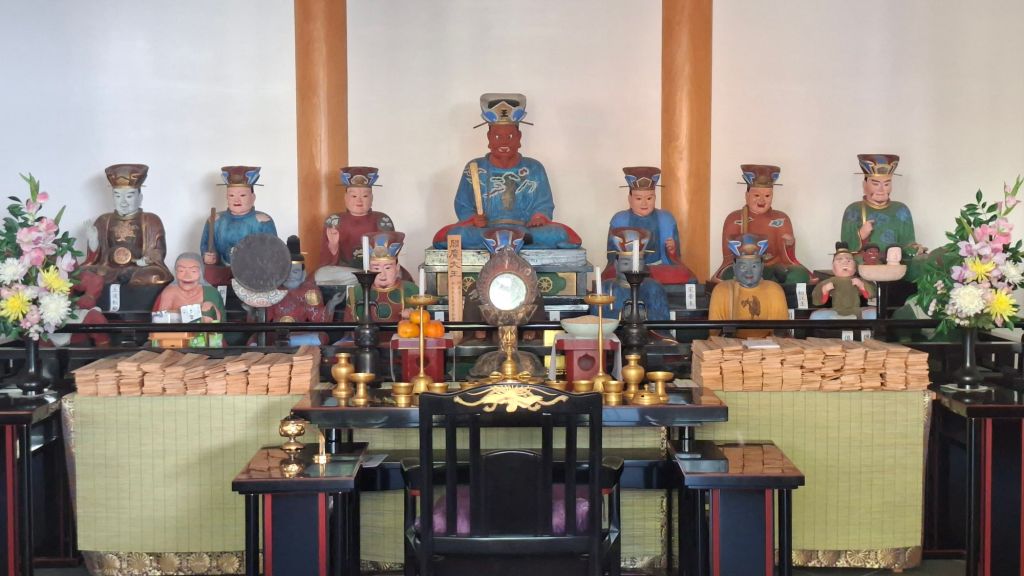
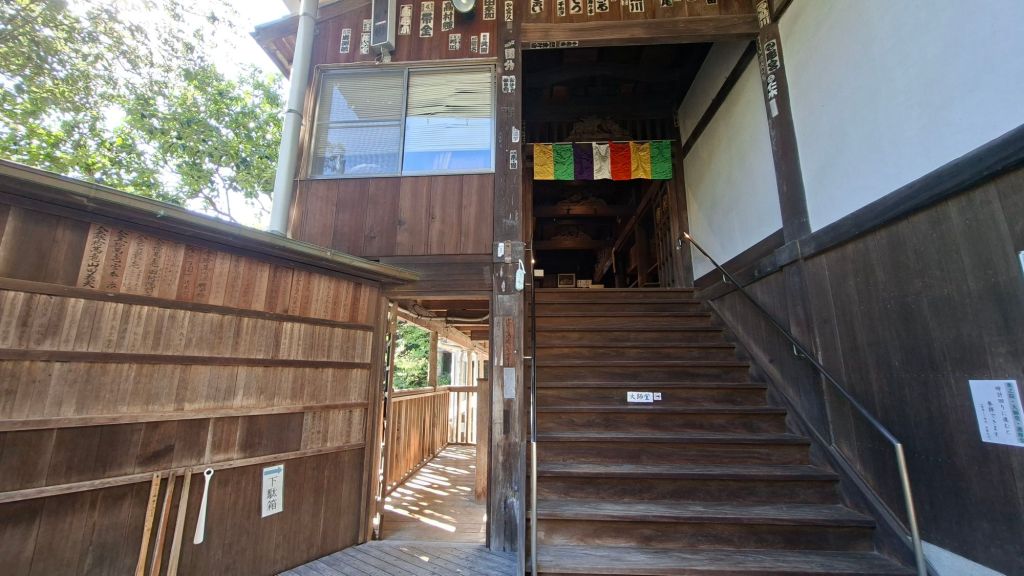
The Daishi Hall takes me a moment to recognise because, unusually, I have to go in, take my shoes off and say the prayers inside. I check with Google Translate on my phone a dozen times before going in. But once there, I take it all in my stride.
According to Jesse, the rest of today will be a doddle. But there’s still one, two, three, four more temples to go. I mustn’t get complacent.
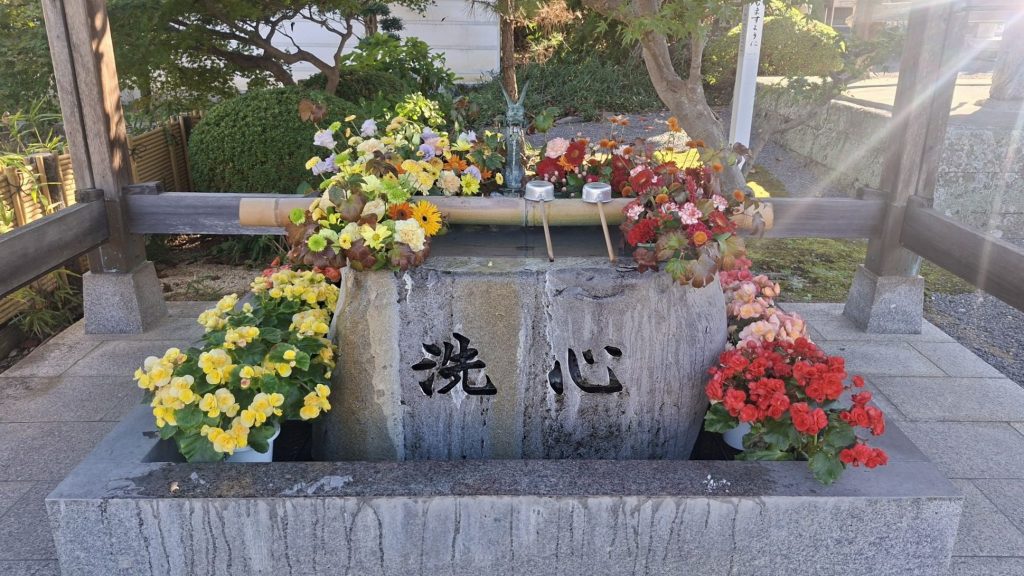
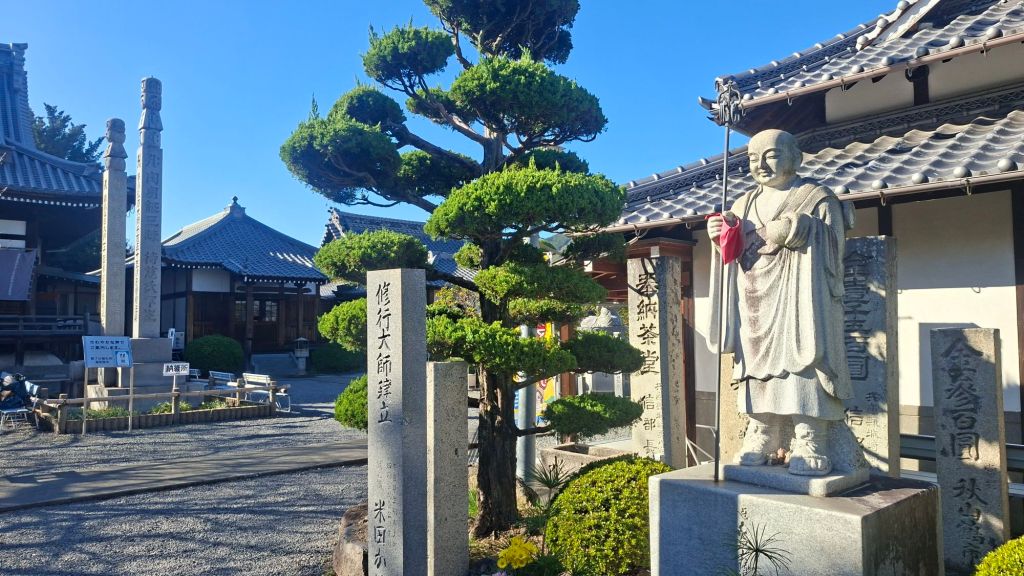
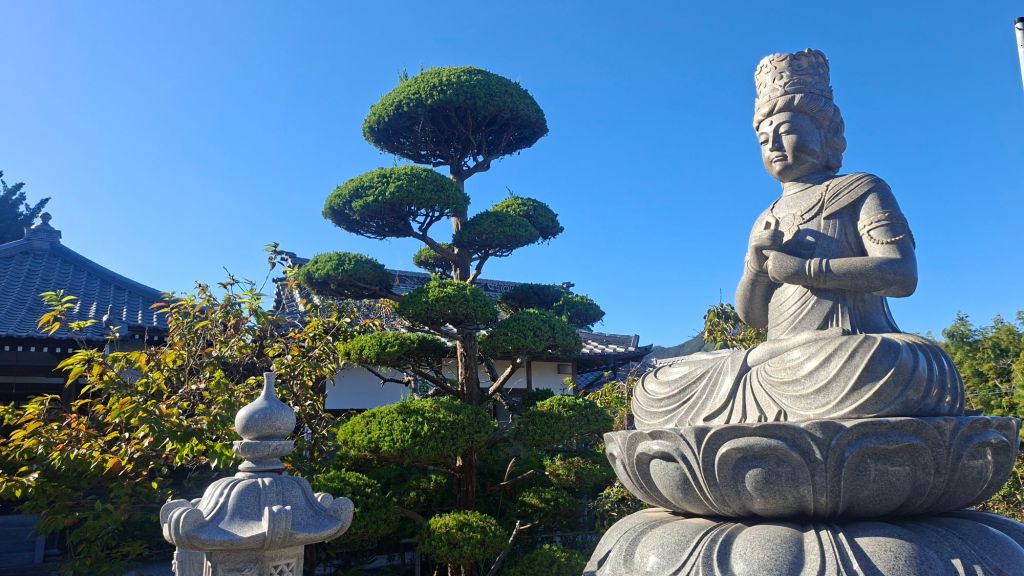
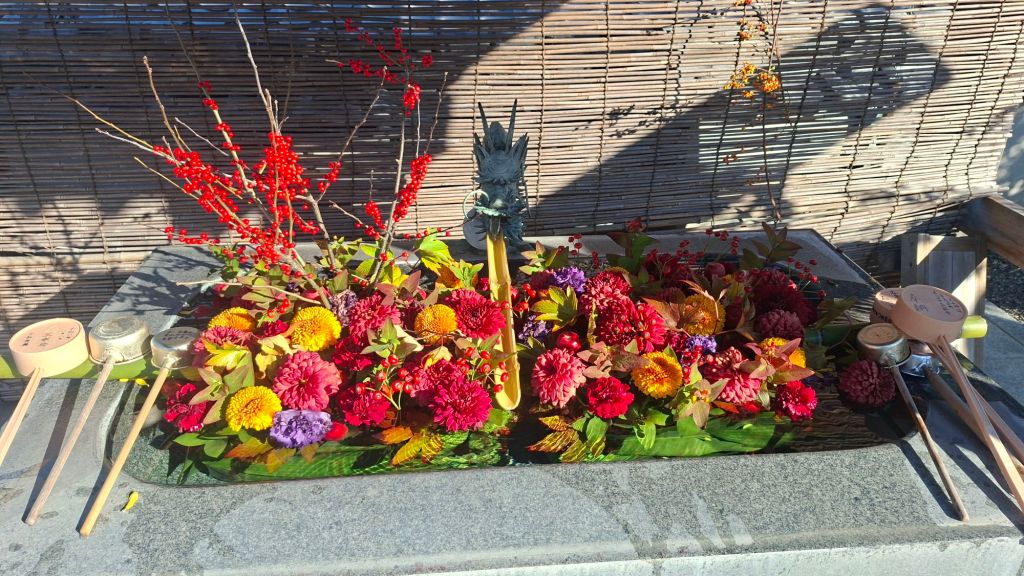
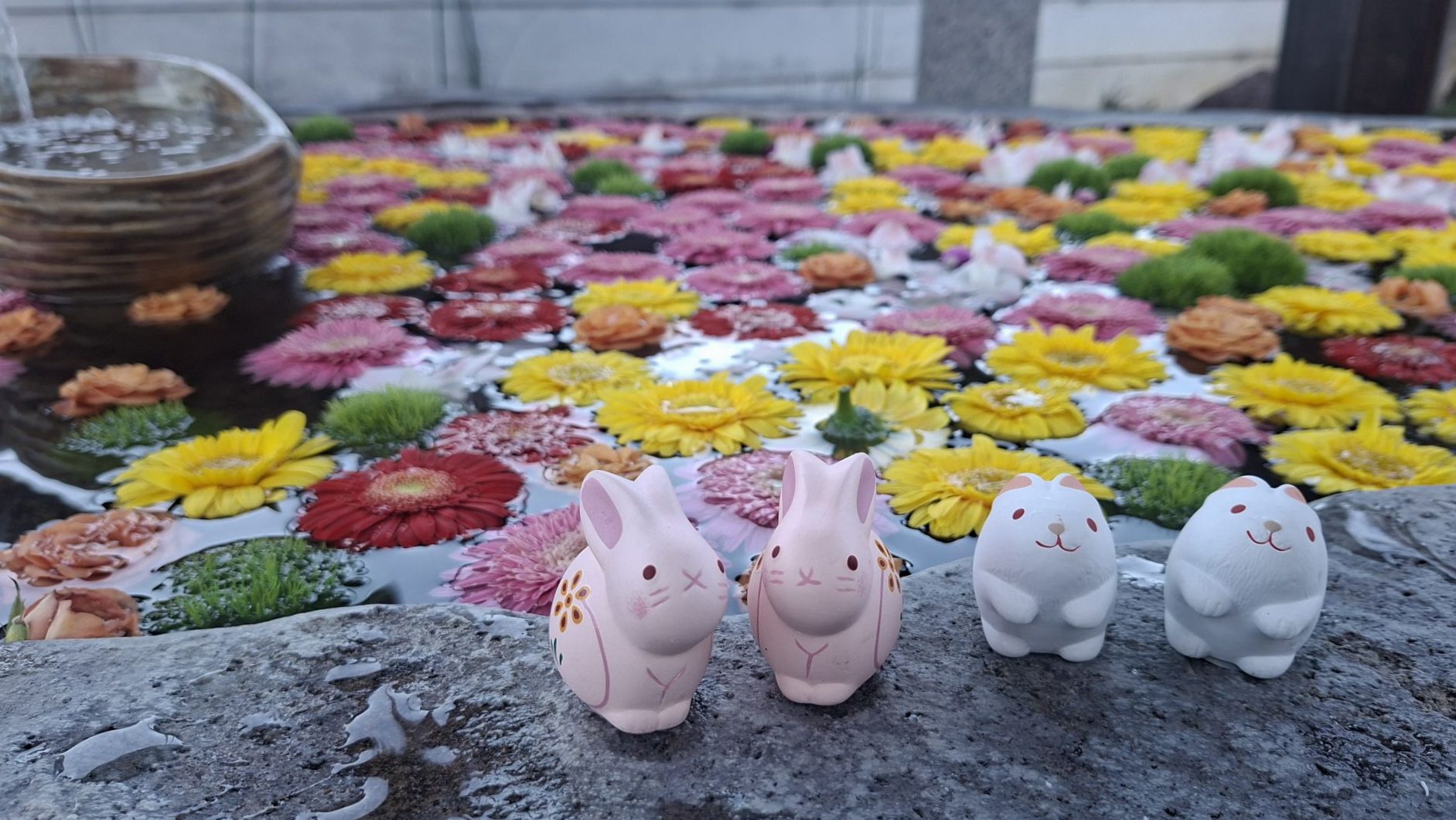
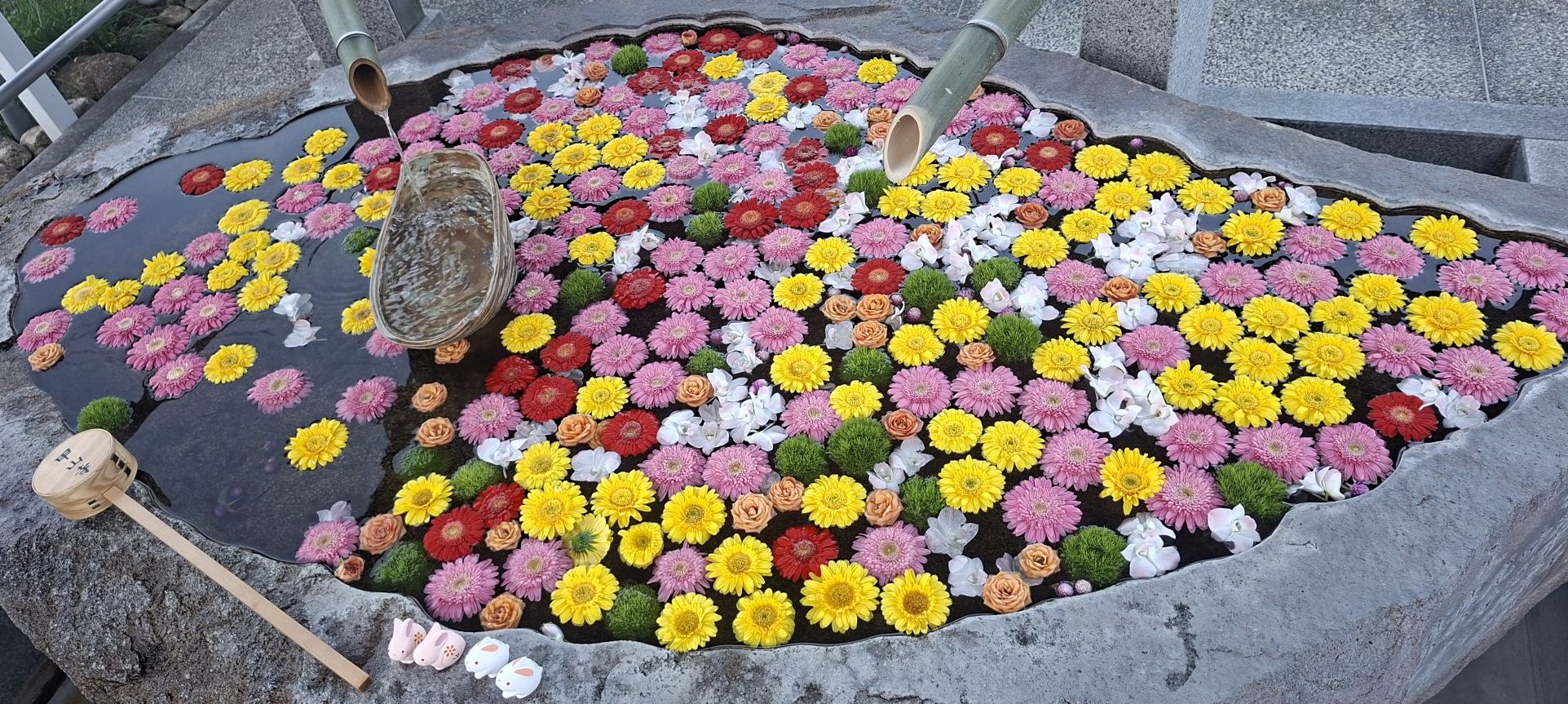
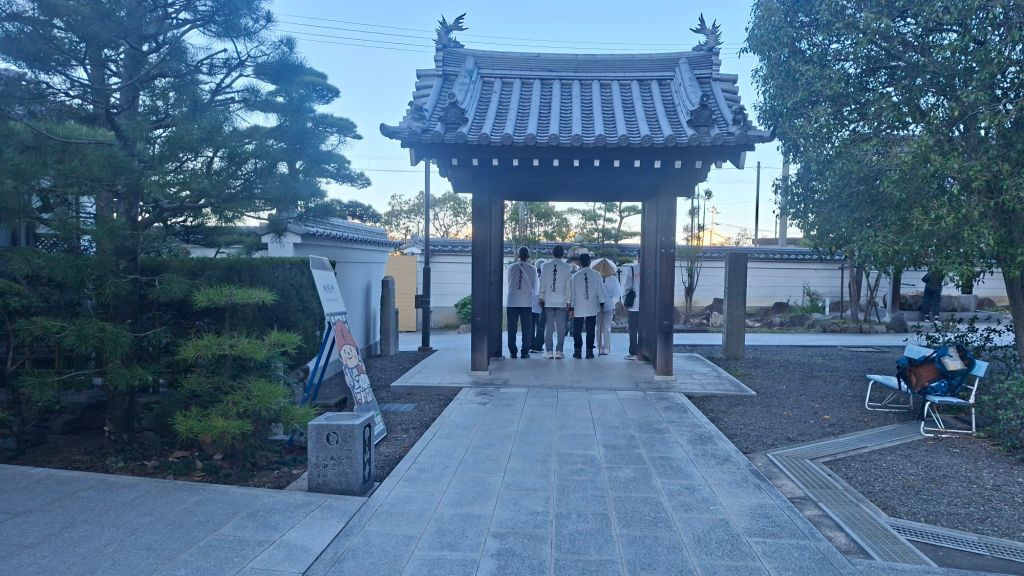
So the rest of the day is spent skirting the foothills. Temples 72, 73 and 74 are each small, pretty and distinguished mainly by their beautiful flower arrangements and hand-washing stations. This is what seems to distinguish them, and it works. It’s beautiful.
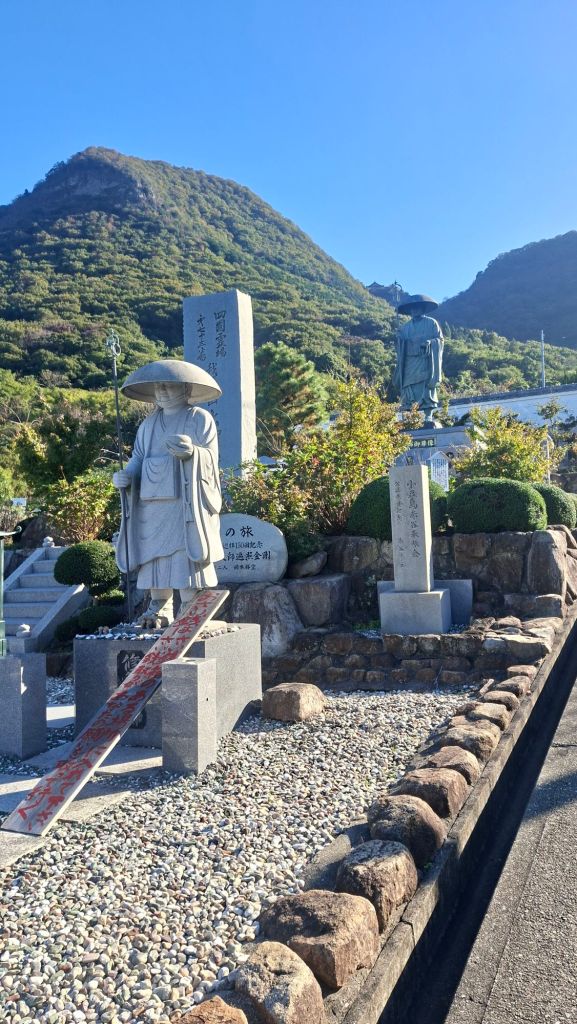
The pilgrims today seem to be short-break couples from Australia, a group of French women driven everywhere by taxi, a very jolly party of Japanese pilgrims, and a few individuals making their way.
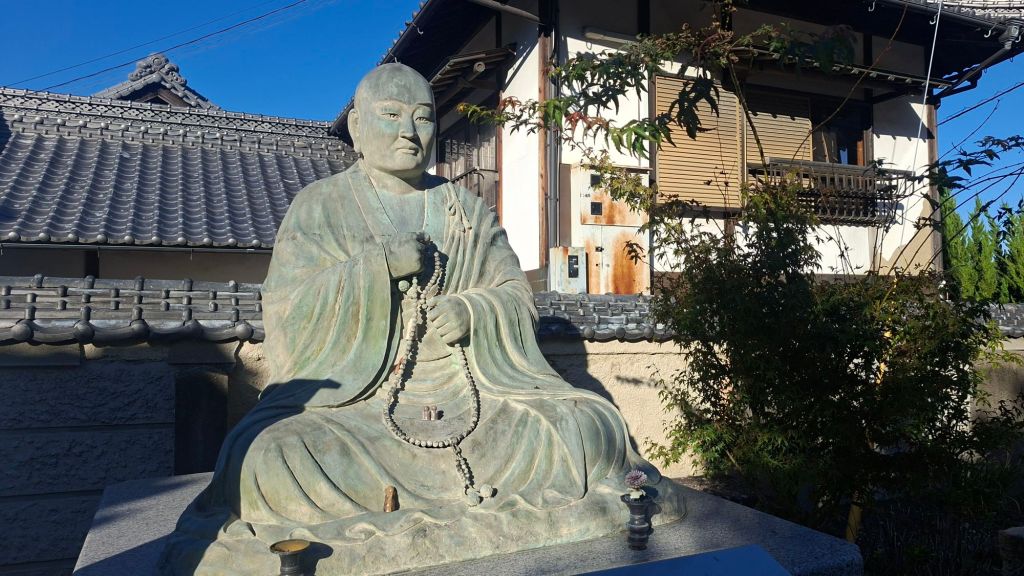
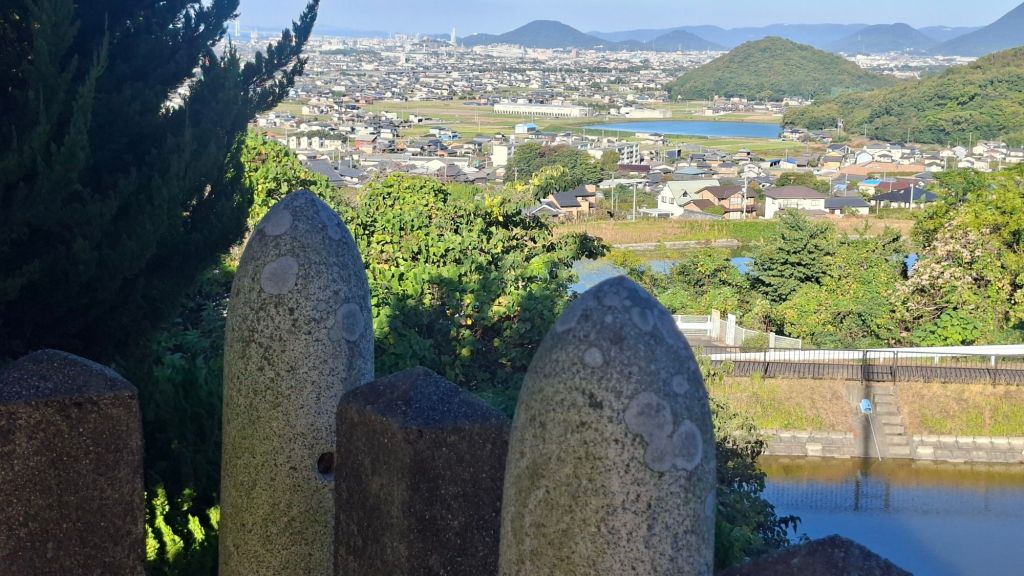
It’s not the most sociable day, which is exactly what I’d wished for because of my tight schedule. But it makes me realise that I’m not doing it wrong on the days when I spend too long everywhere. I’m doing it right.
I call from the grounds of Temple 74, in a quiet corner away from the chants and the bells and the washing of hands.
There she is, before school, first thing in the morning, overwhelmed by the new bedroom her mum has created and the gifts she’s in the process of opening.
I say goodbye to her as she sits happily in her new hammock, toys on her lap. Seven years old.
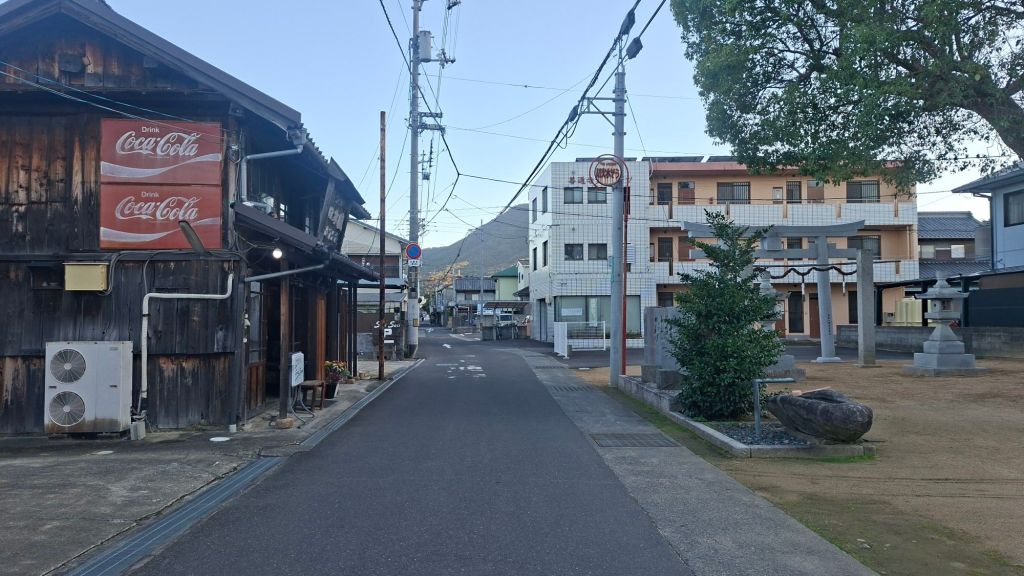
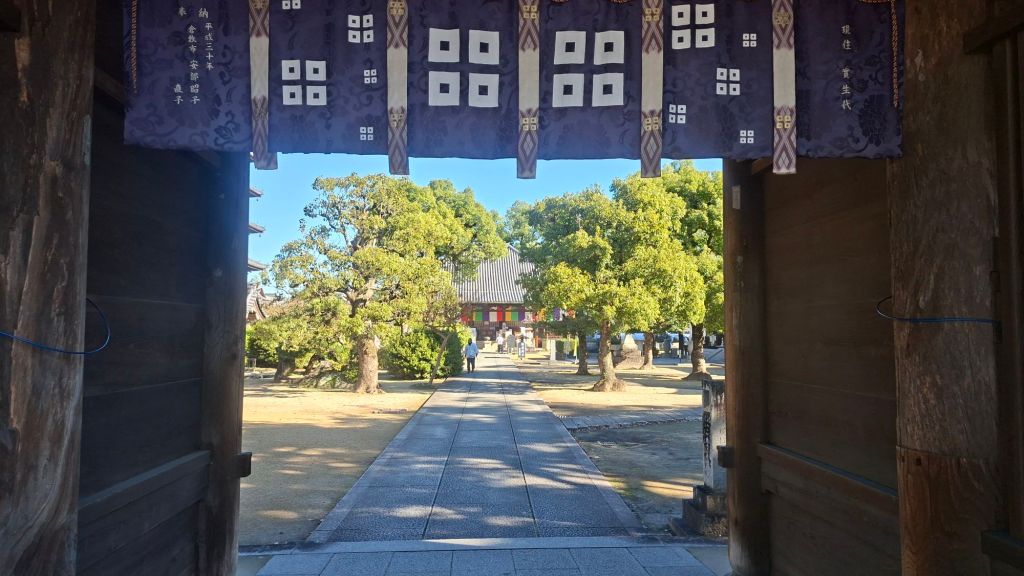
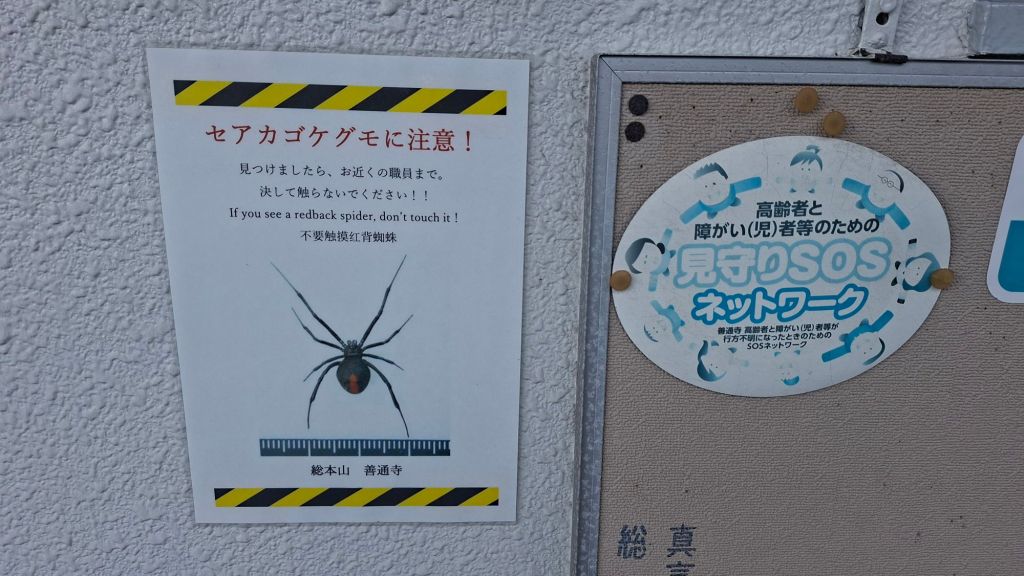
And after all my rushing around, I arrive in good time at Zentsuji Temple. This is a huge temple complex, stretching out on both sides of the road, the birthplace of Kobo Daishi, the monk in whose honour the whole Shikoku temple pilgrimage developed.
And instead of rushing around to light my candles, place my incense and deposit my prayers, I decide instead to check into my temple lodgings, with just a brief visit to the gift shop, where I finally give in and buy my white pilgrim’s vest.
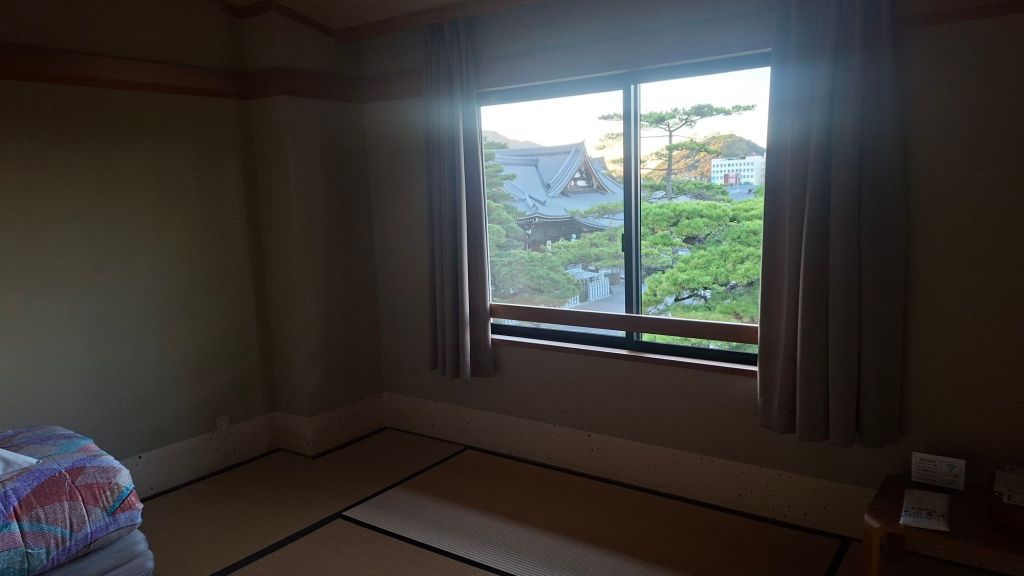
These temple lodgings are more like a hotel. Still traditional, still the slippers, still the tatami floors and the futon and the sliding doors, but a much more sophisticated affair than the other temple I stayed at.
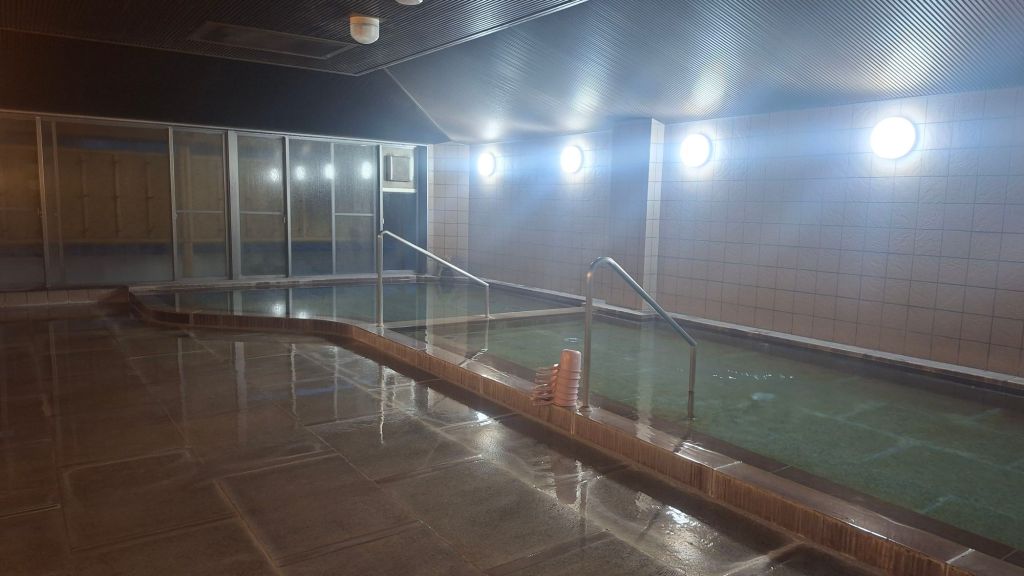
I follow the signs to the large public bath, which is available on the ground floor, and finally find myself in a communal bathing hall.
Once more I’m in luck. One Japanese lady, fully clothed, getting ready to go. The French lady I’d met in the lobby, then so sophisticated, now scampering around unclothed, having not realised she needed to hire a towel. By the time I’m ready to get into the hot water, I’ve got the whole large hot spring bath to myself.
And I luxuriate before running back to dinner.
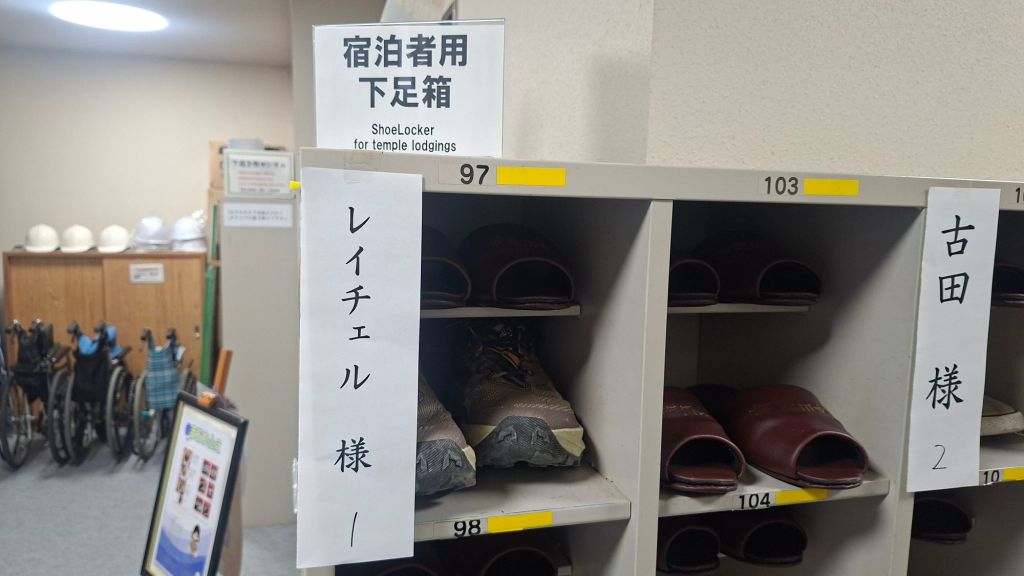
Dinner at this temple is also a formal affair. And I recognise my name now. At the slipper lockers earlier, a gentleman I’d never met before had addressed me as, “Rachel-san,” and pointed to my shoe locker.
As Hiro has done all my bookings, my name on the shoe lockers, and now here at dinner, is written in Japanese script. So everyone but me knows where I need to go.
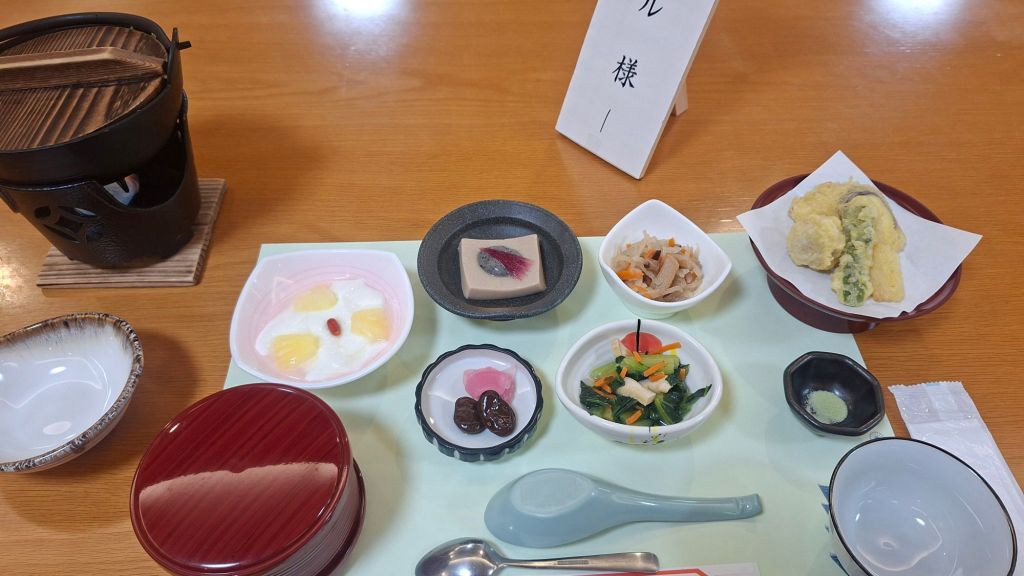
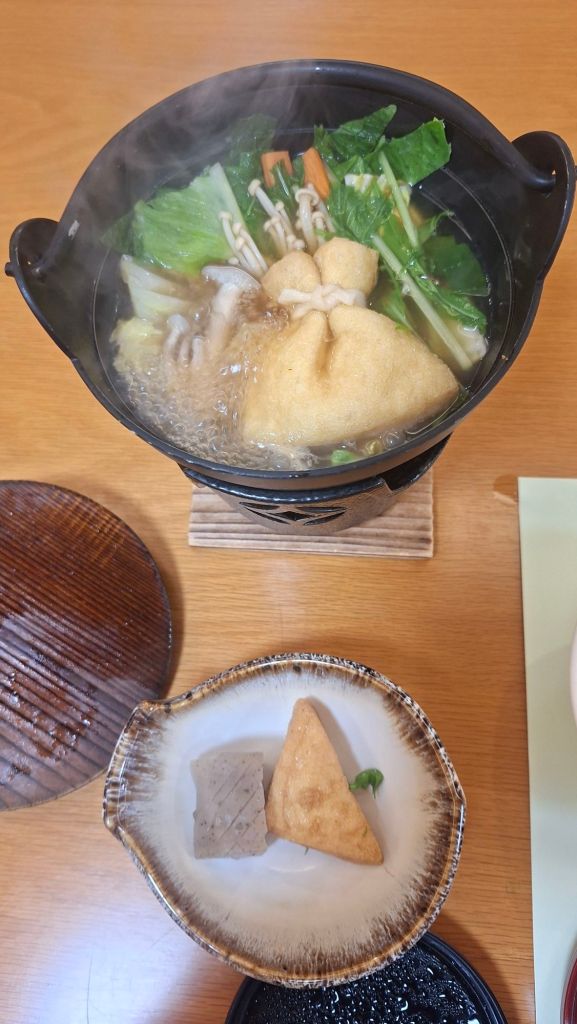
And we’re all placed apart from each other. You can sit with your partner or with your group. But if, like me, you’re a lone pilgrim, you have your name placed at a table with spaces around you and the number one written clearly on the card. There are three number ones all sitting at my table, all distanced. It’s not really a way to meet pilgrims. I give a friendly smile to the French woman two tables away, who gives an awkward smile back.
But the meal is delicious. Things I’ve never tried before. Things which even now I don’t know what they were: a new favourite food which was purple and involved sesame, a tasty parcel of god knows what floating in the soup.
And because it’s a Buddhist temple, it’s completely vegetarian. No fish to come to terms with. And tofu galore.



Leave a Reply