Shikoku 88 Temples – Day 7
Senyuji Temple to Komatsu (Temples 58, 57, 56, 59): 28km (+11km bus)
I’m up at half five for my first Buddhist prayer service.
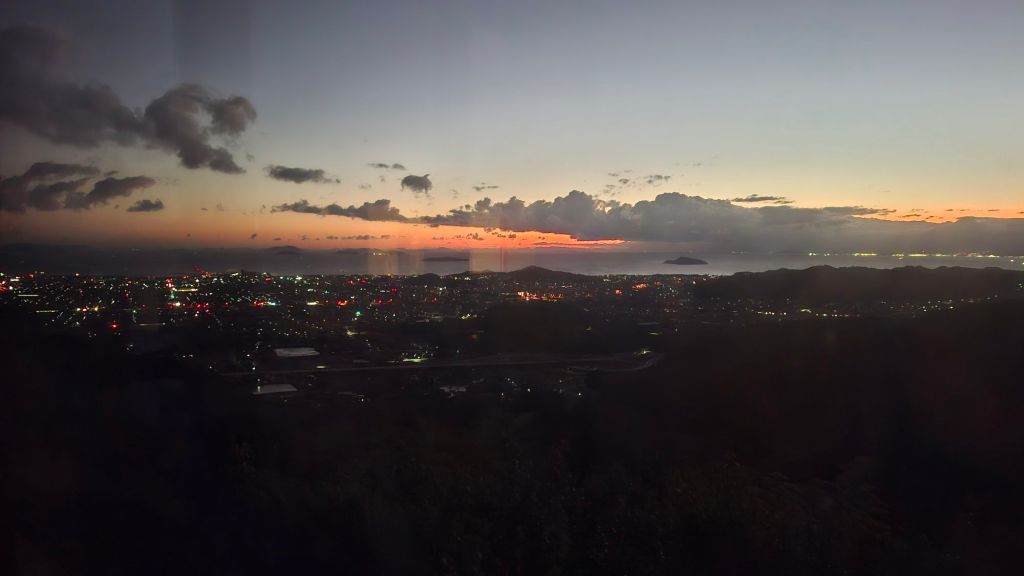
I sit on the little chair next to Sashiko. Relieved we don’t have to kneel or sit cross-legged for an hour. I feel a little out of place without a hite pilgrim shirt and without the ability to understand a single thing that’s going on.
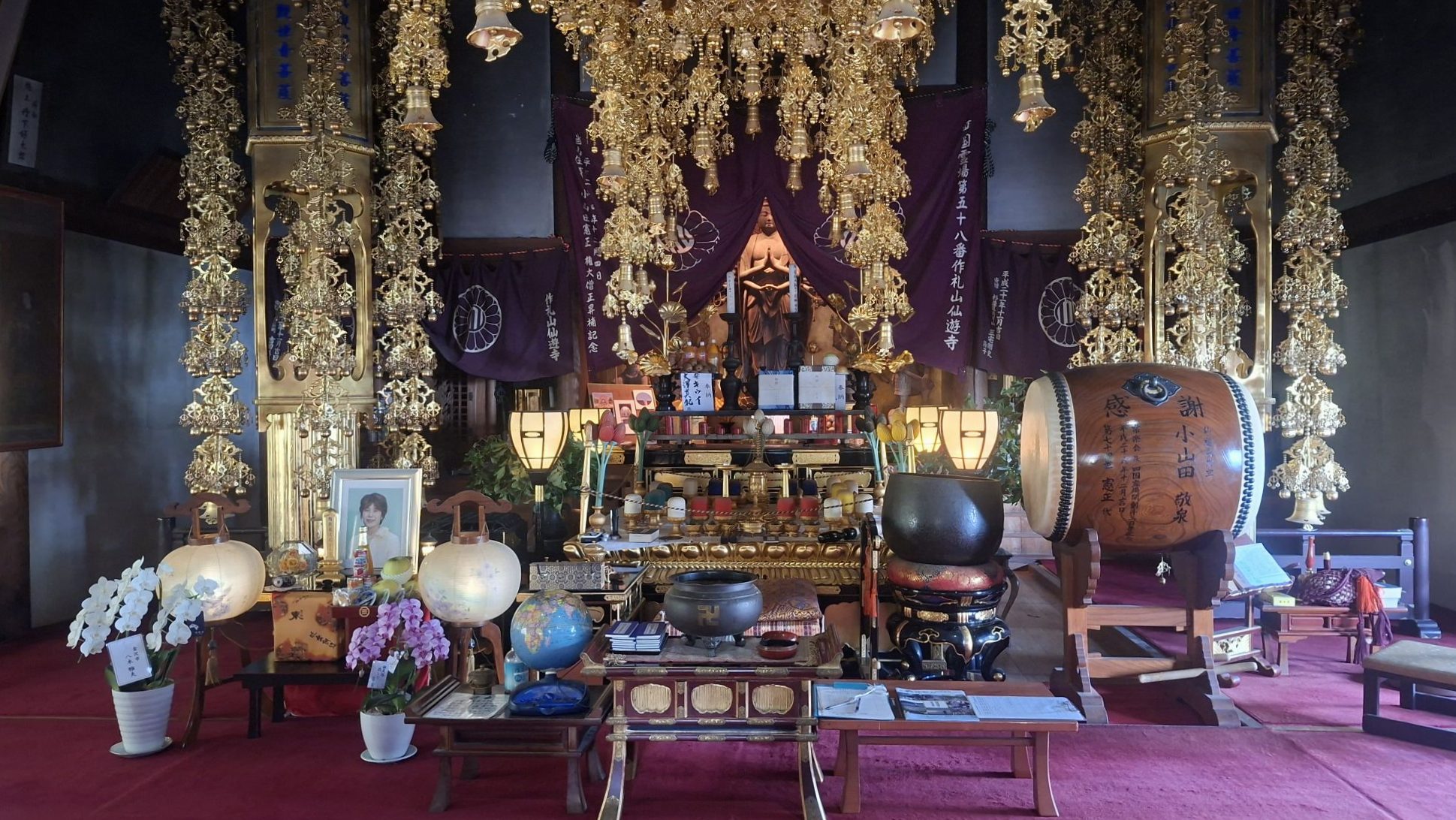
When the monk comes in, he asks if I want a chanting booklet, and I say no. He laughs. The chanting lasts about ten minutes, and it’s beautiful. A large metal gong drum is rung and then the chanting is the same tone as the reverberations. The row of pilgrims join in for the final prayers.
And then, to my surprise, there is a sermon, a long sermon. That seems to transcend all cultural differences. Although it’s all in Japanese, every five minutes or so the monk will throw in a word in English to help me stay involved.
I hear “karate teacher Manchester”. I think he once did that. Or maybe his karate teacher came from Manchester. “Vietnam student peace protest”. Maybe he was there, maybe there were protests in Japan which he was part of? And then he holds up a scallop shell. “Spain, Camino de Santiago two times”. And he explains to the other pilgrims what this is and asks me if I have completed it. When I tell him I have, I am a part of the sermon and the others nod appreciatively.
A good monk, a good vicar, a good priest, a good person. They always make themselves known.
At breakfast, the eighty-year-old introduces himself as Mr Shirakawa and we manage to work out the countries he’s been to in Europe before having an in-depth discussion on Switzerland. “Oh Swiss, beautiful no?” “Oh yes, beautiful.”

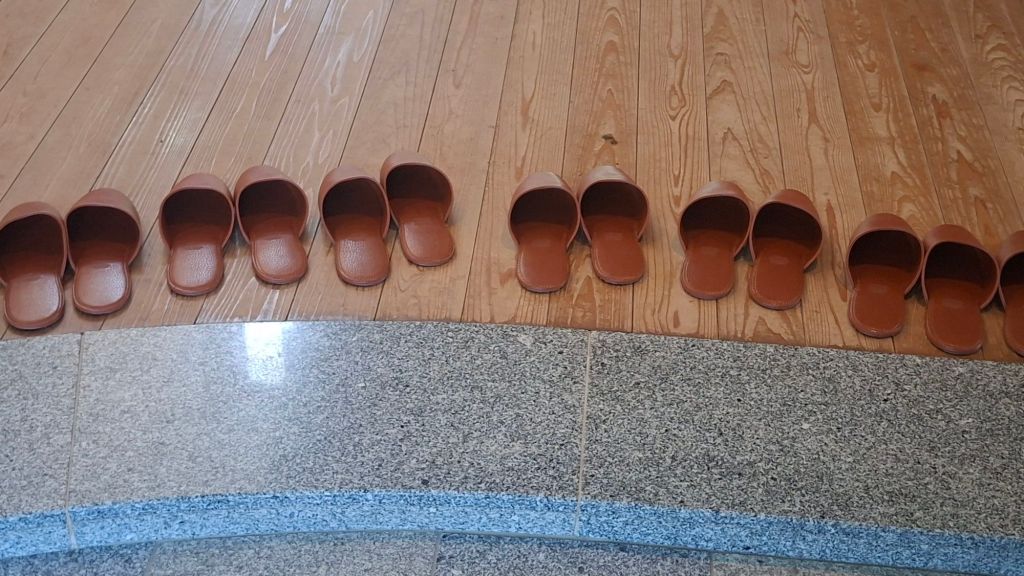
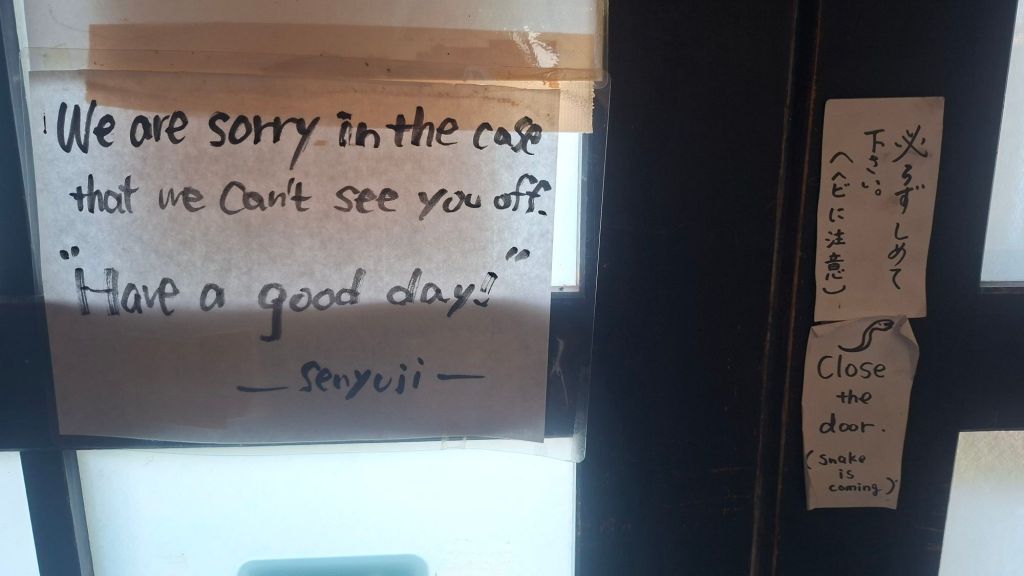
When I leave at eight o’clock, there is no one there but me. It takes a while to get up the mountain if you’re staying in the city. But after a short amount of time I see a young man spotting down, taking cleverly angled photos of the temples. As I go to wash my hands to get ready to do my stuff, I realise it is Jason, the absolutely lovely, friendly New Yorker, who I’d met while sitting with fellow New Yorker Don yesterday.
“Did you cycle up here?” I ask him with incredulity.
“No,” he says. “I cheated. I got a cab.”
The cab is waiting for him but still he wants to spend time here. “Is it OK if we do selfies and photos?”
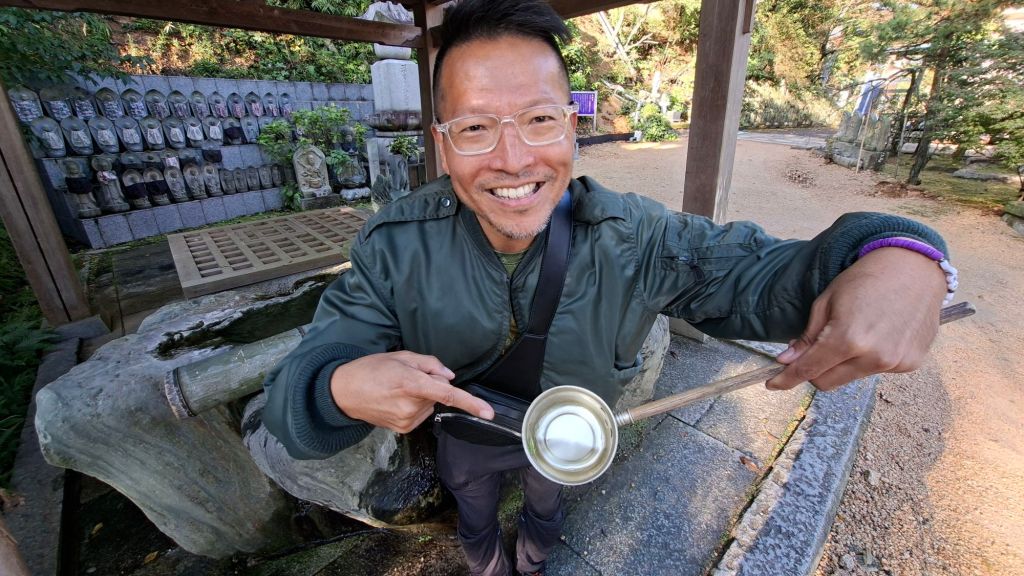
“Of course”, I say. In the back of my head I’m wondering if I could get a lift down in his taxi when he goes. But no, it’s early in the day and I have time.
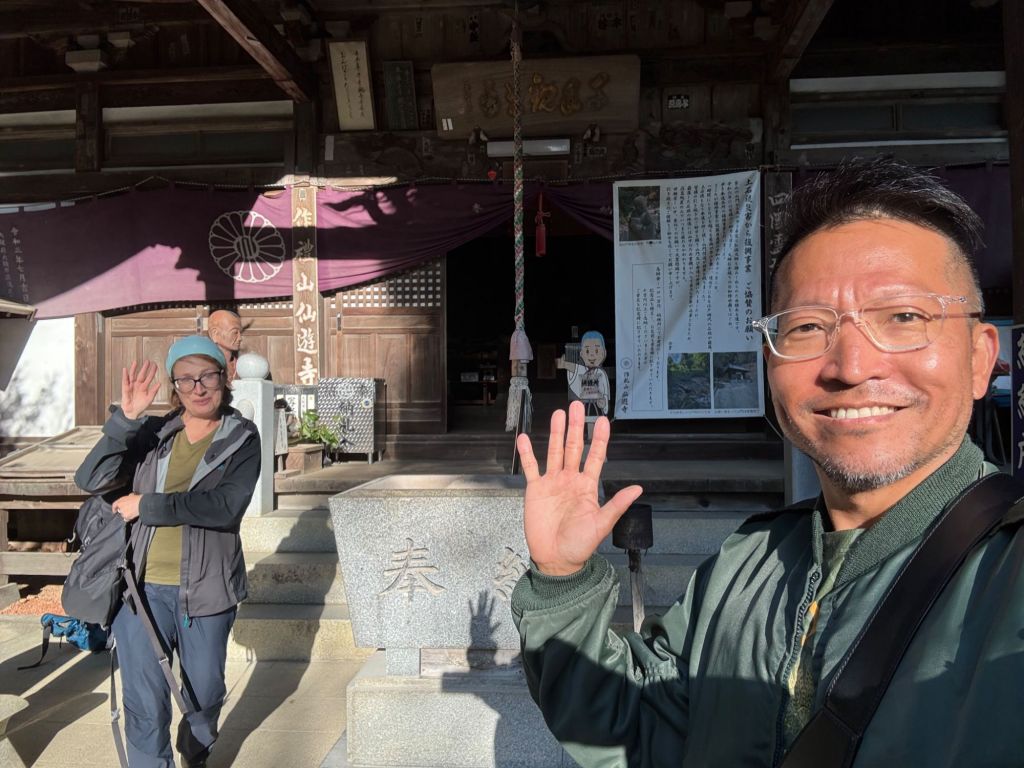
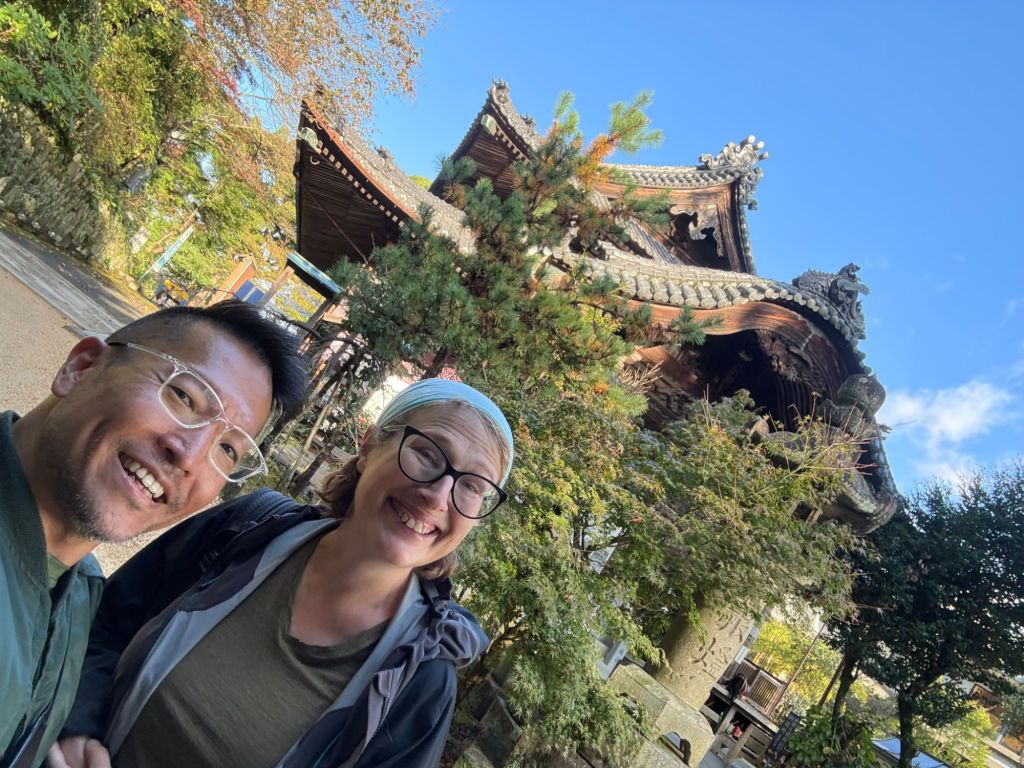
Jason is a good Catholic and doesn’t do the rituals, but he does wash his hands and ring the bell. He’s held back out of respect until now. I don’t think it’s a problem, I say, and there’s no one here. So we take videos of each other ringing away.
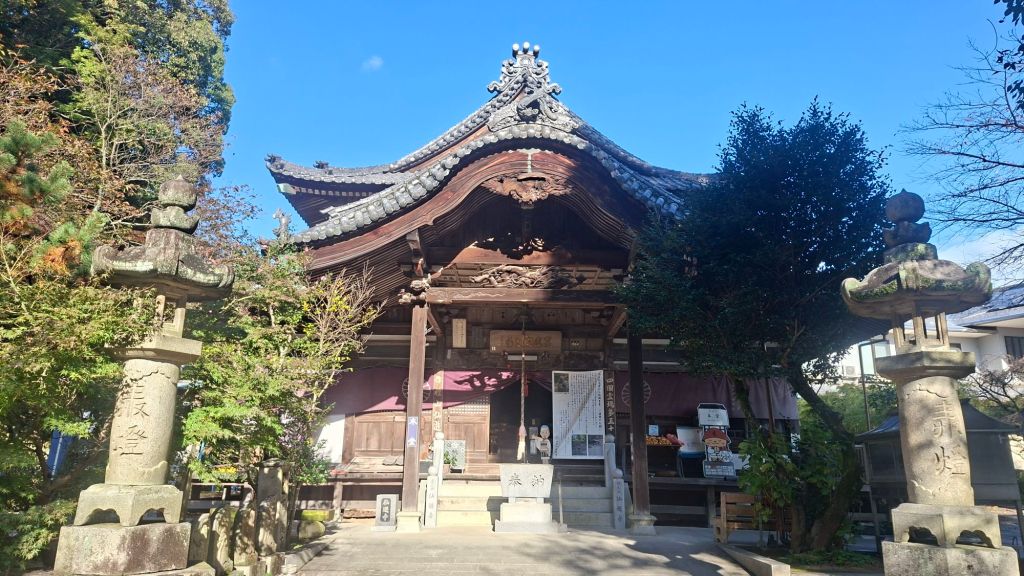
When Jason leaves, I start my walk back down along the same path I walked yesterday to go and do the temples I missed in the rain.
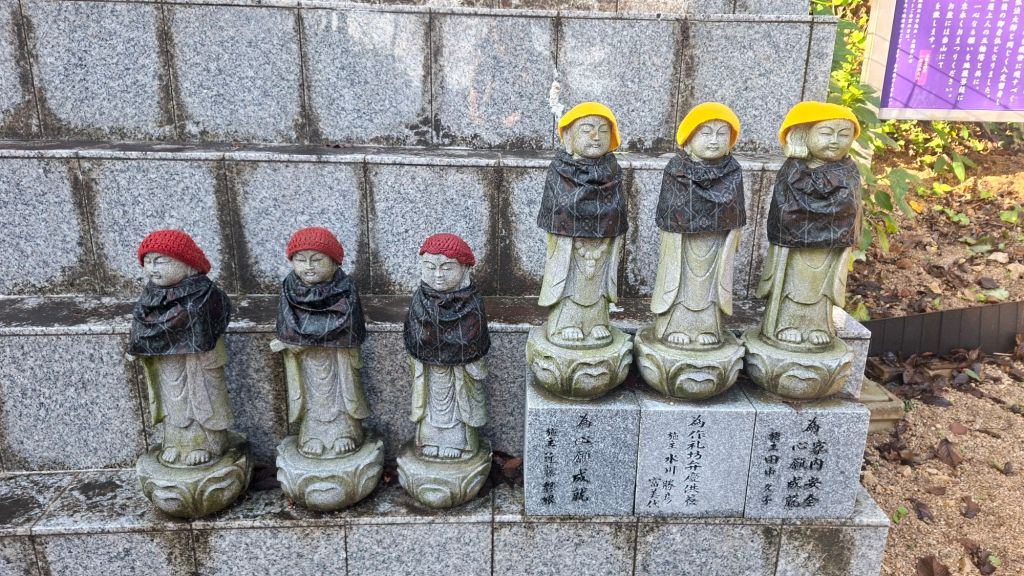
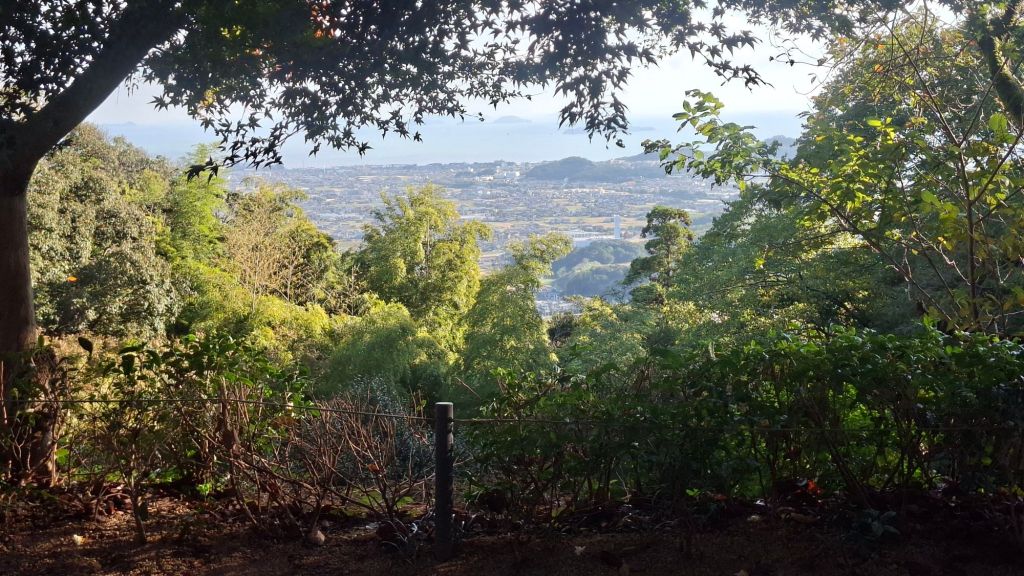
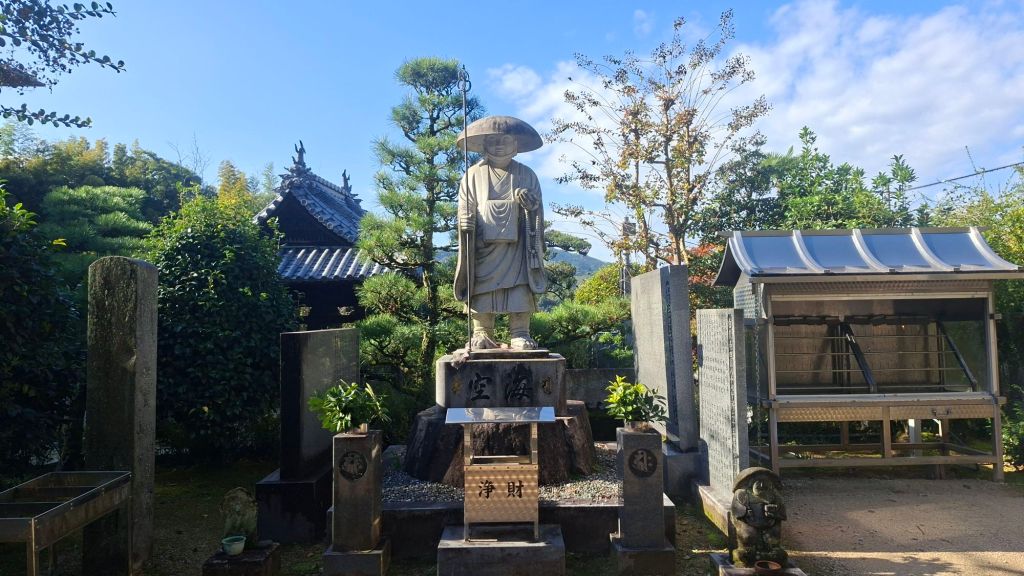
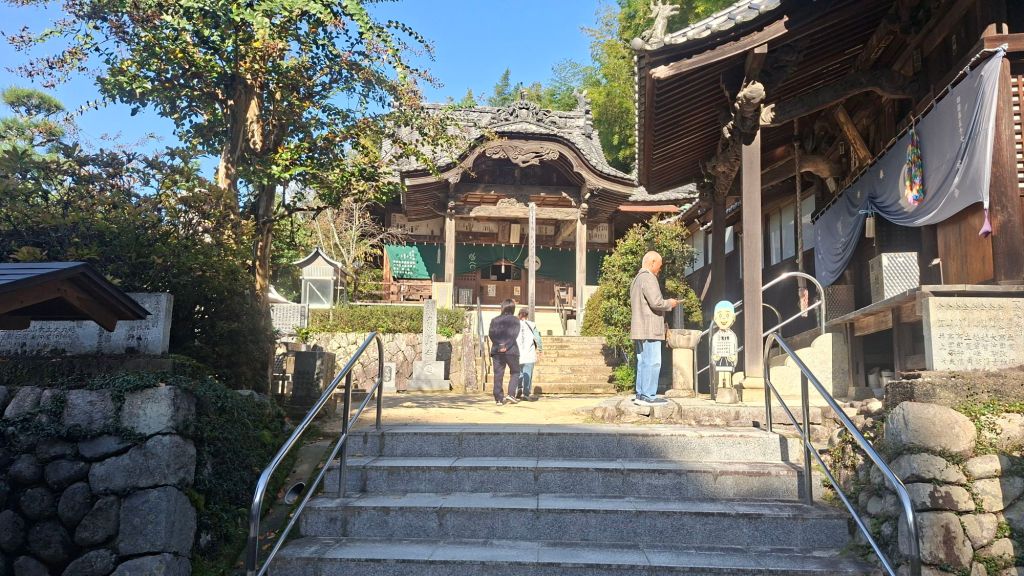
Halfway back into town, as I retrace my steps, is Temple 57. It’s a good’un. I’ve developed a preference now, I realise, for wooded hillside temple complexes, but I must press on.
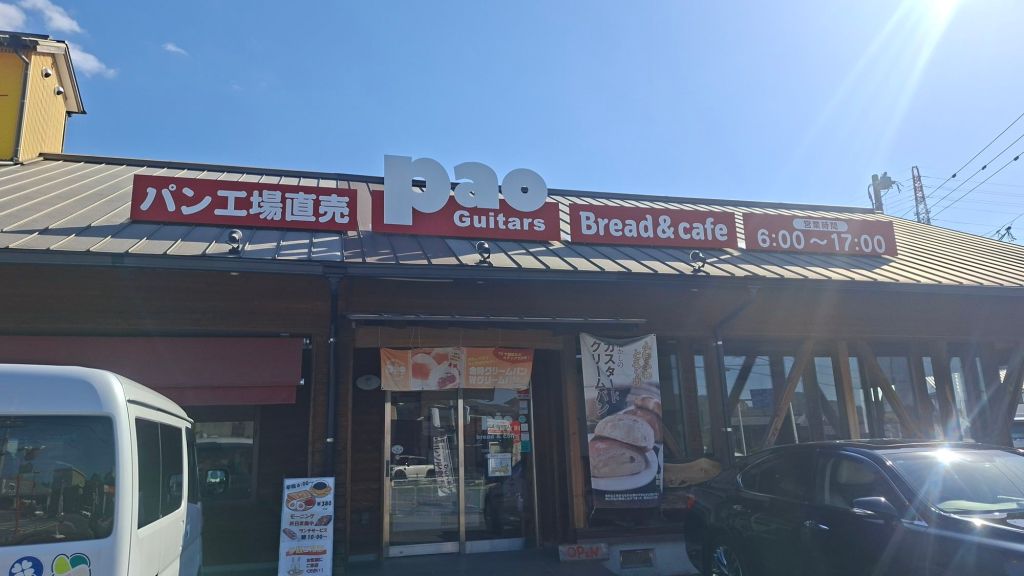
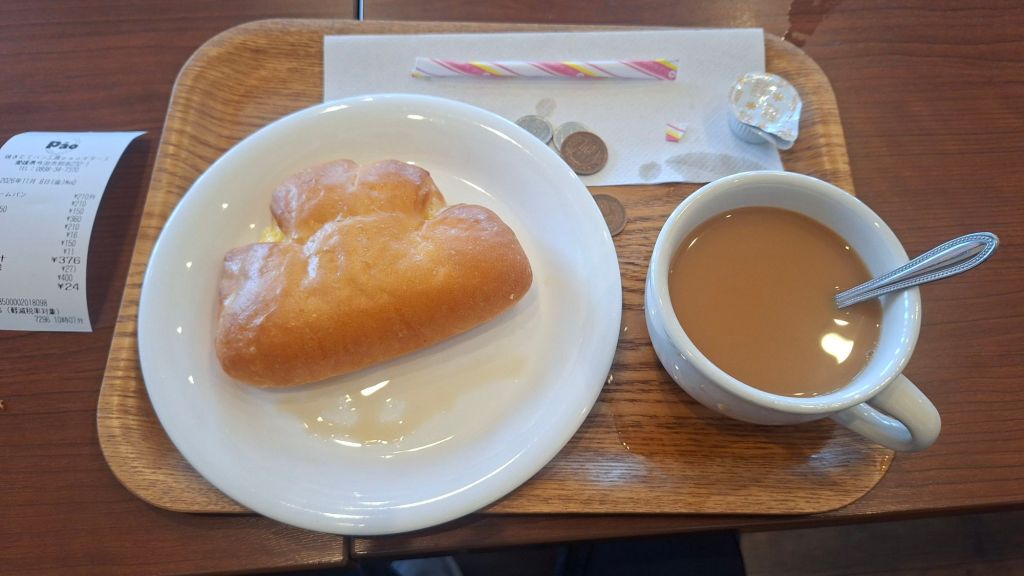
As I’m retracing my steps, I decide to go and visit a cafe which intrigued me as I rushed past yesterday. I’ve noticed that a lot of businesses here seem to have been named by someone asking a random word generator, and that’s what drew me to this place. And so I find myself having a second carb breakfast in Pao Guitar, Bread and Coffe, a cute corner cafe on the main road.
There’s almost no one at Temple 56. Another little suburban oasis. But I can see a monk looking out the window, expecting visitors. And before I leave, a limousine with VIPs appears. I don’t know if this is an official state visit or a family coming for a service. I’ll never know.
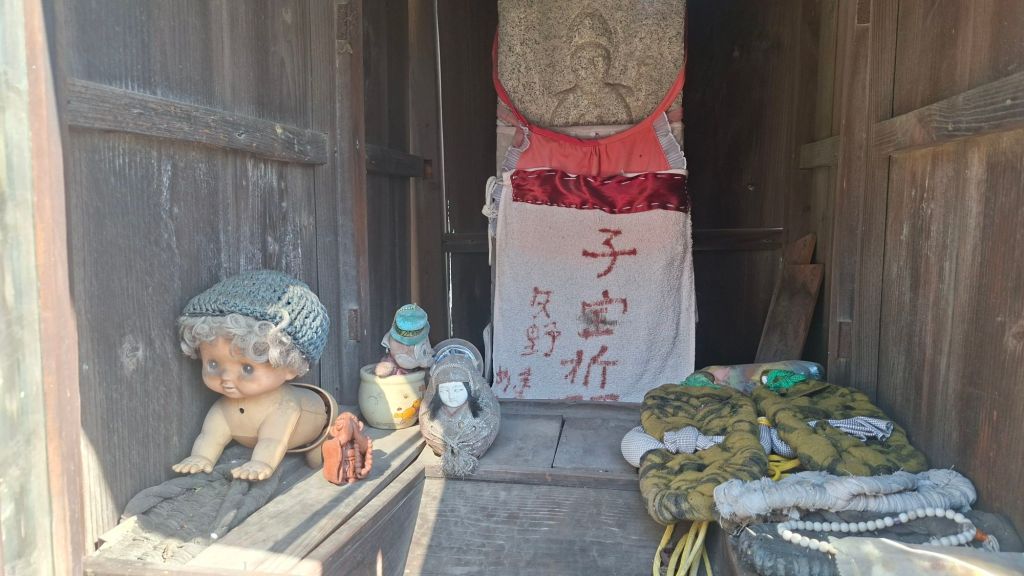
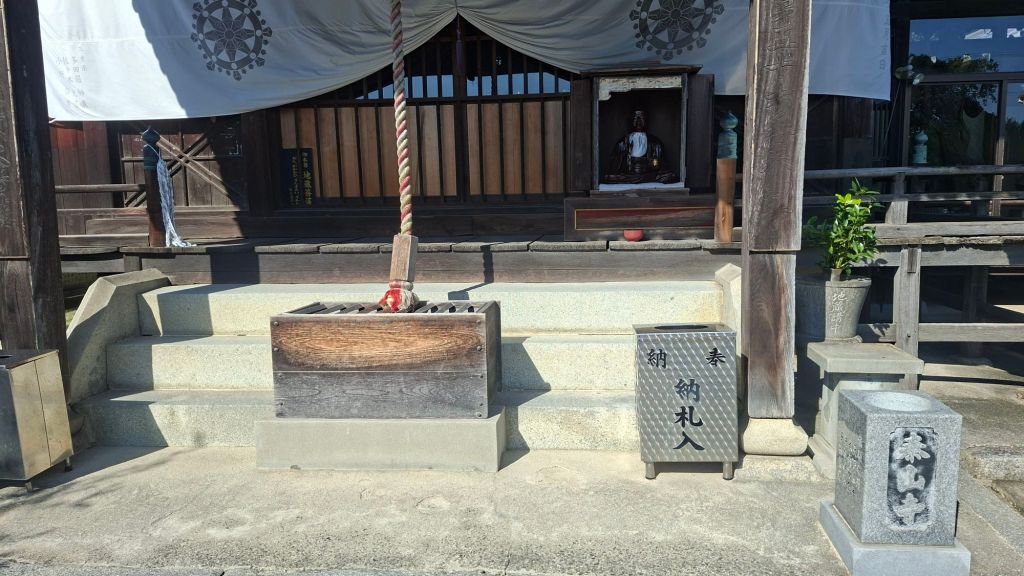
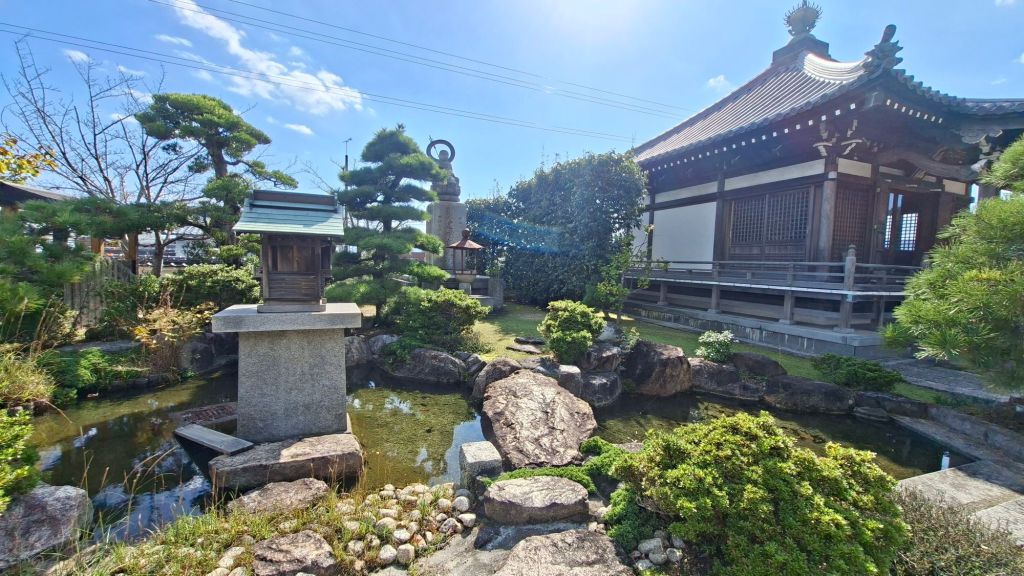
The next part of the walk is a slog across town. I’m doing extra today to make up for yesterday. And so I’m off route as I go back to where I should have started. It seems like hours later, I arrive at Temple 59.

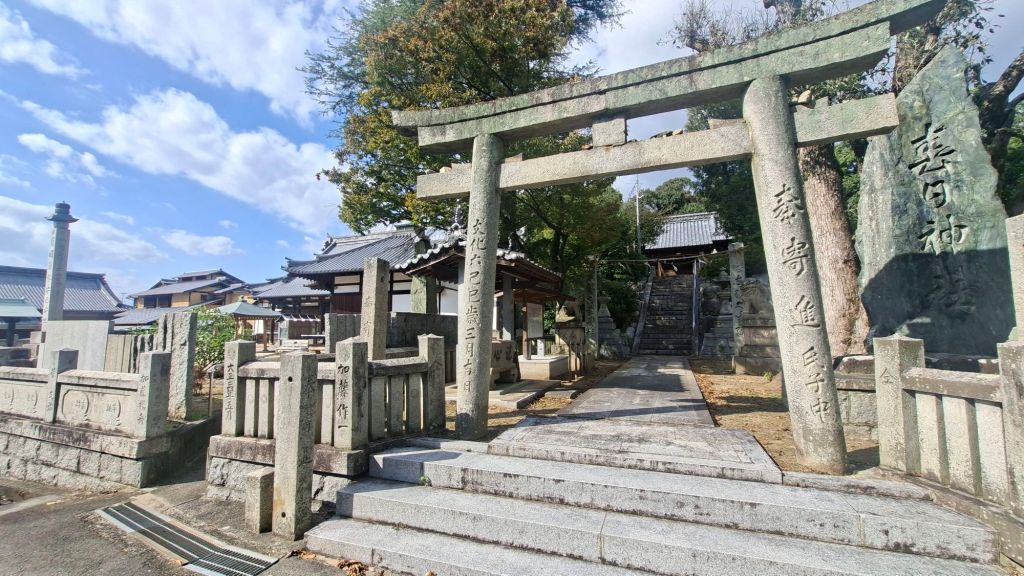
But Temple 59 more than makes up for everything. There is a slight setback at first, when I meet Jesse, who rather annoyingly tells me about the delights of the route I would have taken had I not been playing catch-up. “I was with Jin, but he’s gone on ahead”. Everytime I meet Jesse, he refers to Jin, the travelling companion who is always just ahead. I am not sure Jin exists.
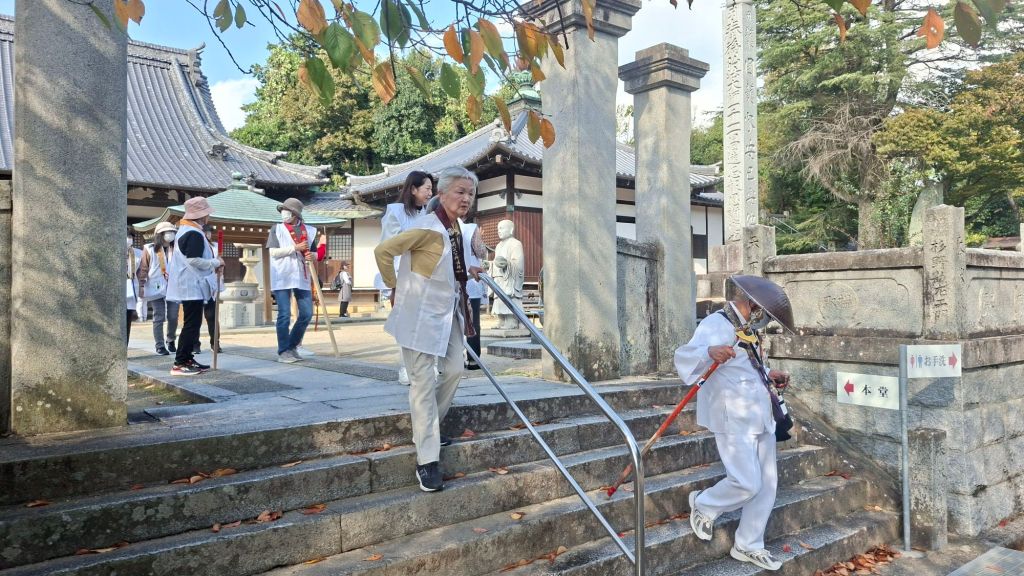
A huge coach party arrives. My first reaction is annoyance that I need to quickly do my offerings and get to the office before the queues form. Of course, my first reaction is wrong. What I get is a large crowd of genuinely devout Japanese pilgrims, chanting along with their leader in one of the most beautiful temple experiences I’ve had so far.
Even so, I’m glad to have got my offerings out of the way before they finish chanting, so I can nip to the office and get my calligraphy before them.
It turns out I needn’t have worried. They are a very well-organised coach party. I think it is all done for them while they chant. Instead I see them queuing up to shake hands with the Buddha and rub a neighbouring vase. I join this line willingly. We can all do with an extra blessing or two. The tour leader sees me, and gives me an extra blessing too.
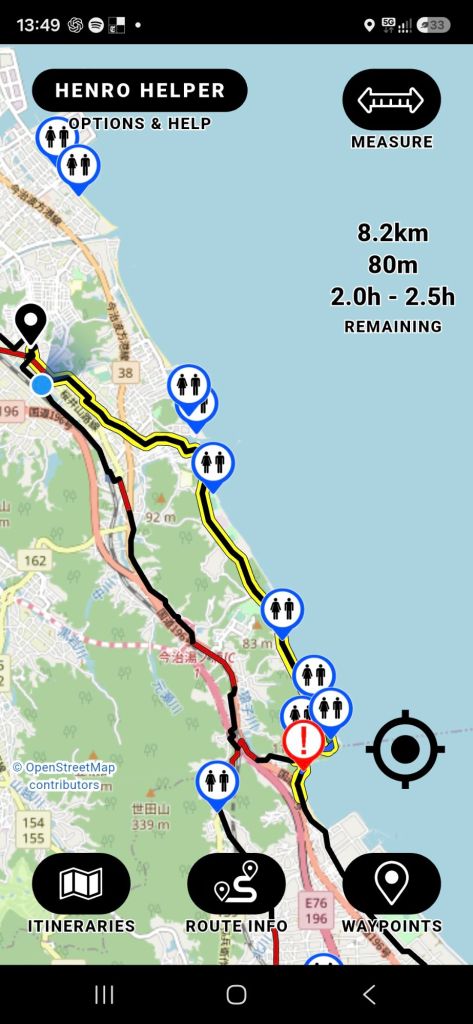
Now I start the long stretch along the coast to the next city, the next temples and the next accommodation. I choose the coastal route partly because of the wonderful line-up of toilets I see on the map. Although sod’s law means I don’t need a single one of them today.
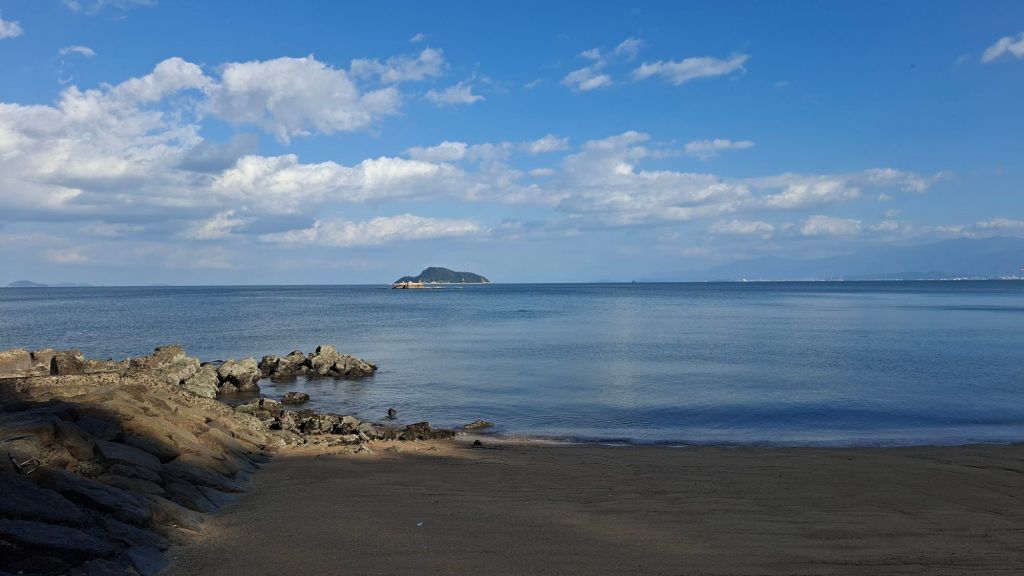
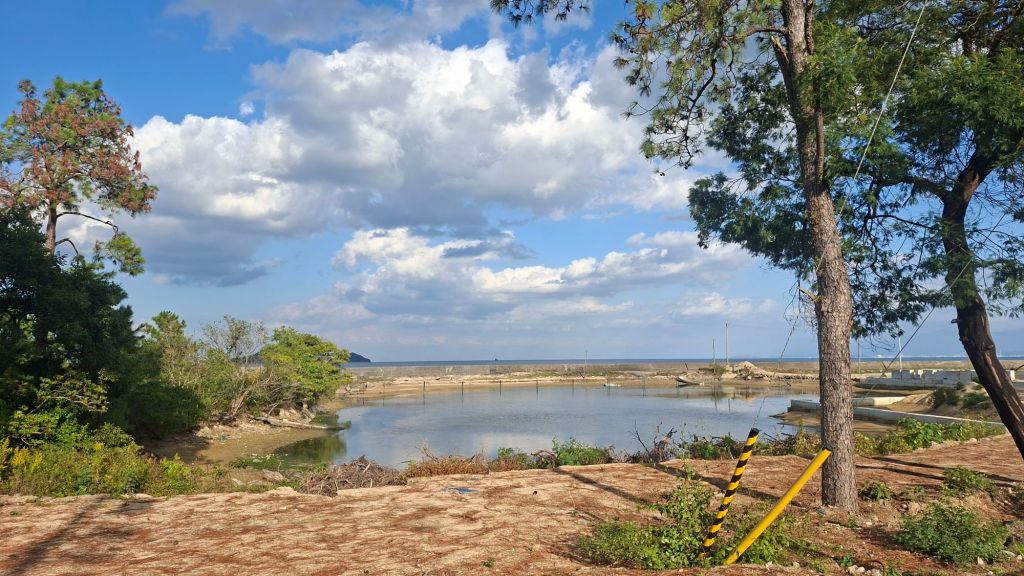
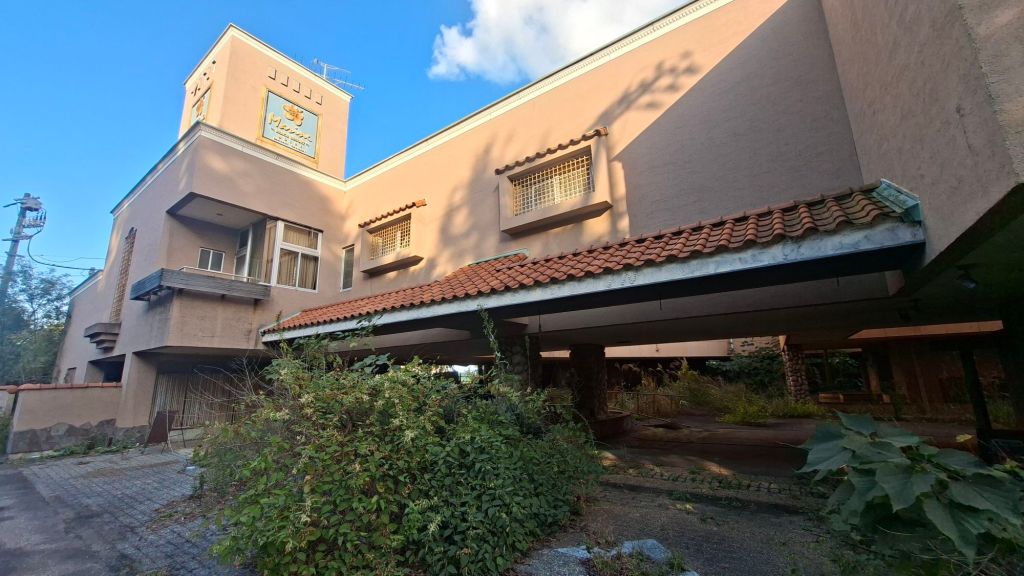
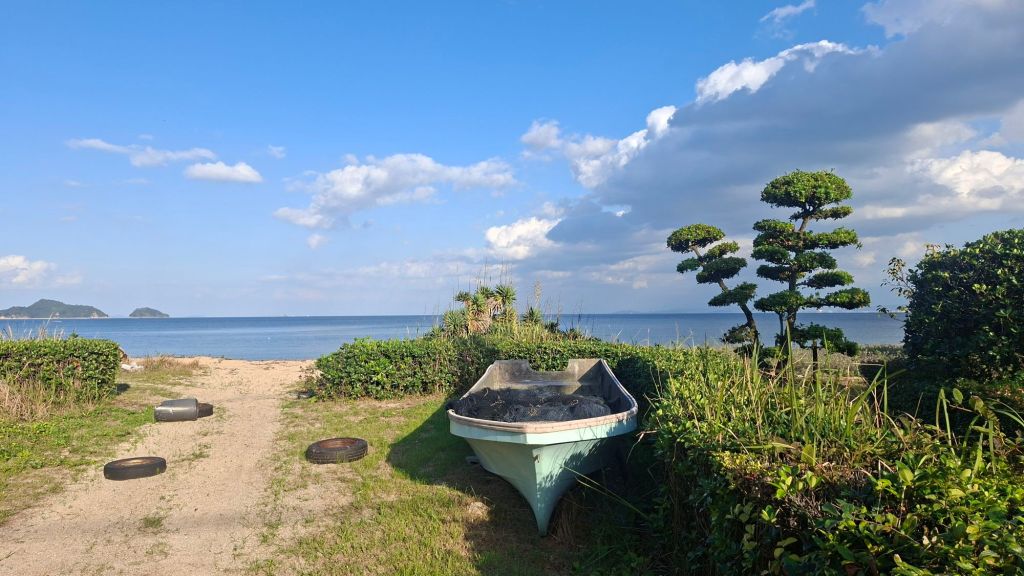
I’m all set for an uneventful stroll along the coast, looking across the bay to the huge mountains behind Saijo City, the massive refineries built up along the Saijo City waterfront, the tiny islands dotting the sea, empty beaches and slightly forsaken resort complexes. The thing that makes the biggest impression, is an extraordinarily pure light, which adds a diamond quality to everything.
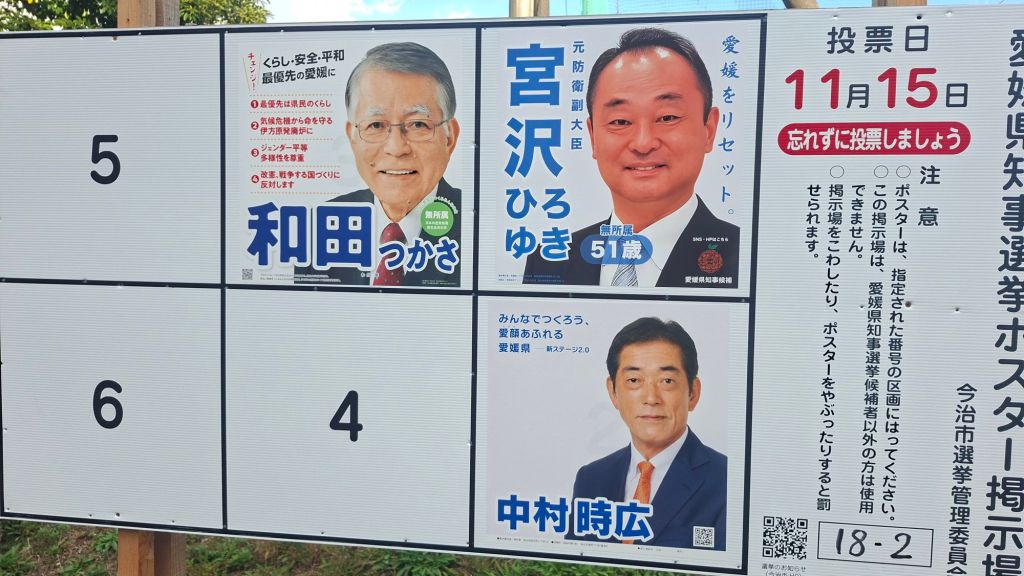
Candidate 3 had smiling lessons
But as I’m walking along, two teenage boys overtake me with a cheery hello. I think back to the last teenage boys I had any dealings with, when walking to the station in England at the start of my trip. Three teenage boys carrying their scooters, walking three abreast and blocking the path, so that I am forced to knock into them, and then a flurry of insults and curses following me as I carry on through the woods. It was so annoying that distracted, I had accidentally jumped on the wrong train and nearly missed my plane.
But no, these teenage boys could not be more .
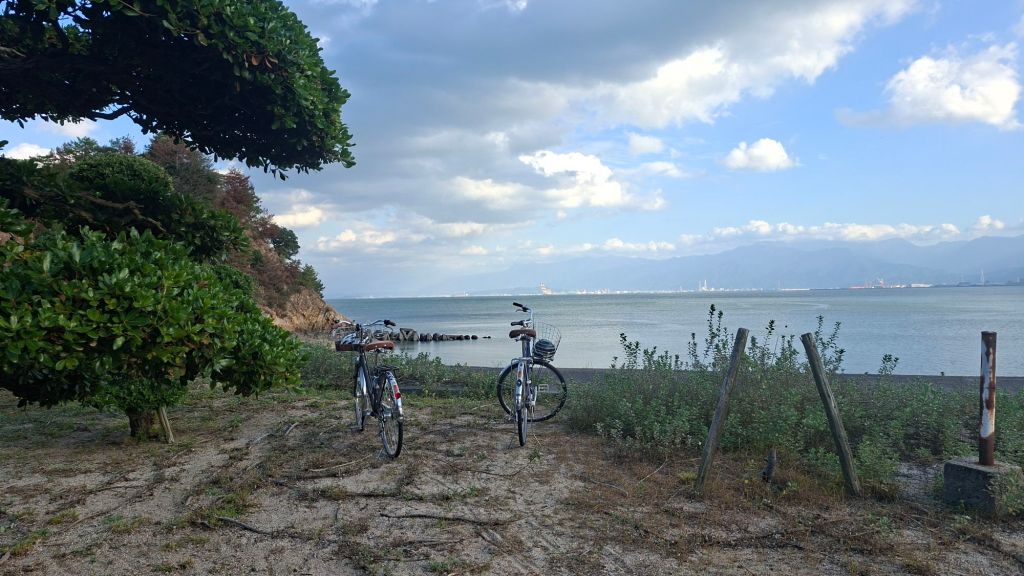
A little further along the path, they’ve turned around to catch up with me and want to speak to me in English as they push their bikes. Tatsuki and Saiki have decided to change their afternoon plans.
Saiki speaks slightly better English. Tatsuki speaks only a few words, but he does try, and I encourage him. He’s delighted by any praise.
They are friends. They love baseball. They ask me if I know the name of a famous player. I do not. They move onto football and say “Harry Kane”. I nod. I say “Lionel Messi”, and they agree. The conversation does then moves on.
I leave them after they have taught me “take care” and “goodbye” in Japanese, but because I’m about to continue along a blocked path, hey cycle back and tell me, “No, no, the road is blocked. You need to go on the beach.”
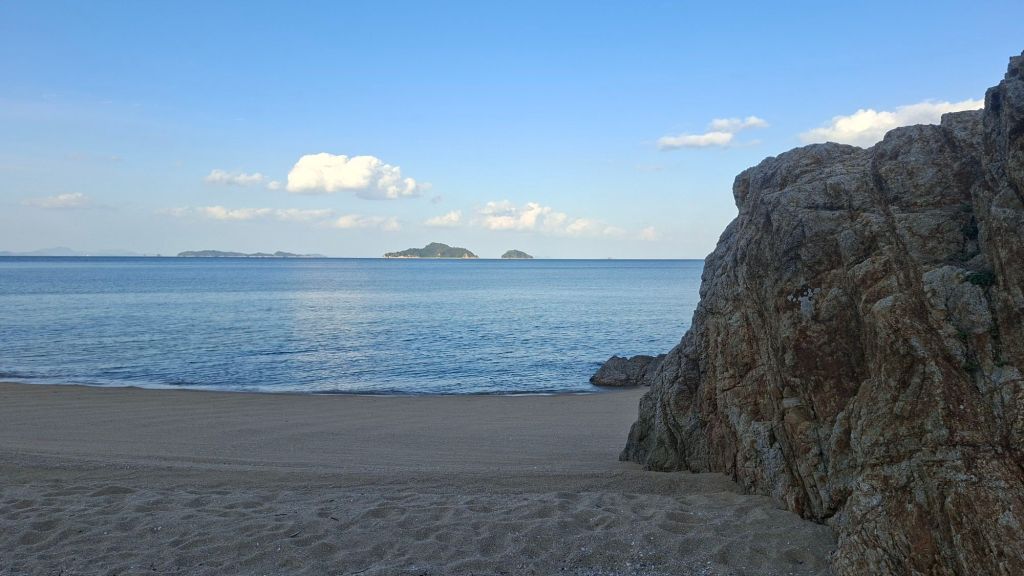
As I stand facing a massive great wall, the two of them get off their bikes to help me get across. Saiki takes my rucksack, and as I crab-crawl down the far side of the great wall, he runs down and jumps onto the sand with a thud that makes me pity his future knees. Tatsuki hands me my sticks, and wishing me good luck, they say goodbye again.
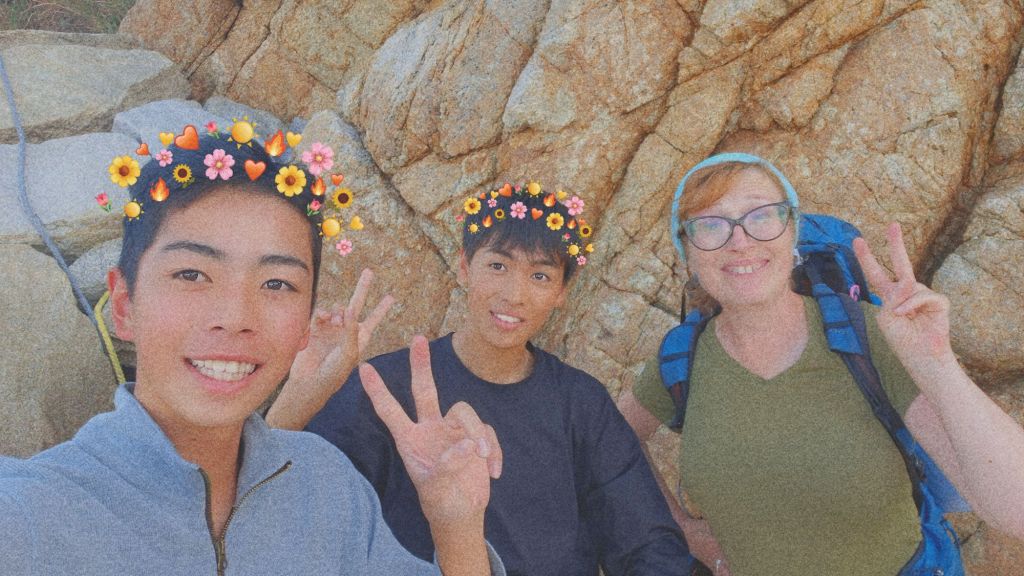
A little bit further along, I’m able to get back onto the road again, and as I start to walk up the winding hill on the final leg away from the coast, the boys catch up with me once and push their bikes up the hill to accompany me.
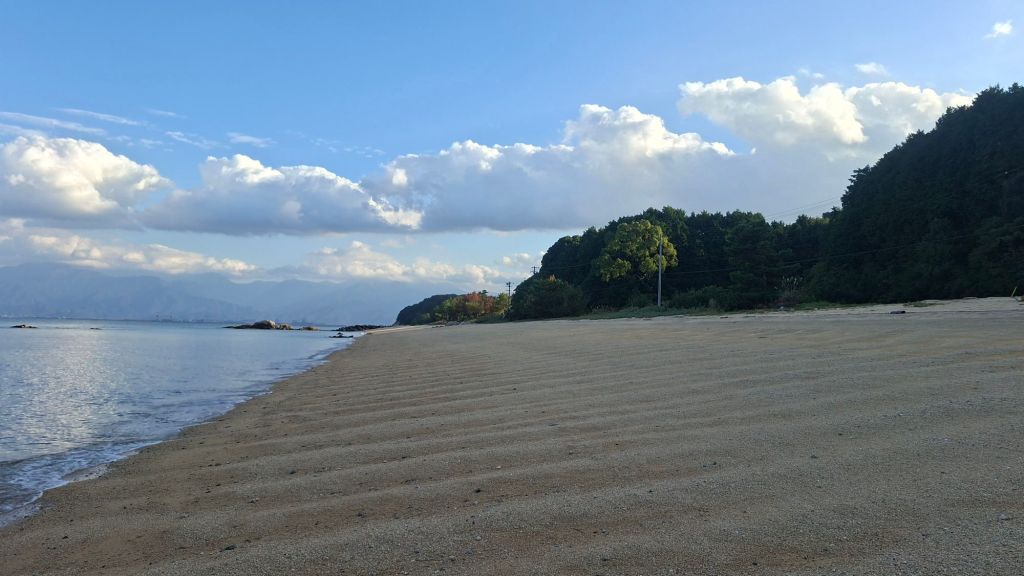
They talk about school. They don’t like learning. “That’s okay”, I say to them. “I don’t always like teaching”.
They ask me my age. I ask them theirs.
“Fifteen!” says Saiki, and then, very proudly, “We are teenagers!”
I don’t know if this is a newly learned word, or if he’s excited about what’s coming next. Because, as if to prove his teenage credentials, and let’s face it, he has to do something to break the angelic guise, he comes up with the most inappropriate English phrase he knows.
It’s hard to take offence. So I raise my eyebrows. It is for just such occasions as this that I paint them in each day. And on seeing them , he immediately backs down and apologises.
“Oh sorry, just a joke, just a joke,” he says a dozen times. And we carry on up the hill, talking sport and school.
As we reach the crest, they both, with perfect synchronisation, park up their bikes at a viewpoint and shout out in perfect English, “Wow! What a view! What a view!” And indeed it is. The city spread out below and the hill in front of me, which I need to descend.
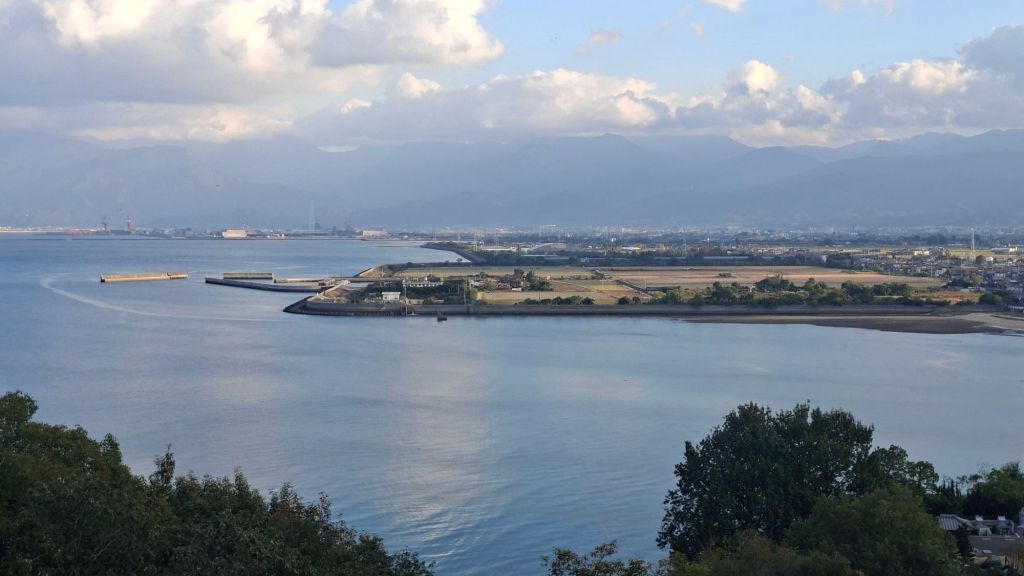
We part one last time, and Saiki and Tatsuki enter the very select ranks of teenage boys, of whom I do not disapprove.
I check my watch. I’ve decided that from the edge of town, instead of following the main road, I will take the bus to get to my accommodation in time. And it seems I have plenty of time for that.
On the map there is an exclamation mark which suggests that the path may be hard to find due to construction work going on. When I come to the construction work, the building of a new Shinto temple, I therefore decide to check.
Three beautifully robed Shinto priests exit a small building near the entrance. And my first instinct is to go and ask them. They seem very perturbed that I’m asking them anything at all.
But when I say, “Ohenro”, an old lady comes out and immediately beckons me over.
“Oh yes,” she says. “Osettai, osettai.”
I am concerned that she may think I’ve walked over deliberately to claim a gift. But very kind, very friendly, she ushers me into the house, puts a stool just inside so I don’t have to take my shoes off, and feeds me a homemade azuki bun and a cup of tea.
Okay, I think, I can sit here for a bit. There’s still enough time to get the bus. I need to be appreciative. I eat the bun with not too much haste, I feel, and finish the tea. But I’m too slow to stop a top-up. It’s okay. I had about twenty minutes in hand.
When I do start to go, another old lady who’s been hanging around watching makes the sign which I now understand means stay where you are, stay where you are. And she tells me she will lead me down the next part to make sure I don’t lose the path. Okay, I think, as she walks very slowly across the building site to the path down the hill.
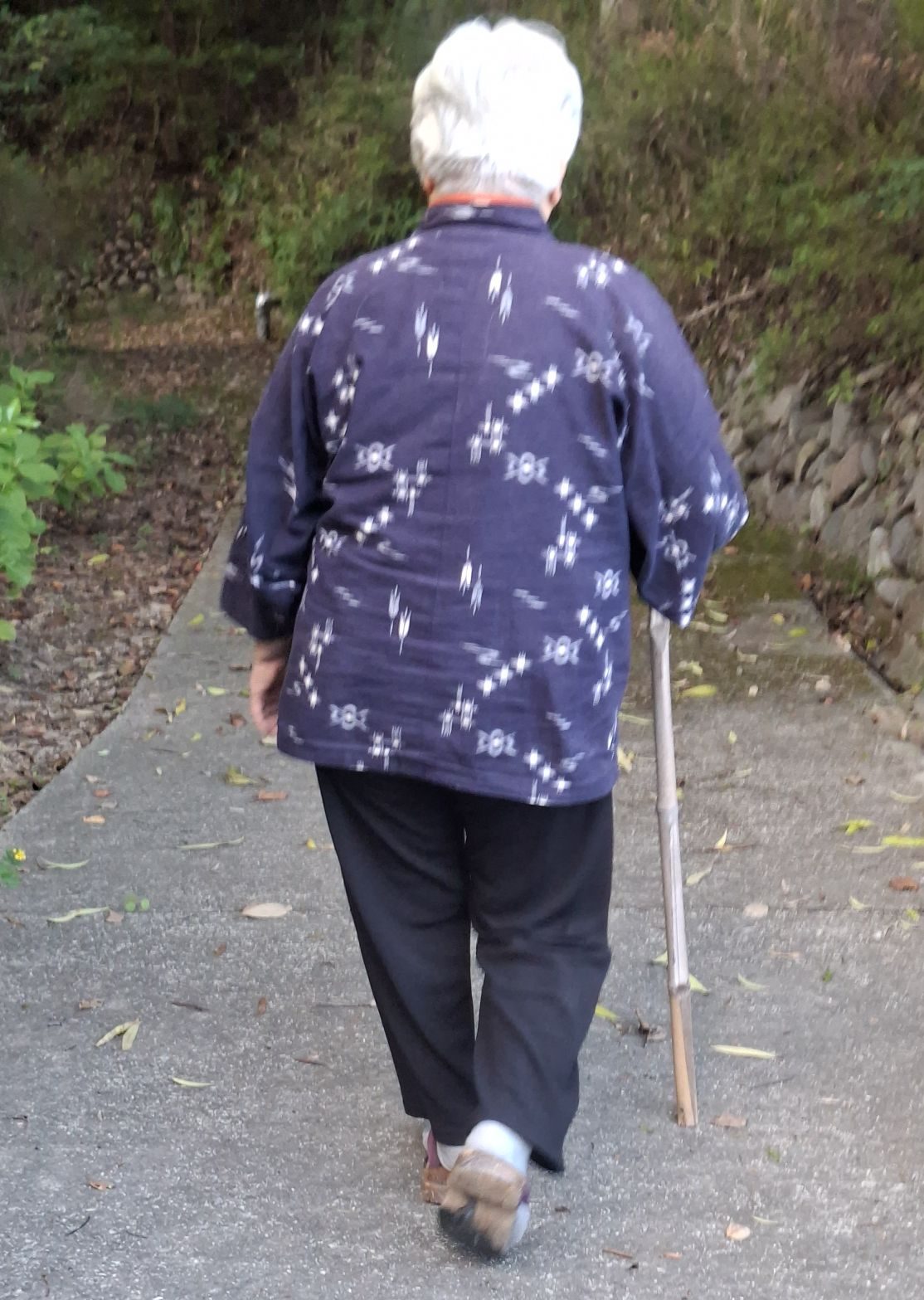
I’m walking alongside her, attempting to chat. And I think she says to me, “You run on ahead, run on ahead.” But clearly she’s not, because when I do run on ahead and say goodbye, she looks at me strangely and tells me to stop again. So this was more than just showing me where to set off, I realise.
I get back into step with her and manage to answer a few basic questions and tell her how beautiful and difficult everything is, and how happy I am, because I have no other words.
Eventually we go through a secret snicket and arrive at her house.
“Wait here, wait here,” she signals again. “Do you have a drink?”
Before I can answer, she asks her daughter to go and get something. Not to be outdone by the woman at the top, this woman is going to give me osettai too. She gives me a small bottle of iced coffee and three satsumas. Local fruit, she tells me. And with great thanks, and only half an eye on the time, I walk calmly around the corner before running for the bus. Which is, of course, late.
On the bus, the driver too takes particular care of me. It’s strange to find I can answer his questions, I guess, because he just keeps on asking me where I want to get off. I keep telling him, I think, but he’s never quite sure I know what I’m talking about.
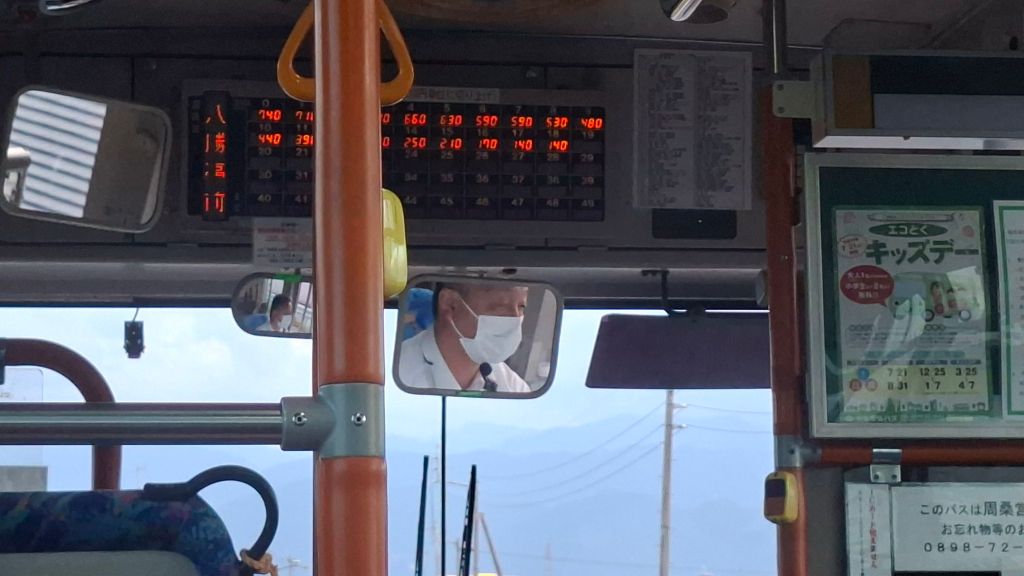
Having asked me if I need to get off at almost every stop, eventually I ring the bell and he nods and lets me . I have the exact change for the fare and not a yen more in my pocket. Everything today was meant to be.
At the inn, the ma and pa greet me when I arrive. My bath is drawn, I’m shown to my room, and I’m told that dinner is at six.
It’s a quick turnaround, but I manage it. I sit down at the table with three Japanese men who don’t know what to make of me until they realise they have the very practical task of showing me what on earth I’m meant to do with the food in front of me.
On a little individual stove, water is boiling. And on a plate next to that is a huge pile of food: chicken, slices of some sort of meat, mushrooms of many kinds, bean sprouts, leaves and tofu.
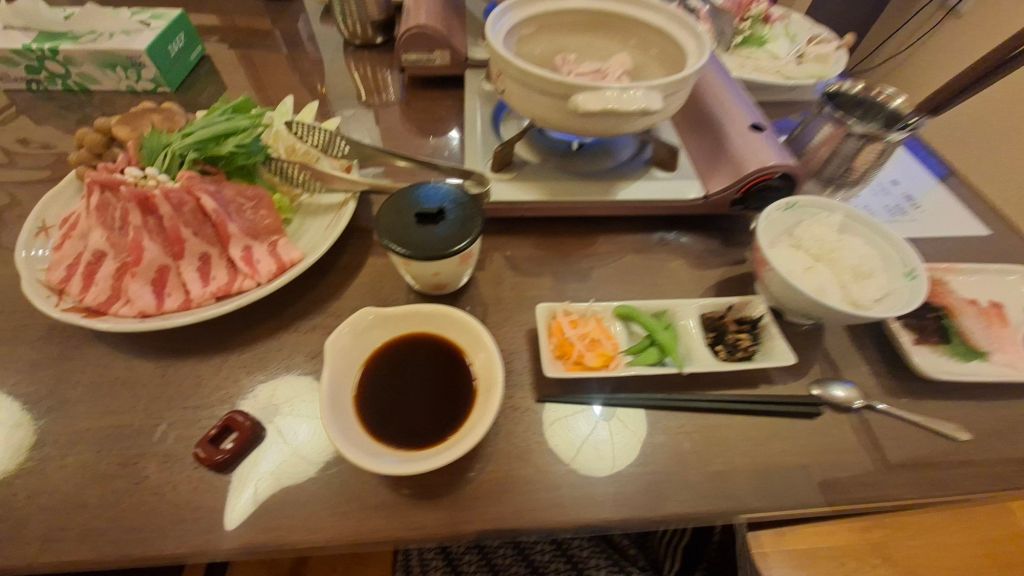
The men show me I need to take it, put it in the water in batches, and then, when it’s all cooked through, dip it in a bowl of sauce on my left for seasoning, then eat. Luckily I’m getting quite good with the chopsticks now, because this is all a major manoeuvre. But I manage to eat at almost the same rate as them.
I’m starting to get the hang of this, I think. My repertoire now include two-word phrases. With careful observation, I can eat the meal without causing offence. I even tied my dressing gown. Beautiful. Difficult. Happy
One week in. I’m doing okay.


Leave a Reply