Shikoku 88 Temples – Day 5
Matsuyama to Seapa Onsen: 28 km (+4.5km bus)
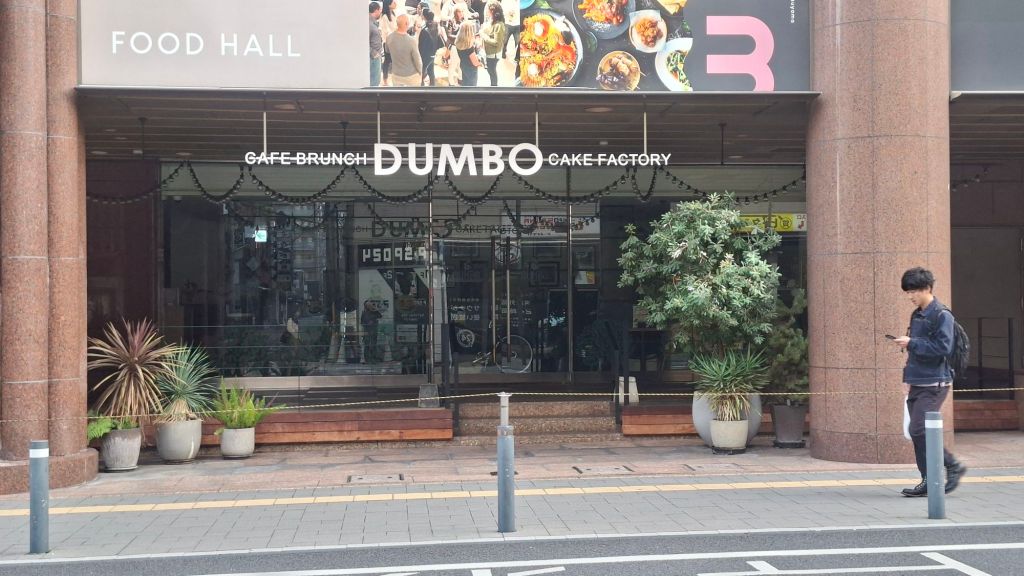
My plan for this morning is to visit Matsuyama Castle on my way out of town and then go via the Dogo Baths, maybe get a foot bath on my way out. For this reason, I got up at six and went for breakfast. No breakfast included today, so I’m fending for myself. I opt for carbs.
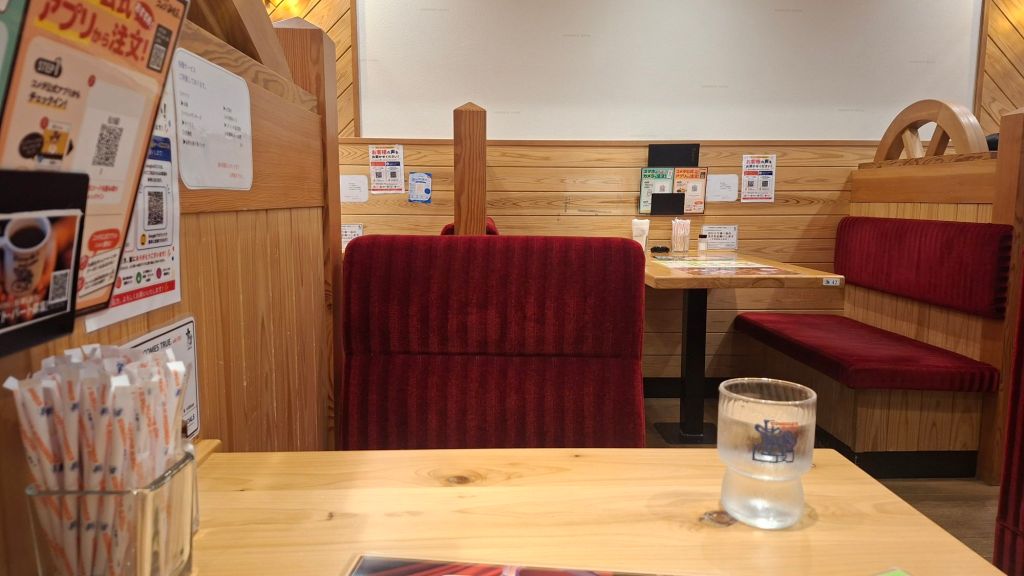
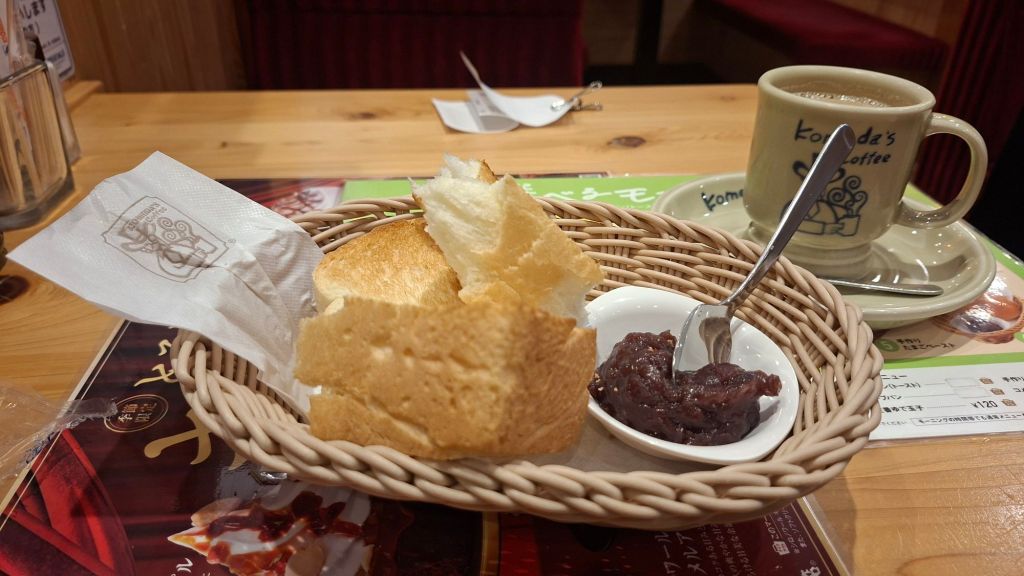
My actual morning ends up being a search for incense sticks. As,a result my sightseeing of Matsuyama is not all the usual cultural highlights. However, I learn a lot.
I learn that Japanese shop assistants are so extraordinarily lovely that it’s worth getting lost in the basement of a store just to find one to help you out. This one speak a tiny bit of English, and finally I get redirected to a drugstore, which I could have found fifty minutes ago.
What would have taken me ten minutes in England has taken me two hours here. This is the difficulty of being illiterate and in a culture you don’t know. It’s not that everything can’t be done, Japan is made for convenience and the people are extraordinarily willing to help, but everything takes time. On the other hand, what would have been a very dull 10-minute task back home, has been two hours of discovery and fun.
I decide I will visit the castle after all, although I think the sight of the shopping malls has been as exciting an experience for me as any ancient monument. Maybe they haven’t transported me back to the Middle Ages, but I’d say these covered arcades have definitely got me as far back as 1983.
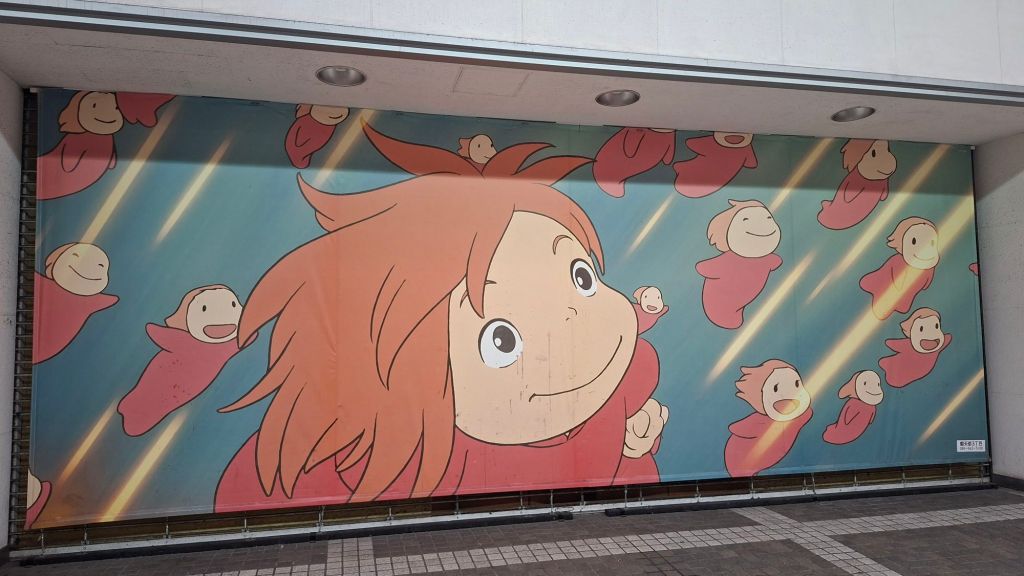
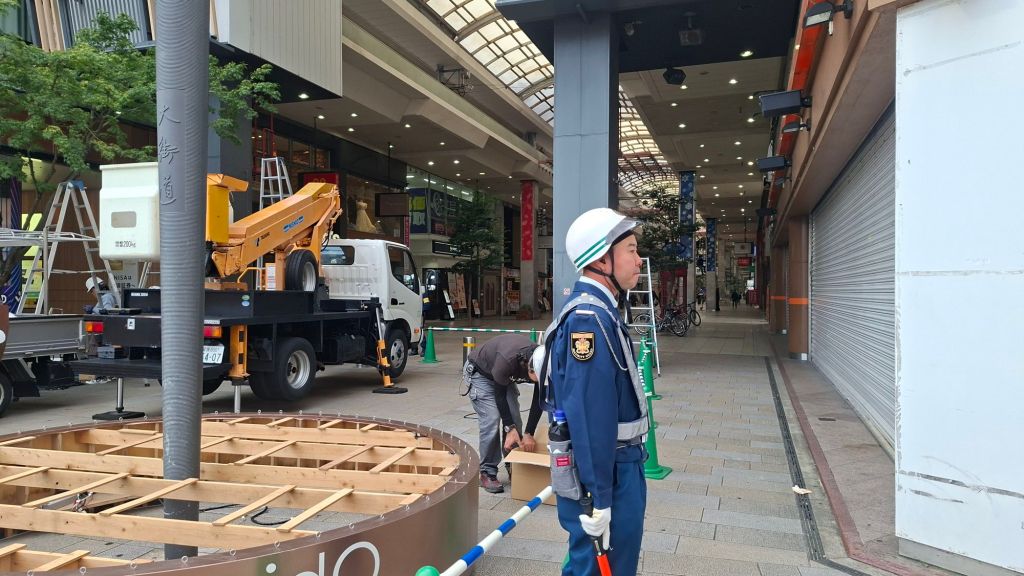
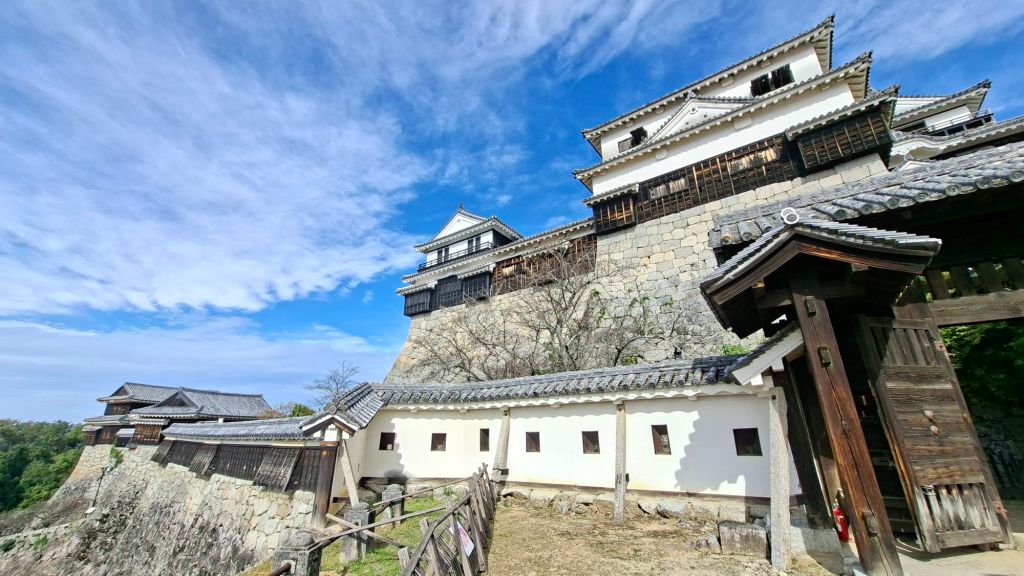
Good decision. Matsuyama Castle is a one hundred per cent excellent tourist destination from beginning to end. No queues. People give you change. Lockers for your backpack. Everyone polite. And that’s just the front desk.
The journey up is on a chairlift, the ultimate way to travel. I feel weightless. I notice everyone going up and coming down is swinging their legs. What a sense of freedom. A few people wave. I wave back.
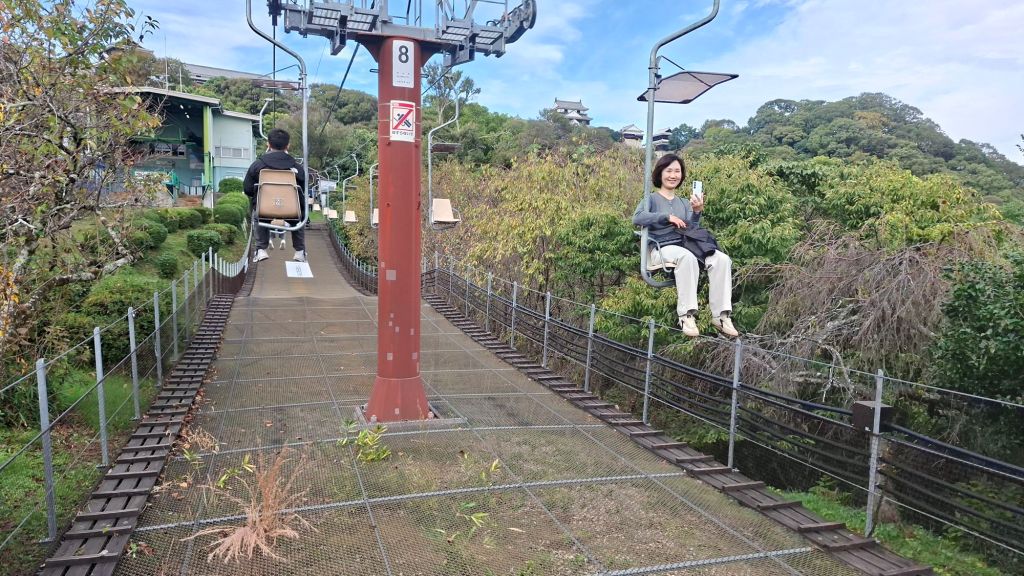
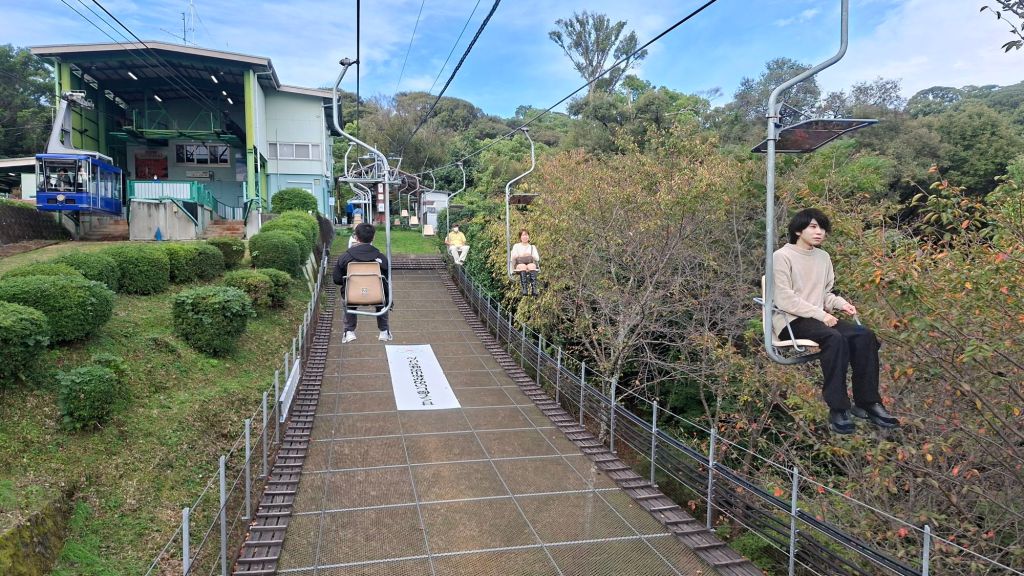
When you get to the top, there are groups of primary school- and kindergarten-age children with their teachers waiting to greet tourists and offer them pieces of information, shouting out in the cutest voices and occasionally, on seeing me, there a chorus of hellos.
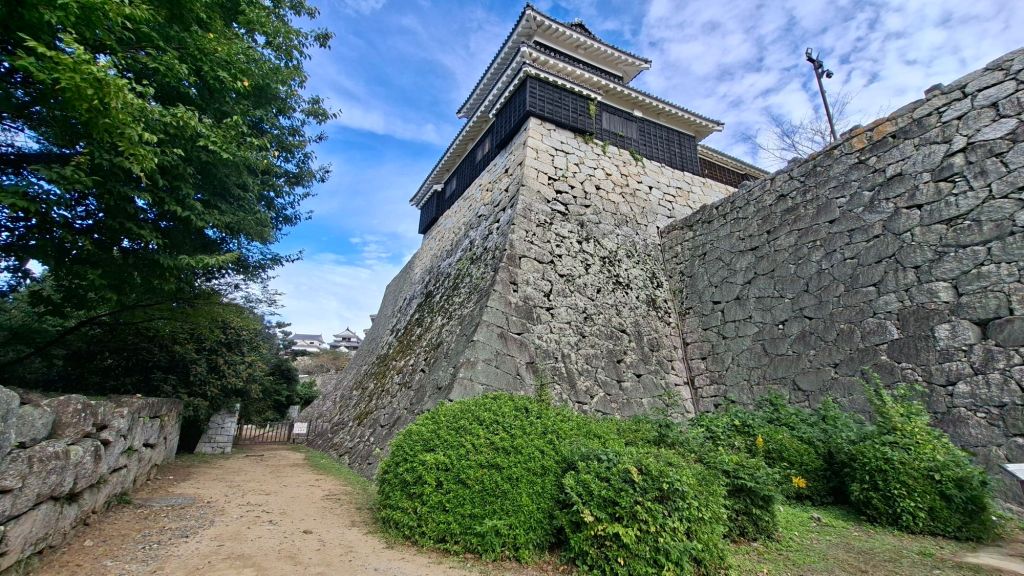
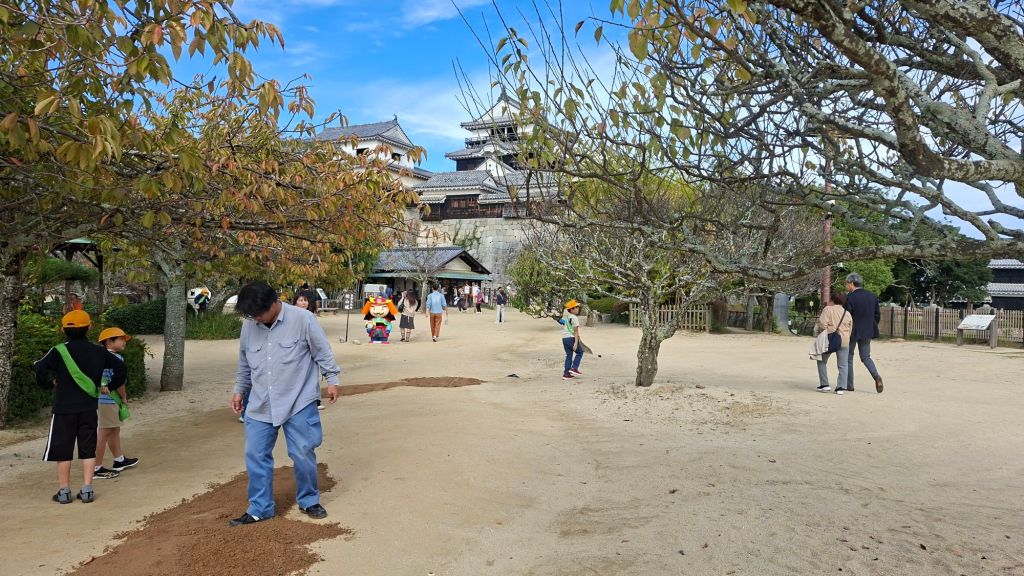
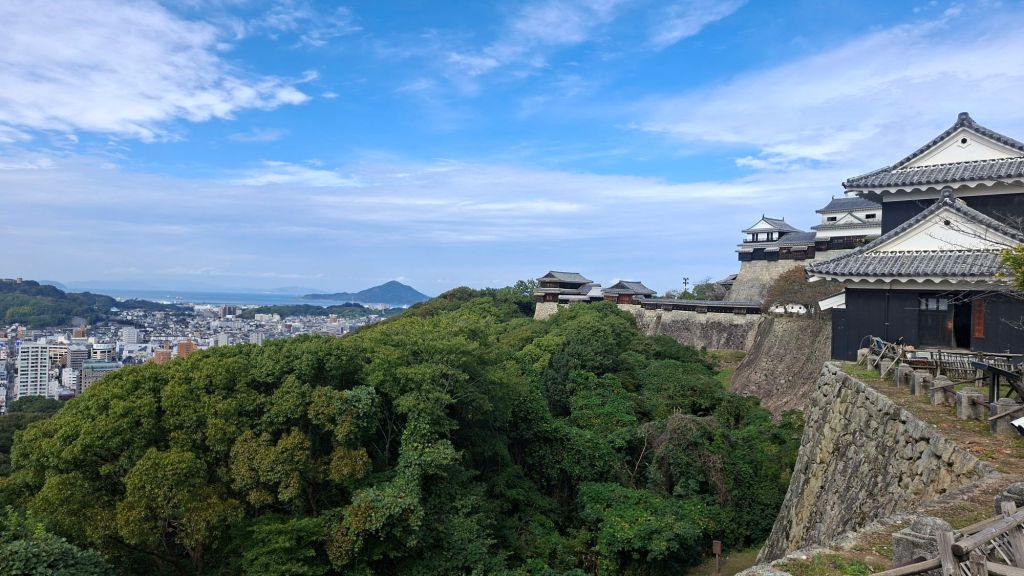
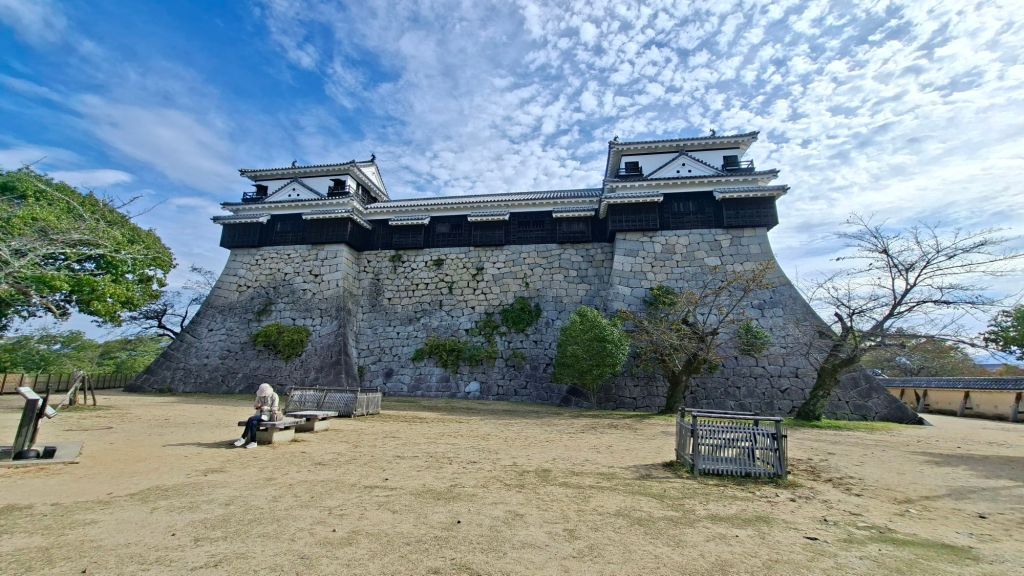
I don’t pay to get into the keep. I don’t have time to visit it properly anyway. But the walk around the grounds gives you huge views towards the Inland Sea, across the city and back to the mountains I’ve come from. Besides castles are built to keep foreigners out.
On the way down in the chairlift, it’s just as exciting, this time with the views of the city beneath you. As I’m watching the people come up, I see a familiar face. The South African from the convenience store, passes me on the right. He sees me, recognises me, shouts out my name. He is no longer all zen, now he’s as excited as a kid in a castle. “Anthony!” I shout out. I hope that’s his name.
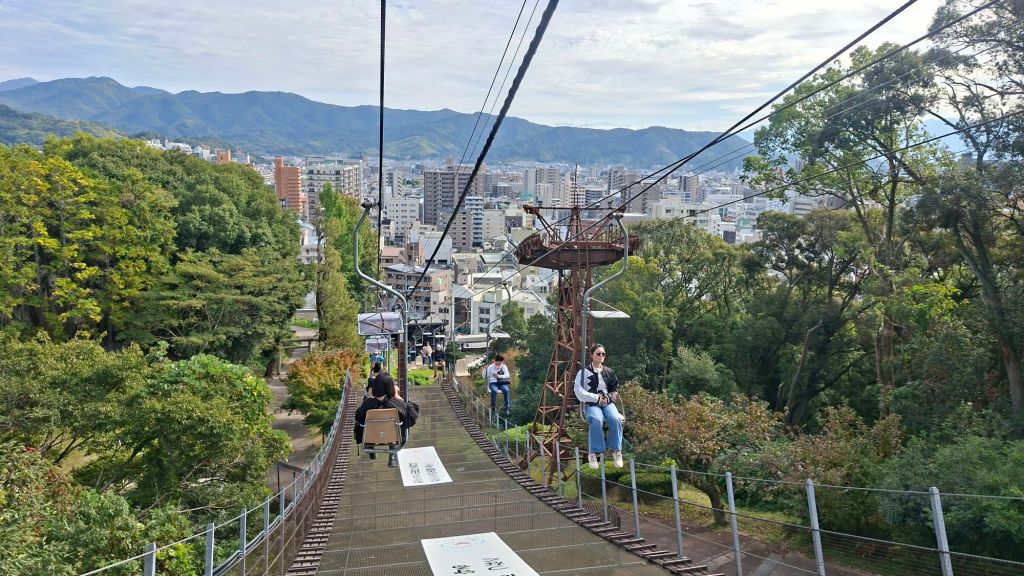
No point pretending to be all now, Anthony. He’s as excited as I am.I think he’s called Anthony. I hope he’s called Anthony. That’s what I shout out anyway.
Looking at the time as I get my feet back on the ground, I get ready to go fast. I’m already so far behind. Then reaching the outskirts, I pass an old lady. She stops and turns and asks me if I’m doing the Ohenro. When I say yes, she carries on talking to me. I try to make myself understood, but at least manage my name and where I’m from.
She reaches into her bag and gives me some food. “Osettai”, she says. And then she says she’d like to walk with me part of the way to the next temple so I don’t get lost. This is lovely, but my pace is now twenty years older. But I know it’s the right thing to do. I can run later, I tell .
Now an uninspiring walk along a path beside a main road in an out-of-town commercial district I will hardly remember at all. I’ll just remember this lovely lady and her snack. The memory becomes even more powerful when I realise the snack is a cream bun.
We shake hands and part and I leave the commercial zone. The way leads through rice fields to a main circulatory road and then to a little village just tucked between the road and the hills. At the end of the village, a narrow road climbs up to the temple itself. Temple 52 is another special one for me.
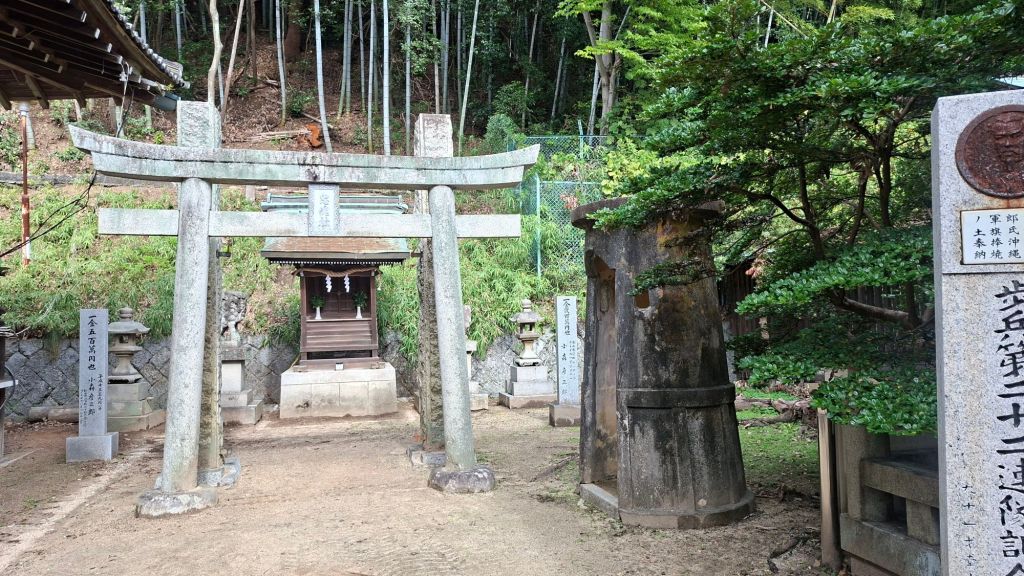
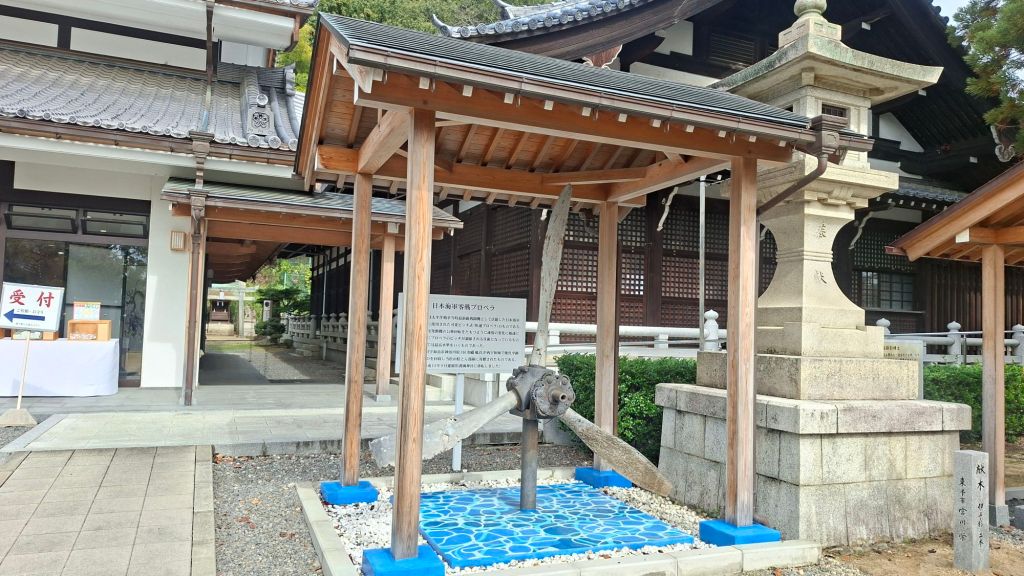
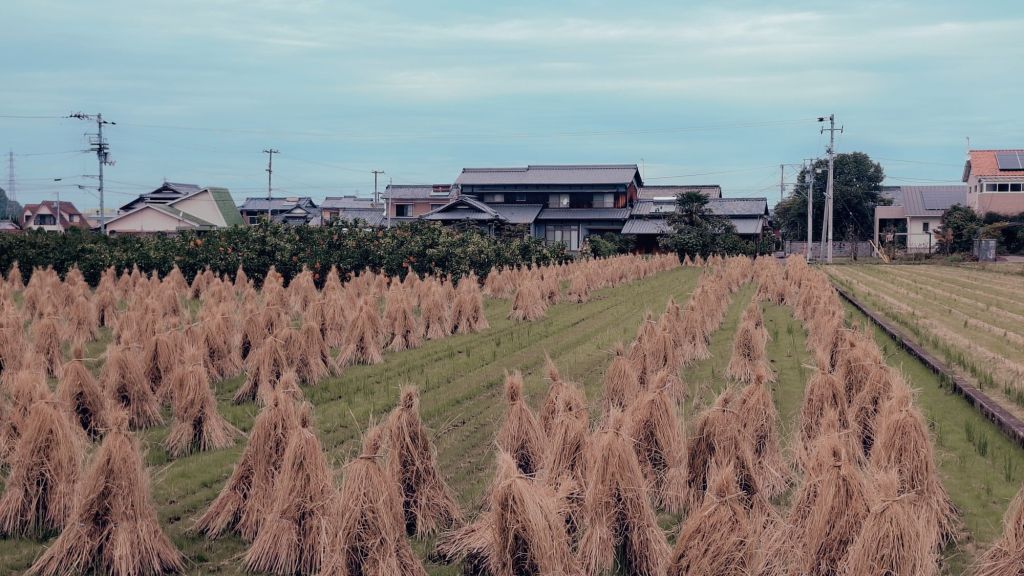
I walk up the hill with a slightly older gentleman who is taking time to get his breath. We exchange pleasantries as far as we can. “Difficult?” “Yes” “Beautiful?” “Yes”.
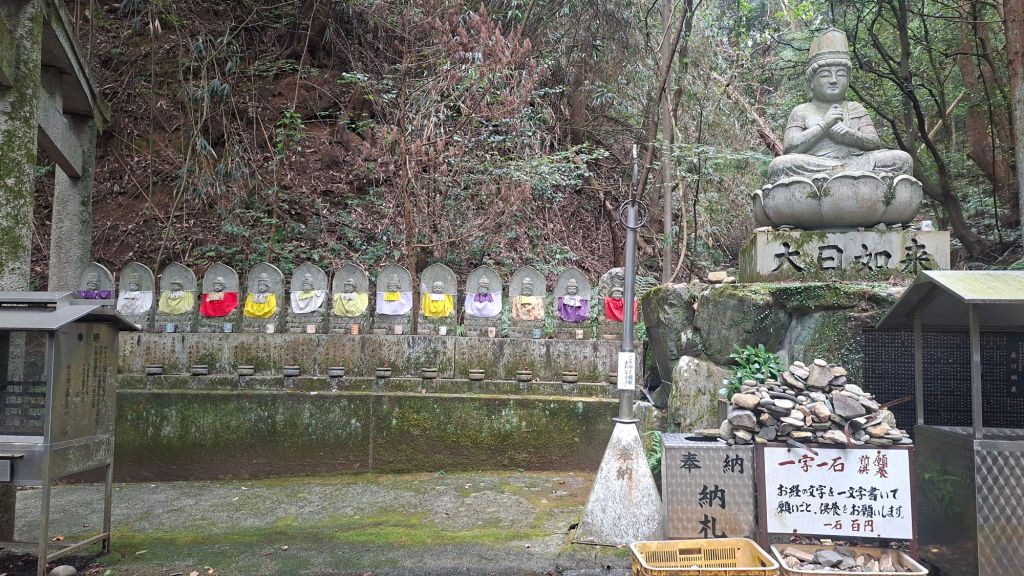
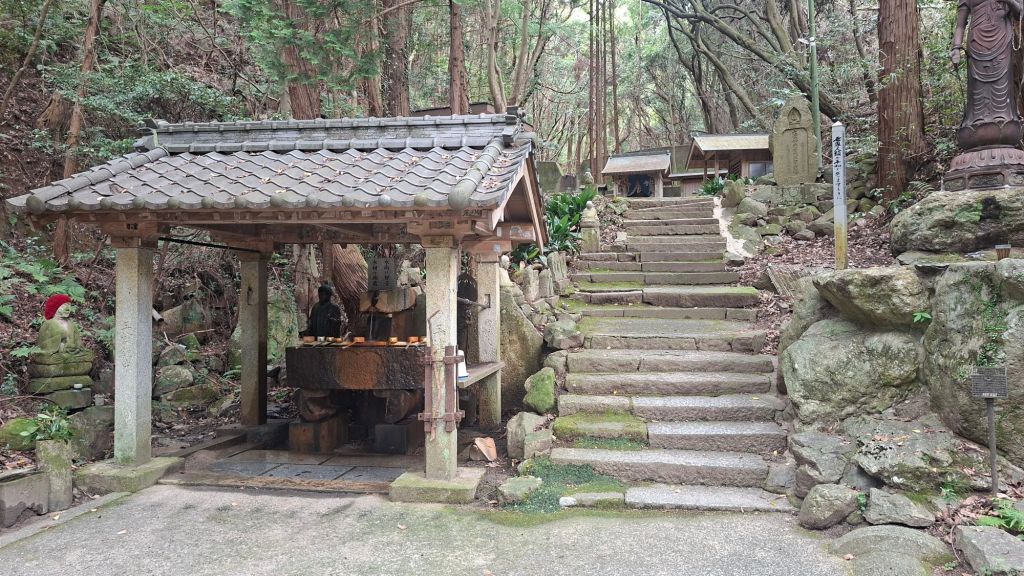
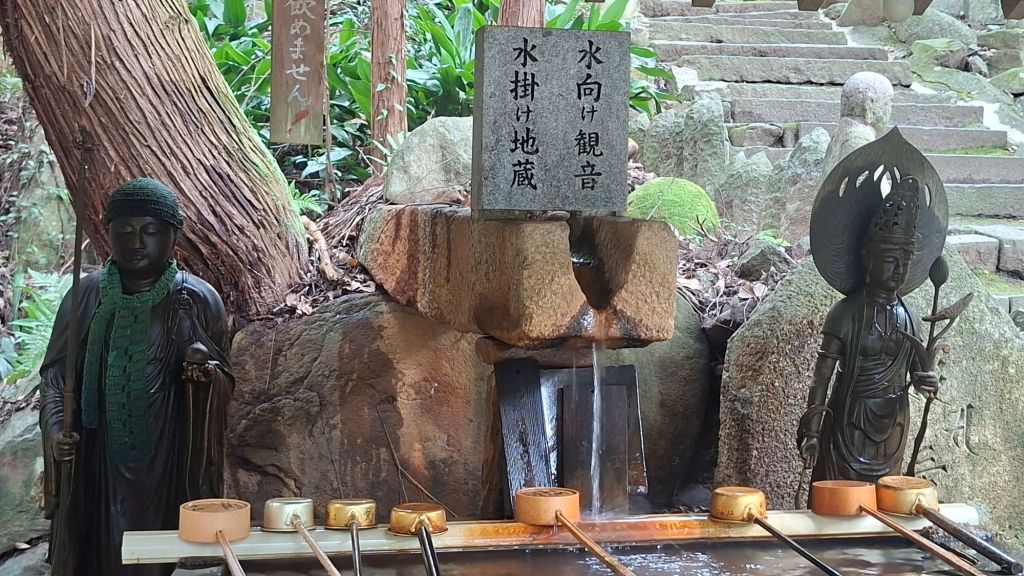
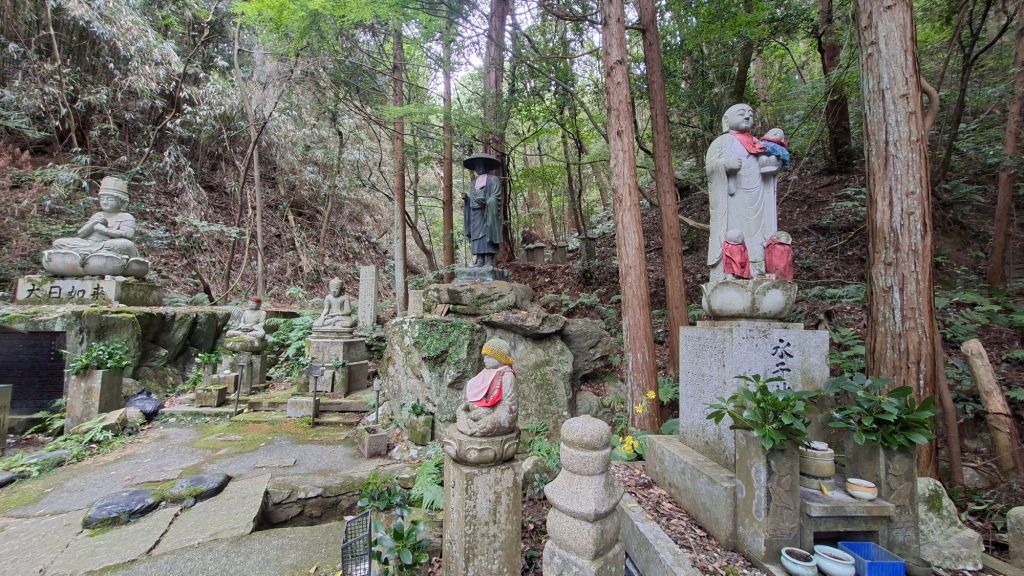
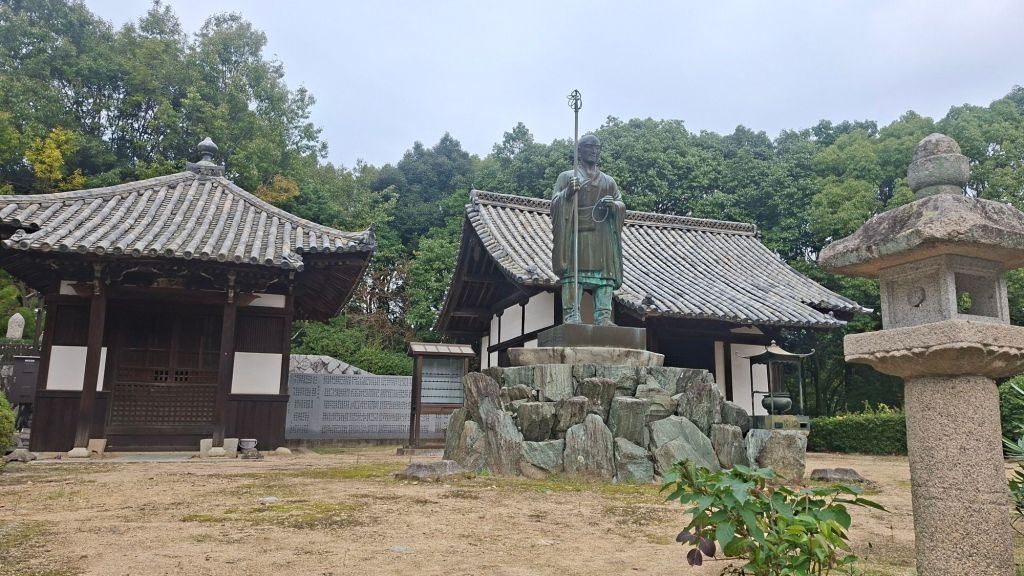
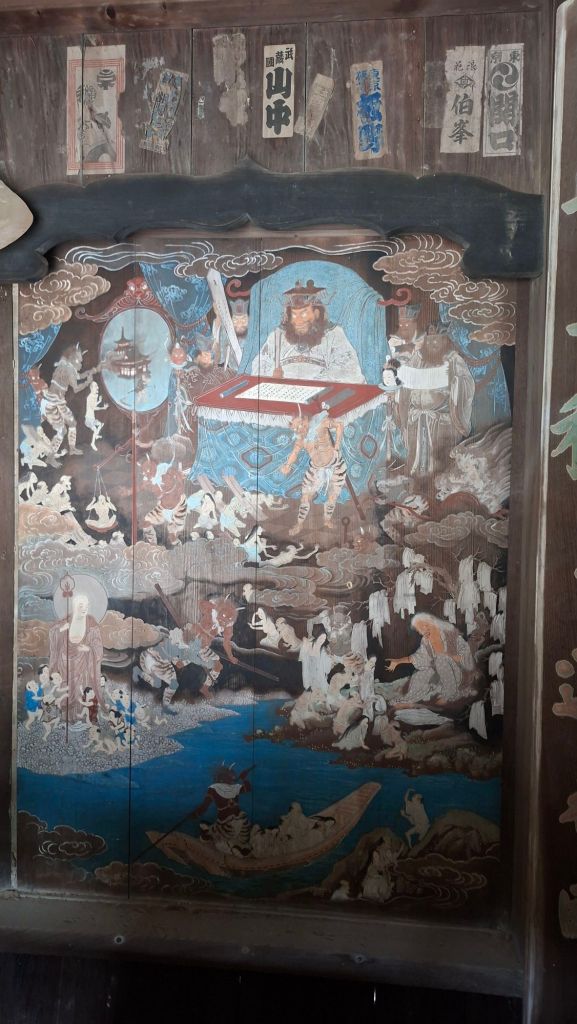
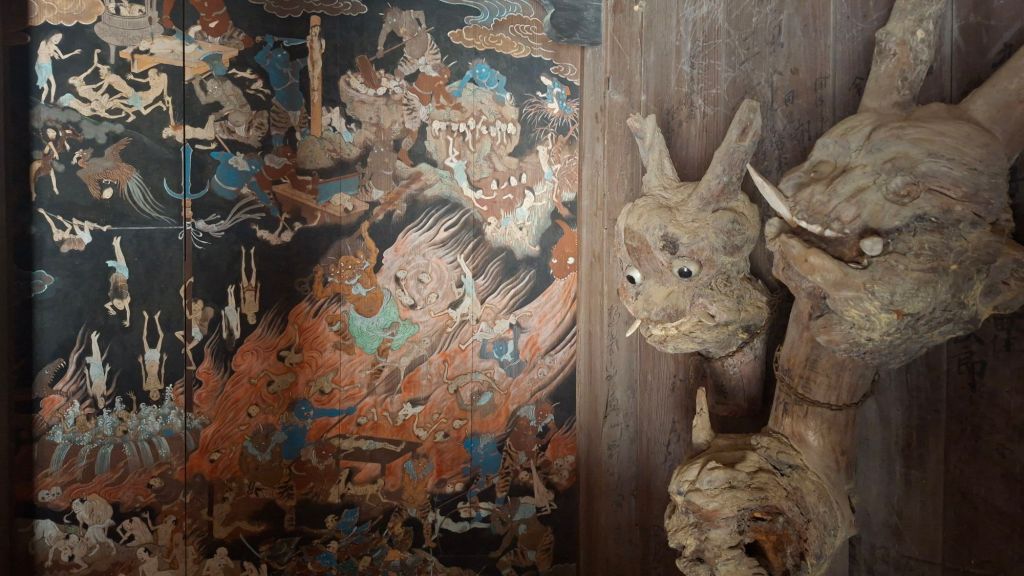
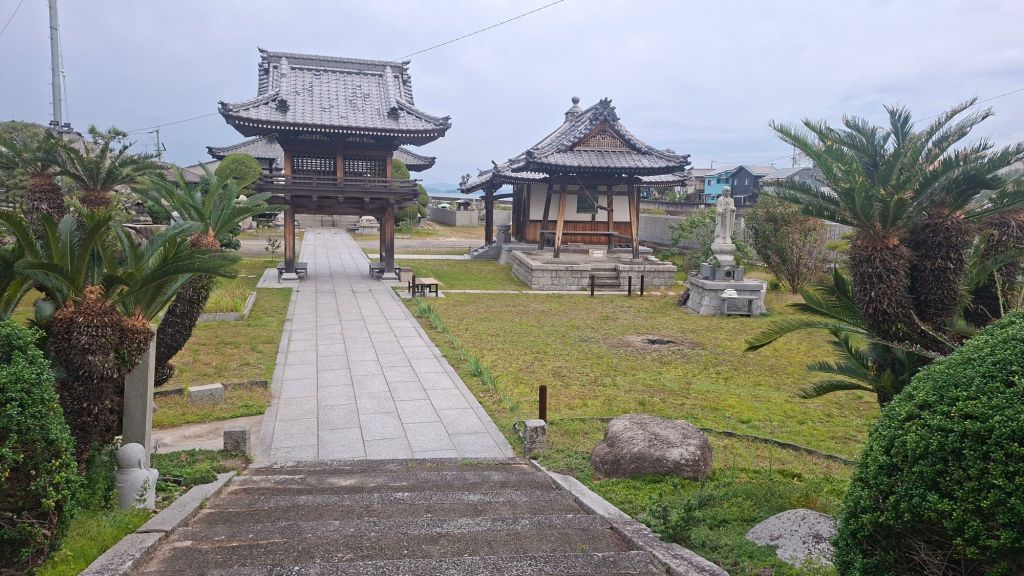
When we get to the little temple complex, I’m impressed by how quiet it is. The bell is tucked away in an Enma heaven and hell hall. And I’m rather pleased with myself when I find it. A Japanese pilgrim hears the bell and thanks me, and rings it himself.
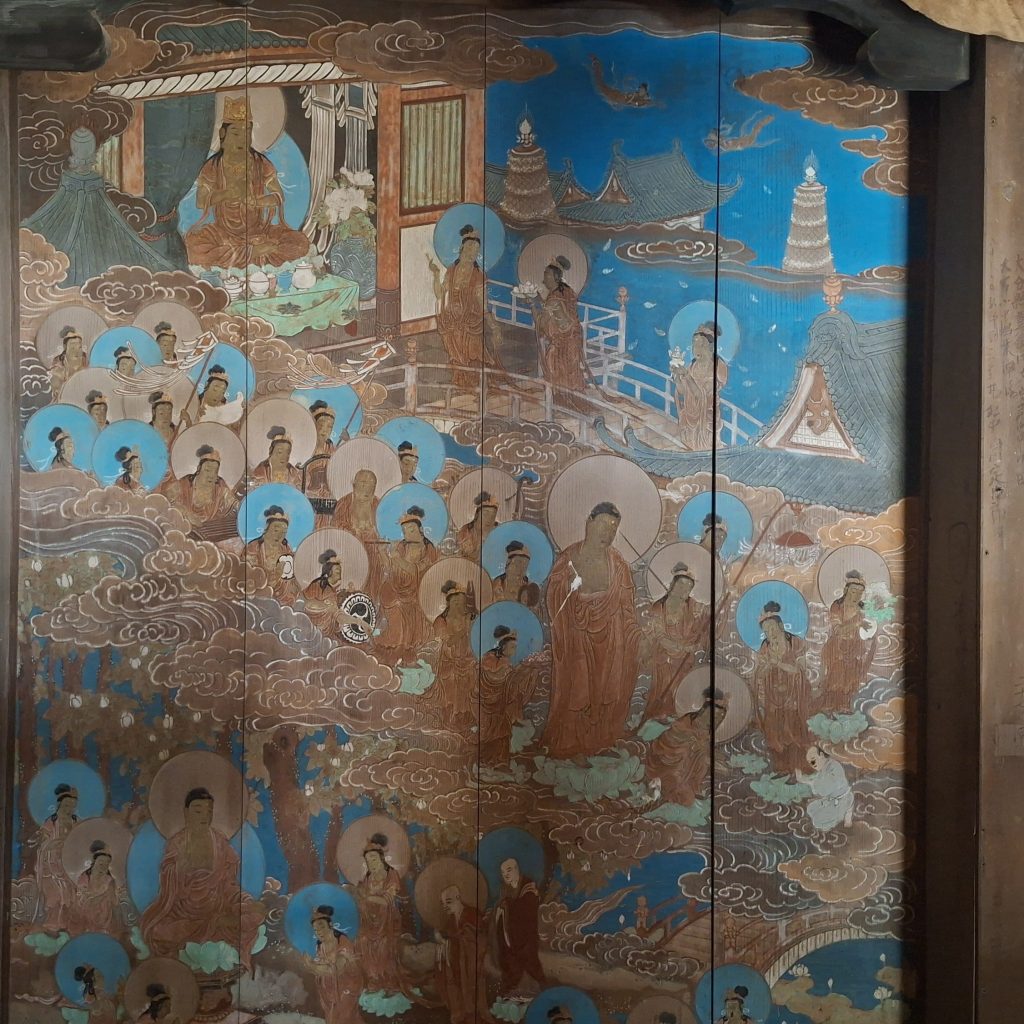
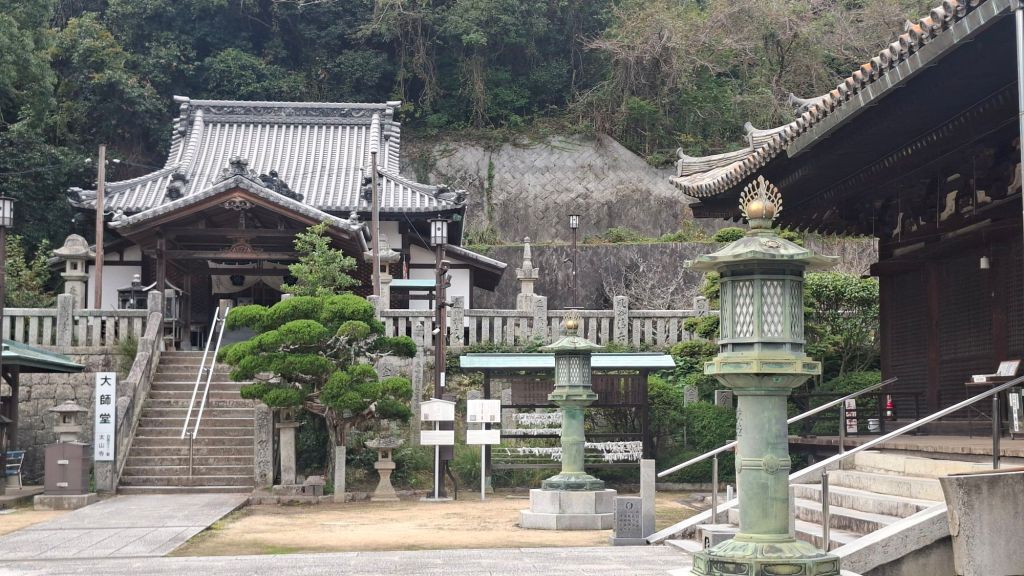
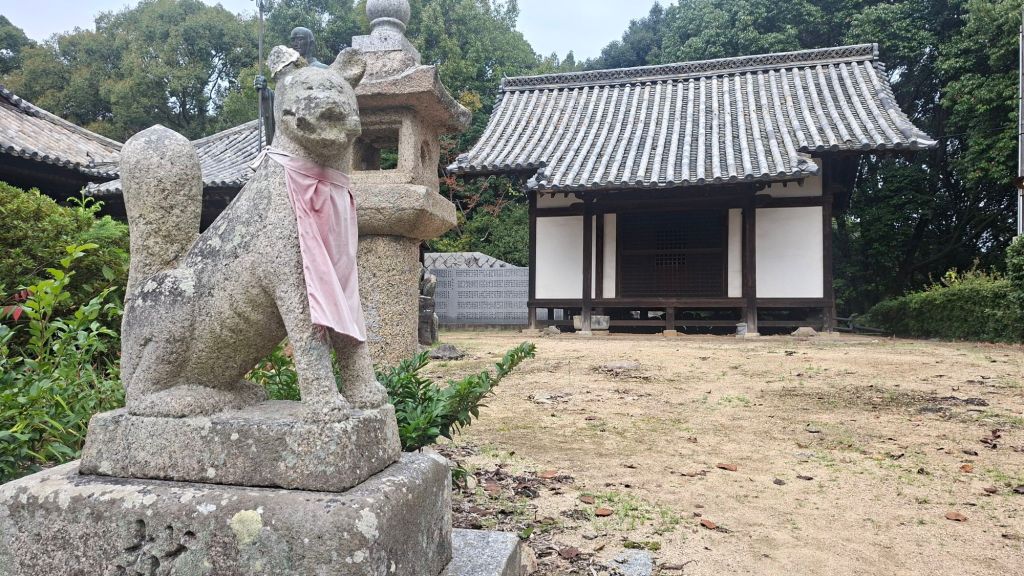
One thing I wasn’t expecting in this out-of-the-way place was to meet a YouTube celebrity, or at least a celebrity to me: an American guy whose posts I’d seen in an attempt to understand temples a little better. He seems pleased to be recognised, and I discover he is travelling with another American who is his Japanese translator. You never see the setup when you see the YouTube videos.
The lady in the office who does my calligraphy is much more relaxed when I come back. I visited her before going to see the temples to ask if I could deposit my bags, and this rather difficult-to-convey request had left her somewhat flummoxed and afraid. When I come back, she’s happy to point at my bags, which have been moved slightly, and to mime a heavy load. I think she’s relieved that the difficult part of the interaction is now behind us, and all she has to do is her usual job.
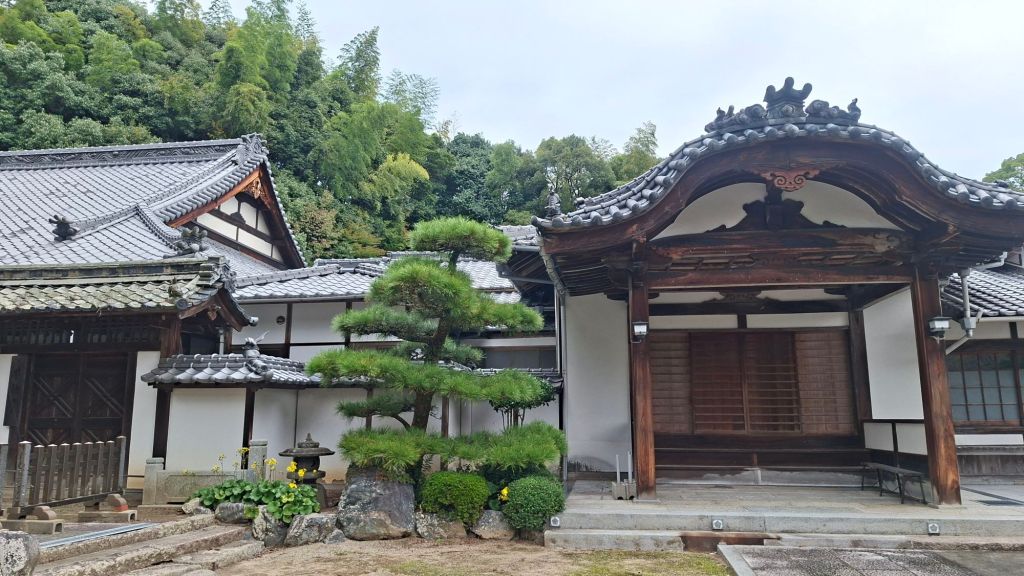
Walking to Temple 53, back on the main road, is an easy, quick trip. And the temple itself is a very unassuming middle-of-the-city temple. Almost more impressive when you approach it from the outside and you see the wall with the trees and the temple all clustered within, a stark contrast to the very ordinary streets.
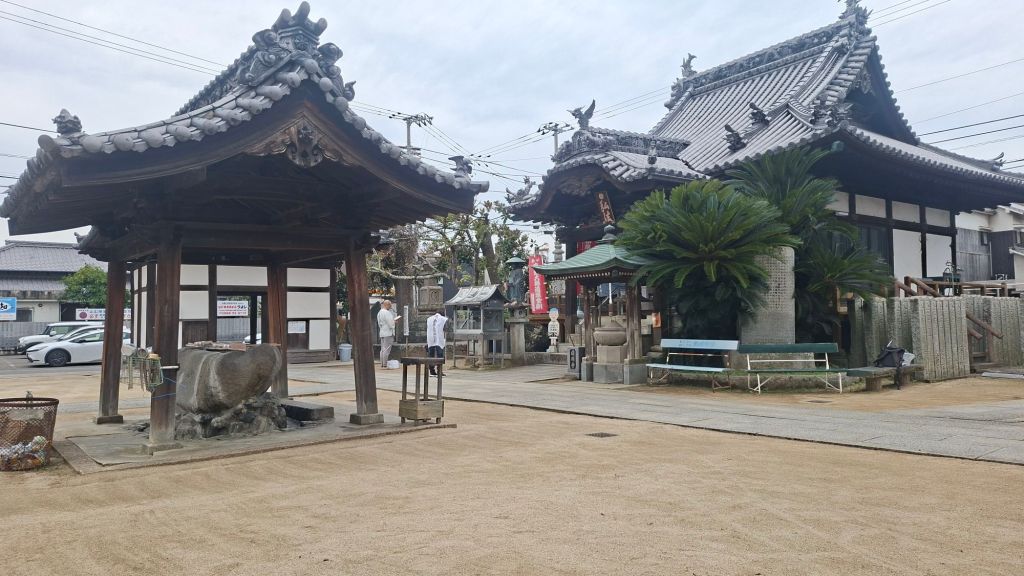
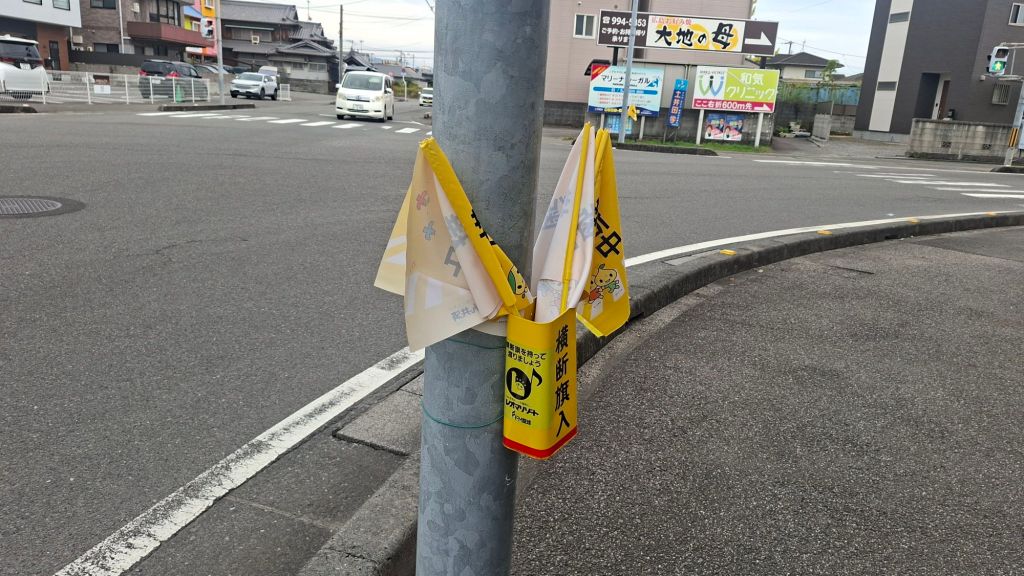
Inside, it feels very much an inner-city temple. You have to negotiate a plastic cover covering some cars to get to the bell, and the office where I get my calligraphy done is also clearly the storehouse for everything non-beautiful and sacred. But for all this, in its own way, Temple 53 is memorable.
While sitting in the temple, I try to phone ahead to my evening accommodation to let them know I’ll be late, but on hearing my voice, they repeatedly hang up. I think my attempt at Japanese is too difficult to deal with. I get as far as saying my name three times. So I hope they take this as a message to say “I’m coming”, and not to say “I’m not”.
This does leave me with the quandary of how to get to my final destination by five o’clock. Hiro, I have discovered, will be contacted by the owners if I arrive late, as they are worried about me and concerned I may not be coming at all.
So I make two decisions. My first is to walk as fast as I can along the coast road. It is beautiful, with the Japanese Inland Sea on my left, with ships and little islands dotted around. But it also follows a main road, so it is fast. Sadly, not fast enough.
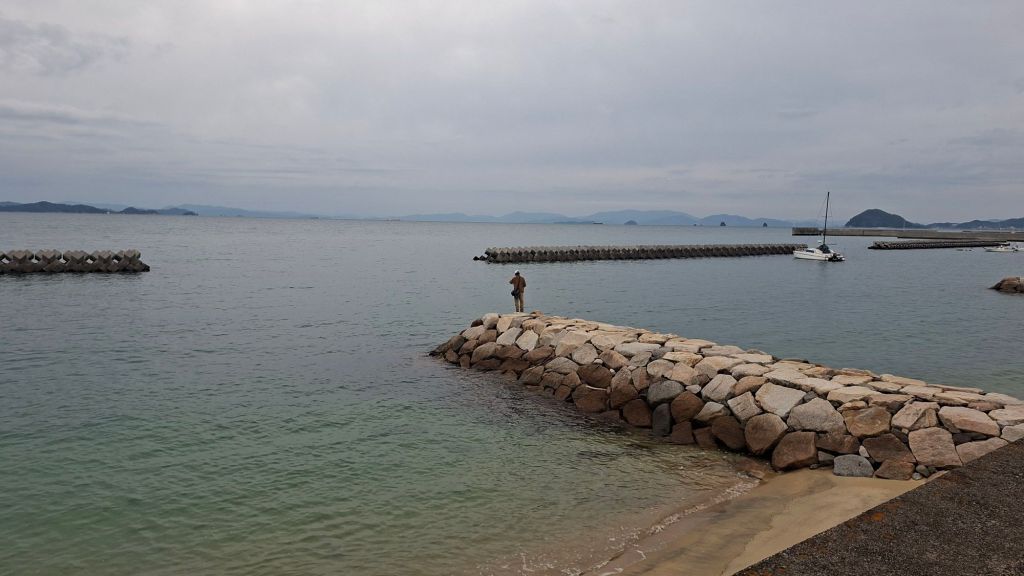
I stop an old couple and ask if they can help me to make the phone call again. They happily agree, but this time they can’t get through, nd I lose a lot more time, as after the failed attempt, they chat to me for ten minutes. Again, I can’t regret it. Such friendliness is what’s special to this walk.I hear the words “okay, okay”, and they’re convinced that I can get to my destination on time. Look, they say, it’s just over there. However, I know the mileage, and I realise it’s not possible at this point.
So I make my second decision. Something I have never considered before. I will take a bus. It is a very difficult decision, but it feels like the right one. I realise I’ve proved to myself many times over that I can do silly distances, what I’ve never done before, and may never do again, is visit Japan.
I ask myself, should I have missed Matsuyama? Should I not have slowed down to walk with the old lady? Should I have told that couple I didn’t have time to chat. Then I ask myself, and what about next time.
So the nature of my walk has changed. I will be practical and I will put Japan first. Besides, getting a Japanese bus is an exciting affair.
I wait outside a temple. I follow the mother and child onto the bus. They think I’m being kind, letting them go first. I’m just watching what they do. I take a ticket when they get on. And then, at the front of the bus, I can see the number of my ticket and, the further I travel, the more I can see the price go up. So when I get off, I am able to give the correct money, or near enough.
And so, I get to my accommodation by five, not by six and in . The lady at the desk is very friendly. She’s worked out how to communicate with a piece of paper, numbers and a smile. I manage to work out dinner and breakfast. And somehow even understand that I have a spa in my room.
When I get there, there it is. The room overlooks the sea. The sun setting. And without delay I make for my little spa and sit in my own private thermal bath. At moments like this, I’m sure I couldn’t be happier, and I couldn’t be more appreciative of the extra hour. I think of Yumiko on the first day, shuddering as she mimed a shower, luxuriating as she mimed the bath.
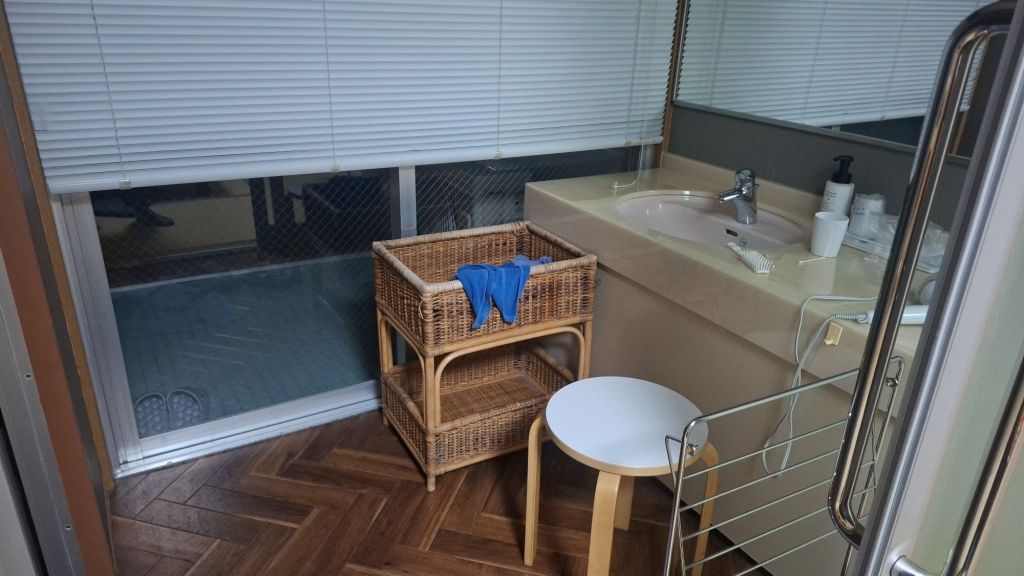
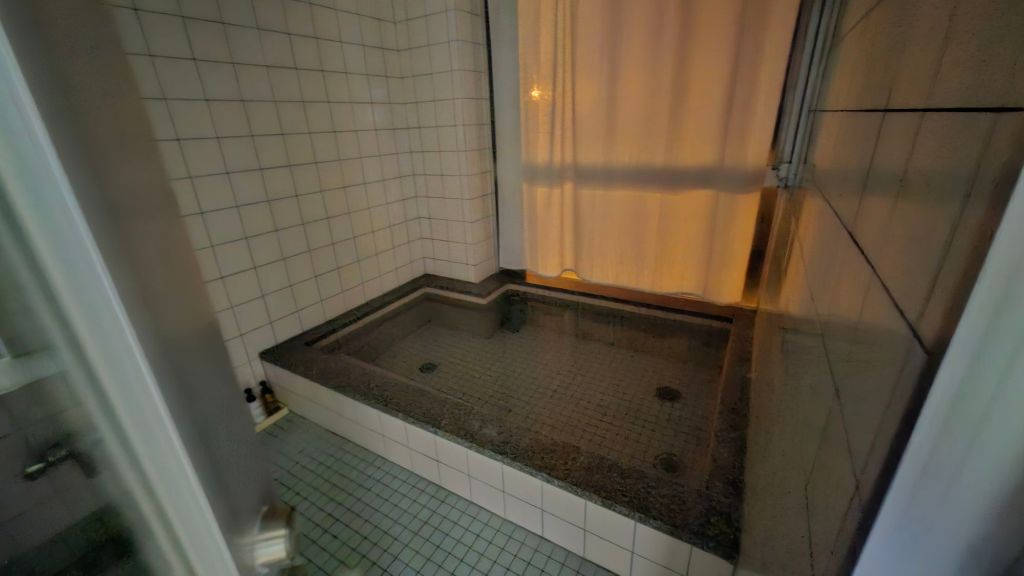
When I drag myself out, I find Japanese pyjamas to put on. Now these I can manage. And they’re wonderful. They even look good on a big Western woman. I make a note to get some to take home.
I join the diners in the restaurant. Everyone is sitting at tables on their own, in their identical pyjamas, facing the window and the sea. There’s Toyoda-san just ahead of me.
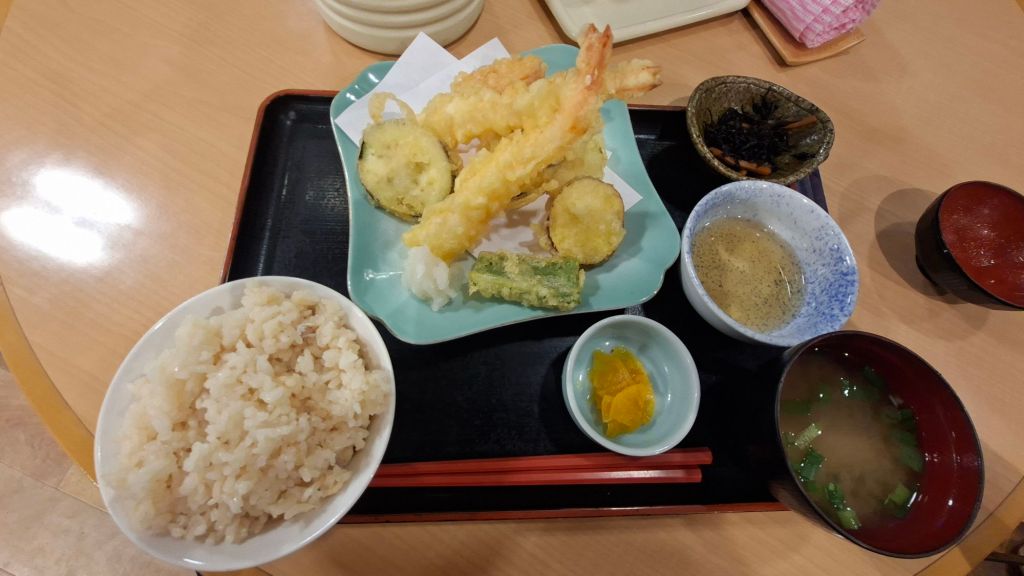
The lovely lady shows me the choice of set menus I can have. And as there was no tempura at yesterday, I have the tempura set menu .I’m getting good giant prawns and chopsticks, and no problem at all.


Leave a Reply