Home to Santiago – Day 76
Miráz to Sobrado dos Monxes: 26km
I’m very much the last pilgrim to leave today. And it’s not all my own doing. I do sleep late, as everyone gets up and has breakfast so quietly. But everyone’s still there when I do make my way in.
Once they’re all gone, I have a pair of missing socks to find, while Judy, the Scottish hospitalara bravely warms up my others on her hands. The hospitaleros are so chatty that, between making jokey asides about how late I am, they keep me there with their friendliness. I tell them as I leave, “It’s your fault I’m late.” And they say, “Just how it should be.”
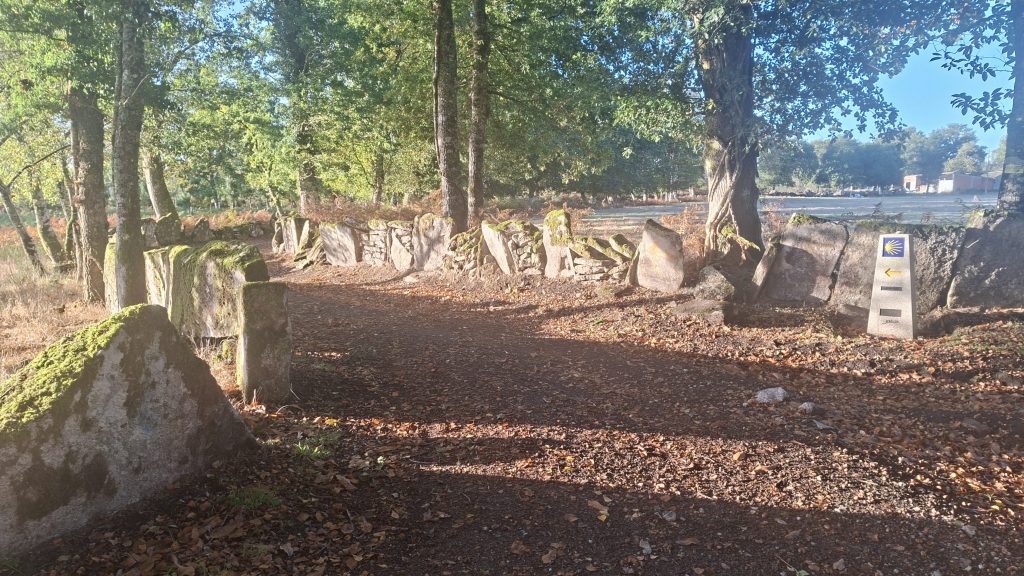
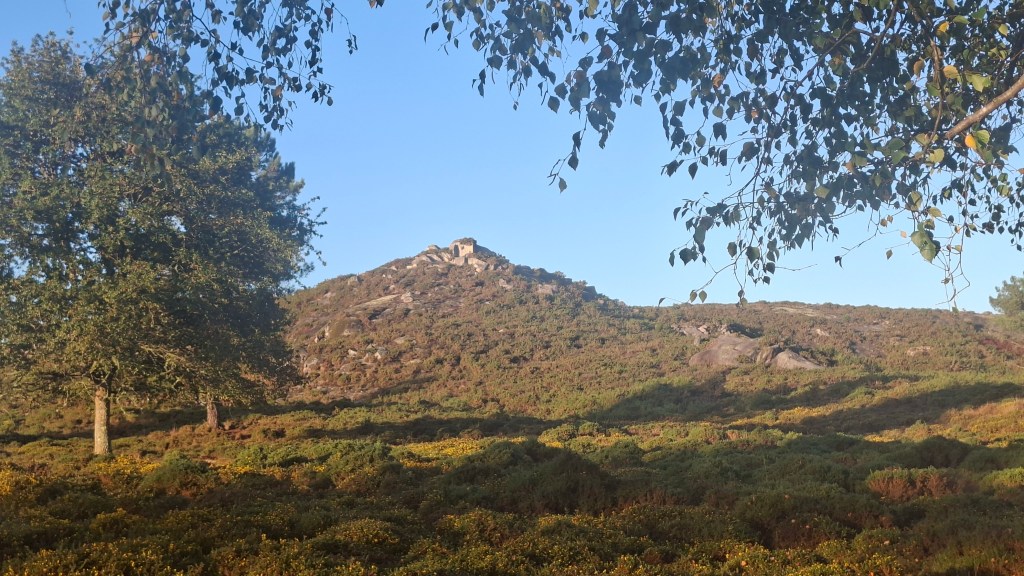
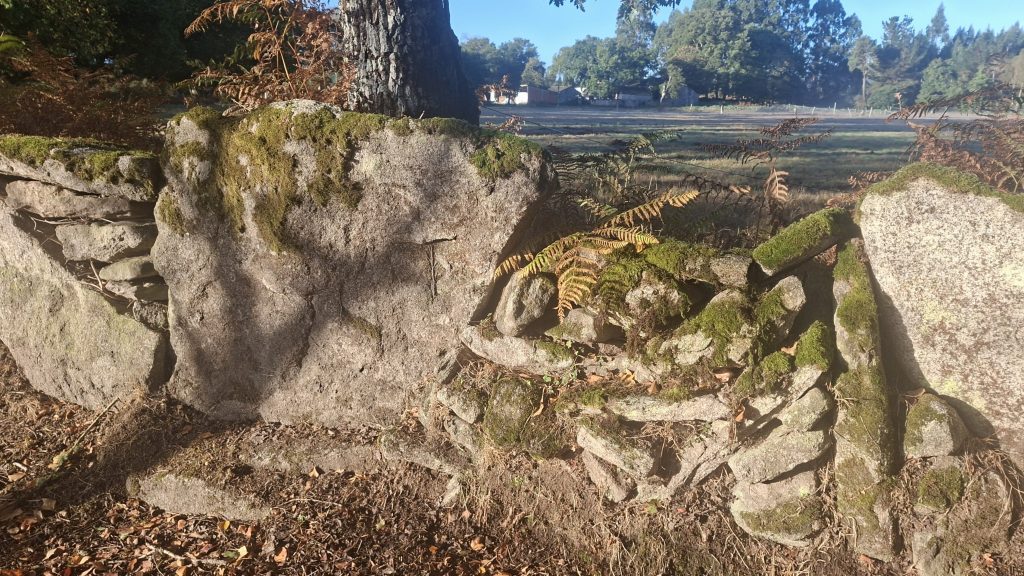
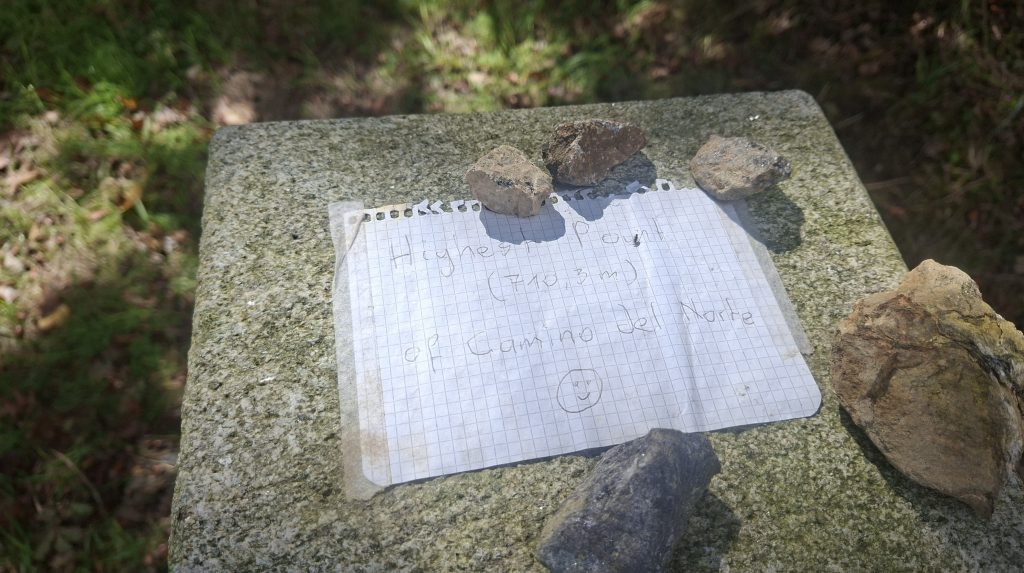
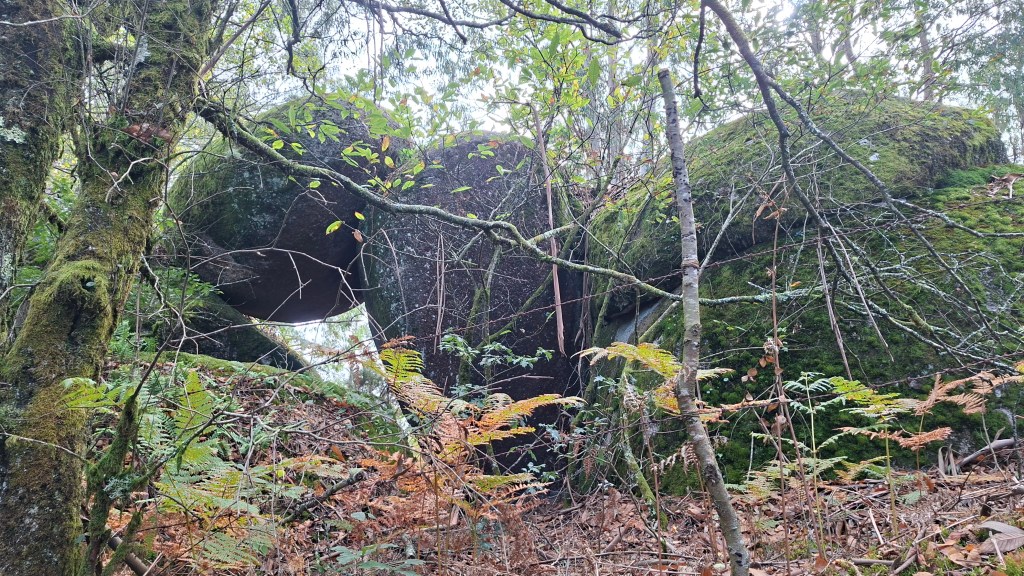
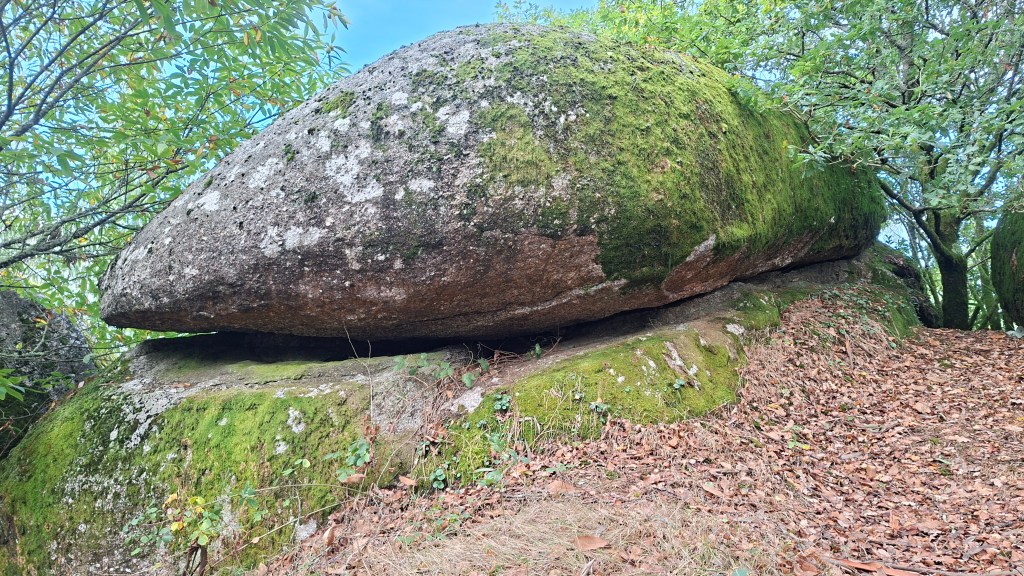
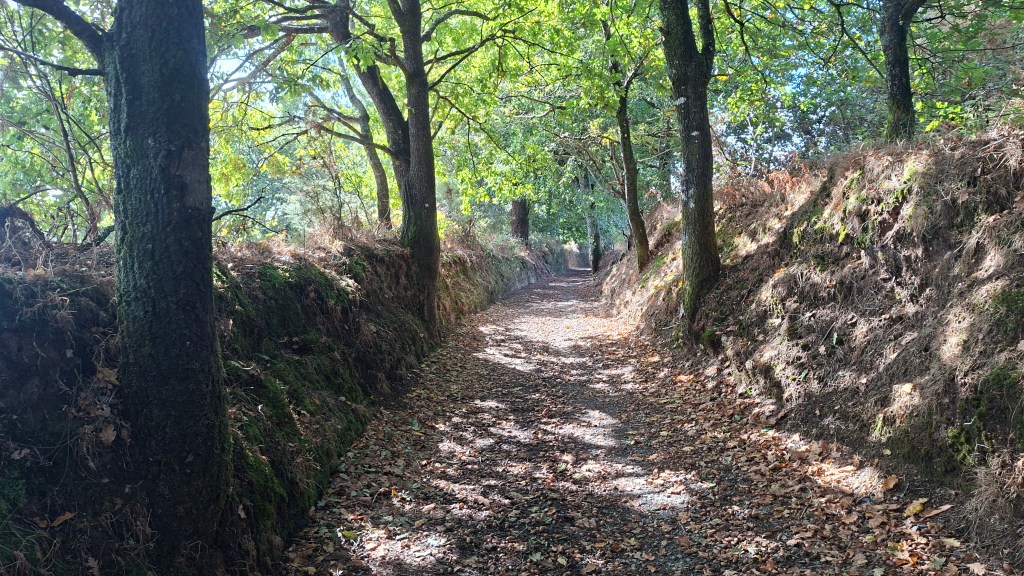
We have some beautiful Galician scenery. Bernard, whom I’ve told to walk on ahead, will be in his element; rocks and moss everywhere. It’s not the wildest bit of Galicia I, but there are twenty minutes that looks very like the mountains.
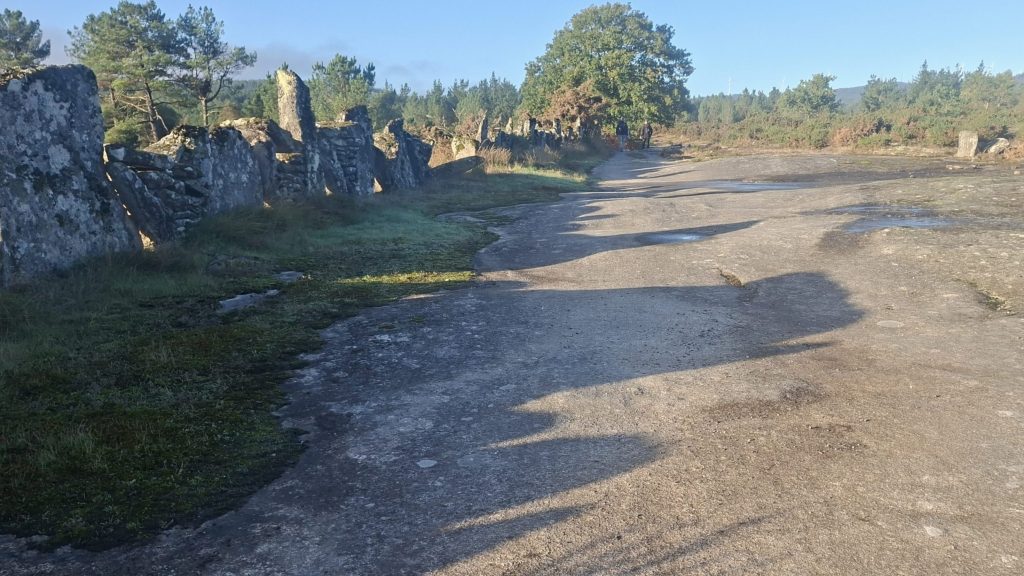
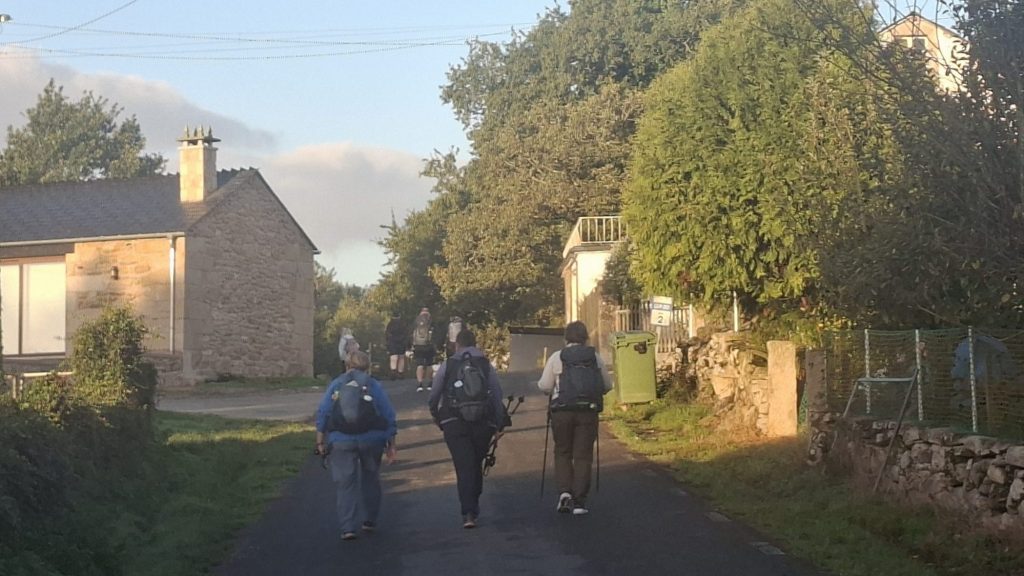
Another big feature of the day is crowds of pilgrims who have suddenly appeared. There’s a group we’ve seen off and on since Baamonde: thirty-two Polish pilgrims are boosting our numbers. They get picked up with a coach every day and taken to a hotel, so they don’t impinge at all on our sleeping arrangements. It’s very pleasant to have them on the way.
The only stop en route this morning, is a little old lady in a farmhouse by the road, making the most of her location, and charging what she likes. The omelette bocadillo is good though, made better by being surrounded by the chickens who contributed to it.
Bernardo, who I’ve caught up with at this point, follows me in, but signals for me to come and sit at the table furthest away from the smell of manure. He’s clearly quite horrified at this place, but I love it. Everyone’s stopping here. They have no choice. If they don’t stop for a coffee, they stop for the stamp. And the farm woman bustles around making a killing.
The highlight of the stop though is a group of polish women, stopped for a coffee. I tell them I know one polish song about a handkerchief and ask them if they know it. I have been doing this to every unsuspecting Pole I have met in the nine years since I learnt this song on my first big camino. But these ones say they do!
It turns out it’s not the same song, but if someone’s willing to sing me a song in Polish about a handkerchief, I cannot complain. They stand up, discuss the performance quickly and organise their props. I am ecstatic.
For Bernard, the performance cannot make up for the smell and the prices. “I’m never going to let you take me to a place like that again,” he says. “I didn’t”, I reply.
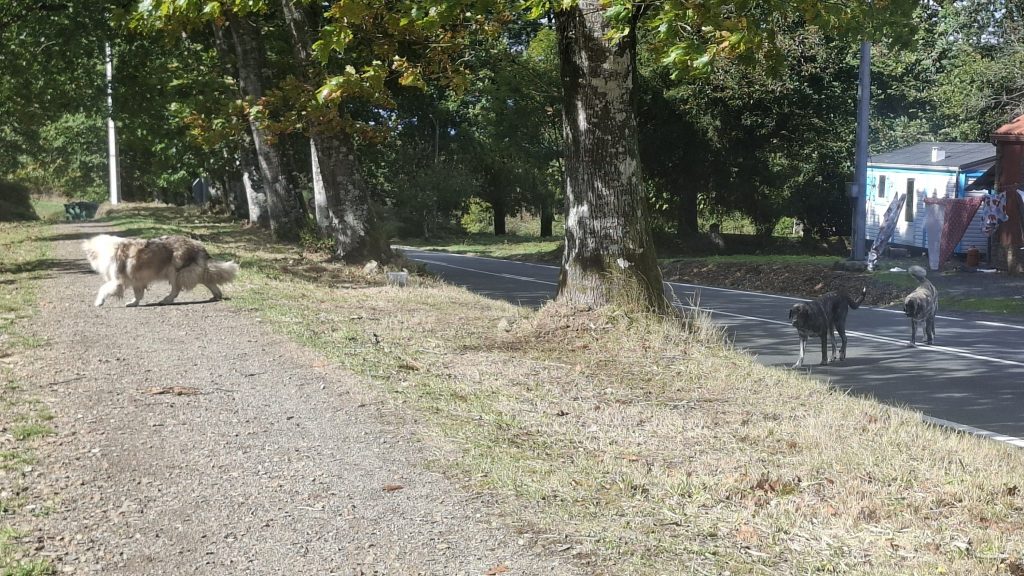
I’m getting a little tired of being an interpreter, and I may be finding it a little hard to hide. So when I come to a point where three enormous dogs walk across the road to greet me, I decide that I will stay with them a little while. I think they’re cattle-herding dogs, because one keeps turning its body around in front of me when I try to move on.
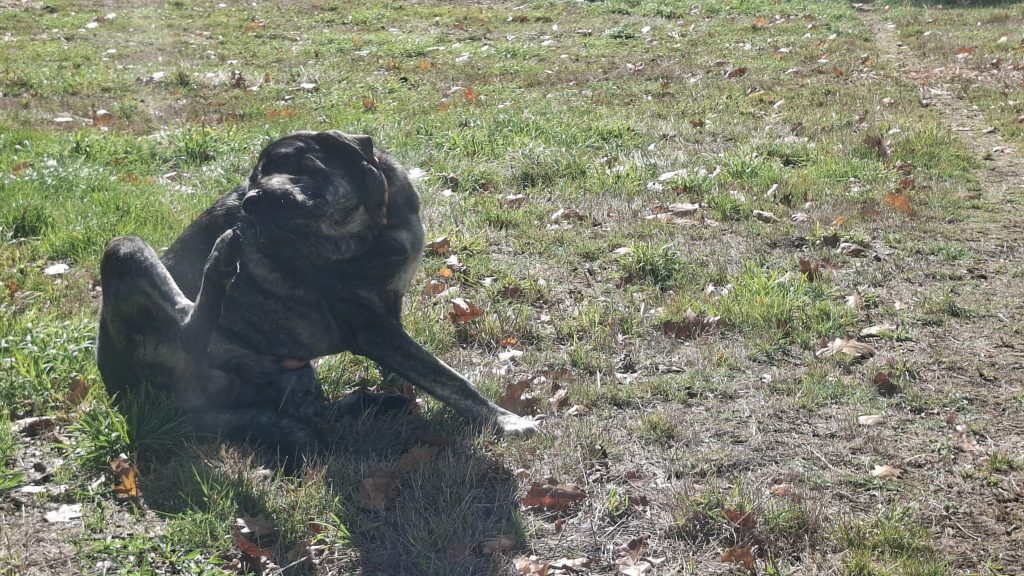
Eventually, I decide that with dogs, like with children, and possibly the occasional pilgrim, the best thing to do is to make yourself available until they tire of you. So I sit down by the side of the pavement and let the huge dog walk on top of me and sit on my lap. When I try to move, he slaps a big paw around my arm to make me sit still. But, as expected he does eventually tire of me and moves away to lick his backside.

By this point there are no other pilgrims on the path, and I walk alone for a while until I’m caught up with by German Ralph, who has the incredible job of organising the travel and accommodation arrangements for major TV events. He went to the World Cup in Brazil. He covered the London Olympics, but most excitingly, he was in charge of all the arrangements for the Dusseldorf Eurovision Song Contest.
“Was it fun?” I ask.
“At first,” he replies, “but when you heard all of the songs sixty times, it could be a bit much.”
“One time is usually more than enough,” I agree.
After walking a while together, we come to a small café where Bernard is waiting. This café is the final stopping place for the Polish pilgrims, who are being called by their rep to get back on the bus. I sit at their empty table with Bernard and Dutch Eric and Diana, and we get nostalgic watching the 80s video mix on the TV: Rick Astley, Belinda Carlisle, Simple Minds. It’s clear that the slightly older Eric and Diana have much more sophisticated musical tastes from this era, but they’re very polite and remember these too. You can grow fond of anything and anyone once time has passed.
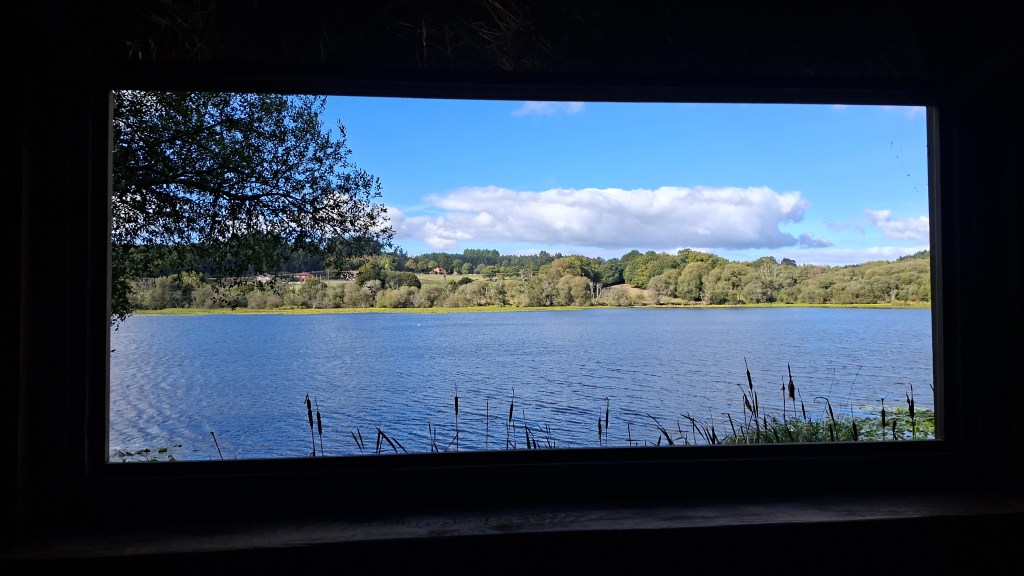
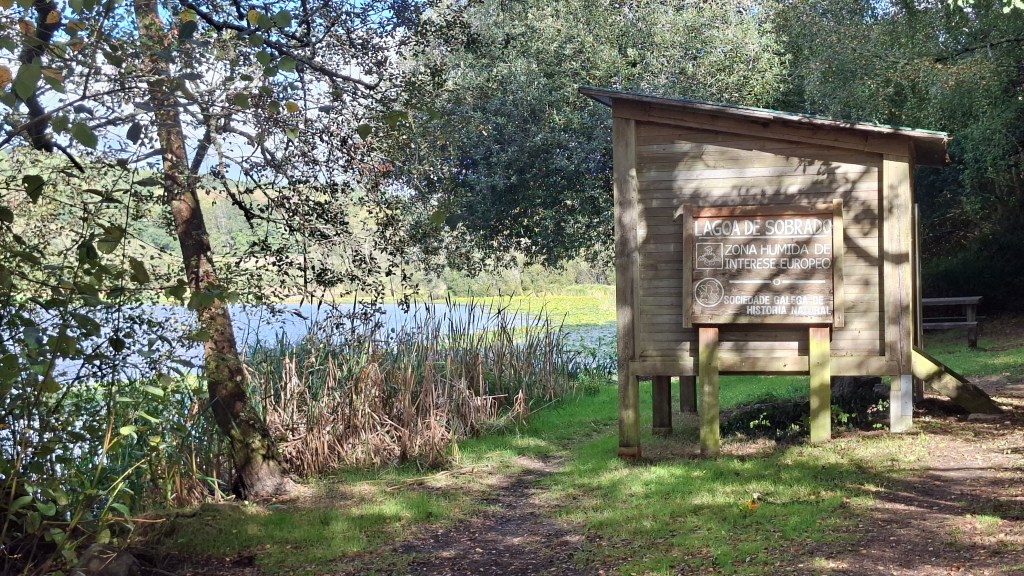
In the last part of the day, the rocks and the trees are better than ever. I tuck myself away in a little bird hide by the lake to see if I can spot herons and ducks across the water, as I hear footsteps go past.

Entering the town, I get the message, “Rachel, où es-tu?” and I realise Bernard must have arrived and be having trouble checking in.
The two hospitaleros at Sobrado Monastery are English, a priest, it would seem, and a volunteer. They both have such cutting British humour that they’ve managed to be quite off-putting to all of the non-British pilgrims who’ve arrived so far. This is one cultural behaviour I am expert in. I go on the counter-attack and all is well.
I chat with William, the volunteer, as he shows us around and gives detailed descriptions of the facilities in the monastery. I give the briefest of translations into French. It’s all that’s needed.
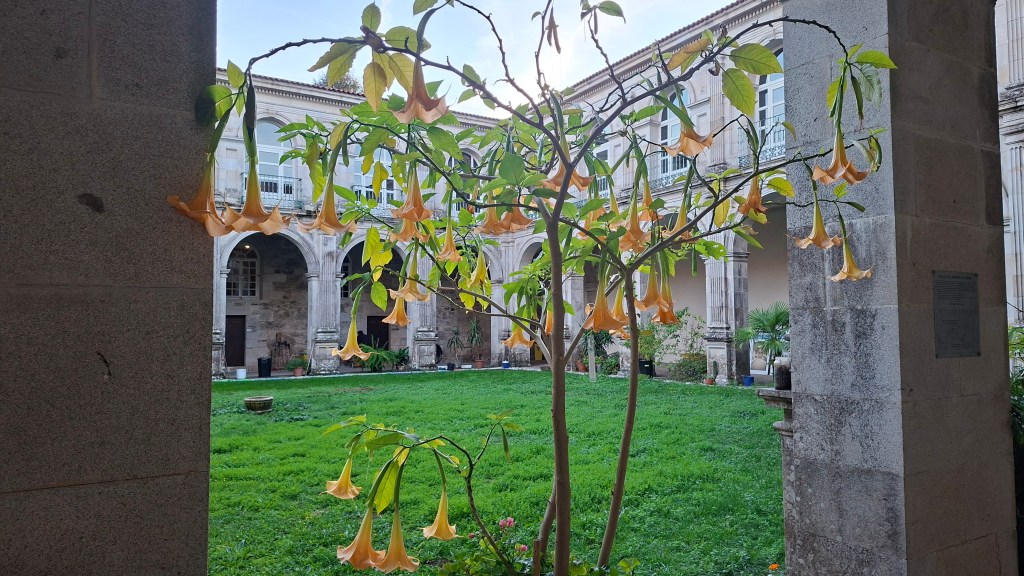
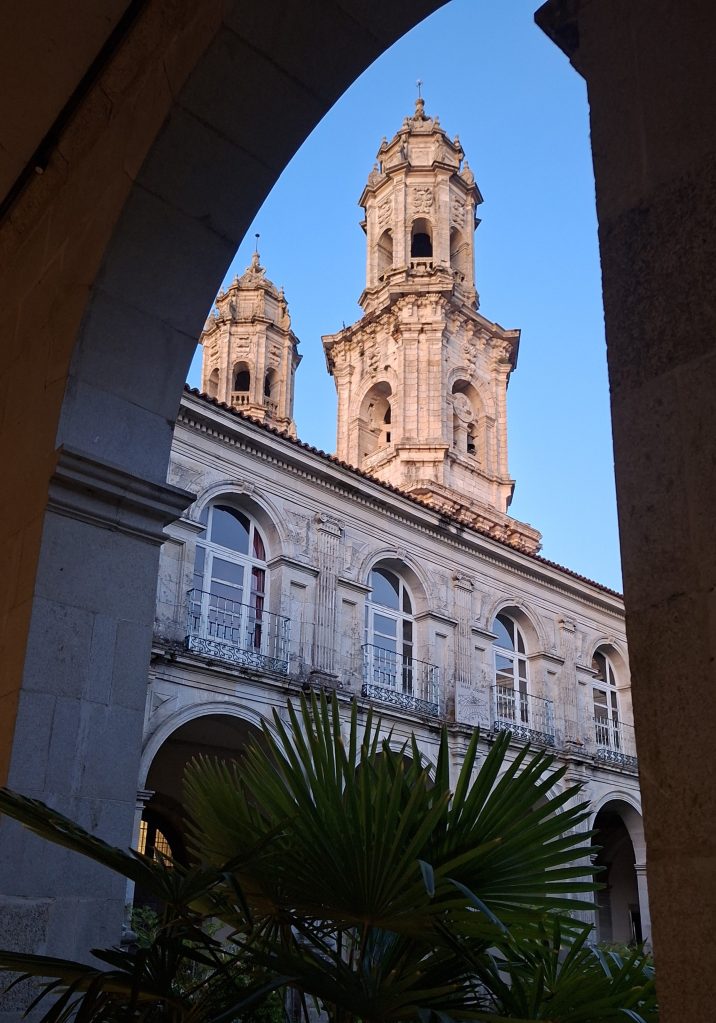
Most important things to note about Sobrado Monastery:
Point number one. The far cloister is out of bounds. That’s for the monks, and there are thousands of them buried underneath it, but don’t expect him to count them.
Point number two. If you want to go to Vespers, it’s at quarter to seven on the dot. You need to be careful. If the monk leads Vespers, he’s loud, but the nun is very timid and you won’t hear her call you to prayer at all.
Point number three. There are toilets and showers near the entrance for general use. Pilgrims can use them, especially the toilets, if they’re getting drunk, but they shouldn’t use the showers because groups of children come along, open the doors and wave. They are uncontrolled.
Point four. The kitchen is locked at ten because the English priest works seven days a week and goes to bed at ten and hasn’t had a day off in twelve years. It says nine on the door, but that’s just for the Italians.
Point five. The door will be open between six and eight in the morning, or whenever the cleaning lady decides to turn up. It’s hard to get a good cleaning lady, so don’t upset her.
And I think that’s pretty much it.
It’s a lovely little dormitory. It’s the exact six of us from the English albergue, plus two young men, an American and a Swede who are walking together, and whom Bernard has, for some reason, taken a dislike to.
Because today is Mateus’ birthday, Bernard decides that he will reciprocate Mateus’s lovely meal yesterday by cooking a French pasta carbonara. There’s also an element of competition here. Interestingly, Mateus leaves half of his on the plate.
The meal is full French style, with pasta, a cheese course and Danone yoghurts for dessert. Margoz and I have chosen the wine. We went for the bottles with the most gold trim.
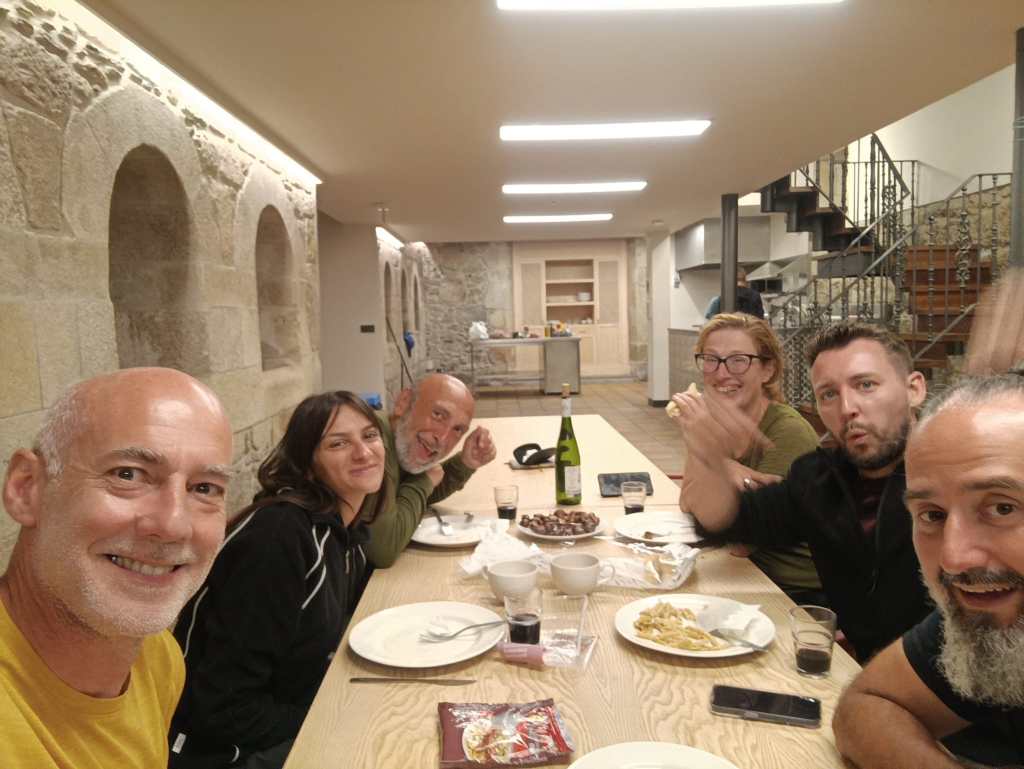
We also take advantage of the international mix to have rounds of ‘Happy Birthday to You’ in English, French, Spanish, Catalan, Italian, Argentinian Italian, Armenian, and eventually Flemish.
Apparently, they don’t they don’t sing ‘Happy Birthday to You’ in Flemish-speaking Belgium, but the lovely young man looks it up and, having told us the words, sings his version solo.
No one’s attempting Flemish tonight..


Leave a Reply