Home to Santiago – Day 55
Laredo to Güemes: 29km
I notice there is only one pair of boots left on the rack when I leave the convent, and I suspect the nuns only keep those there to make people like me feel a bit better.
While packing, I chat with my roommate, Aya, a Korean woman, walking and surfing the Camino del Norte. It’s a big adventure, she says. She’s just spent two years doing social work in Kyrgyzstan. I feel she’ll get the hang of this soon enough.
I bump into Ilke on the promenade, doing an extra seven kilometres to go back and get her sticks. It is like meeting a better-looking, younger, taller, blonde, Dutch, more socially competent version of myself. We discuss taking our time and arriving too late for the famous speech at the albergue tonight. But I don’t think either of us mean it.
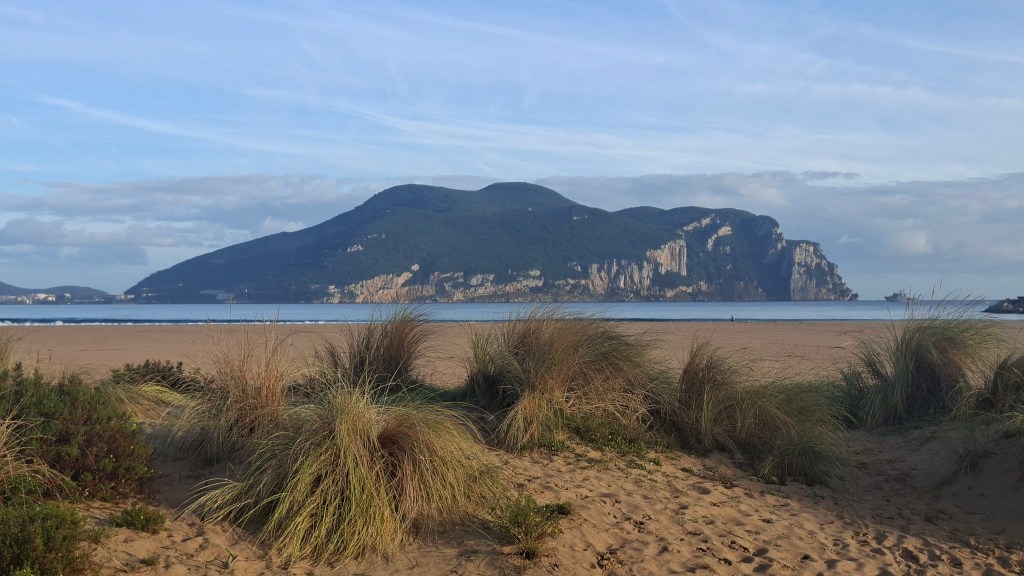
A bit further along, North Carolina Deborah catches up with me. She tells me she’s been wearing the same shirt for three days and is relying on the sniff test. This would have been me before the heatwave walk through the centre of France made even a sniff test unnecessary, and I took on the habit of daily laundry. Now I register her comment as license to go back to my old, less fastidious ways. Her admission is reassuring, until I notice how clean and smart she still looks. Even after one day, I don’t have this, and my sartorial confidence is diminished once more.
The boat from Laredo to Santoña is tiny and is waiting on the beach, already full of pilgrims. Grace calls out my name. I know she will have taken an excellent picture of me crossing the sand. And there is Czech Gabi, waving from the seats opposite, our last meeting before she heads home. I like the random gatherings caused by the boat crossings. I think back to the joy of finding myself with people I like in a randomly allocated online breakout room.
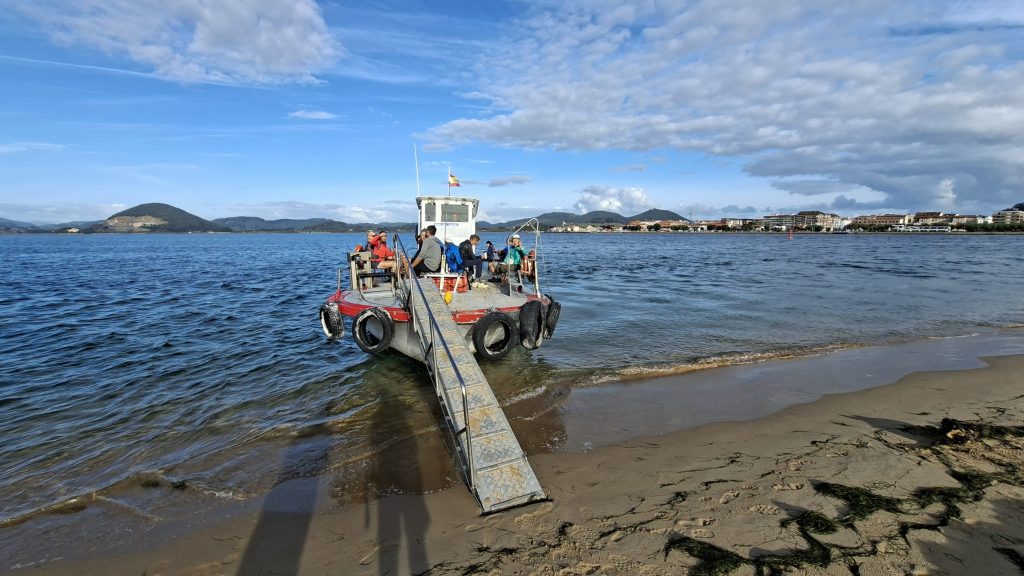
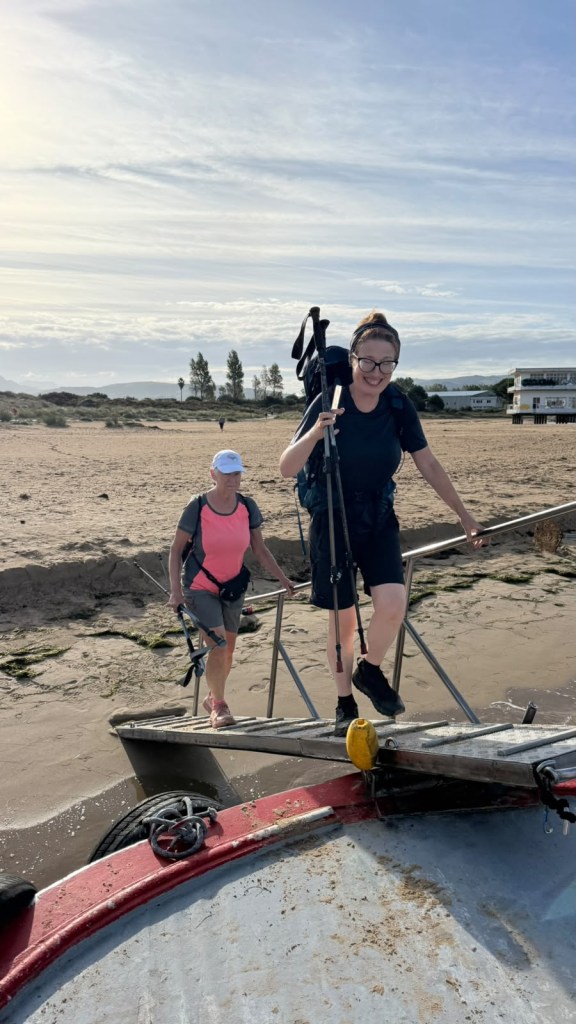
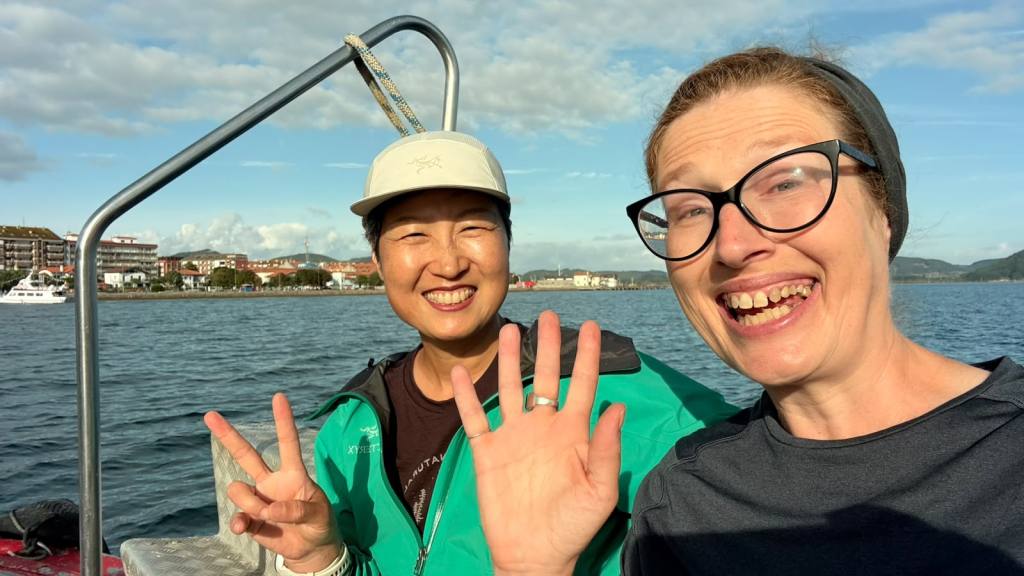
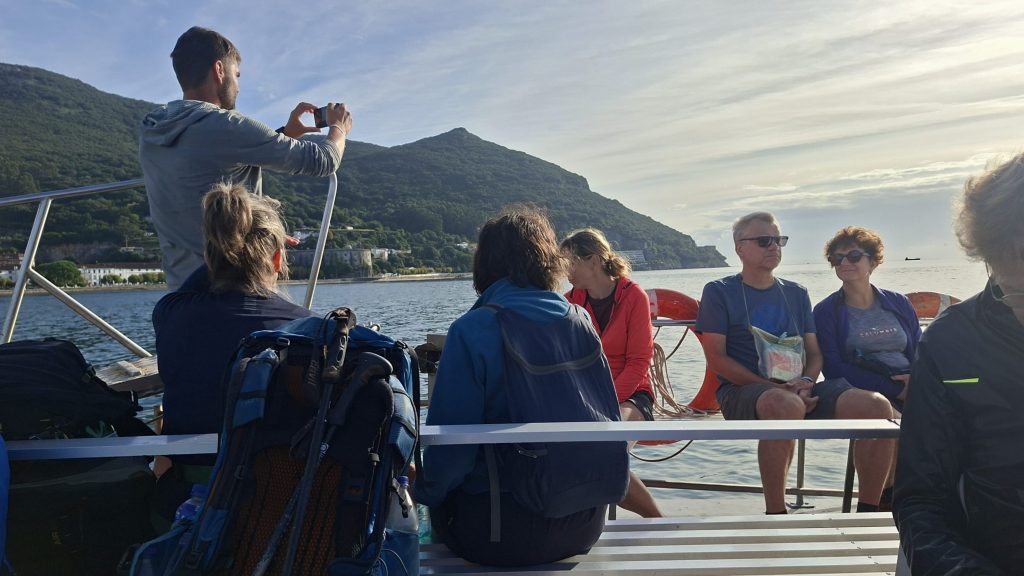
And off we go on our little trip across the water, until deposited on the other side, we all wander off on our own ways once more.
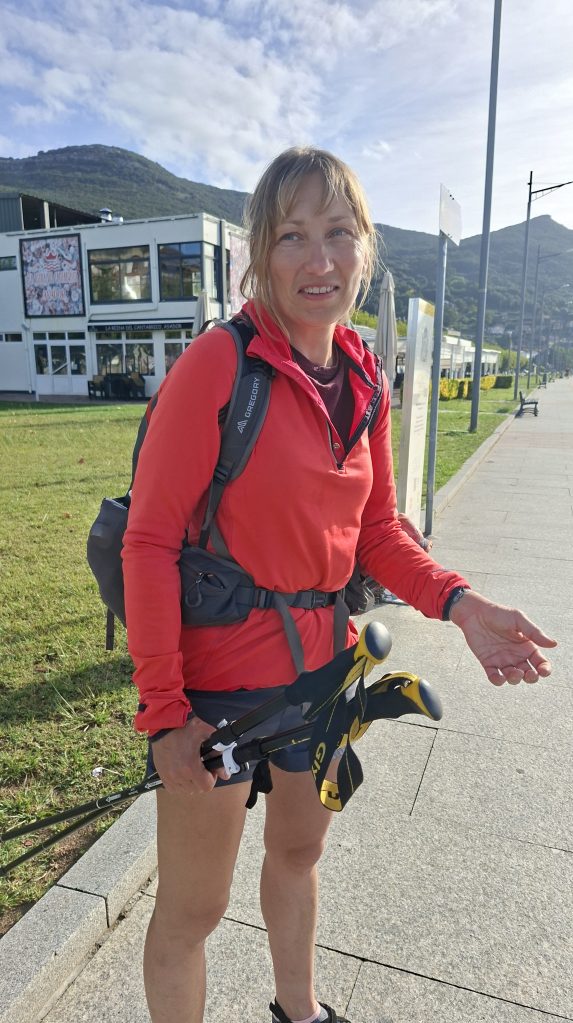
The path to the town leads to the beach and then to a headland. Apparently, this is a variant, but unaware of this, I set off. After the rain, this variant is a challenging one for me. Apparently, if I’d read up on this, I would know it is not recommended, especially in wet weather.
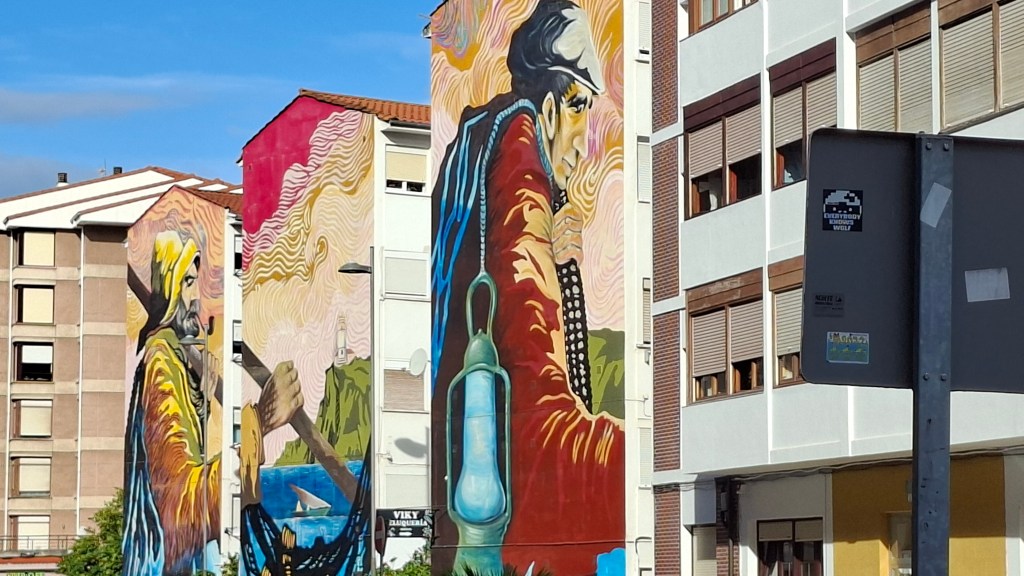
And up I go, with my rucksack and my sticks, on the slippery, muddy, rocky, almost vertical path, up above the cliffs. I go slowly, wondering how this could possibly be an official route. I’m soon caught up with. And today’s the day in which I’m going to be proven absolutely, totally and completely wrong in my judginess.
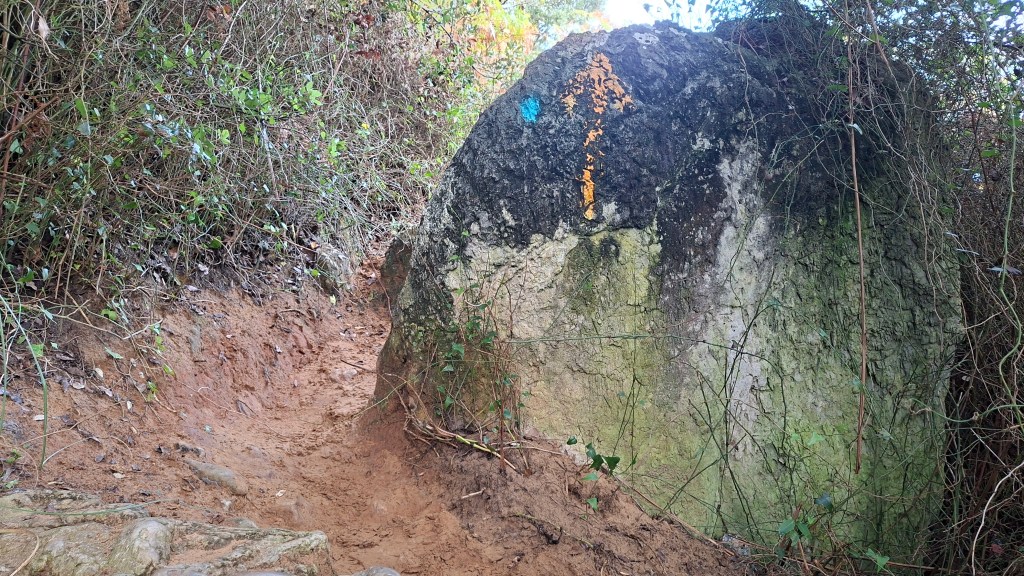
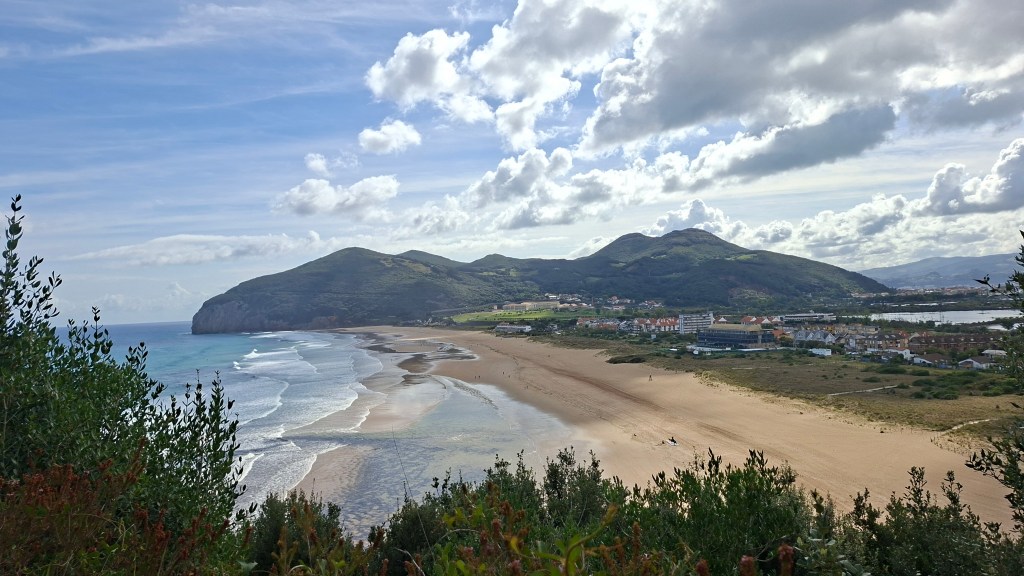
As I stand contemplating my next step, a pilgrim comes up behind me and waits and helps and slows right down and starts to take me over the headland.
“Just one step. Just one step”.
This is familiar territory. And as we reach the top, Grace catches up and continues with us too.
“Just one step. Just one step”.
As I talk to my new companion, Javier, he starts to tell me about his walk, and how he walks.
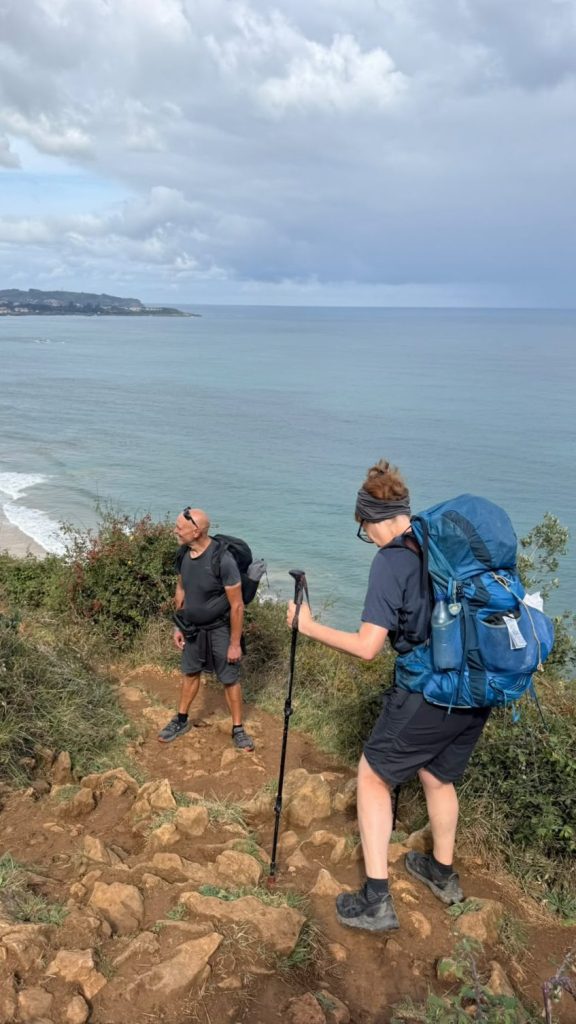
“You know, I always like to be the last to leave an albergue and the last to arrive,” he tells me. “I would not be sad if my mobile phone was stolen.”
I suddenly realise who my saviour is. This is the pilgrim from Pobeña whom I had overheard, and I had judged. I was wrong. I am almost always wrong.
Now I’m quite enjoying the philosophy of Javier, especially when stopping to look at the view above a particularly vertiginous cliff. He says to me, “Don’t worry. If you fall here, it was meant to be.”
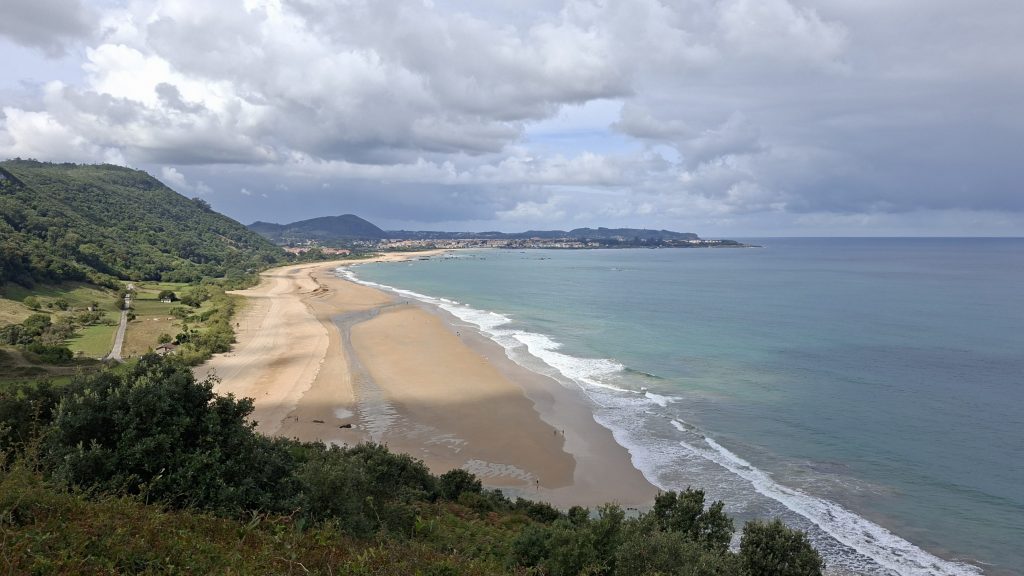
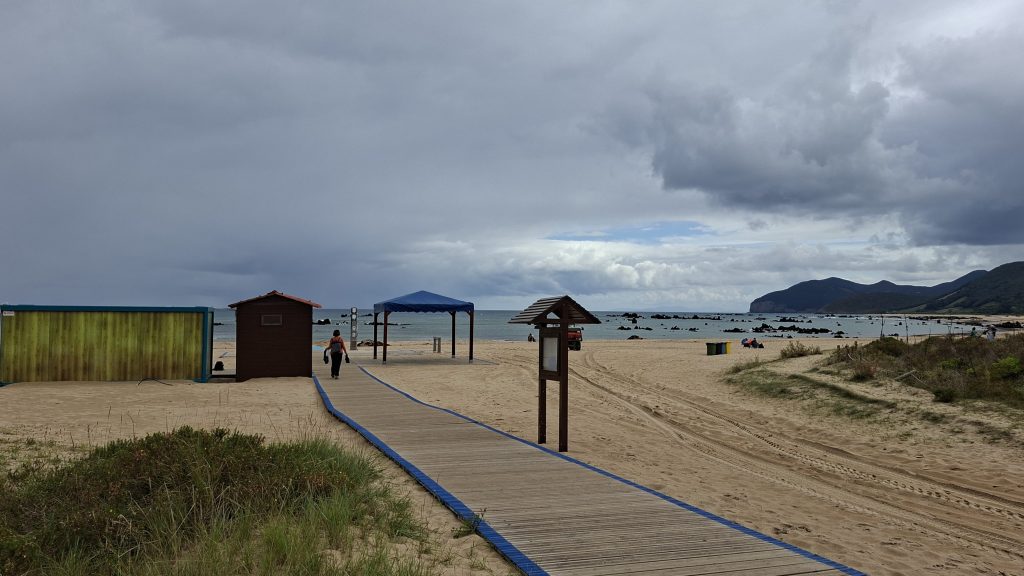
The bottleneck I caused on the headland creates a new little group for the rest of today. Grace, Javier and I walk across the long, sandy beach to Noja. “This town”, he says, “is a tourist town. In summer it has one hundred thousand residents. In winter, only a thousand”.
“A good place to spend the winter?”
“Yes”, he says. “A lot of foreigners come. The rents are very cheap”.
Not being a swimmer or a beach lover, I think seriously about the possibility of renting an apartment overlooking the rocks and the waves. That could be a good reading winter.
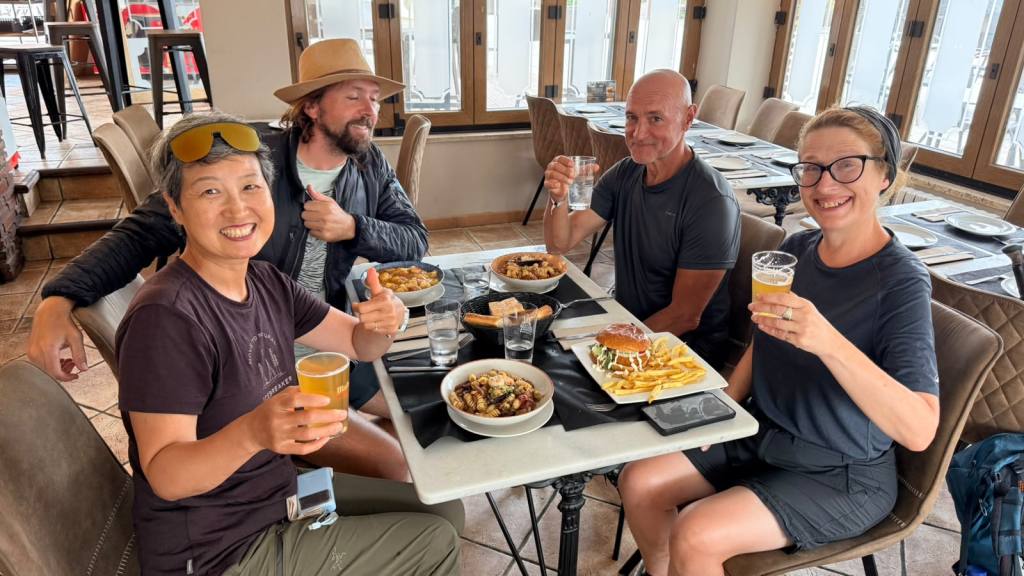
We stop for food, pulling in with us the North Carolinian pilgrim who had given me part of his dinner two nights ago and is therefore immediately judged a good man. And the four of us sit down to a hearty lunch, and I introduce the table to shandy.
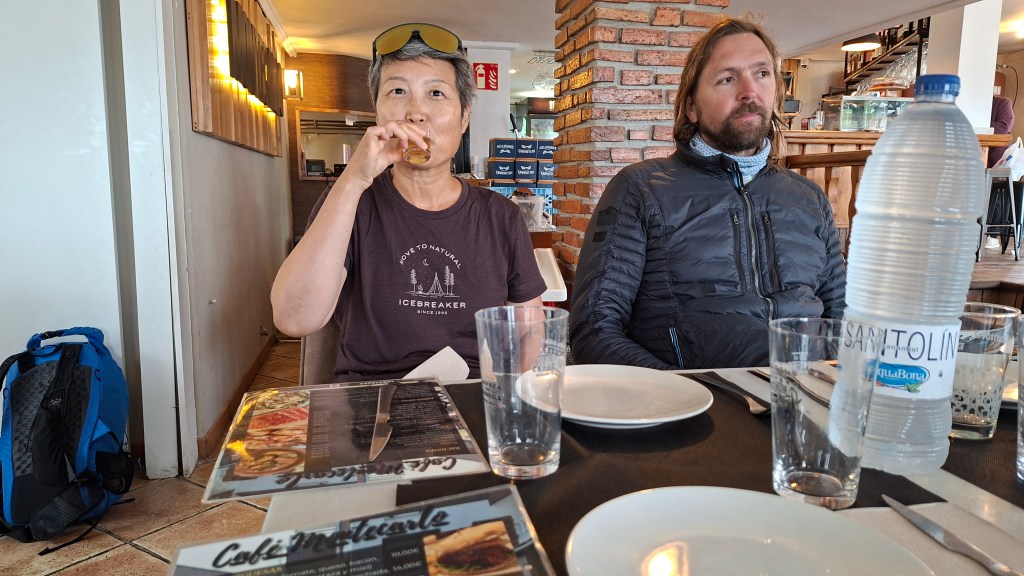
Grace is impressed. After the tiny tasting glasses, she orders another. Javier says this is the first beer he has tried in 40 years because he has an allergy, and I worry that he might suffer more than my wrong judgment. But we all survive the long walk to Güemes.
Talking, we all slow down. Grace, a marathon runner, I fear, is getting anxious about how late we’re going to arrive. But she stops to take photos, which I know I’ll benefit from later.
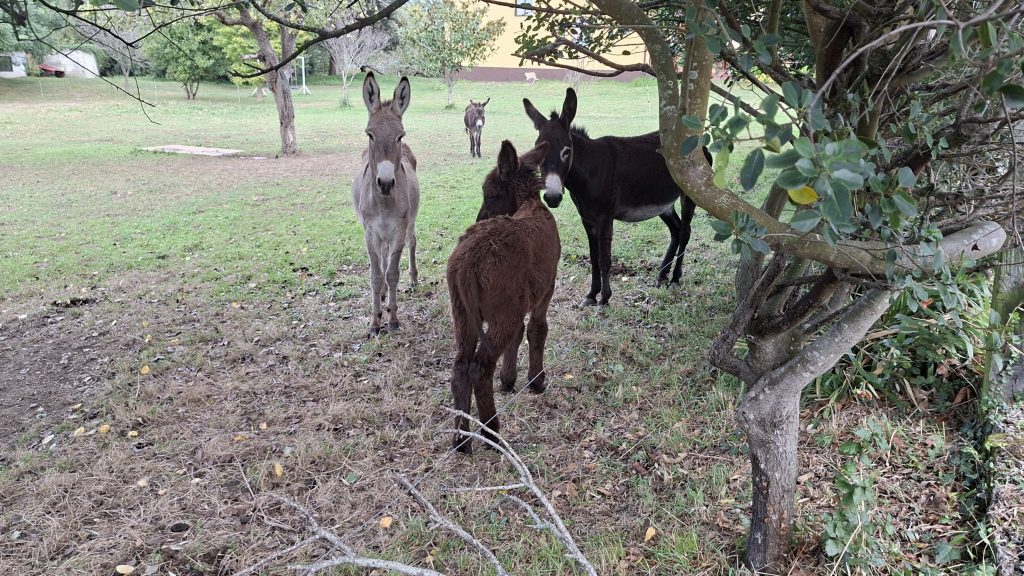
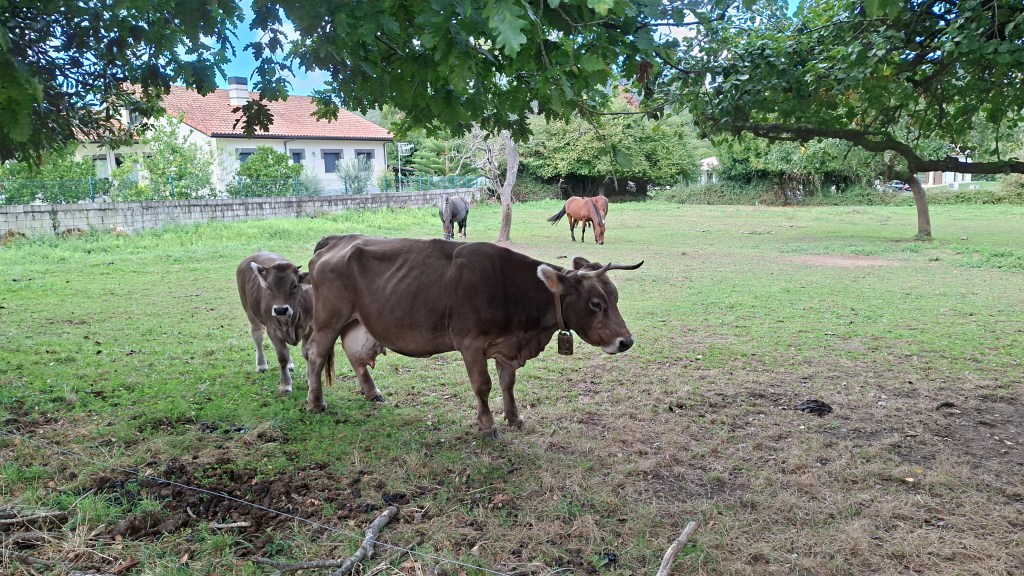
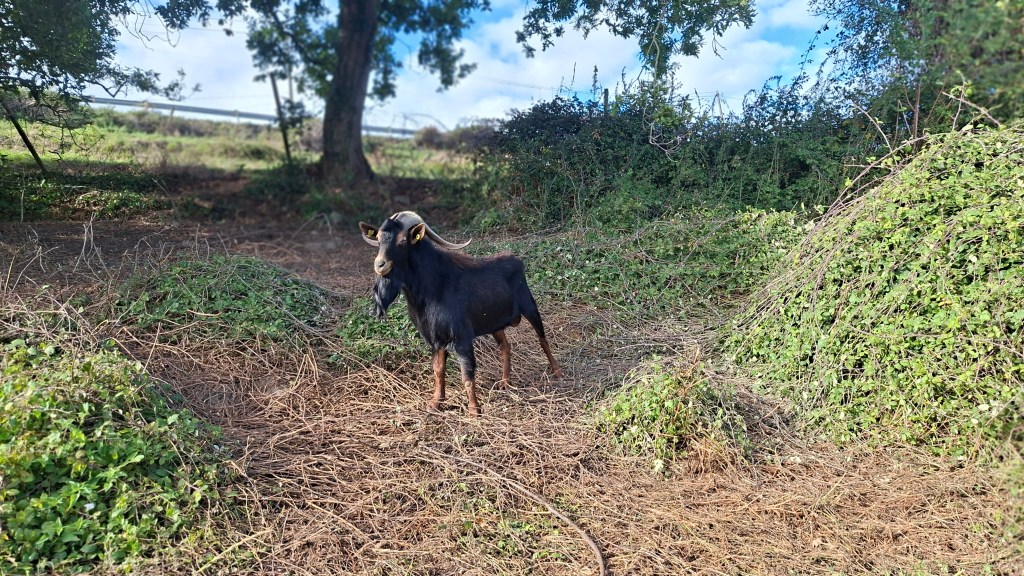
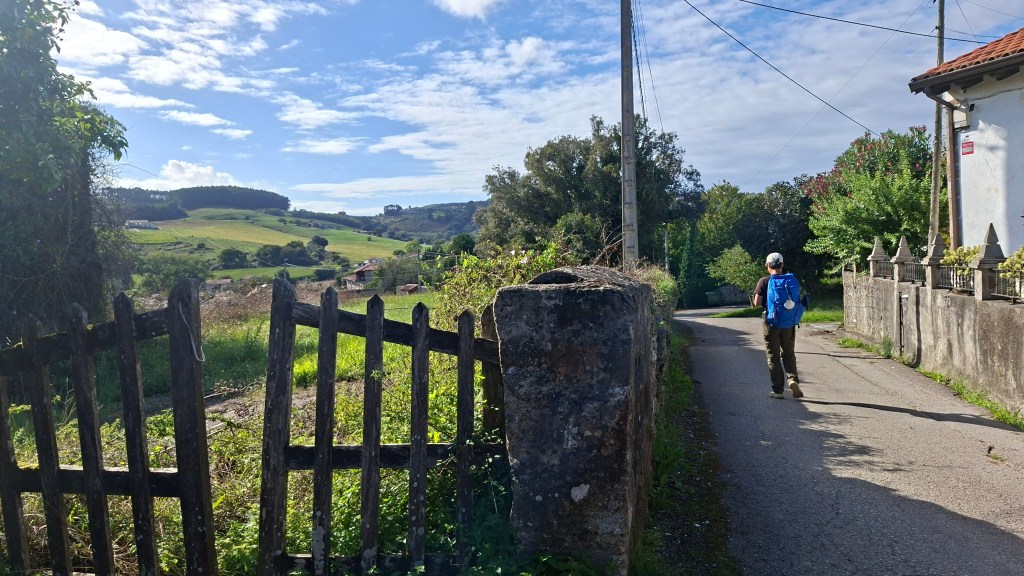
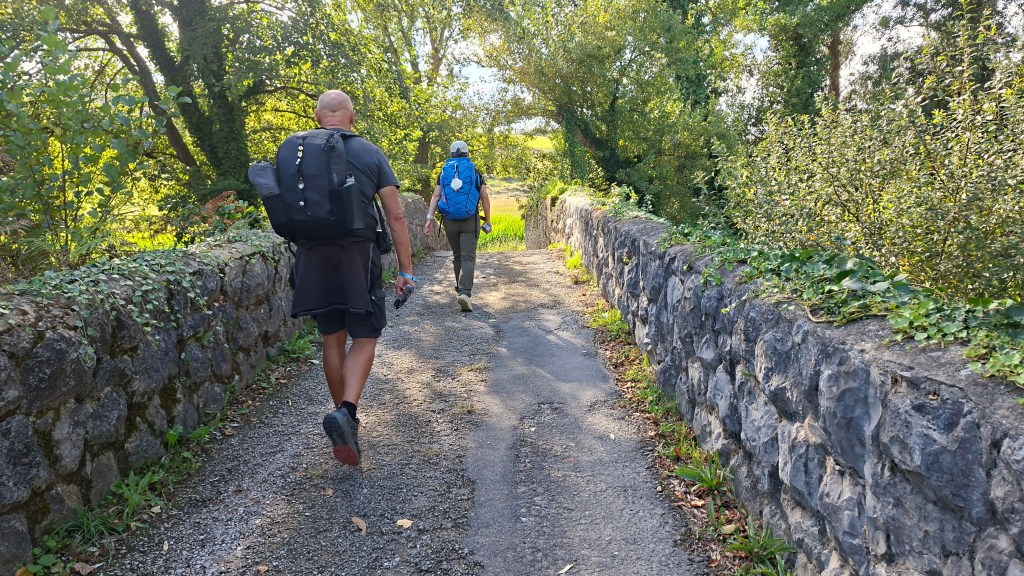
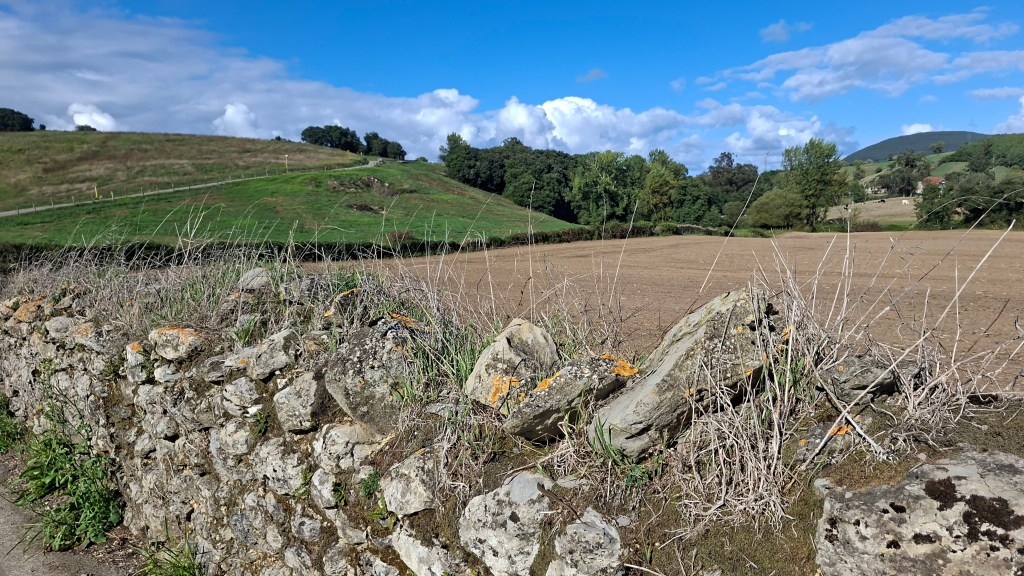
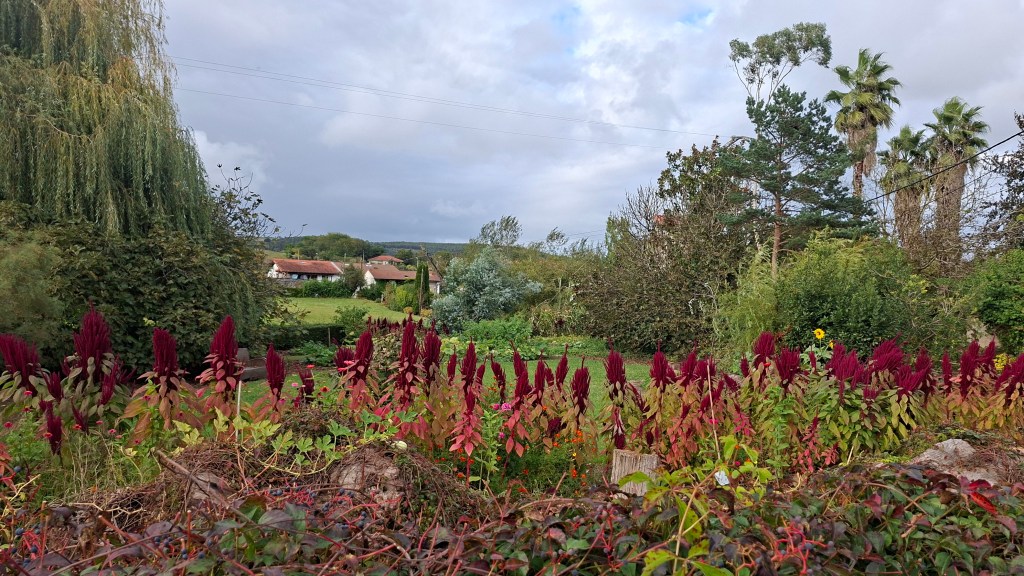
And when we reach the little hermitage just before the end, we all stop and enjoy.
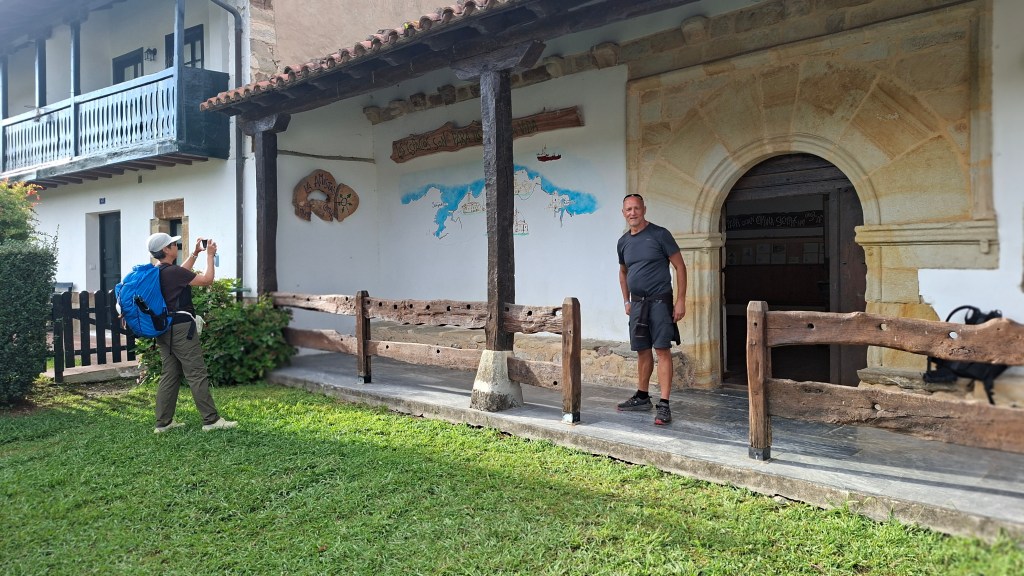
We finally arrive at the famous albergue of Grandad Ernesto. This is the place that everyone’s been talking about for days, a famous stop on this Camino, described by some as a cult to the founder, and by others as the most meaningful stay they have on the whole route. We shall see.
We arrive so late that we barely have time to drop down our things before going to the semi-compulsory talk in the big meeting room, where Ernesto will explain his philosophies, the history of the albergue, and everything we need to know.
He’s 89 years old and at the moment he has a sore throat, so he apologizes that it may not be as long as usual. We’re all very tired and hungry, so we accept this.
But the speech is actually rather lovely. It’s wonderful to see his work in the Picos de Europa and all around the world, and to hear about the history of the house, the core of which he was born in, along with his many brothers and sisters. As he says, nowadays he’d never have been born. His parents were one of twelve. He was one of five, and his niece doesn’t have any children at all.
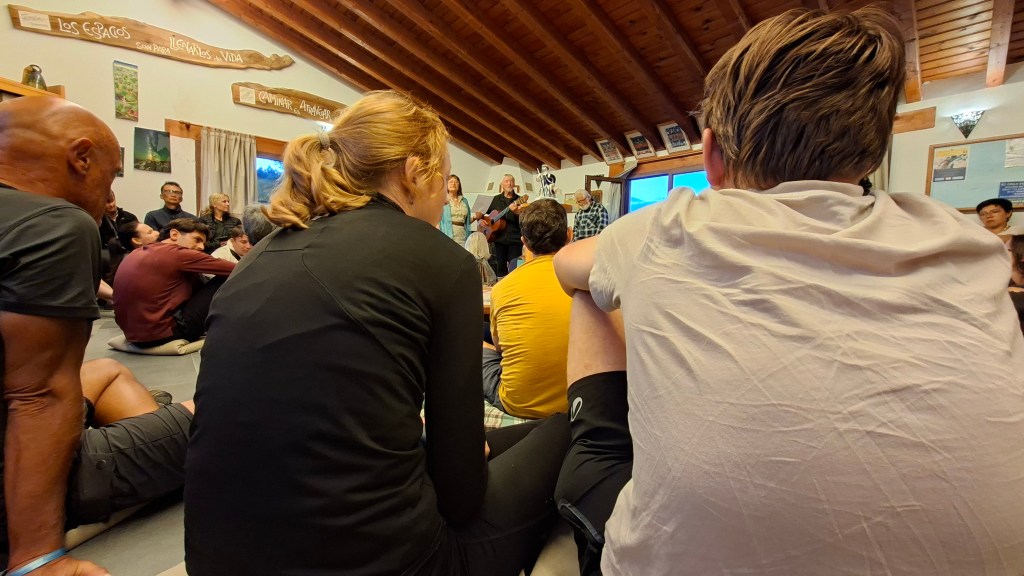
A couple who return every year play some songs on the guitar, and I try not to catch the eye of Ilke, who has come here after all.
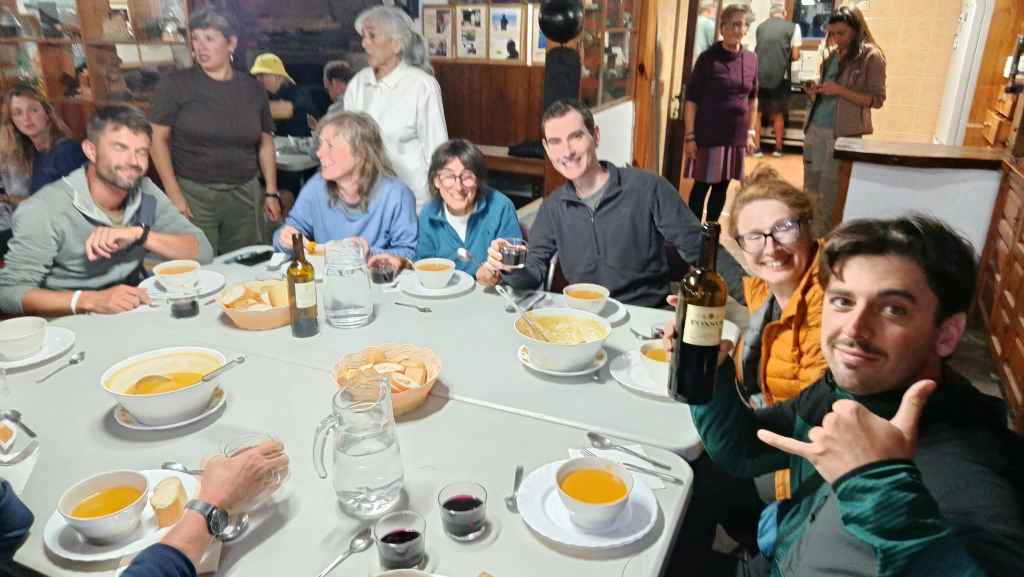
And then we descend for the communal meal, a room full of pretty much everyone walking on this day. There is nowhere else to stay in the area. So many familiar faces and surprisingly so many new ones.
But I sit with friends old and new, next to Tommy, an Italian, who is quite diplomatic about the pasta.
And finally I go to the strangest little room, which has been allocated to me and Grace. I think we got it because we’re late: two beds in the hallway to a dormitory, inhabited by seven very loud Spanish men, who apologetically slam the doors as they go through to the loo throughout the night, and talk in loud whispers.
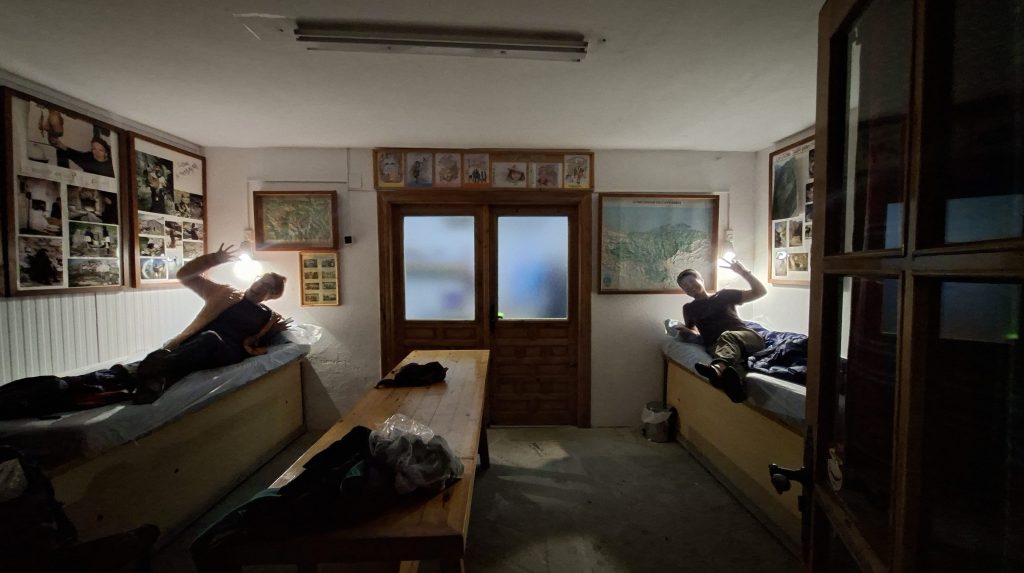
Luckily I can sleep through a hurricane.
Grace says with resignation, “I can rest”.

 WHEN WALKING
Leave a comment