Home to Santiago – Day 50
Ziortza to Pozueta: 23km
The day starts with inspiration in the form of Mirentxu.
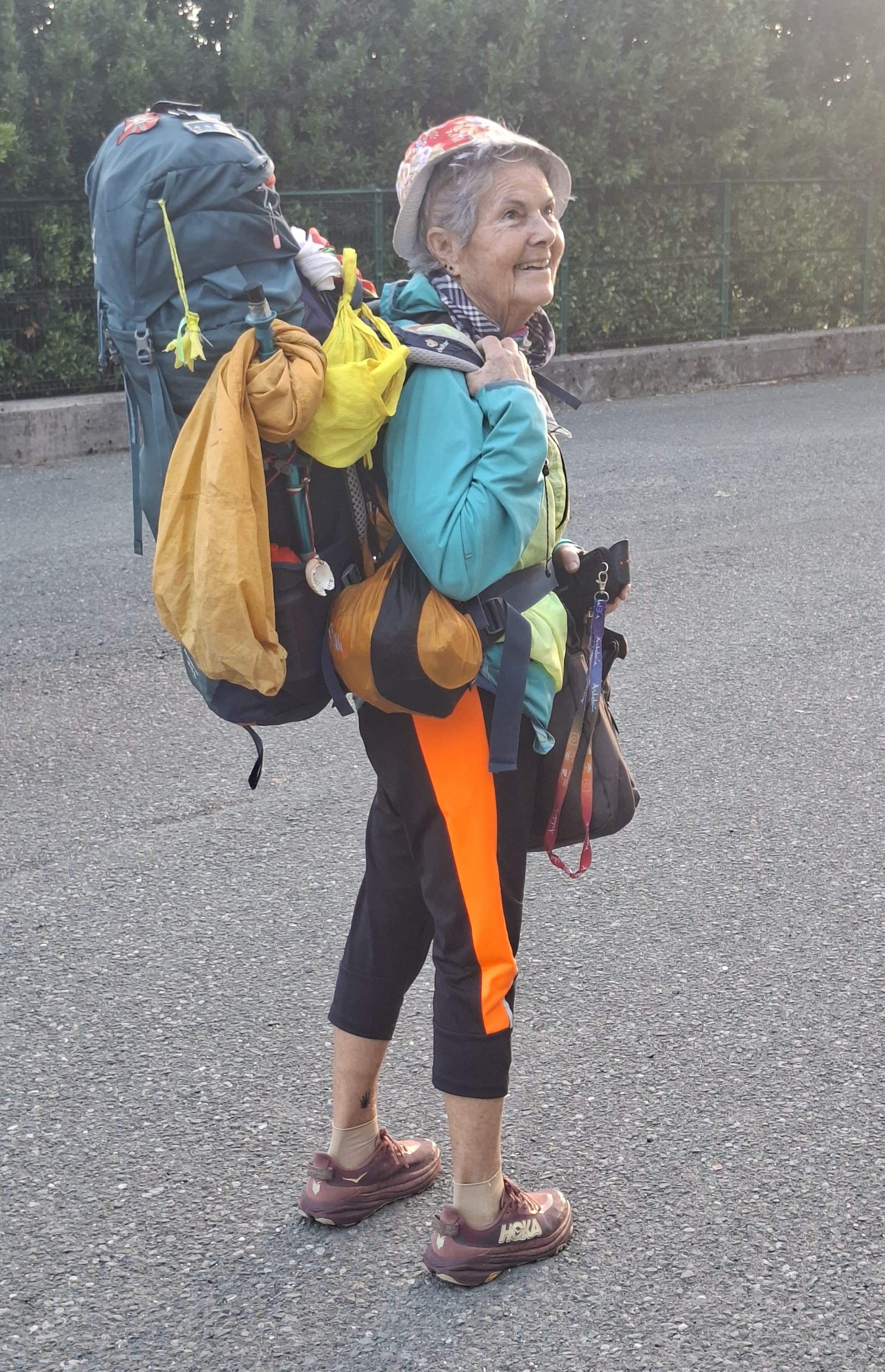
At breakfast, which we seem to be taking in naturally forming batches, I’m sitting at the table with two Latvian guys, Chiara from Italy and 85 year-old Mirentxu, who is perched at the end, sprightly, sparkly and tiny. Via Chiara we learn that she has completed 57 caminos in the last 20 years. Everyone wants their picture taken with her, me too.
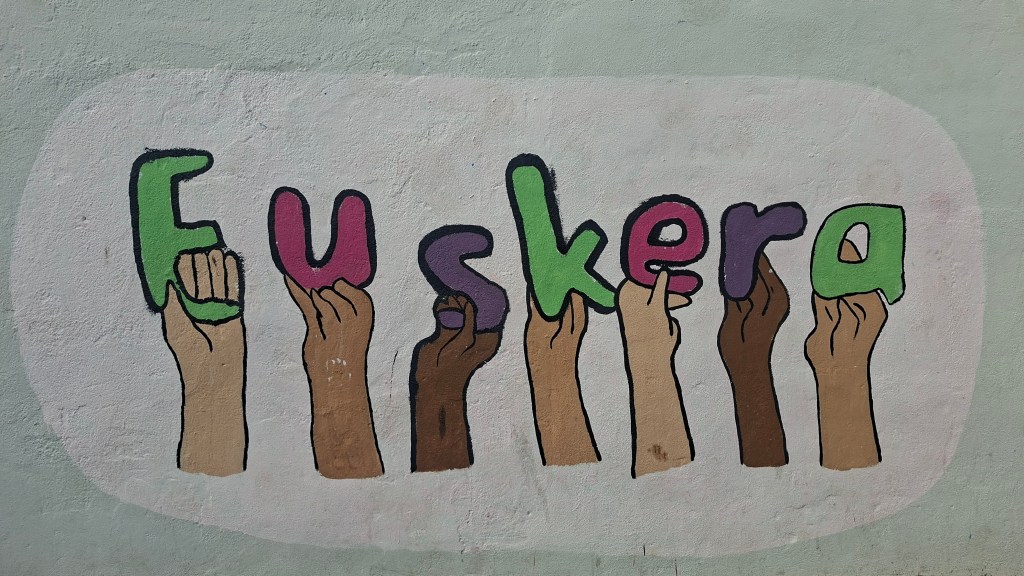
Back in the dormitory, she teaches me a couple more words in Basque. So now I can say hello, goodbye, good way and thank you, which is really all I need. Then a quick hug and off she goes, back down to Markina, completely dwarved by the outsized rucksack on her back.
Now it is my turn to move. One of the English women had told me there’ll be a coffee stop after four kilometres, which makes setting off much easier. And the extra walk yesterday, means I can start at a reasonable time today.
Everybody I know is catching up at this point. Jean-Antoine, who I met walking with Raoul. I don’t recognize him at first, and he seems surprised. But luckily, because his name is my uncle’s name in French, I could remember it as soon as the penny dropped.
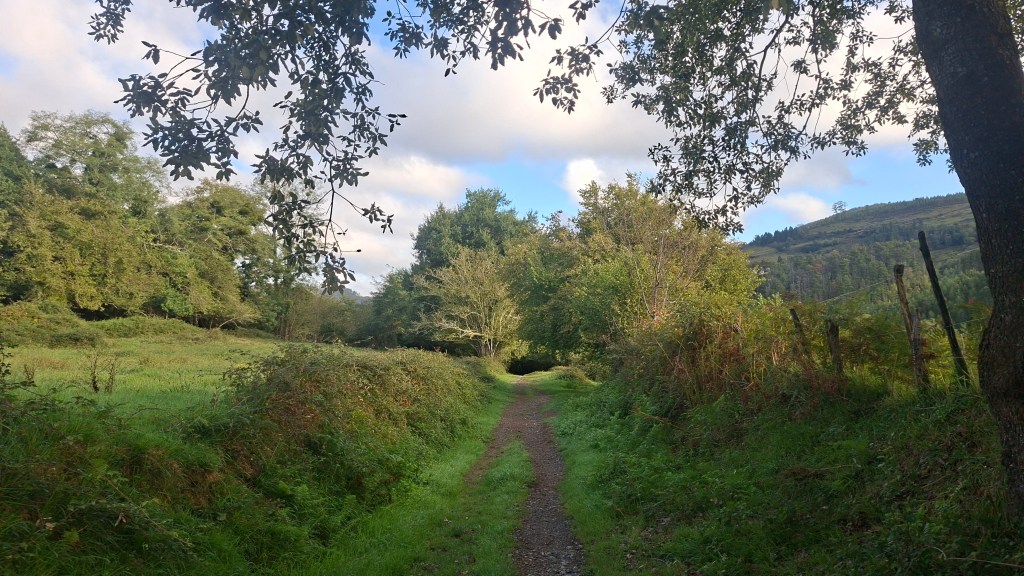
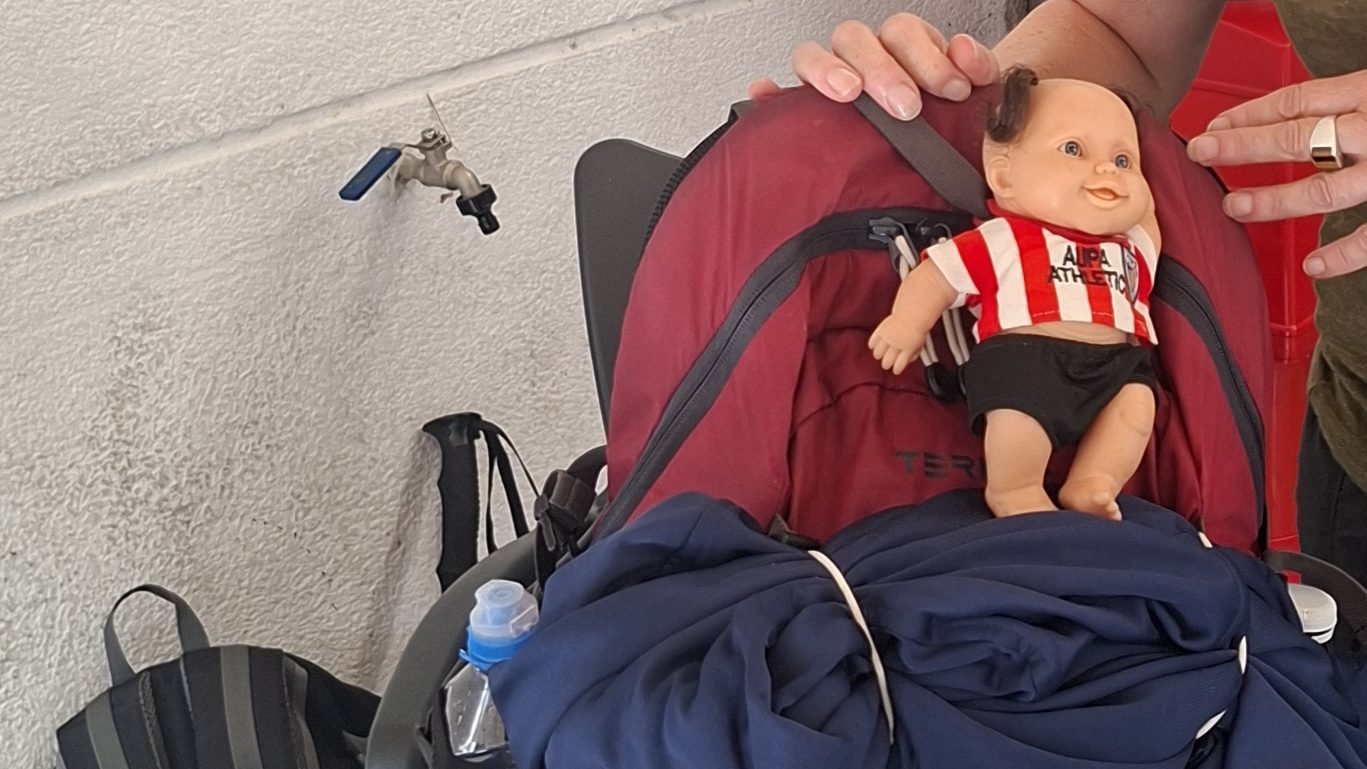
At the first café, I catch up with the man with the hideous Atletico Bilbao doll on his backpack, which has been unnerving me for the last couple of days. The man is Javi. It is good to finally see him from the front. At the second stop, I get to have a proper chat with Iván from Catalonia, which is lovely, as we’ve been walking the same stages since Bayonne and have not really got past the usual vagaries. It feels as if I am filling in missing pieces.
The chat with Iván is a miniature confessional. I tell him the terrible thing I’ve done. I forgot to pay the donativo at the monastery. A sin for which I will need to atone.
Ivan tells me his sin is worse. He lost his silver conch shell necklace in Markina, a precious gift from a friend. He had searched everywhere and was already planning a Poirot-type interrogation of all the pilgrims at the next stop to find out who had stolen it. Possible suspects had already been singled out.
He had found it in a forgotten pocket at the first café. The sin of unkind thoughts. “Besides” he says, “When you lose things, I was told, you learn not to be overly attached.” From my own experience, I would say, you should learn to be more careful, not to put your things in special pockets, and always check under the bed. I have lost a few things along the way.
And then I keep on walking for Gernika.
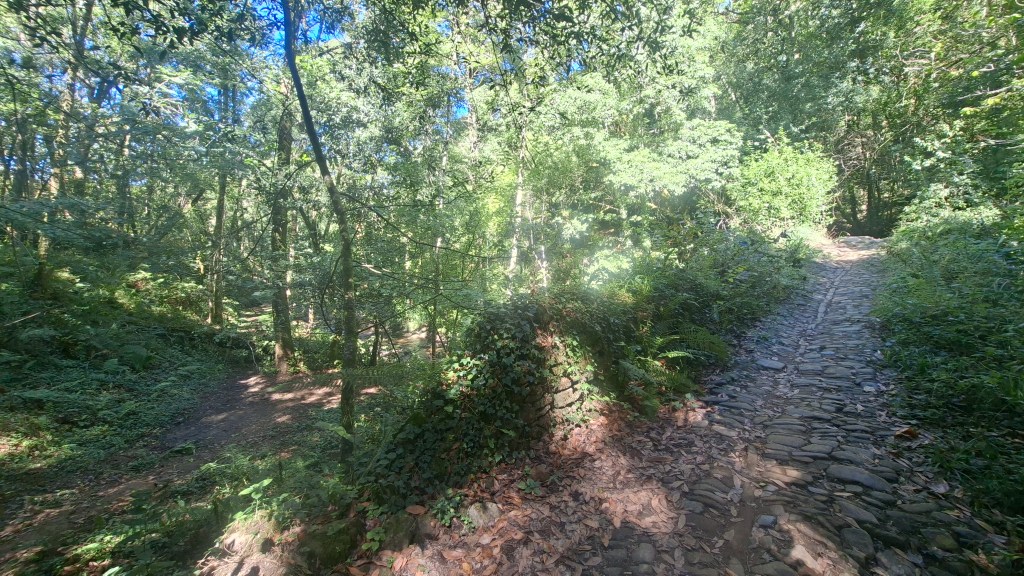
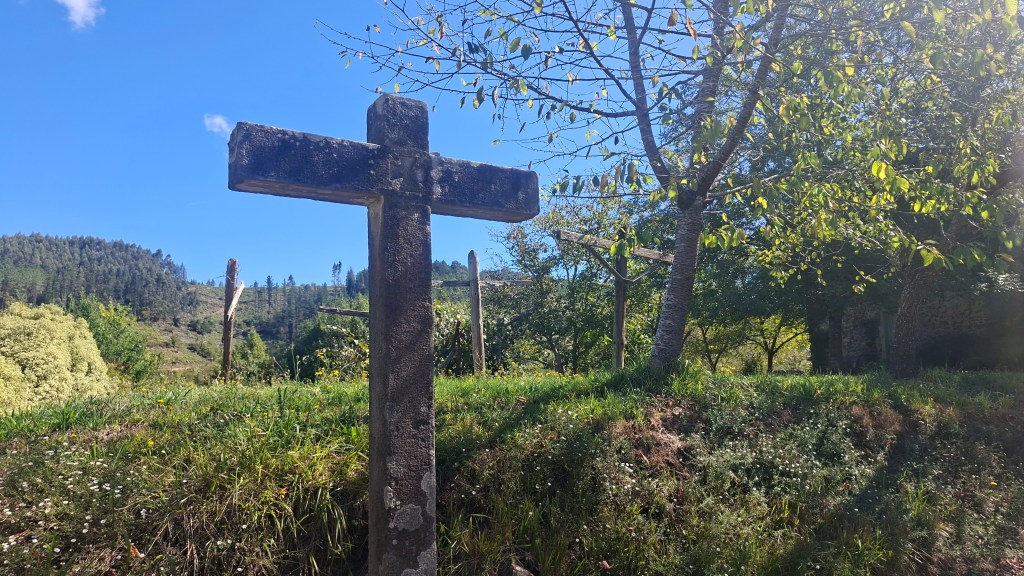
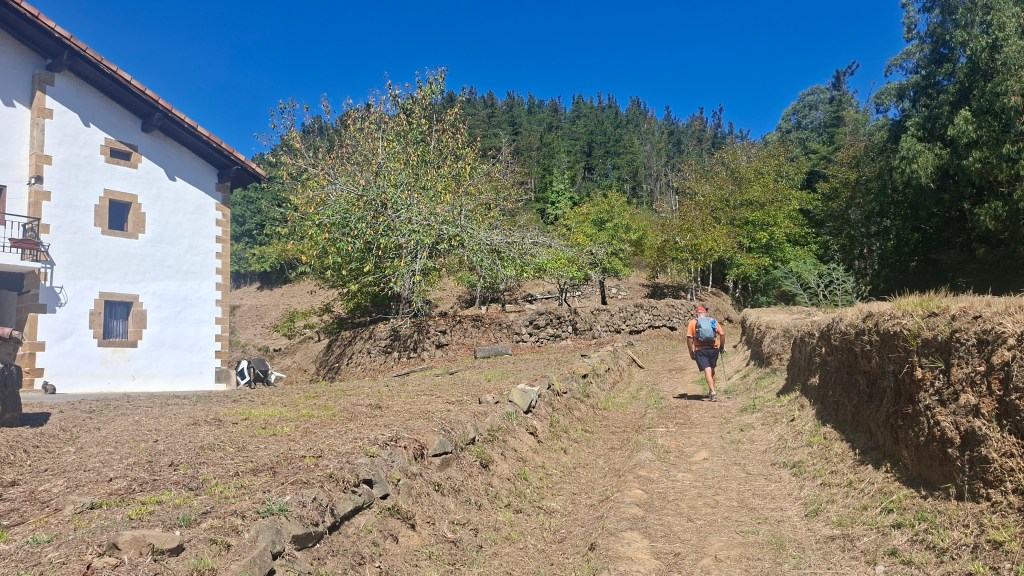
Gernika is a stage post, and so I decide I should do something to mark that. I have a box of salad and then decide I’m going to go to a museum, partly because it has a pilgrim discount, but also because I feel I should pay my respects to the town.
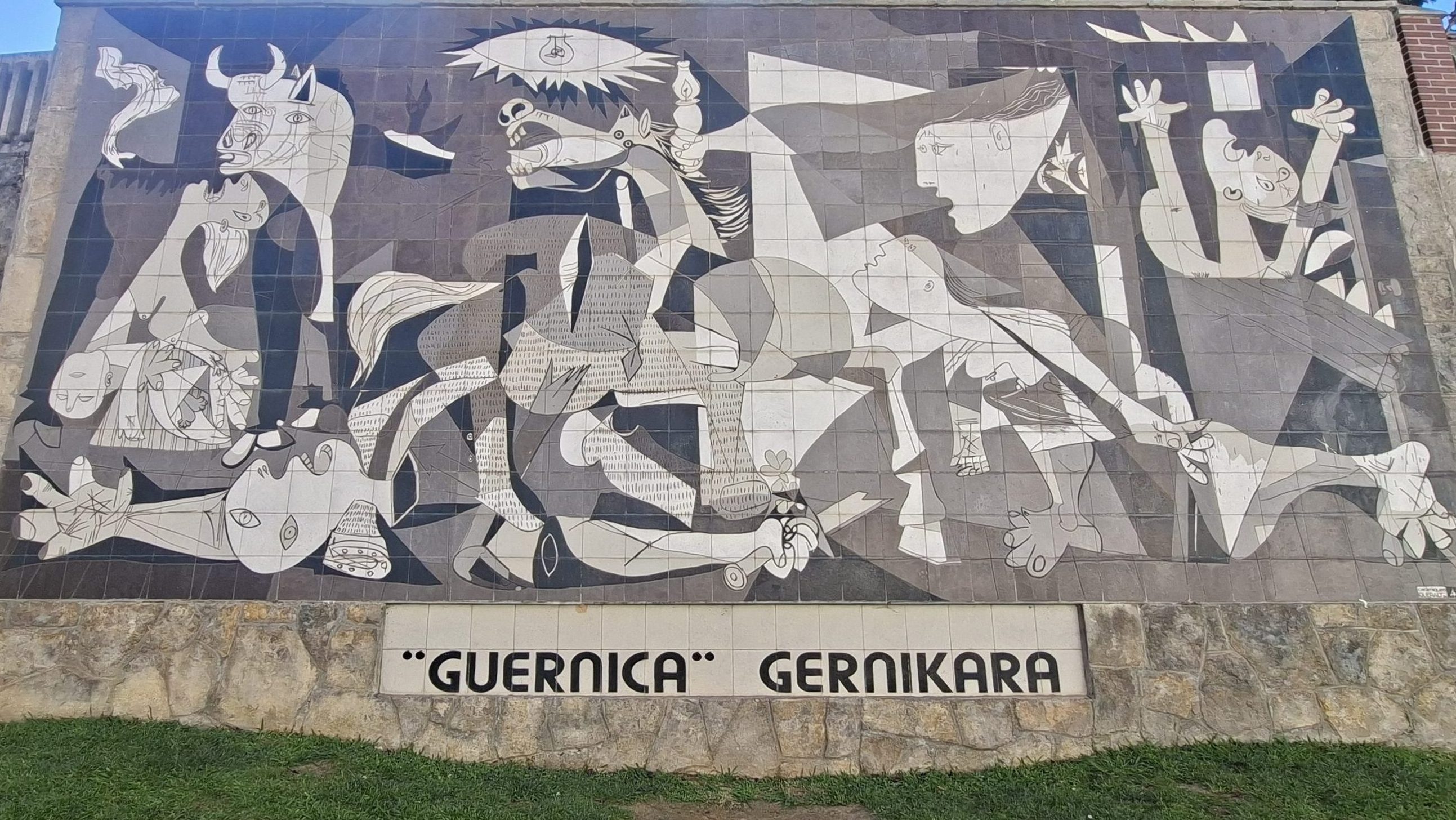
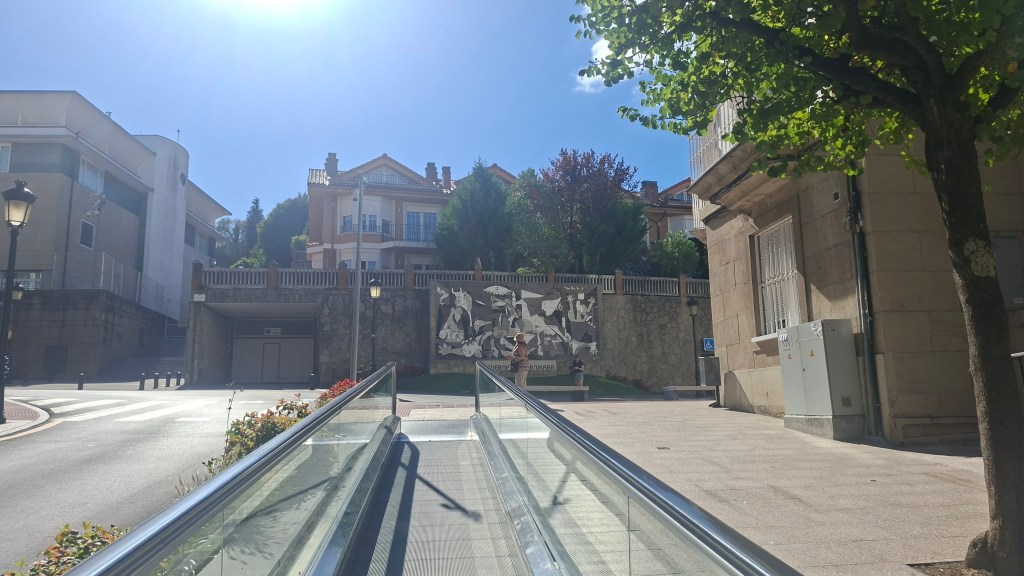
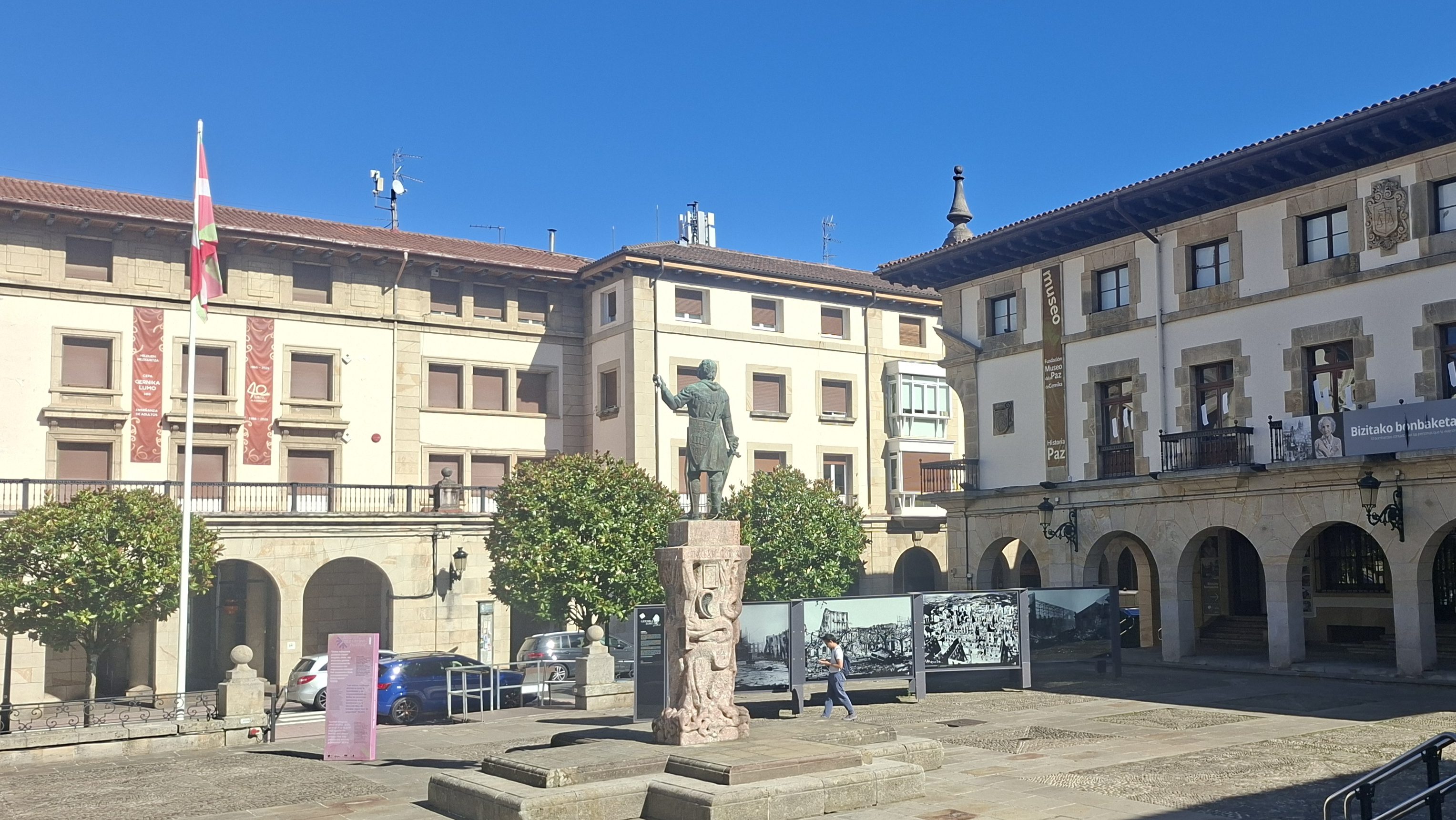
The girl at the door gives me a pamphlet of everything translated into English, shows me where I can leave my backpack and sticks, and allows me to transform into a normal tourist for an hour.
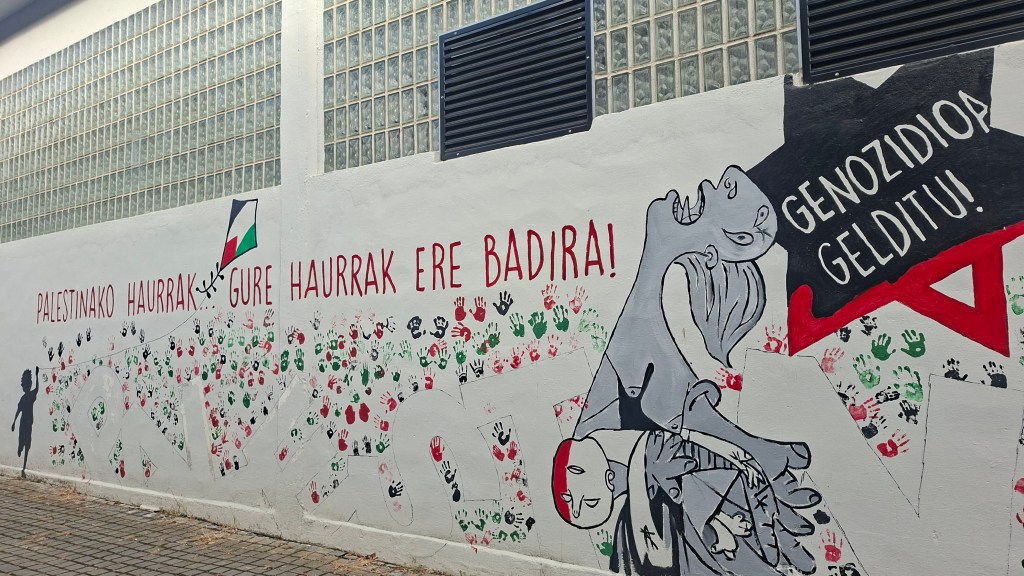
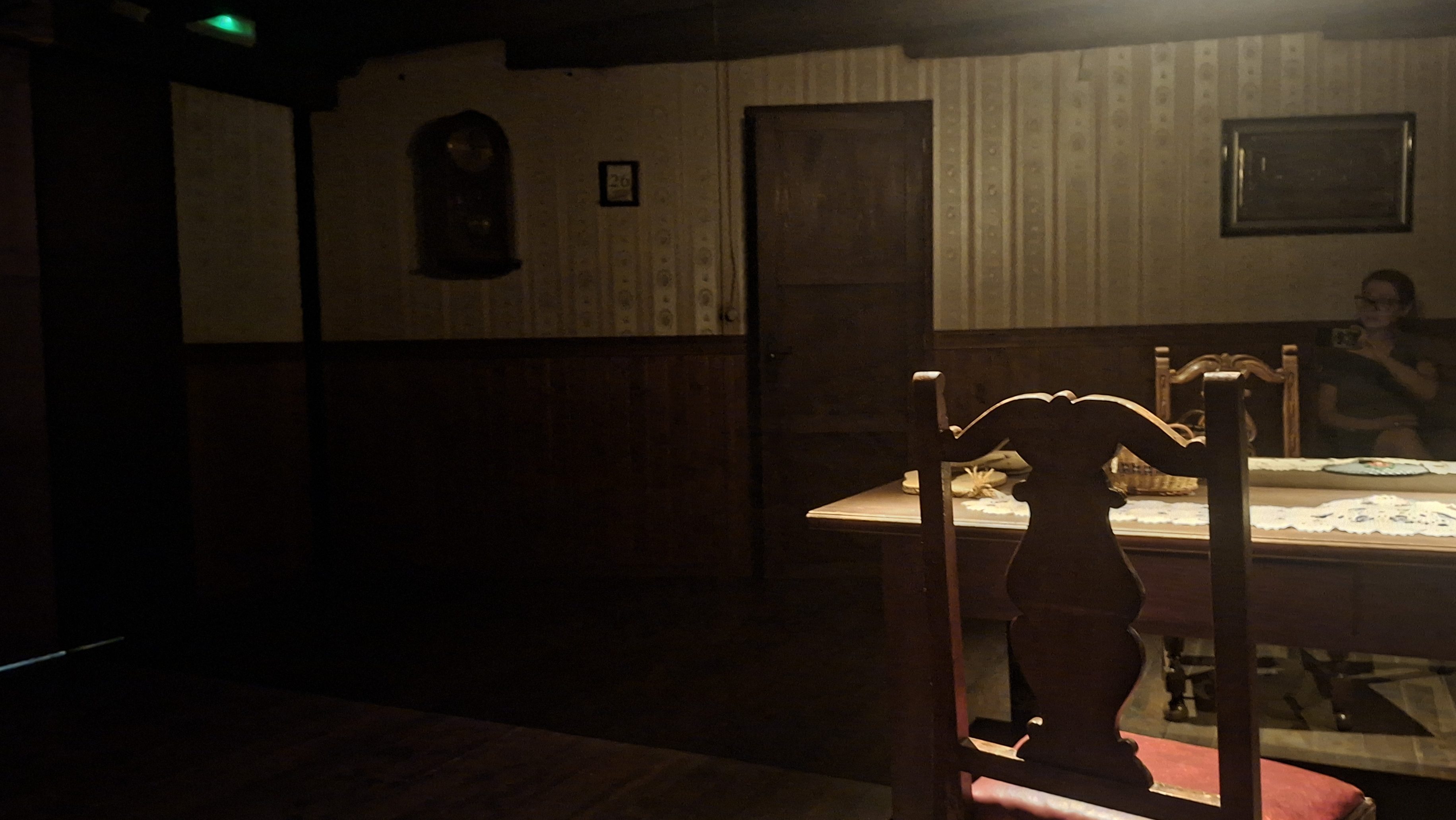
During this hour, I learn about peace and war, in that order, and get to understand a bit more about this town’s famous destruction. At one point, a door opens automatically and I walk into a traditional Guernican living room. The door locks behind me and I listen to a woman talking about her daily life during the war. Suddenly, I hear the bombs start dropping, and the dark mirrored wall in front of me becomes a view onto the rubble the house has become. I’m quite glad when the door opens.
And the conflict doesn’t stop when I’m back on the streets.
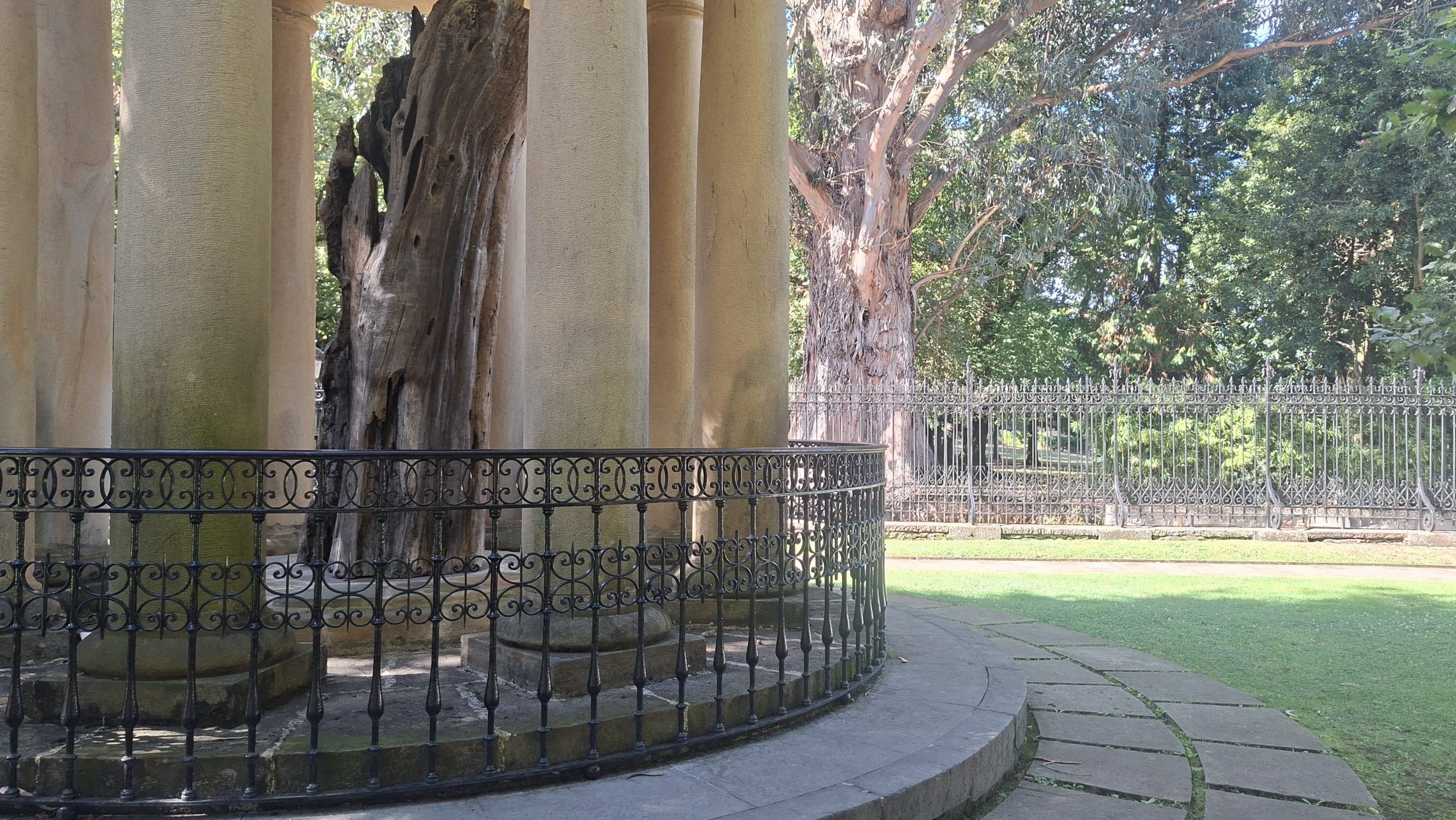
Having wandered happily past the remains of the sacred oak the traditional site of Basque government, I hear the voices of three men arguing behind me, or at least one man arguing against two others.
I want to intervene. The one man is clearly very upset by what the others have said, and the others are dismissive and refusing to apologise, their tone threatening. When he drops behind, I approach him.
He is a young Chinese man close to tears, and all I can do is give him a hug and listen. While he talks, the men disappear, and we discuss options for him getting safely back to Bilbao, from where he has come with these two men before things turned nasty. I give him my number. I’m not sure what I can do to help, but it’s always nice to have a number, I find.
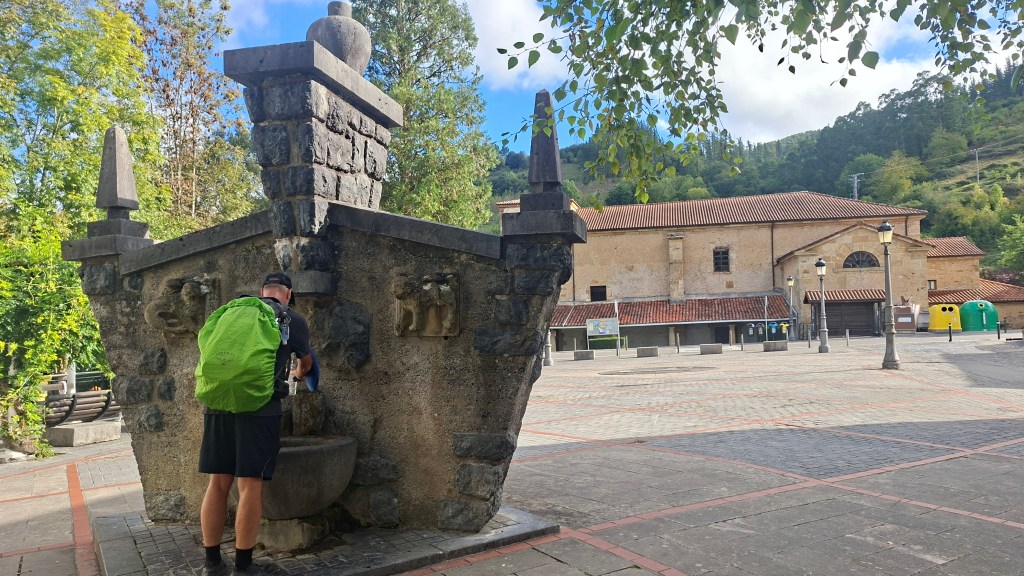
The walk past, up the last hill to Pozueta, where everyone is staying tonight who can’t afford a hotel, or doesn’t want to “cheat” on the Camino experience by paying for one.
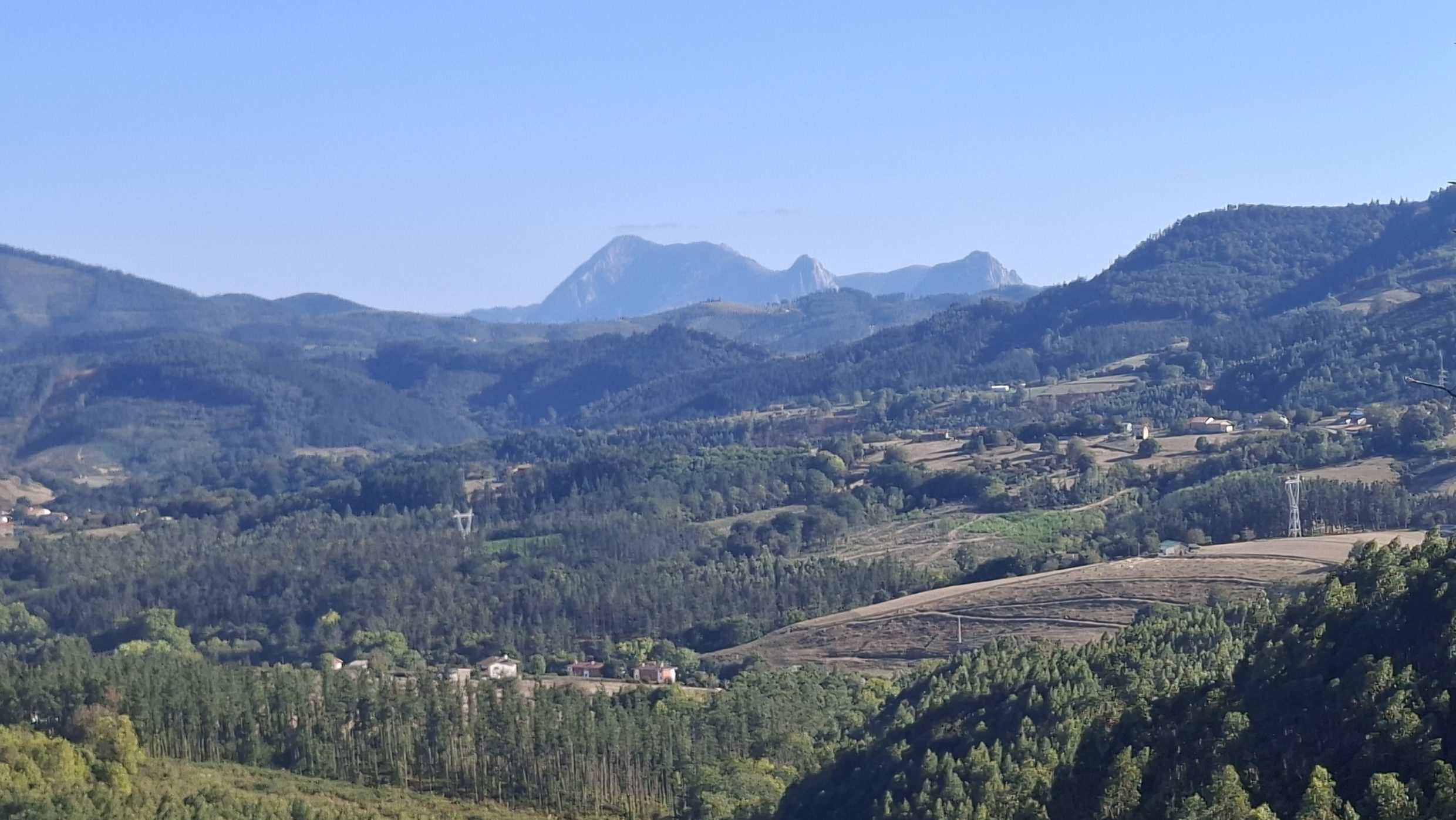
I am happy to be alone for the late afternoon walk. My Spotify account has renewed, so I can finally listen to the end of my awful trad-wife audiobook, which I’ve been waiting for nearly a month to pick up on again. That too descends into conflict and misery. The time flies by. I’m having fun.
As I’m finally approaching Pozueta, I get a call from Alberto, and I imagine he’s worried that I’m so late. But no, he’s only just left Gernika, and he’s worried he’ll miss his dinner. I make sure they know he’s coming when I check in.
And it’s so lovely to arrive. Uruguayan Laura, and the two Spanish girls she’s walking with, shout out “We were waiting for you! We were worried about you!”
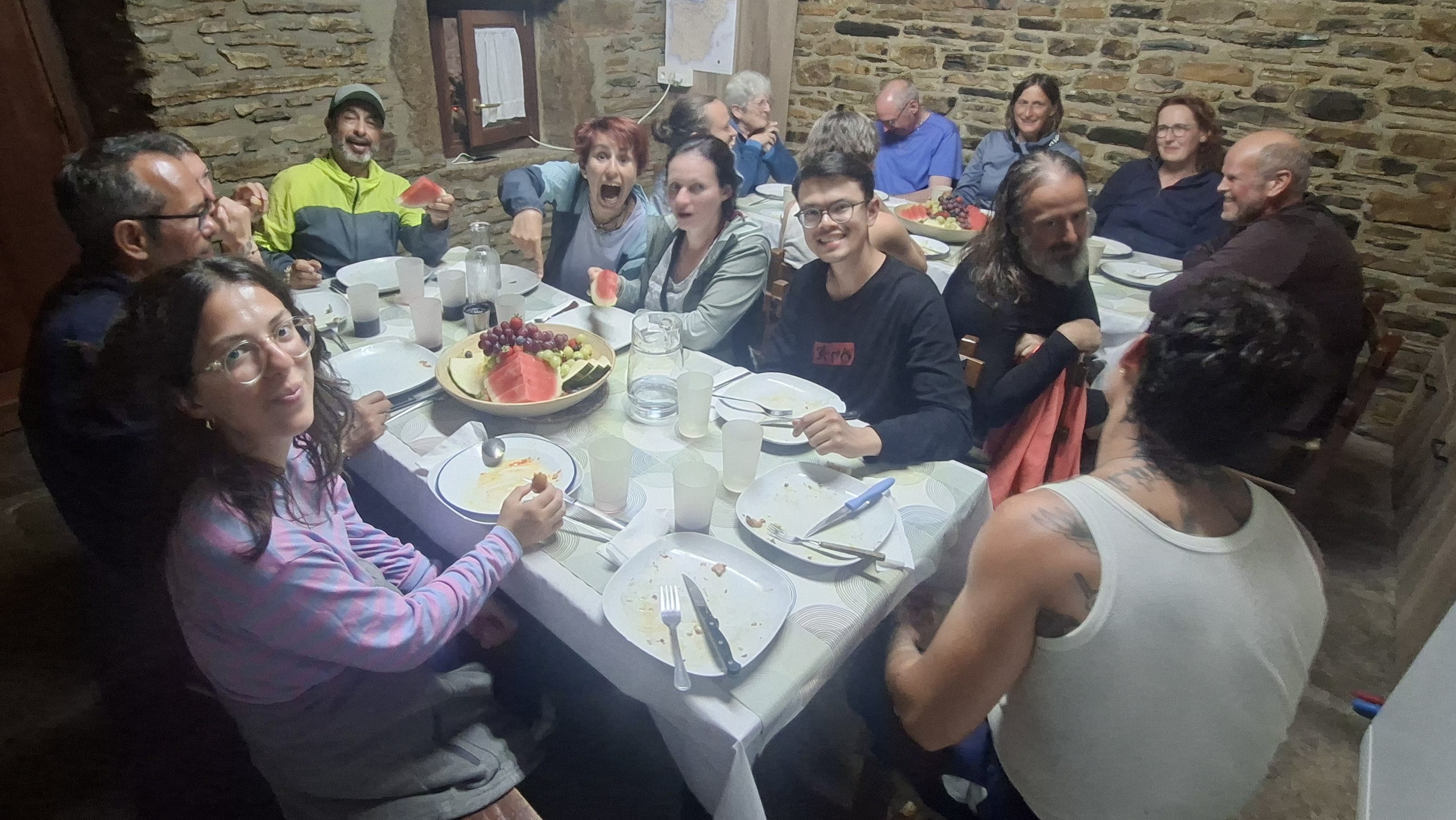
Everyone is back together now, but it’s okay. There are a few people from the monastery, and all the old crowd too, and again a communal dinner. It is a beautiful contrast to the veins of conflict that have run through the afternoon.
I chat to a delightful young German couple, Teresa and Darren at dinner. They were at the monastery. Teresa speaks perfect accentless English and excellent accentless Spanish, and when she speaks to Slovenian Nevis, she even says the few words of Slovenian she knows with a perfect Slovenian accent. I am horribly envious. She can also roll her ‘r’s. Sadly, she is also charming, clever and kind.
Twice in the evening, I pocket call the young Chinese guy, after he texts me to tell me he is safe and his situation resolved. The second time he picks up and we end up chatting. He gives me recommendations for pinxos in Gernika, which I tell him I’ll pass on.
At the end of the day, Alberto and Czech Gabi, who he’s been walking slowly with today, invite me to come outside for a few minutes before bed, and there are Catalan Montse and Iván, and Uruguayan Laura and her companions. All stay outside chatting until the hospitalero announces it’s time to be quiet.
“Us Spanish are so loud,” whispers Alberto, which ends the night with laughter. No conflict here.

 WHEN WALKING
Leave a comment