Home to Santiago – Day 43
Labenne-Océan to Bayonne: 20km
It doesn’t take long after leaving the campsite to become public property again.
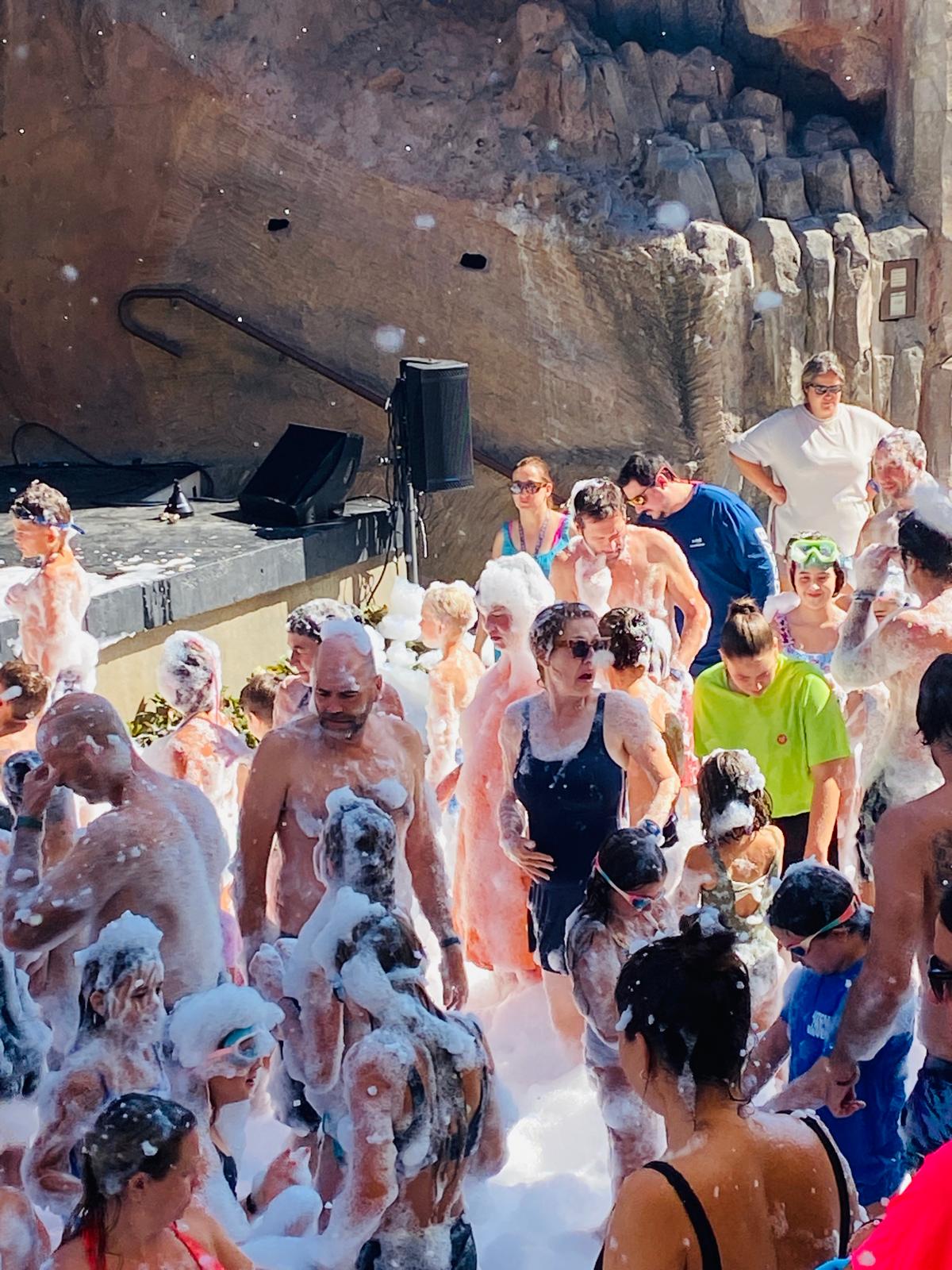
For one week, I ceased to be the lone outsider looking in and became part of the large family group, enjoying life from the inside: doubling up tables at restaurants, foam parties, kiddie discos, craft activitied at the House of Fun, shopping for nine, swimming, playing cards and very little else.
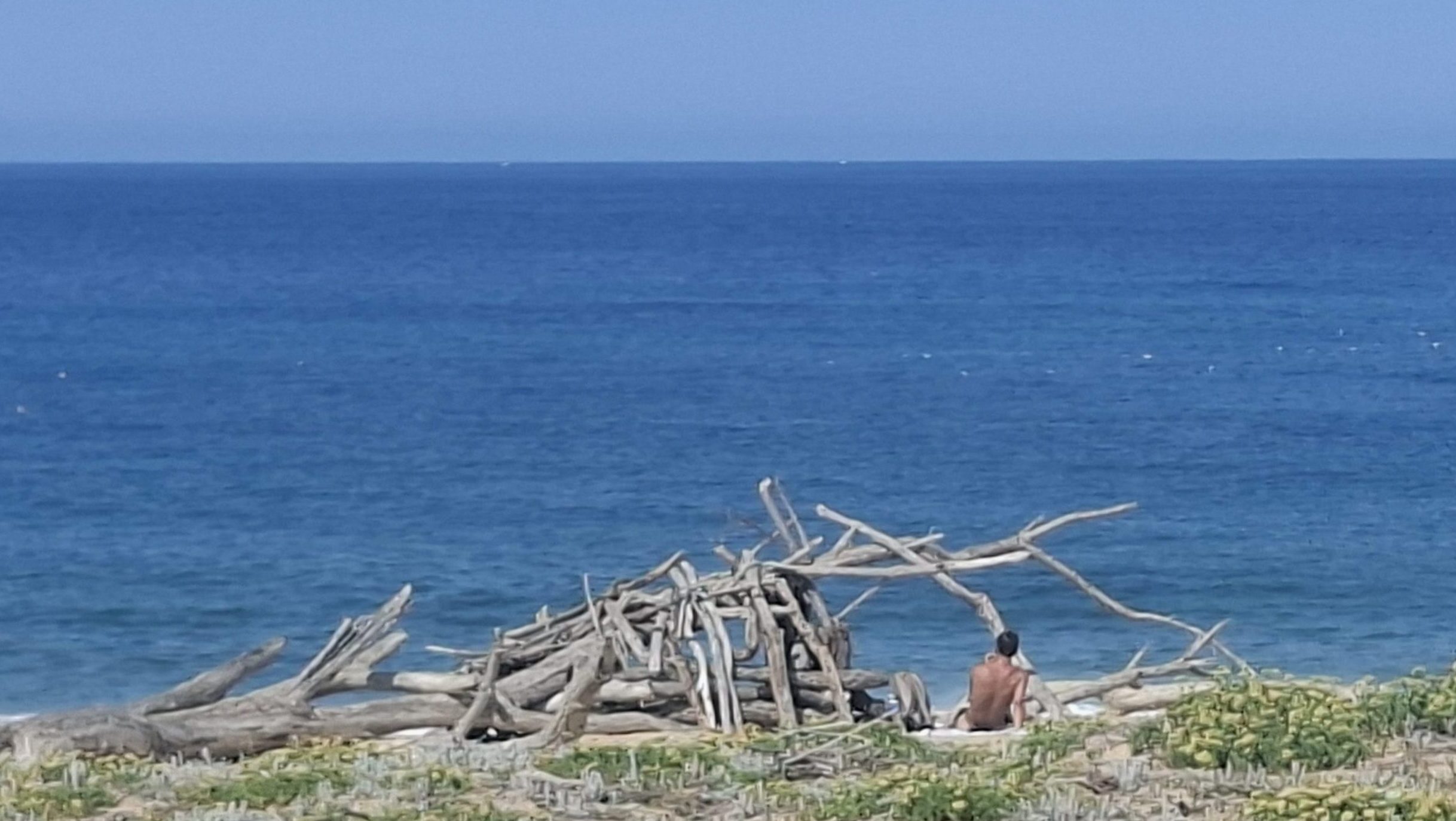
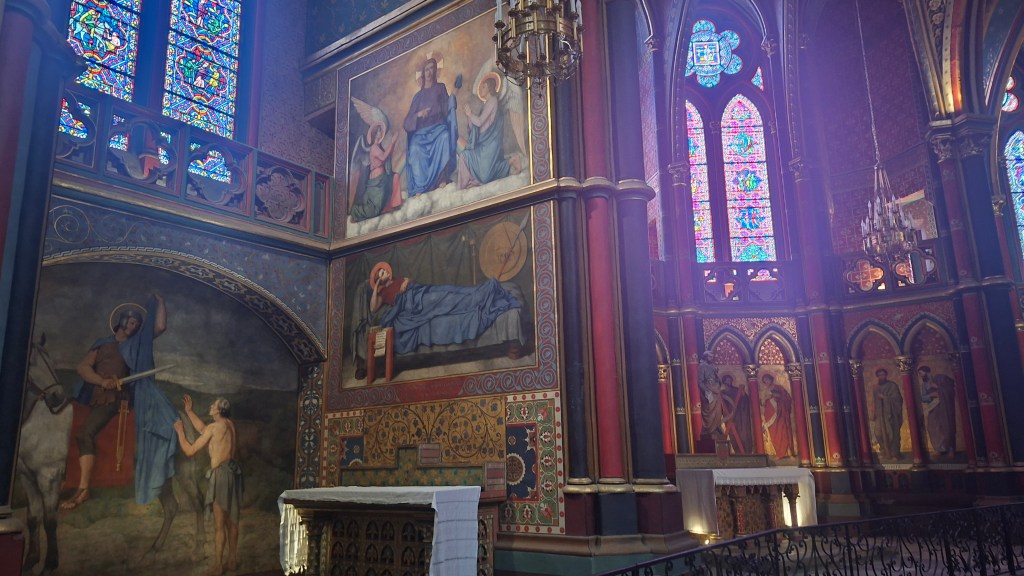
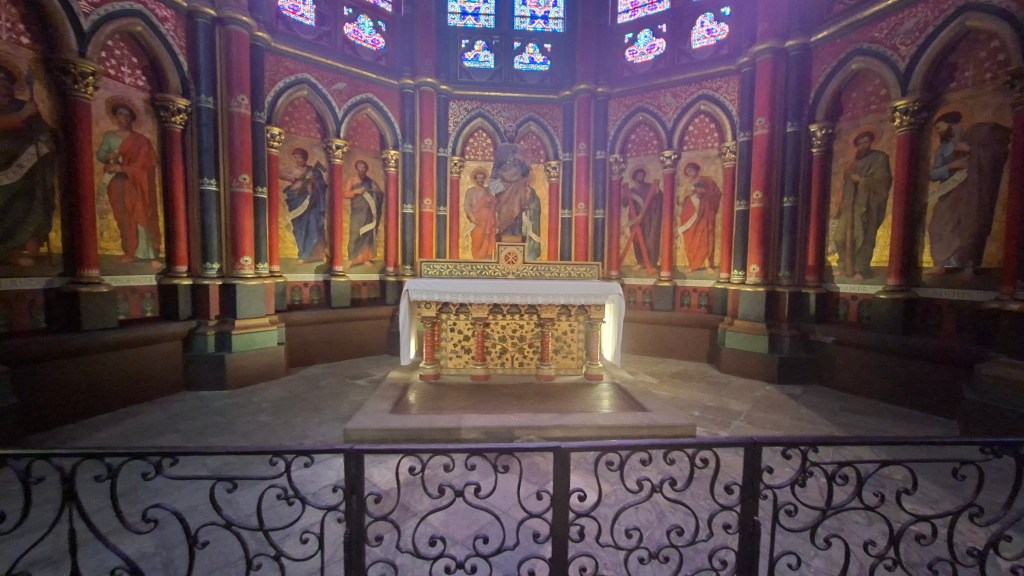
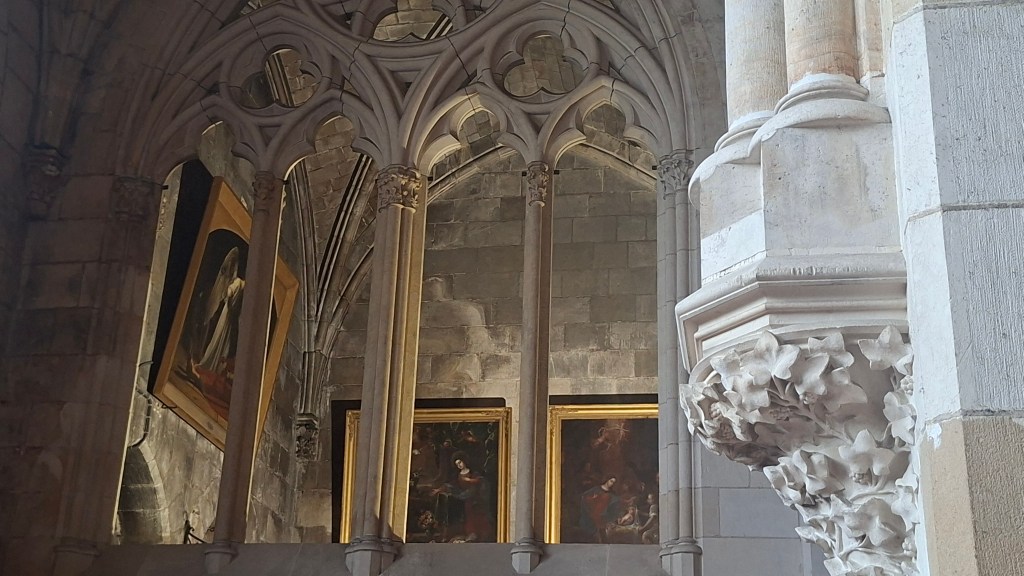
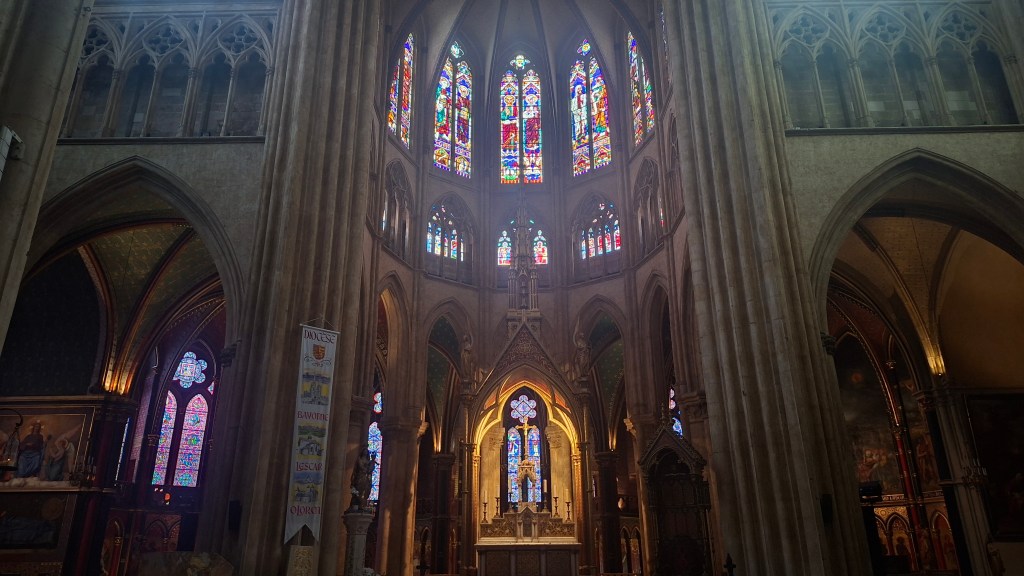
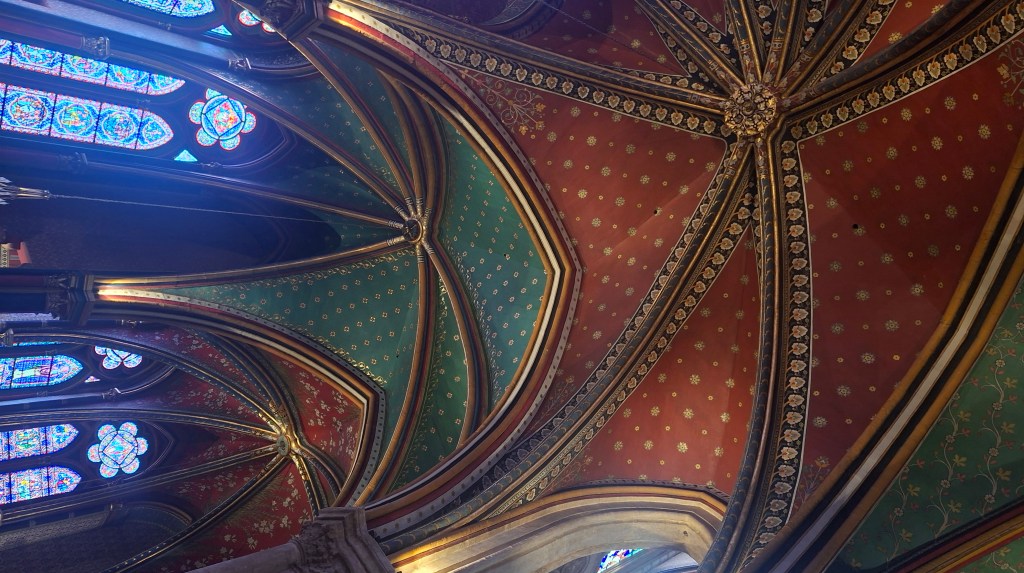
The only trips outside the campsite for me are a trip to Bayonne to replace my sister’s hire car and get a preview of the cathedral, which is an illuminated marvel, and a walk to the seaside on the penultimate day of the holiday, just to say I’ve been there.
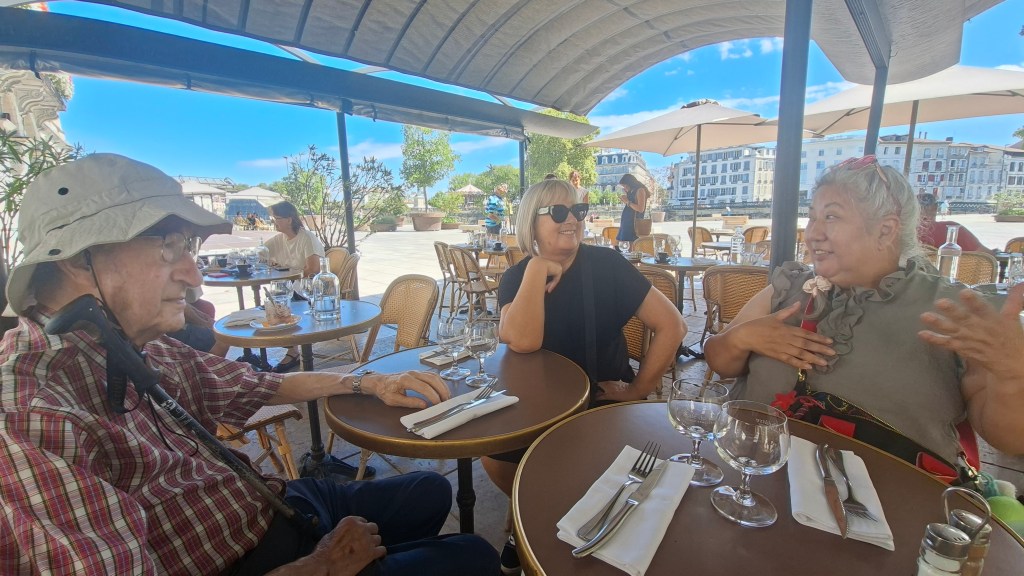
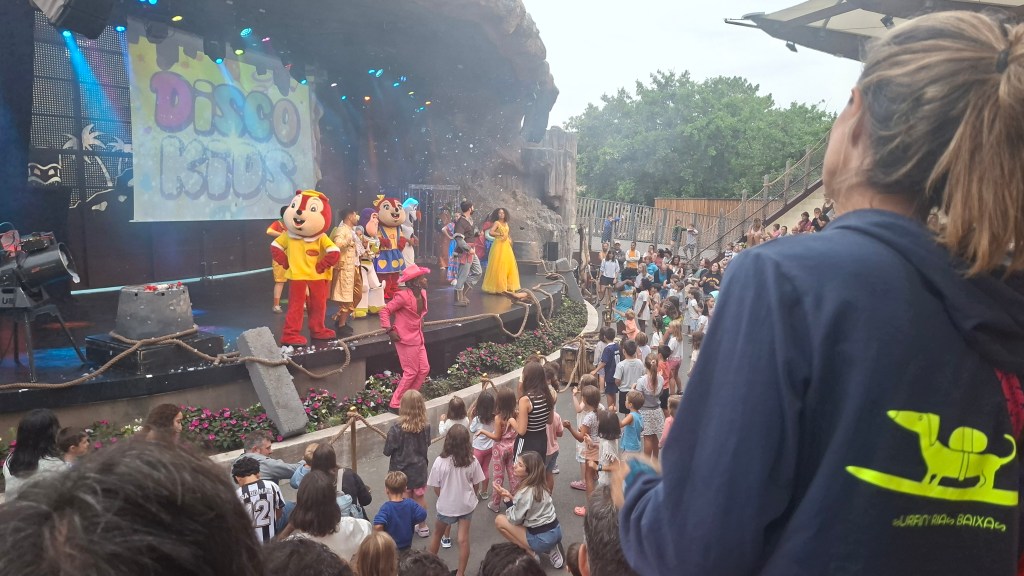
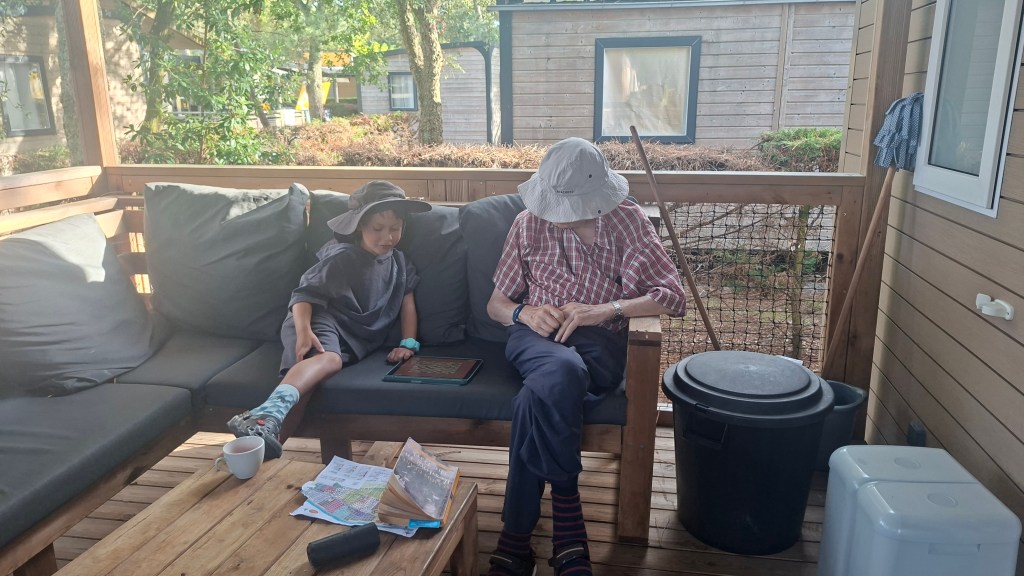
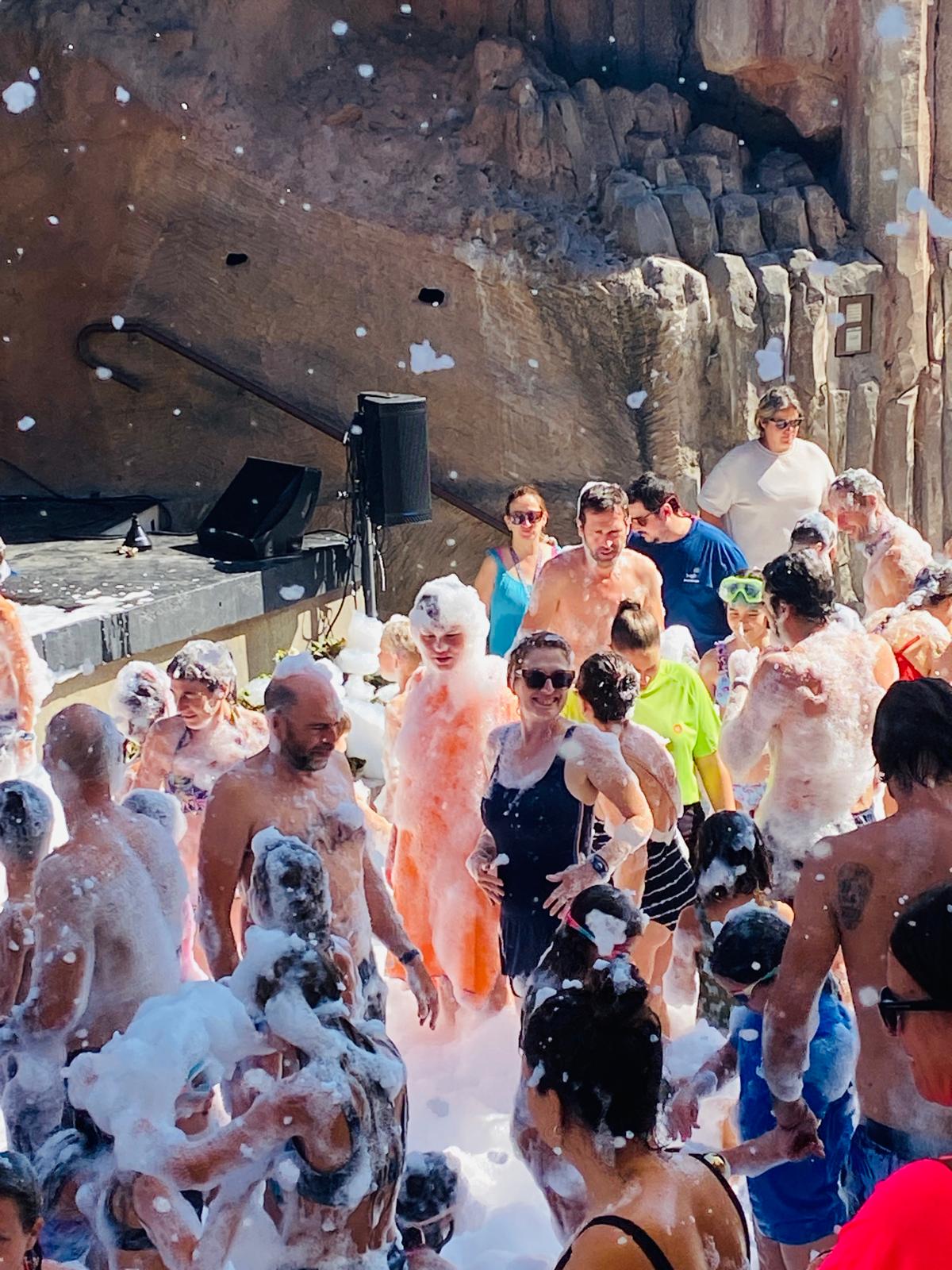
When I first arrived at the campsite, no one thought to tell me they’d arrived. As the children tell me, “It’s because you’re never here”. But by the end of the week, I’m fully present again, and get hugs to make up for the ones I’ll miss over the next month and a half.
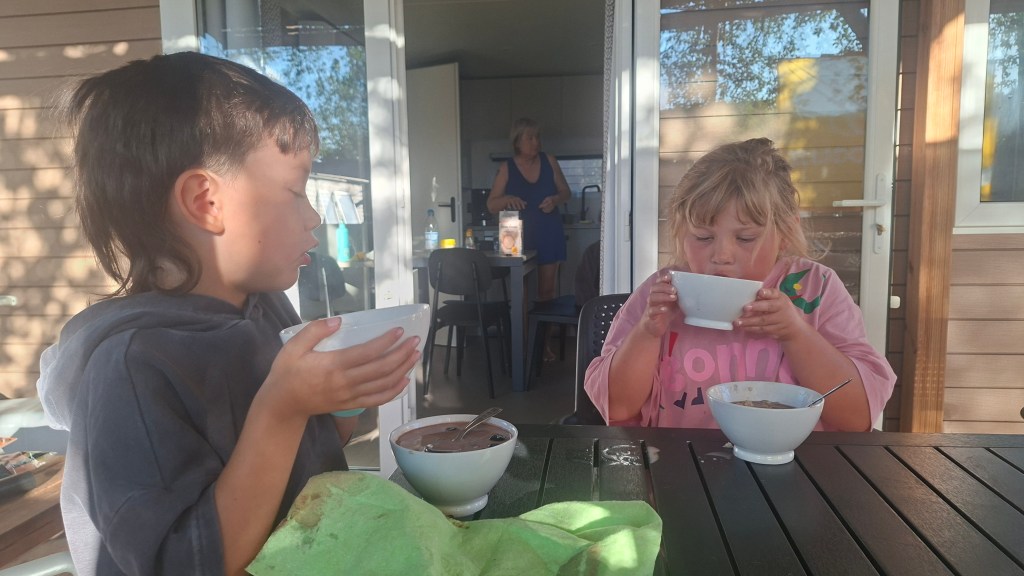
And now they’re all packed up in their cars and probably at the airport, and I am walking along a cycle path beside a river with the morning joggers, trying to remember how to be this person again.
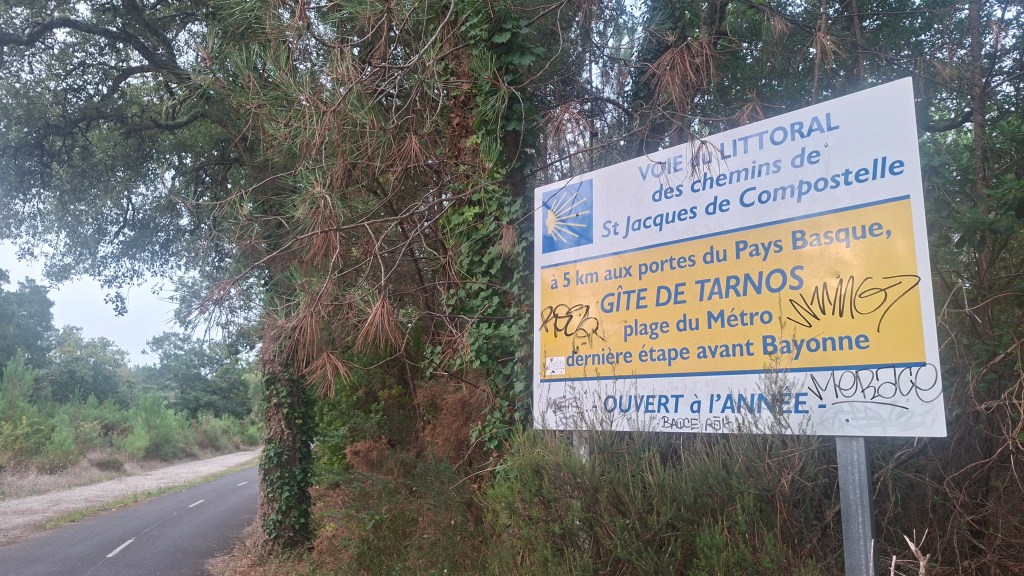
As I walk in the woods towards the ocean, I’m caught up with, while I’m checking the map, by an older man who tells me that he’s been dreaming of doing the Camino for thirty years. It starts from outside his home, he tells me.
He then becomes concerned that I’m walking through Le Bouscatand will be knocked down by lorries. I try to explain to him that the path is usually designed in such a way as to avoid this, and on showing him the map, he is partly convinced, and he walks on ahead.
This means that, having stopped consulting the map, I have to continue walking at a slow pace to avoid the awkwardness of catching up after a goodbye. However, we meet again as he’s pausing by a junction, and I turn to go to the beach.
He is concerned anew and keeps telling me, “No, no, it’s not this way. The path is that way.”
“But the beach,” I say, “is just here.”
“But it’s not the route,” he insists, before relenting and saying “Well, there are water and toilets, I suppose” I am allowed to go on.
As I sit down with a coffee at the beachside café, I hear someone saying, “Hello, hello.”
I don’t imagine it’s for me until I look round and there is a lady waving at me from the next table. She’s seen the rucksack. She wants to talk. I’m in for a treat with this one.
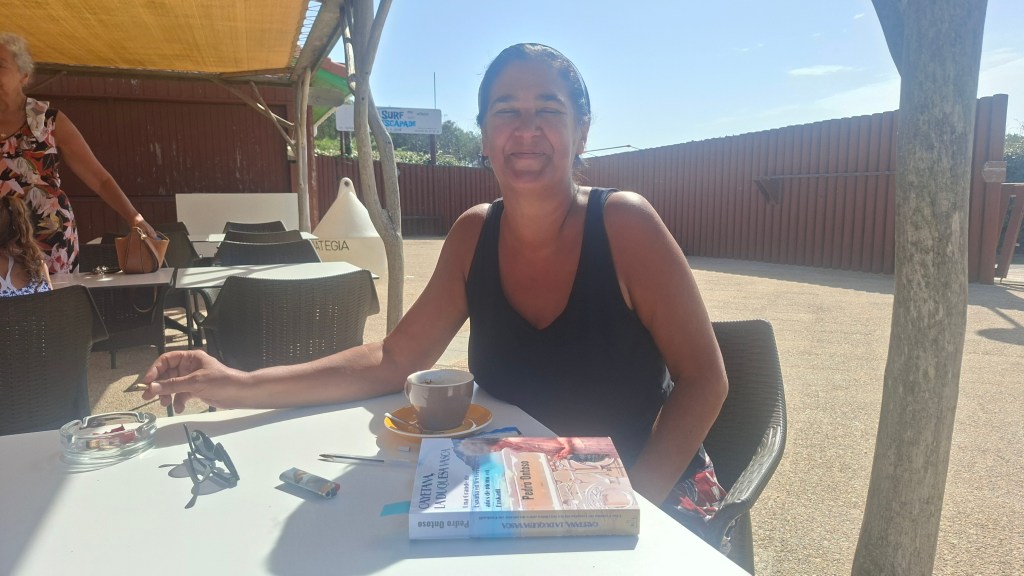
Taking my coffee with me, I go to join Eliana from Sardinia, a high school teacher of Ancient Greek, Italian and Latin, three of her eleven languages. In fact, she says she only speaks nine languages because the classics don’t count.
We start with discussing the camino, which she had done by car, with her dog, before moving on to all sorts of interesting language topics. We chat for far too long. I was due to arrive in Bayonne at half twelve. Now it’s ten past twelve already, and I have at least another three hours to go. The conversation has been so prolonged because she is quite convinced, once we get to it, that she is the person who will finally get me to do the Hungarian and Spanish R.
It would be nice.
I tell her about my tres tristes tigres tongue twister, and she starts me with the T and O vowel sounds, before moving on to the rest, all the showing me with her hand what my tongue should be doing. I need to relax, but I also need me to pay attention and listen.
She gets stricter and stricter.
Everyone at the surrounding tables, is looking on and smiling as I try again and again, with little success, to get my Rs out. Trrro, Trrra, Trrre, Trrri, Trrru. When the T is removed, I just start making desperate blubbering noises in the hope the required sound will miraculously come out.
In the next twenty minutes I get further than I’ve ever got before, but eventually I can see a look on her face of annoyance and disappointment that she might not be the one.
And I have the same feeling I get when I’m evangelized on the street in London, where I really, really want them to get what they want out of me, but I just can’t oblige.
I realise there’s going to be no happy ending to what started so well, when finally says, “You know what? I think tomorrow you’ll be able to do it. Sometimes it just needs to settle in the brain.”
I see now that she too has been looking for a nice get-out of this endless exercise. And she needs a swim.
We part on good terms, but both conscious, I think, of the odd turn the encounter has taken. And I am now two hours later than I hoped to be.
I saunter along the dunes and then plod into Bayonne through the outskirts, stopping only to get myself a ridiculously healthy lunch from Aldi, which I sit and eat next to a main road by a train station just because there’s a bench. There will be many benches along the beautiful river in about ten minutes, but I don’t want a good yogurt to go to waste. Besides, the commuters coming off the train all wish me bon appétit, which feels very nice and French.
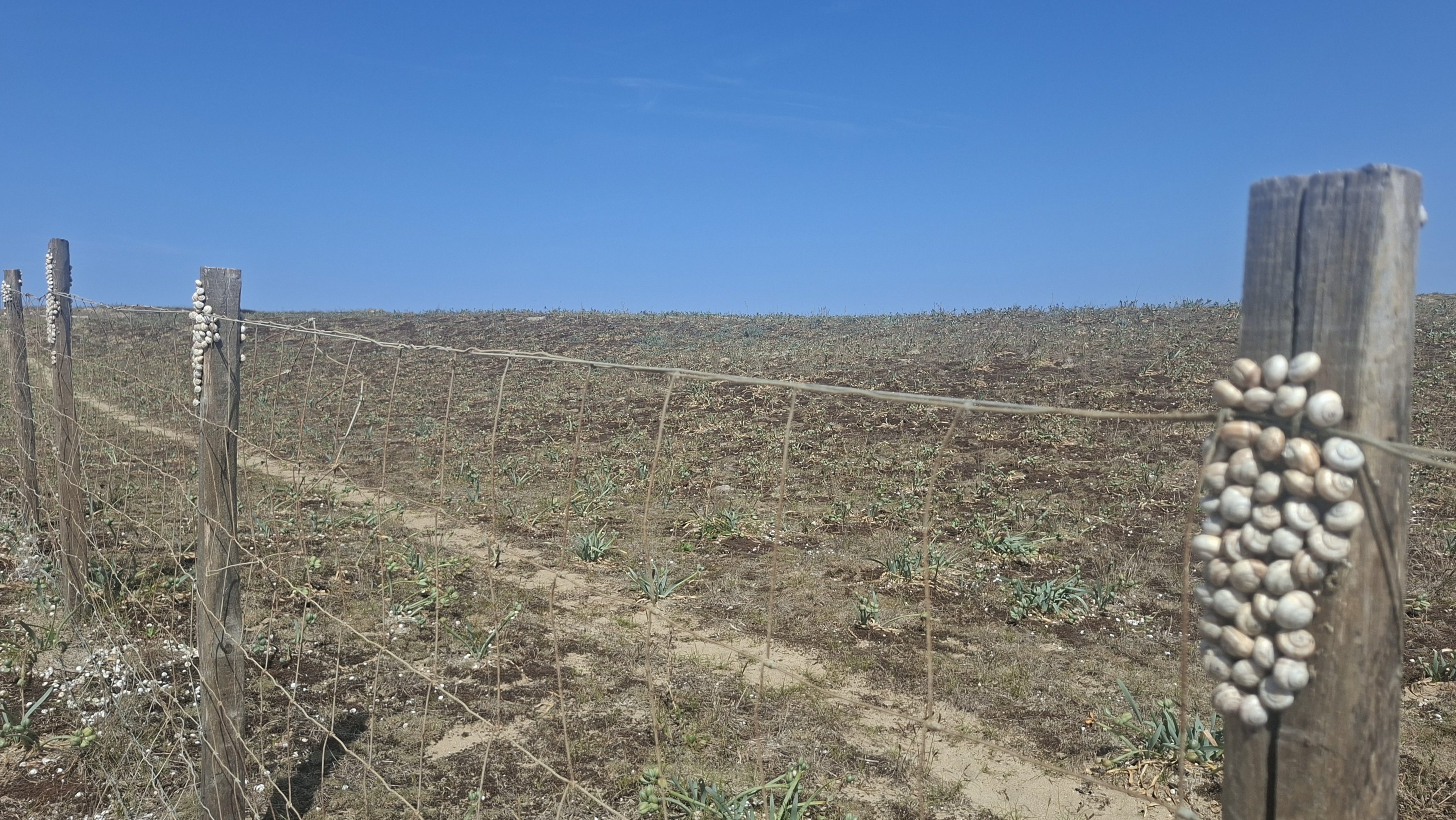
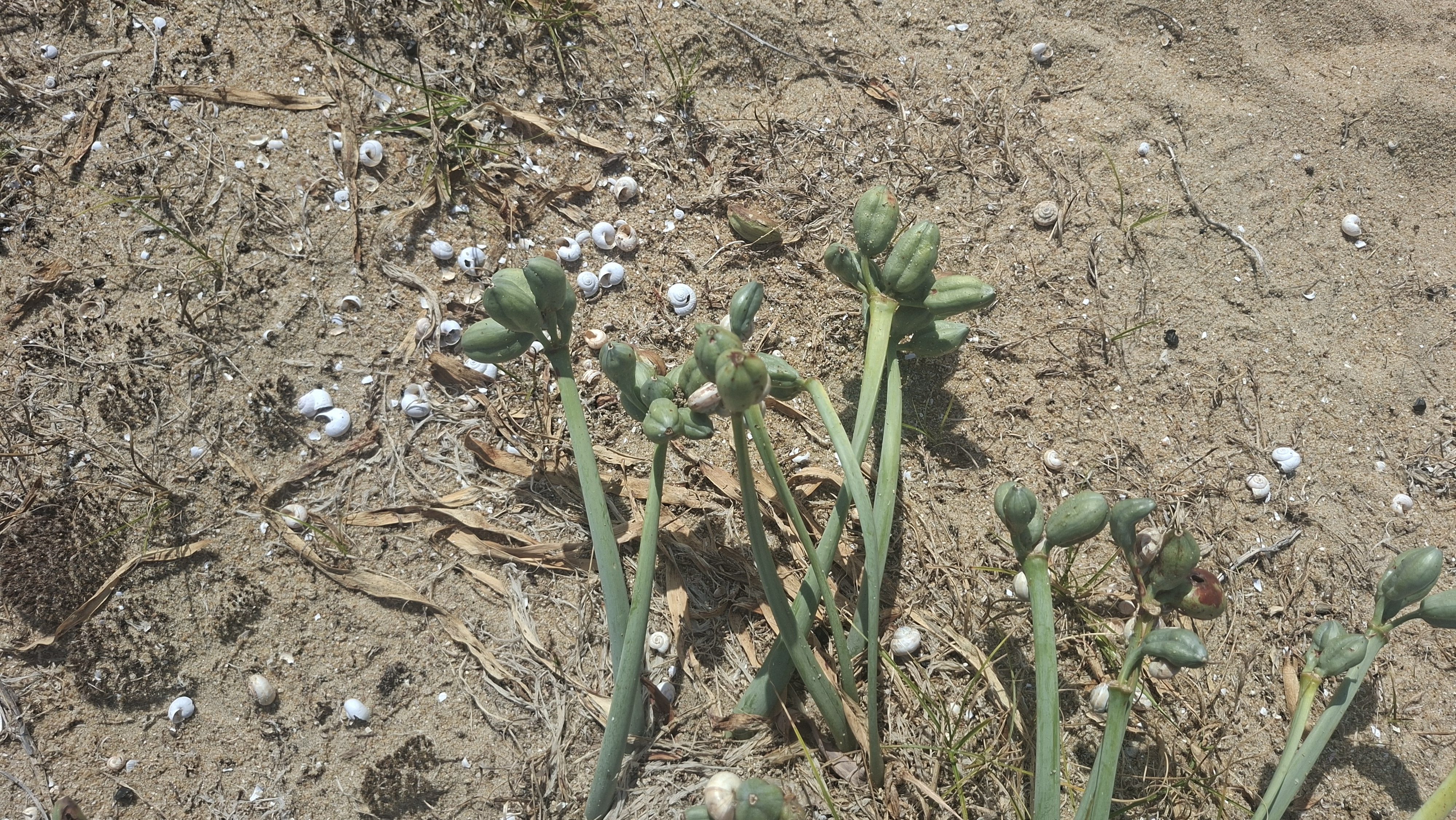

I notice, walking in to Bayonne is how universally shabby, although interesting, the non-cathedral side is. As I walk over the river, I read the sign that tells me that the port used to be at Cap-Breton, where I was a week ago, and before that it had been at La Vieille-Boucaule, where I’d been earlier the same day. The waters are ever moving around here in this strange area of sand, forests and relentless Atlantic ways.
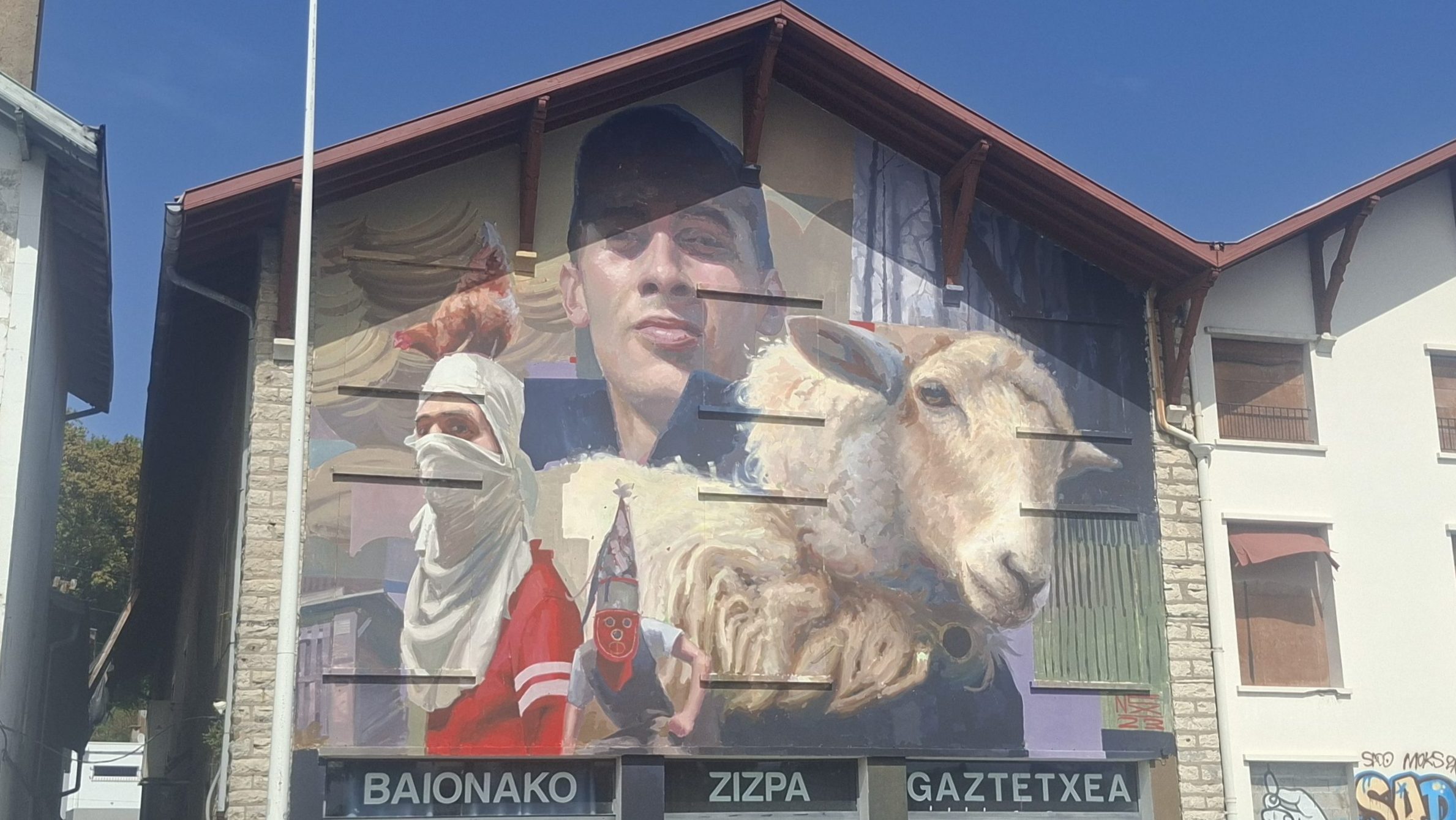
I regret my sauntering and my impromptu roadside picnic when I arrive at quarter past three at the refuge in Bayonne, just behind a couple who take the last two bottom bunks.
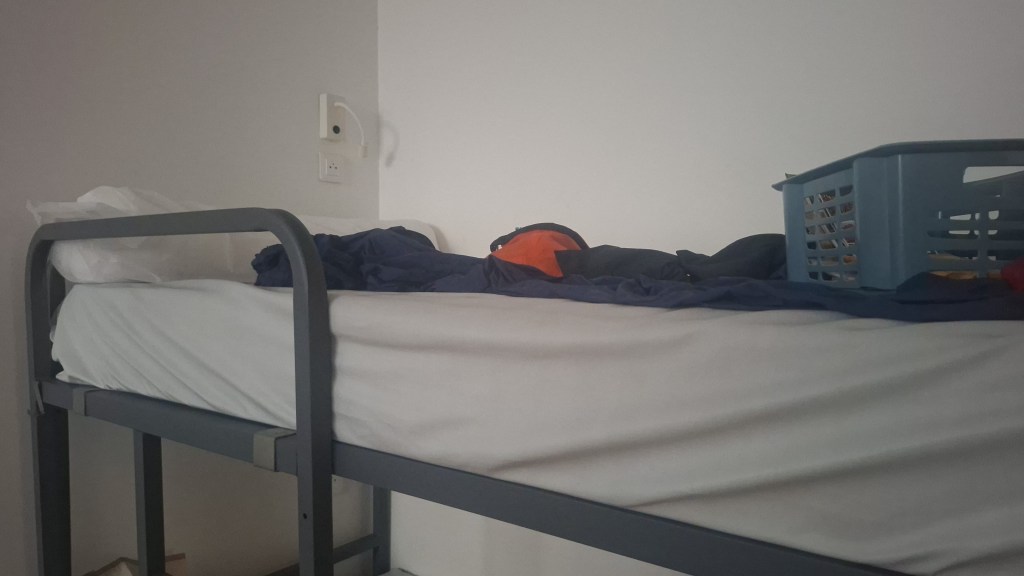
But it’s a full hostel tonight, which feels strange: three Dutch, various French, two Spanish, one Argentinian, a Lithuanian, and lovely Wang Fen from China, who writes my name down so she can practise pronouncing it. I hate to tell her I can’t pronounce it myself in half the languages I speak.
And then, to mark my evening in this beautiful city, I head out to the launderette.
Bayonne is barely recognisable from the quiet, sleepy town I found on Sunday afternoon with my family. Today it feels more Spanish than French. Everyone’s out on the streets, drinking, having fun, on the cathedral side of the river. All the shops are full of beautiful, artisanal things you want but don’t need: artisanal chocolate, handmade berets. (Part of me feels I do need a beret, but I’ll try and fight against that for a little bit longer). There are huge, high buildings on the narrow streets, timbered in the Basque style. Men are singing in the street. There is some kind of festival going on.
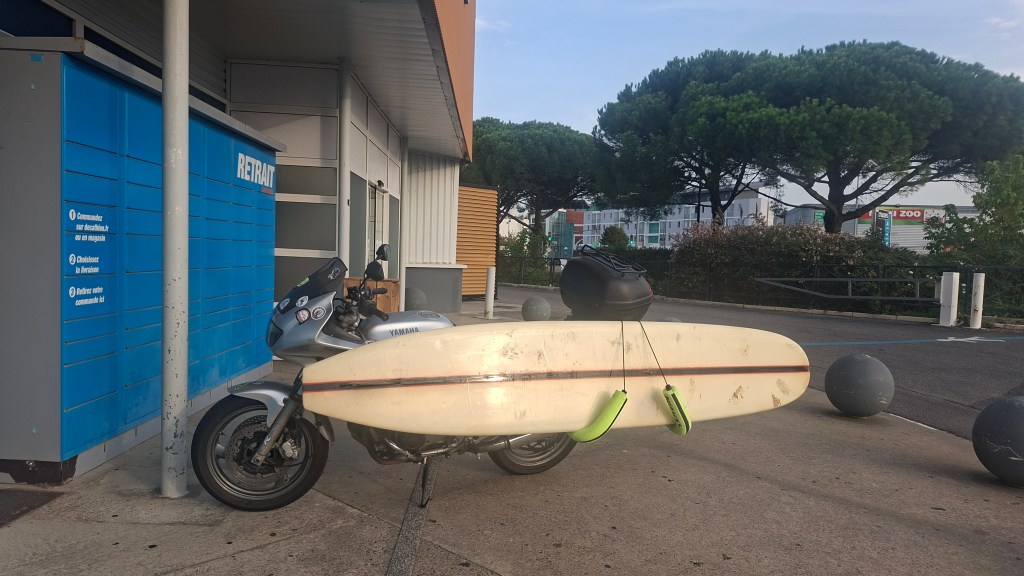
I never quite know what to do in cities, so I decide not to waste the occasion and take a bus to the out-of-town Decathlon. Decathlon is full of things I do need. And a few I don’t. And then, I give in and go to the McDonald’s opposite and finally allow myself to taste the McCroc Monsieur.
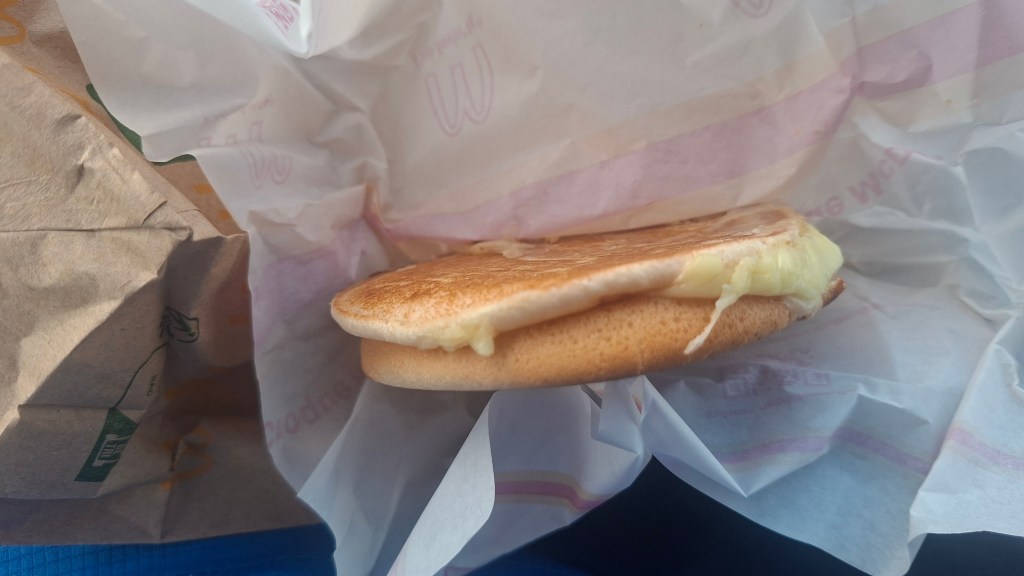
As I sit on the bus stop to return ‘home’, I reassure myself. “This is a part of it all too”.


Leave a Reply