Home to Santiago – Day 27
Aulnay-de-Saintonges to Saint-Jean-d’Angely: 36km
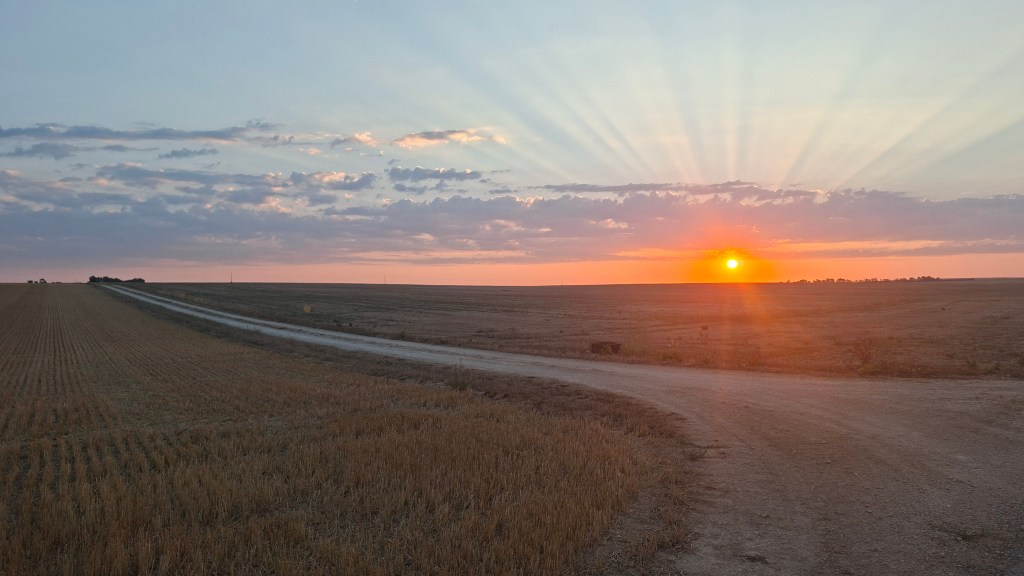
The boys left super early this morning, while it was dark. I think they do not want another day like yesterday. Jean-Charles leaves a little before me, leaving me to shut up and leave, during what I now know is nautical twilight, full visibility and 20 minutes later than ideal. But I get the sunrise.
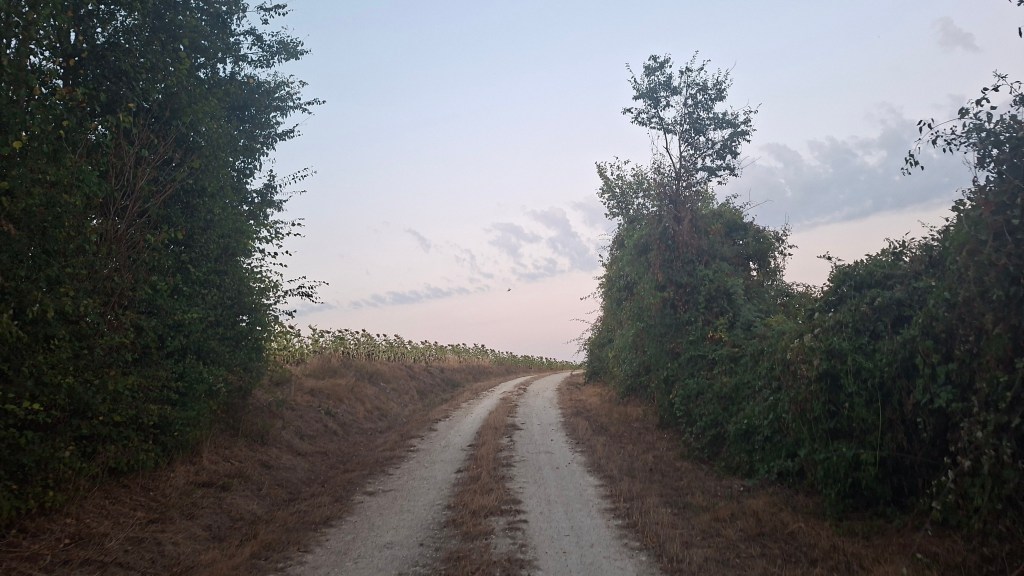
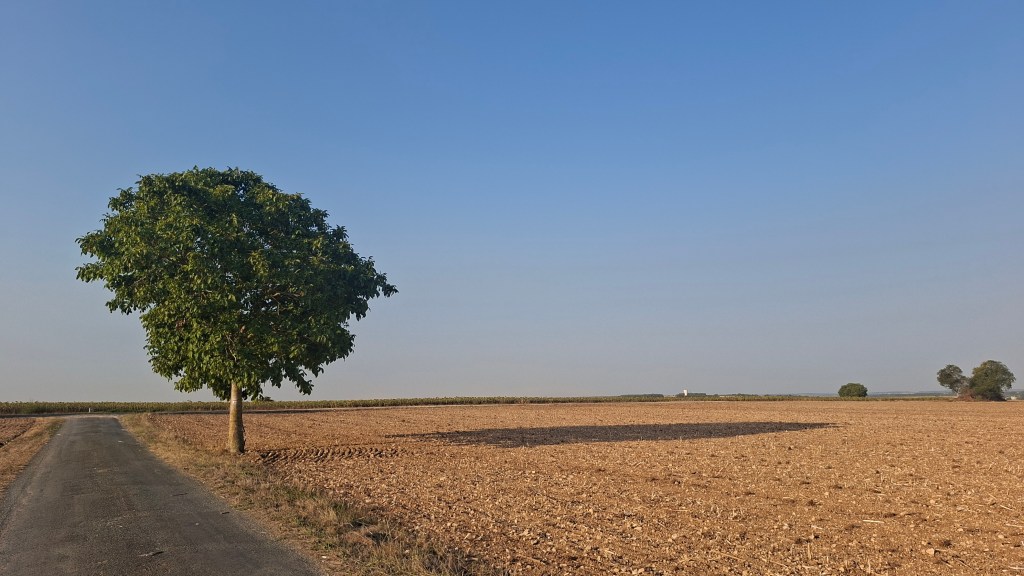
Walking along, looking for the sunrise, the sunflowers are also turned in anticipation, I keep saying in my head, I’m happy. I am happy.
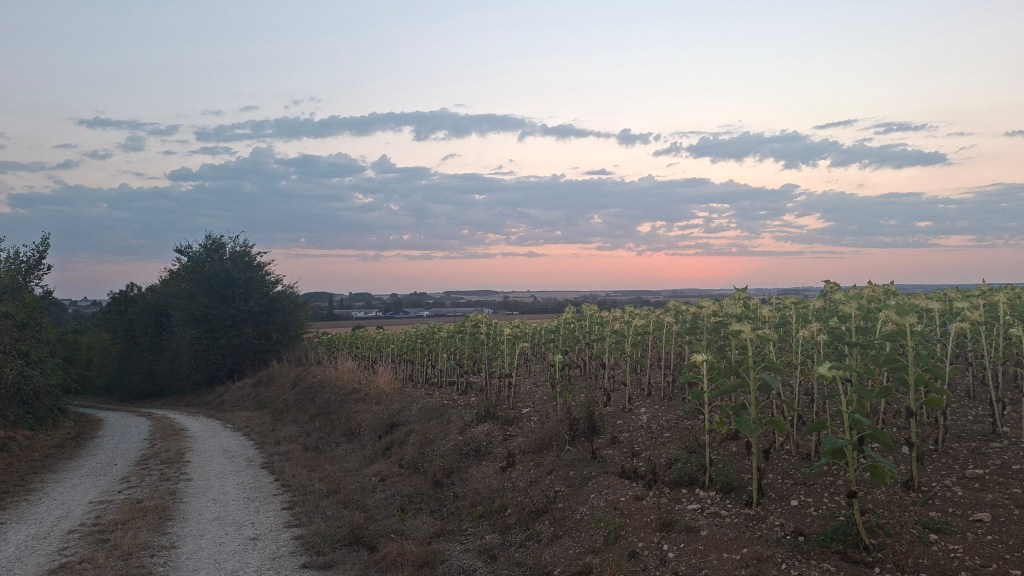
The first village has a shop and a bar, but it’s eight o’clock when I get there. So I walk through, look at the pretty little church of Saint-George, have a drink of water on the village square, and carry on my way.
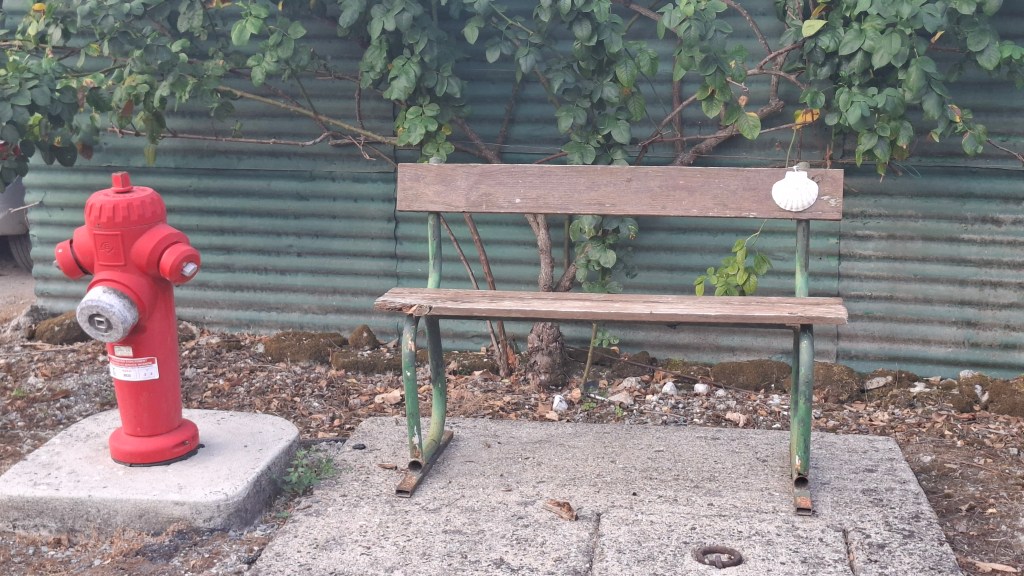
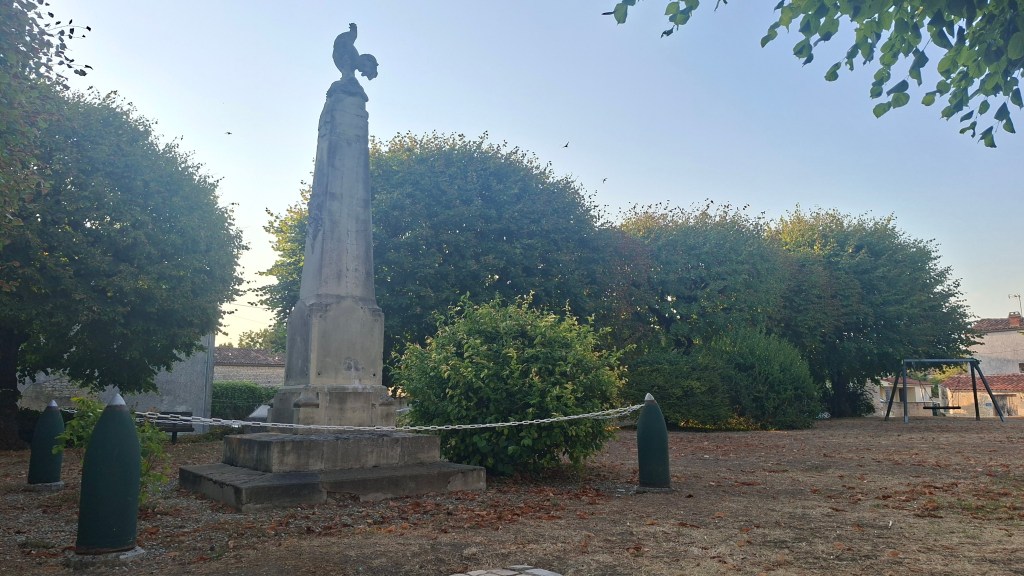
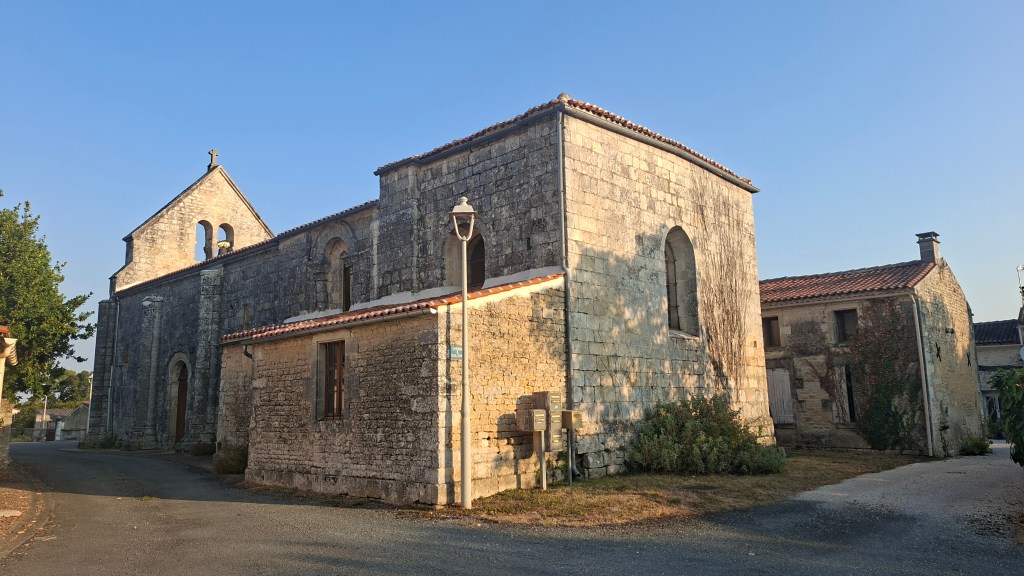
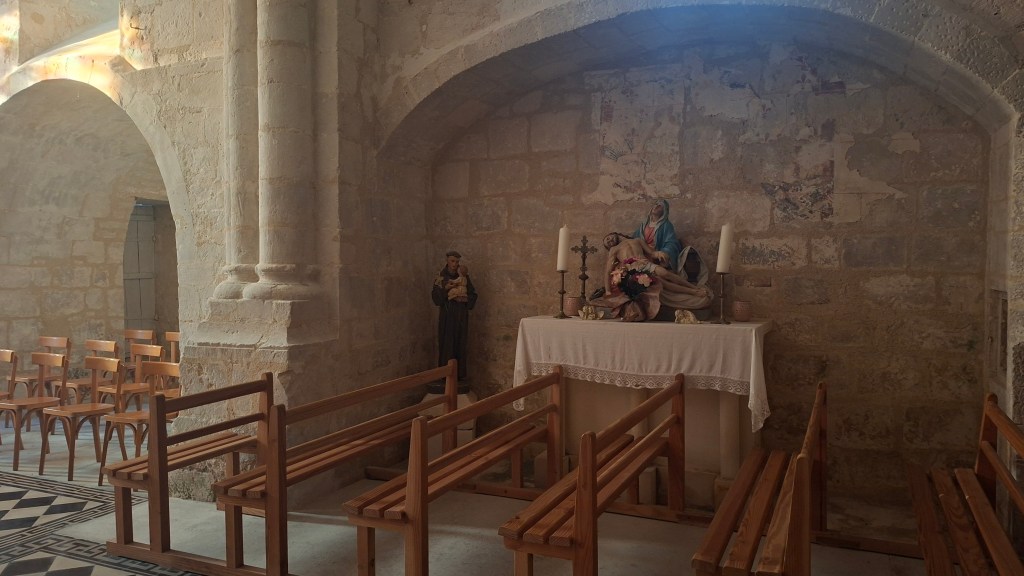
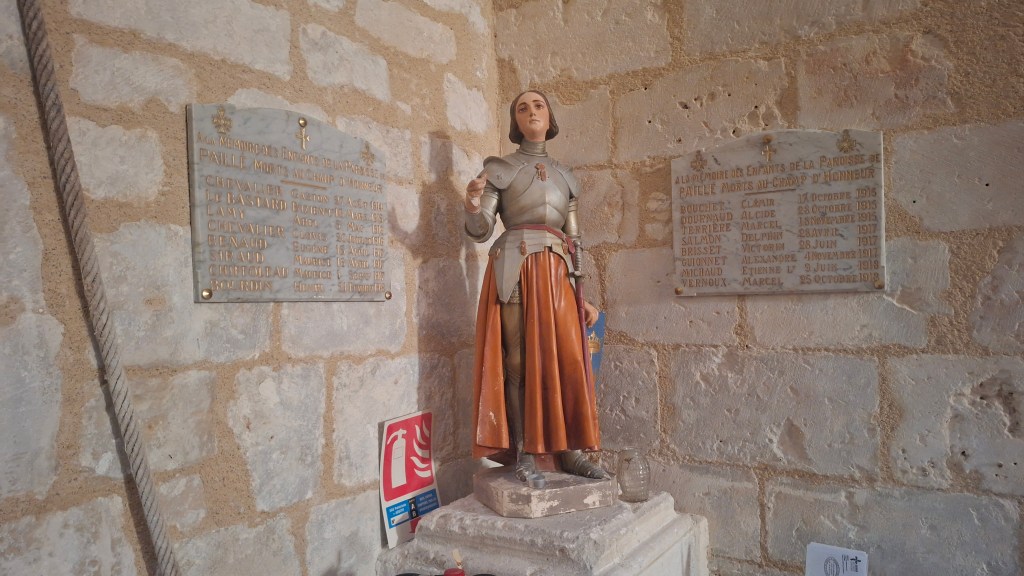
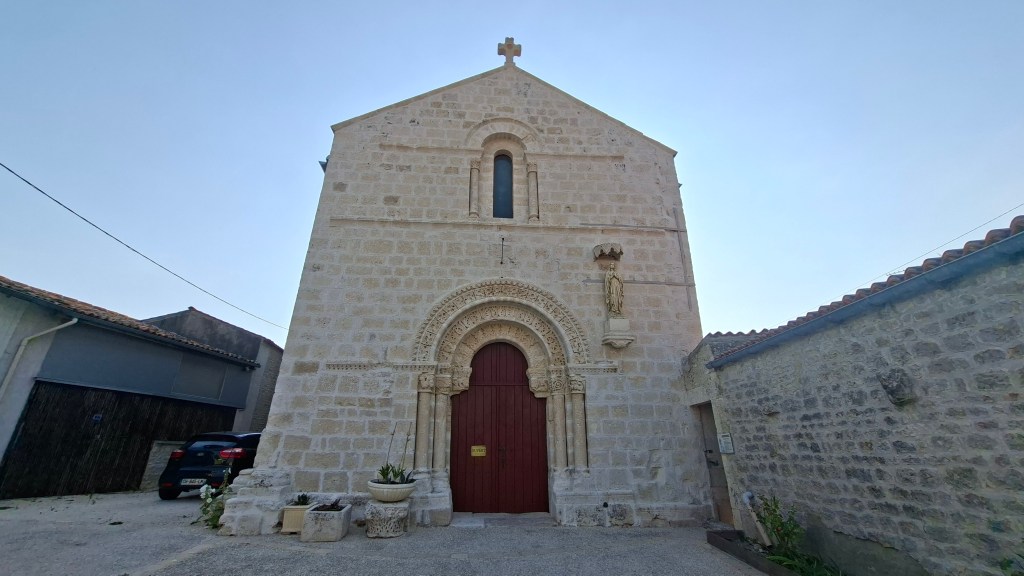
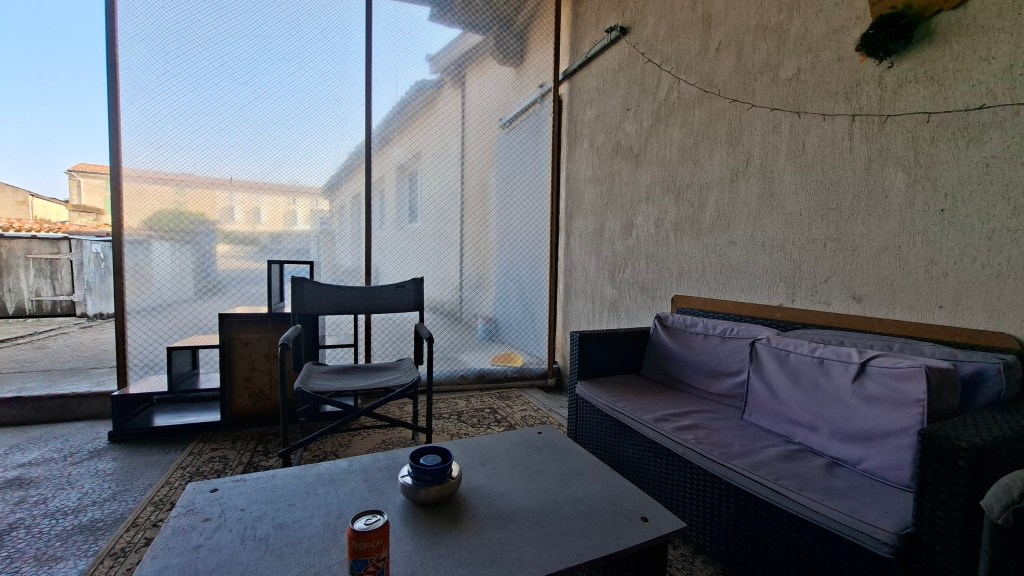
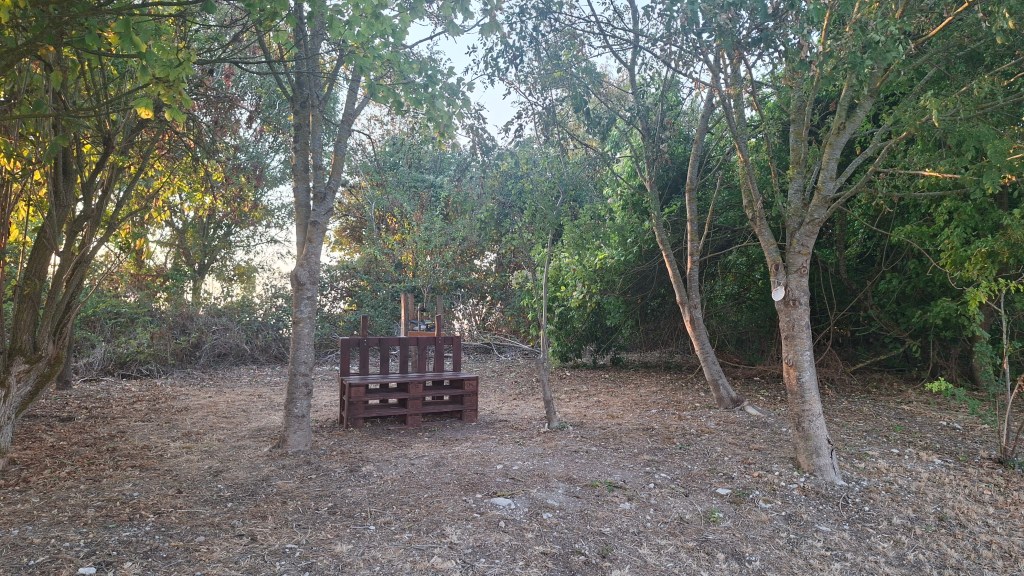
In the village of Les Églises d’Argenteuils, I can only find one church. But it’s a nice one. And what is more, it’s a welcoming one, with a little shady pilgrim area to one side, a map telling you where the various village facilities are, a small épicerie, open, selling cold drinks, with a makeshift foyer outside where I can sit.
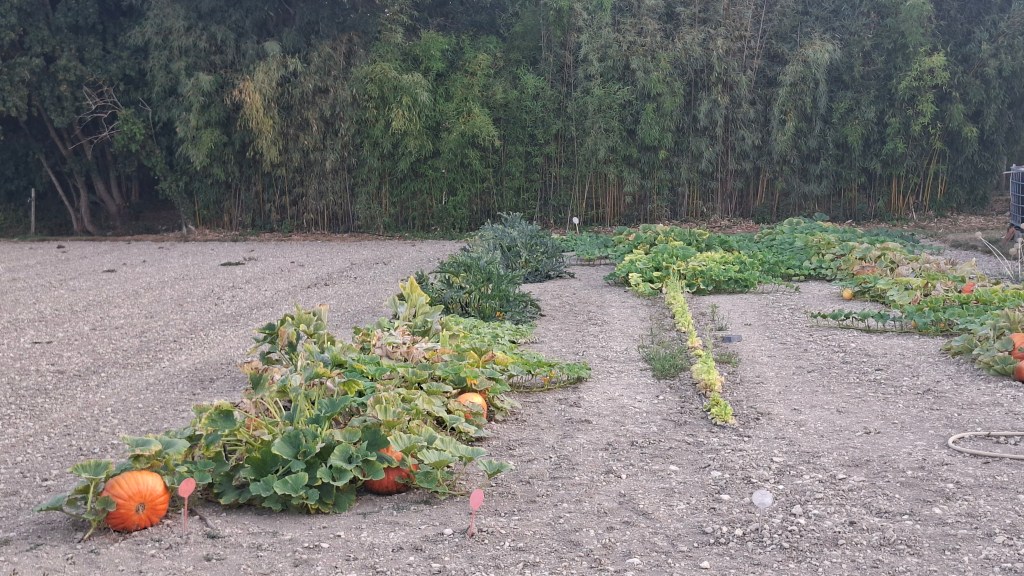
Best of all, a woman on the way into the village, off to illegally water her allotment, who stops for a chat. “What am I supposed to do?” she says. “If I don’t water it at all, I can’t eat.” She also tells me if I get to the village and I need anything, I can call in on her husband, who can provide me with cold water and something to eat. It is a village of many backups.
I seem to be tag-team walking with Jean-Charles today. He’s leaving the épicerie, as I’m going in. And a bit later down the line, I see him lying in a meadow, having a mid-morning snooze. He’ll be camping tonight. He’s taking his time.
When I get to the village of Courcelles, and I’m deciding whether or not I should make a slight detour to the church, a woman approaches me, Marie-Jeanne. When I say what I am considering, she says, “Oh, yes,” and she takes me there. I think she must be the owner of the gîte in this village, and she’s very pleased to show me the modern, very skilful craftsmanship of the masonry in their church. She shows me where there used to be more statues on the wall. But she says the priest here at one point was “a bit Protestant”, which I think means he wanted fewer statues.
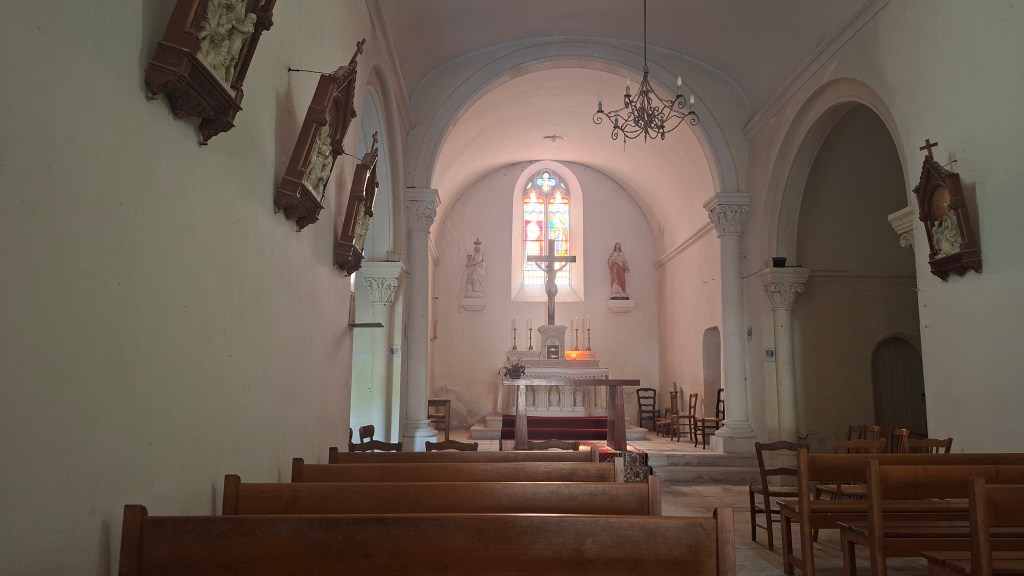
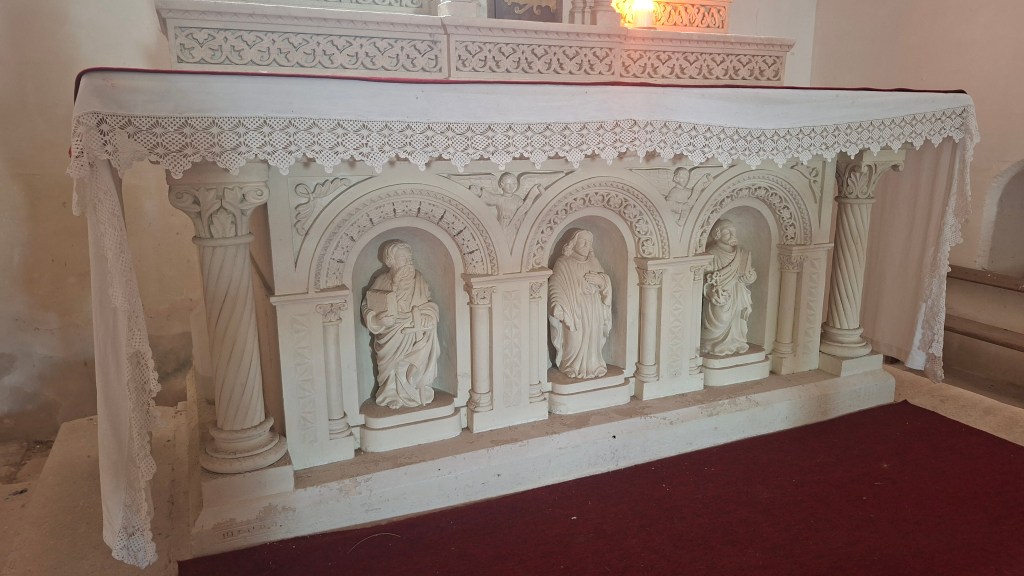
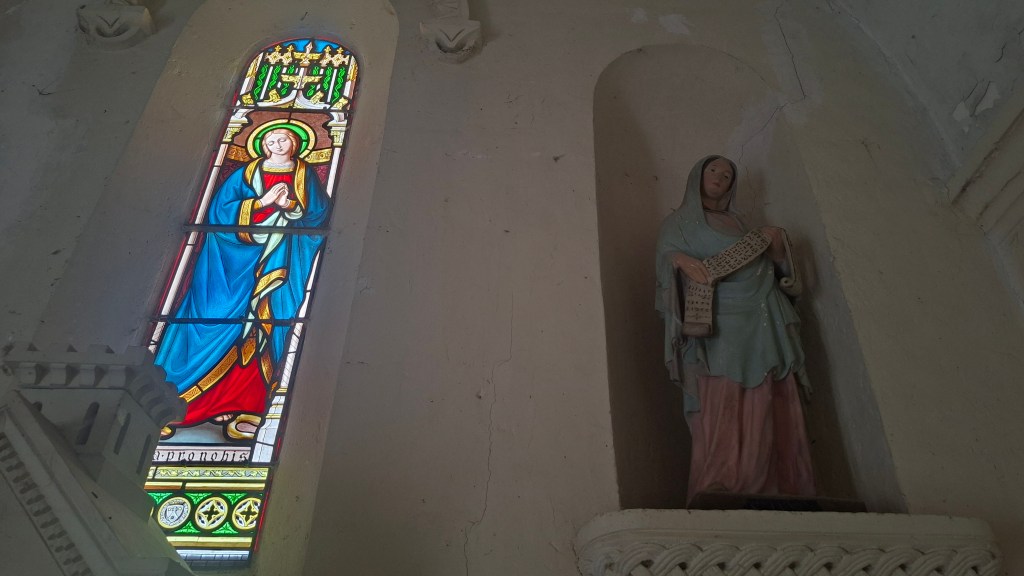
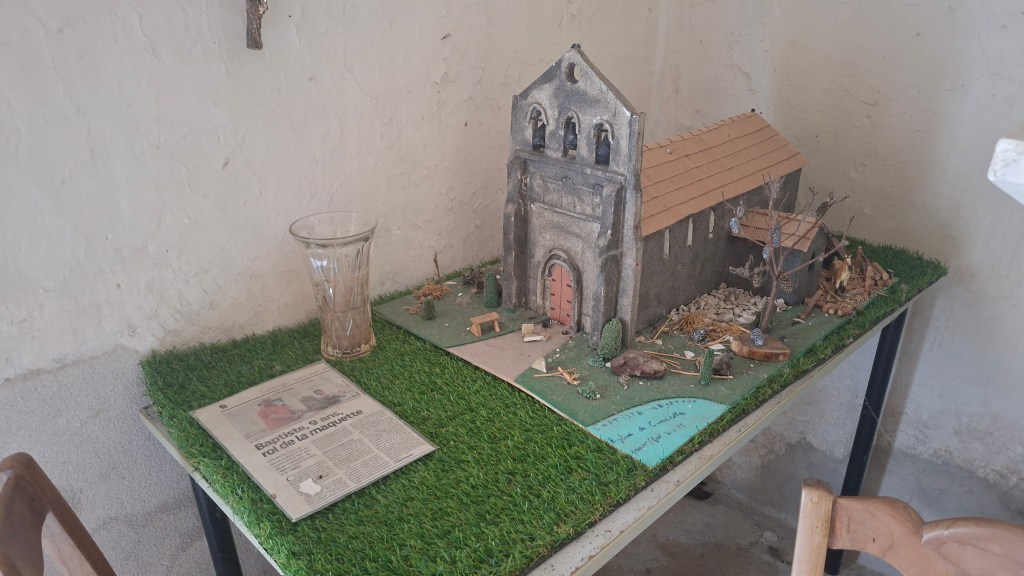
I’m delighted when Marie-Jeanne tells me, “I’d never guess you’re English. You don’t have an English accent.” But then she adds, “I thought you were German.” My father would appreciate this. I hope the officials at the German embassy looking at my citizenship application make note of this too.
She leaves me to have quiet time. This time it’s Marie who catches me up, filling up her water bottle in the cemetery. And we discuss the shortcut suggested by Marie-Jeanne.
I catch up with Marie again a little later, lost, trying to find the path we’d agreed would be better. So we strike off across a field and eventually find a little lane full of toilet paper and refuse and brambles, but definitely the path that was marked on the map, which brings us up to the main road.
We climb over the barriers and, when there’s a gap, we run across. I don’t think this is the walking that Marie had in mind today. But it takes us close to the supermarket, where we both go in for a drink and lose each other as I wander around in a happy haze of air conditioning.
I walk slowly into town, as I can’t get into the halte jacquaire until two o’clock. Having done a bit of shopping and being 15 minutes early, I try my luck. And Arnaud, who is busy cleaning the place, tells me not to worry about the code, all the doors are open. He shows me in, tells me to choose any room I want, and says, as I’m the only person, I can have both fans in my room.
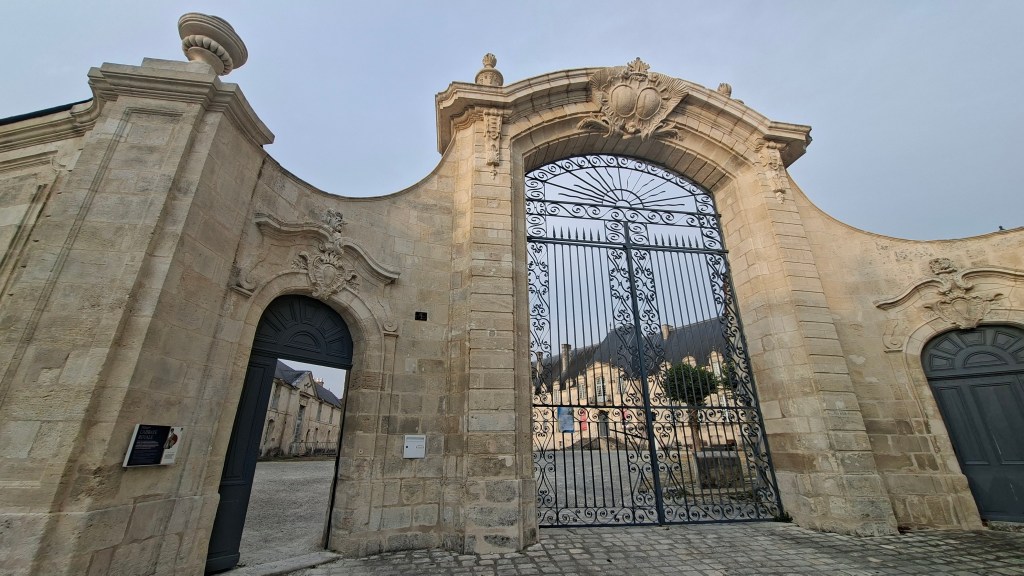
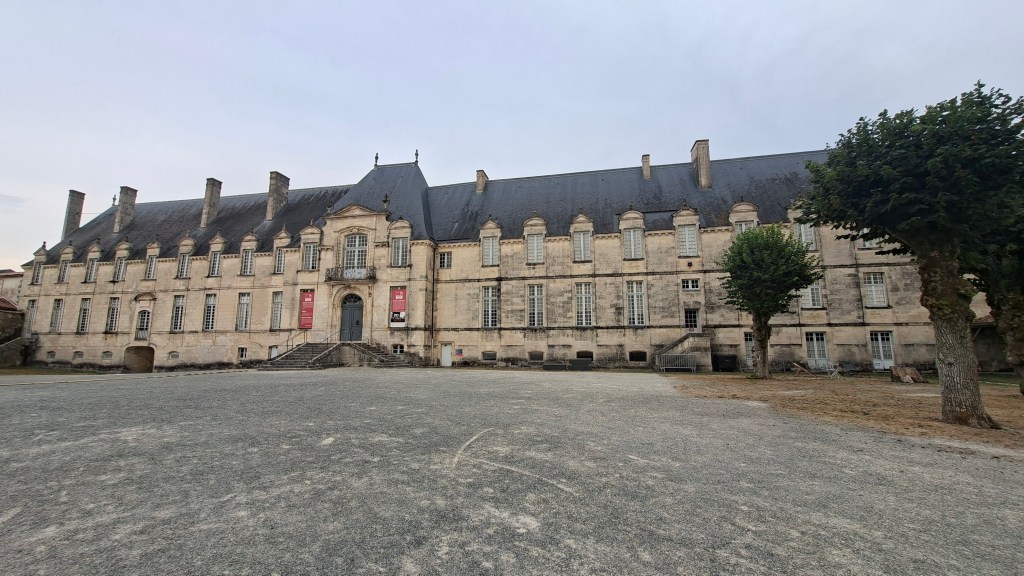
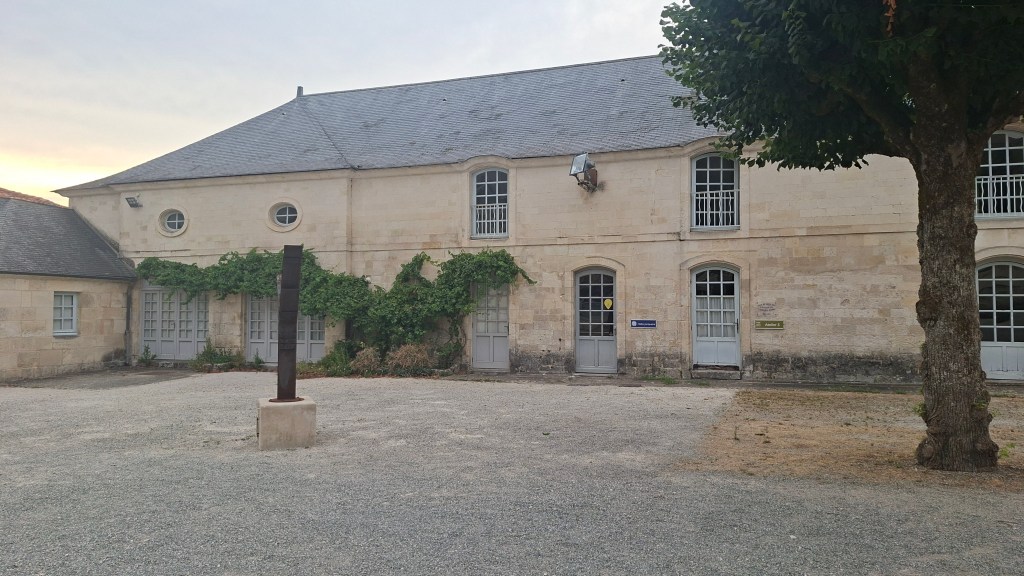
I just take the one and choose a beautiful L-shaped room overlooking the medieval streets. It’s got a private bathroom, it’s got a bath. And having got here, despite being in beautiful abbey grounds, and a visit being possible, I fall fast asleep, and too late wake up to do my laundry and to hear another pilgrim arriving. I can’t think who it would be.
A young man is cleaning his shoes at the door. He comes up, and we chat. His name is Suliac, from a place in Brittany where either they sent people to convert the British or the British sent people to convert them. I’m not quite sure, but I understand enough to nod.
Such a lovely, young, devout, and fit pilgrim. He has done 40 kilometres today in this heat. When I ask him if he’s going to Saintes tomorrow, he says, “No, I came all this way so I could go to the Mass tomorrow.” Tomorrow is Assumption, of course. He is absolutely delightful, and I have to allow him to go and rest and sort himself out, because, I think, he’s too polite to do so, unbidden.
I leave for a wander around the town. Even though I can’t go inside, the most impressive thing is the unfinished towers of the abbey, abandoned with the Revolution. It stands in incomplete grandeur next to the abbey, next to the little church, which remained.
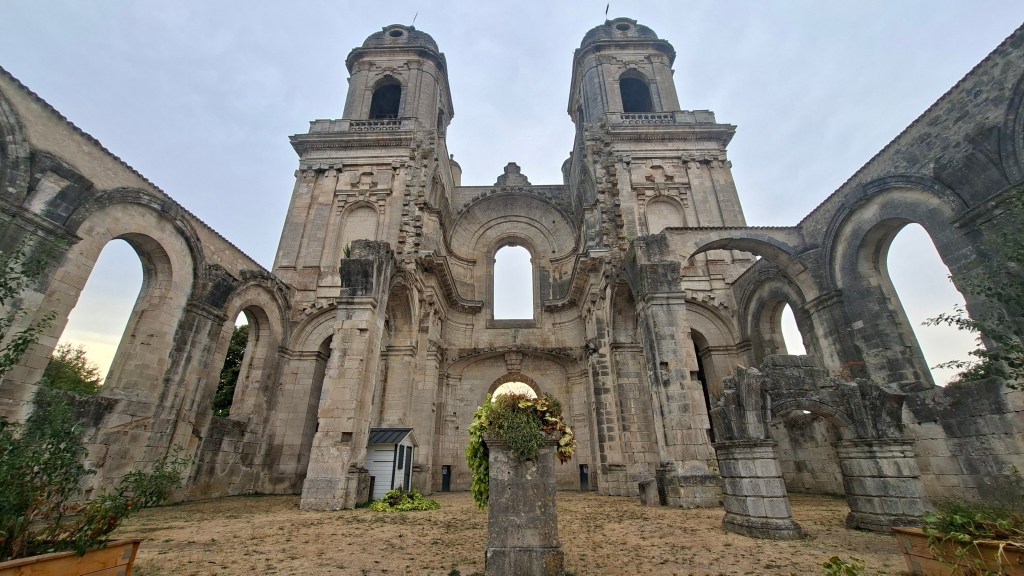
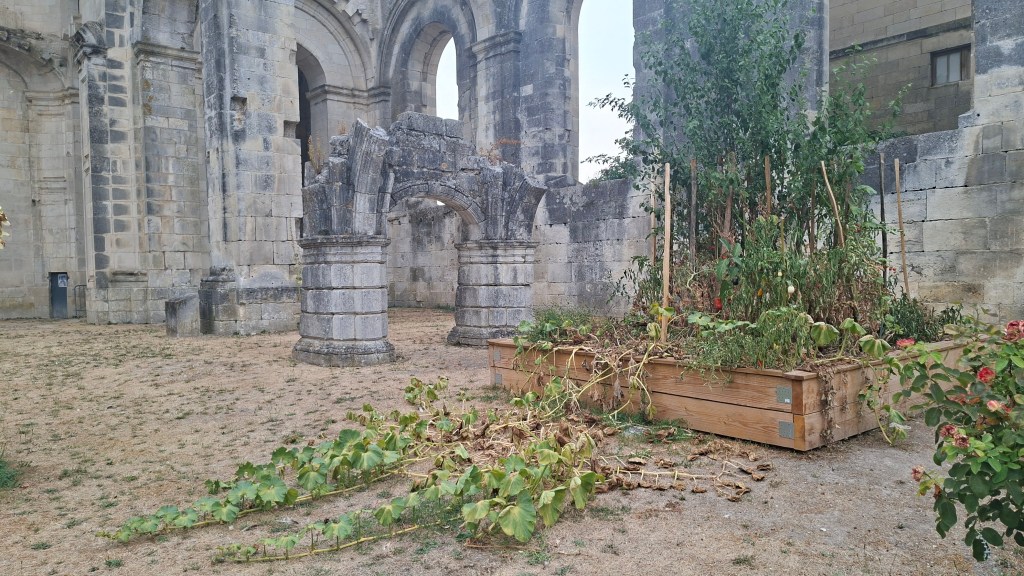
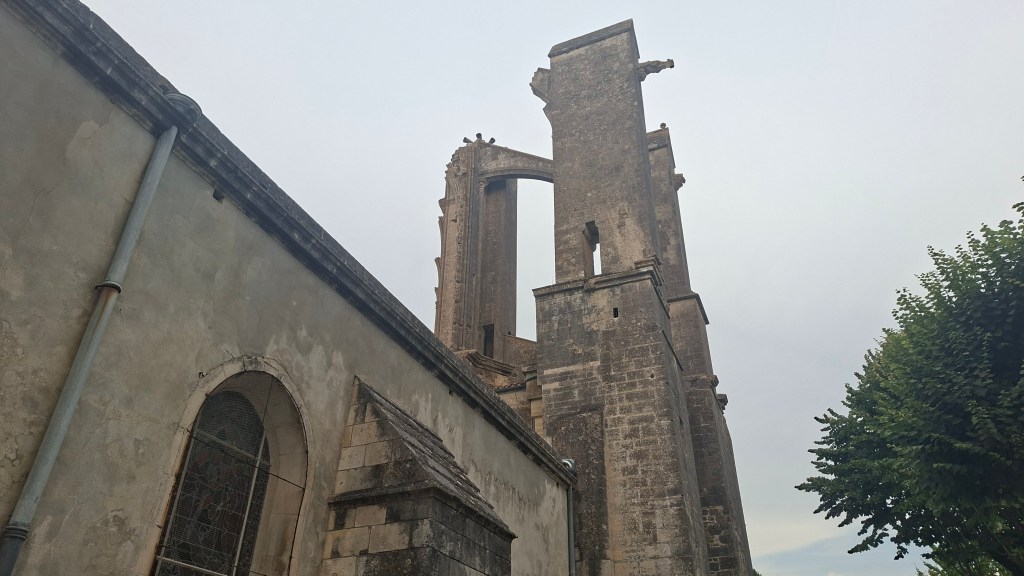
When I get back to the gîte Jacquaire, Suliac is in the kitchen preparing his dinner. I join him with my packet of satay rice, and we have a lovely long conversation about his faith, about traditionalists in the Catholic Church, about the walk, about his upcoming marriage.
I ask him his opinion on the current Pope, and I’m quite interested when he says, “I like the fact he reads from his notes,” which I would have thought would be a criticism, especially having taught presentations for so many years. But no, he says, “I think when your word is law, you need to be very careful. You need to consider exactly what you say.” Francis, he said, was a good man, but he tended to improvise a little too much for him. It made him feel uneasy at times.
We talk until the light is almost gone. I think anyone walking into the kitchen at that point would just see two people talking in the dark. But Suliac doesn’t have an early morning tomorrow, and I do, so I stand up to go.
and I retire to my en-suite room with the fan at full blast for the night.


 WHEN WALKING
Leave a comment