Home to Santiago – Day 23
Lusignan to Chenay: 22km
One of the loveliest things when walking is to enter a town or a village and to hear your name called out.
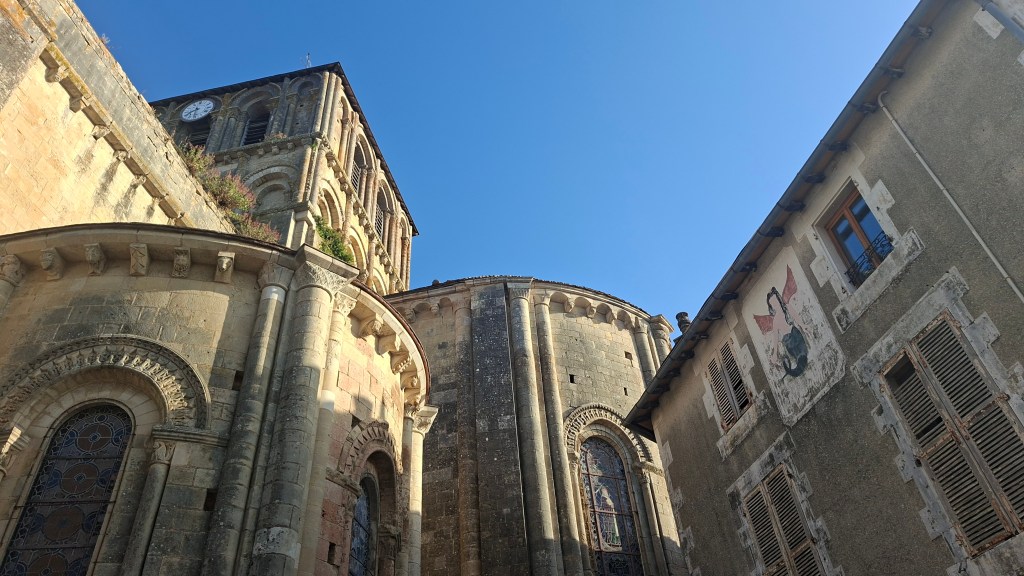
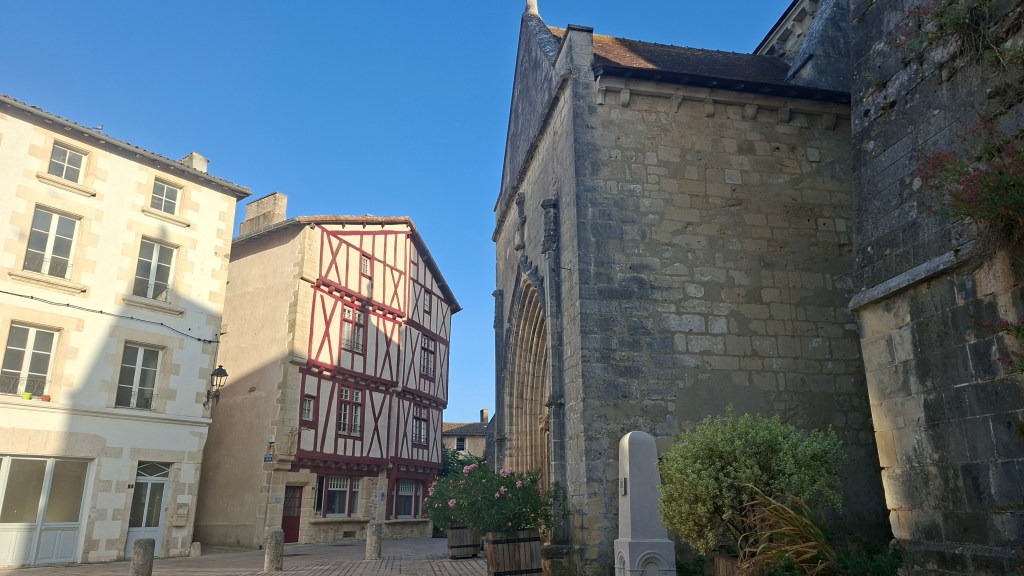
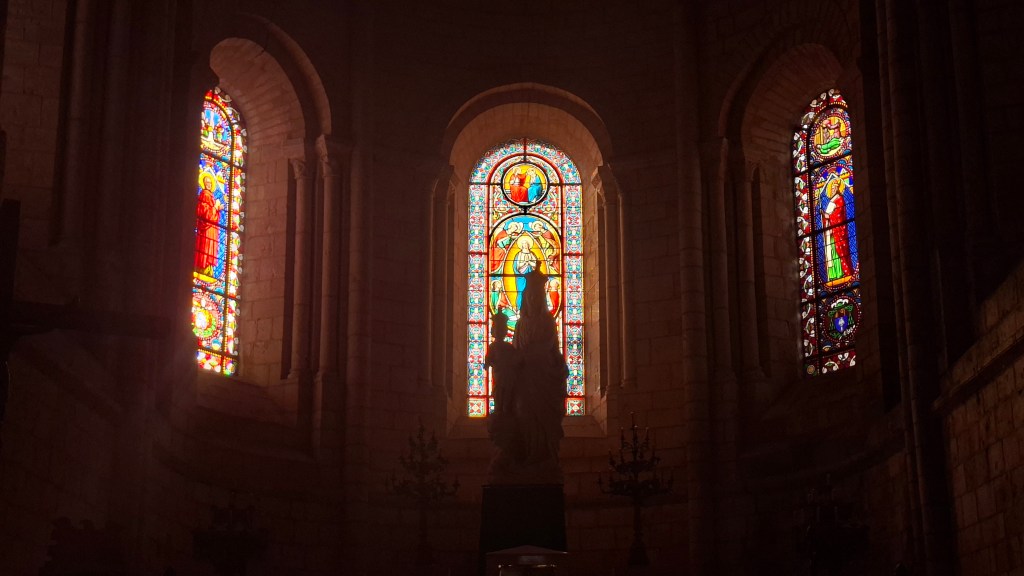
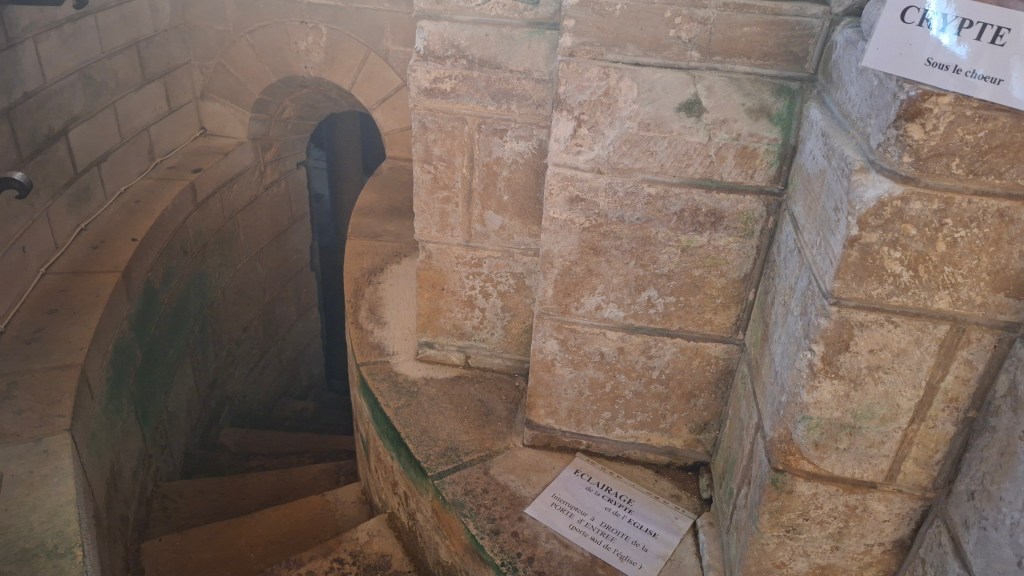
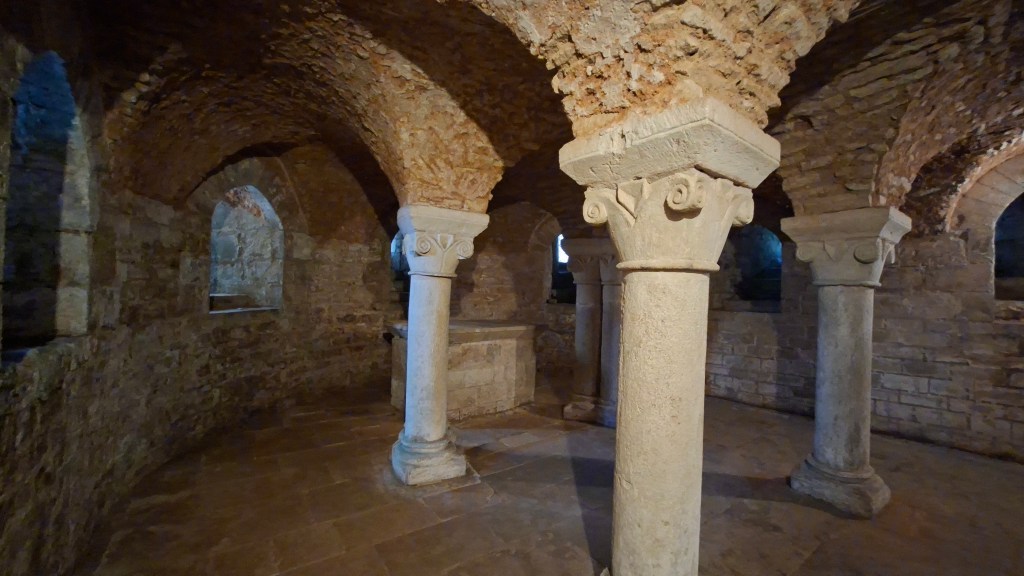
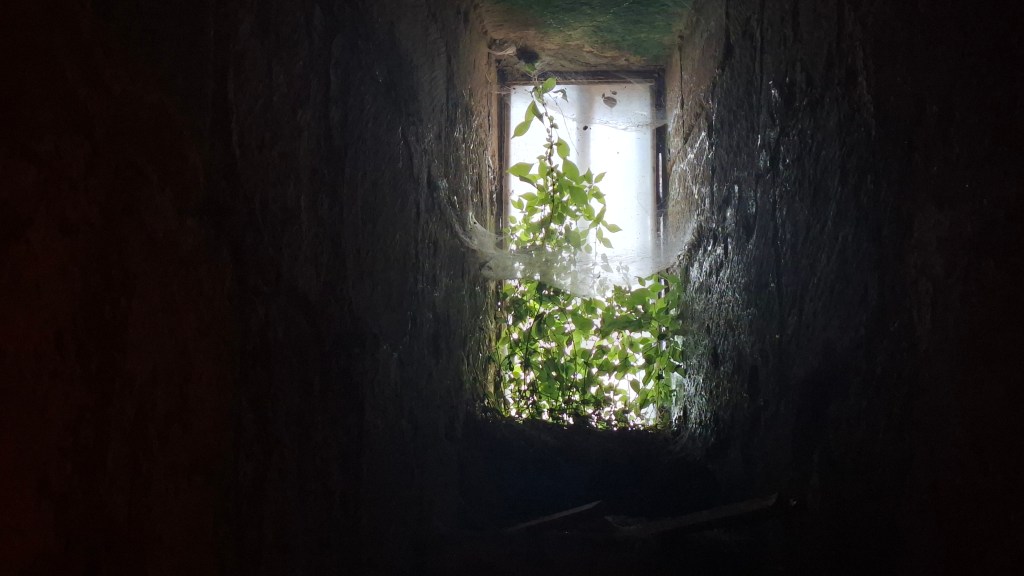
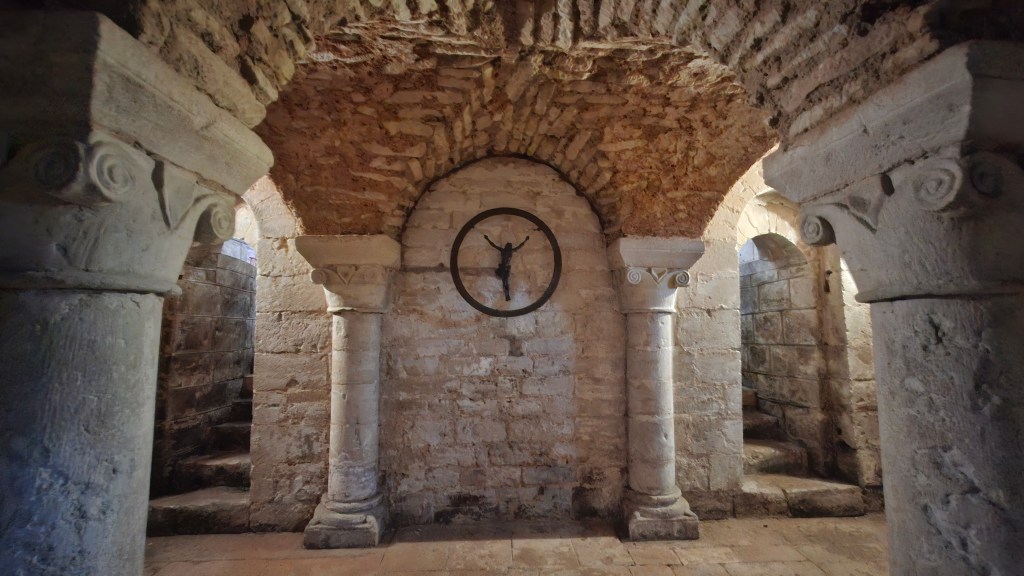
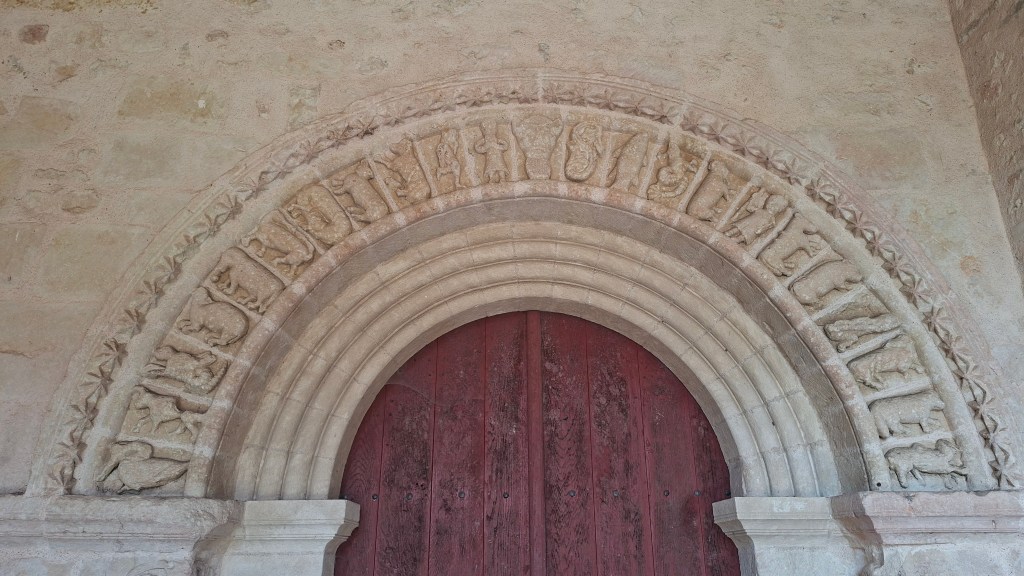
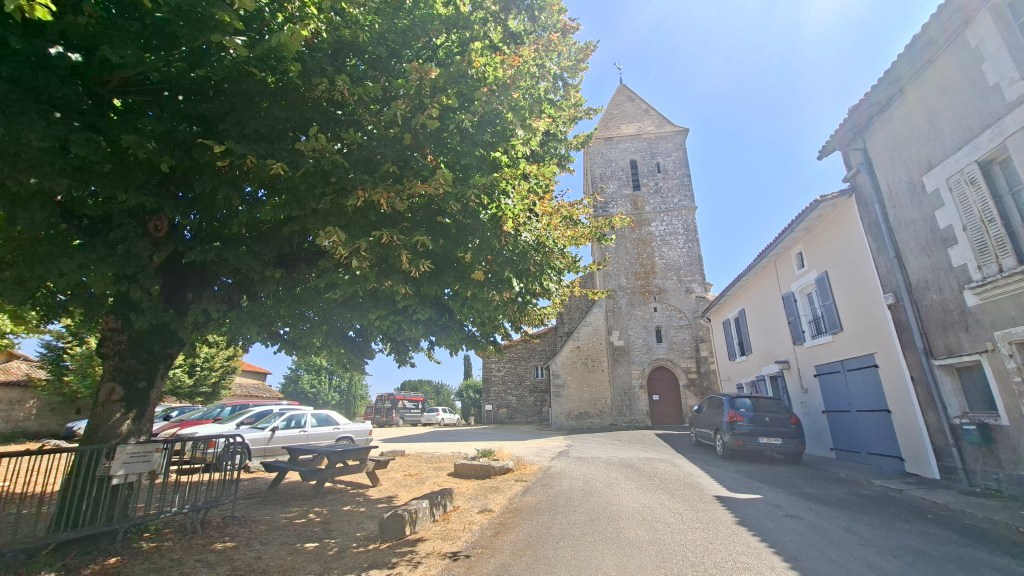
This morning, after a visit to the beautiful church at Lusignan, where the music starts as you walk in, where the crypt is open to view, and where the history of the great lords of Lusignan is finally explained, I walk towards the boulangerie, which I had not expected to be open.

And I hear, “Rachelle, Rachelle!” I look around, and in the shade of a tree to one side, I see Matheus and Jean-Baptiste sitting with a little breakfast from the boulangerie on a stone bench.

These guys are camping, and I don’t blame them. It’s a beautiful campsite down by the river, and they’ll be staying here for two nights to have a rest and let their feet recover. I thank them for introducing me to the idea of the Guinguette, and we talk a little bit about our ever-changing plans.
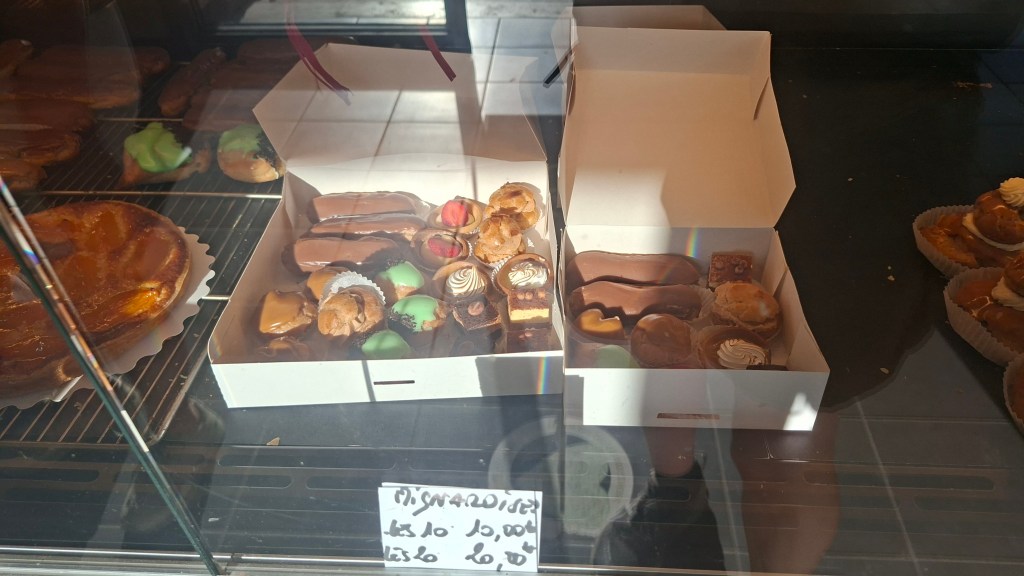
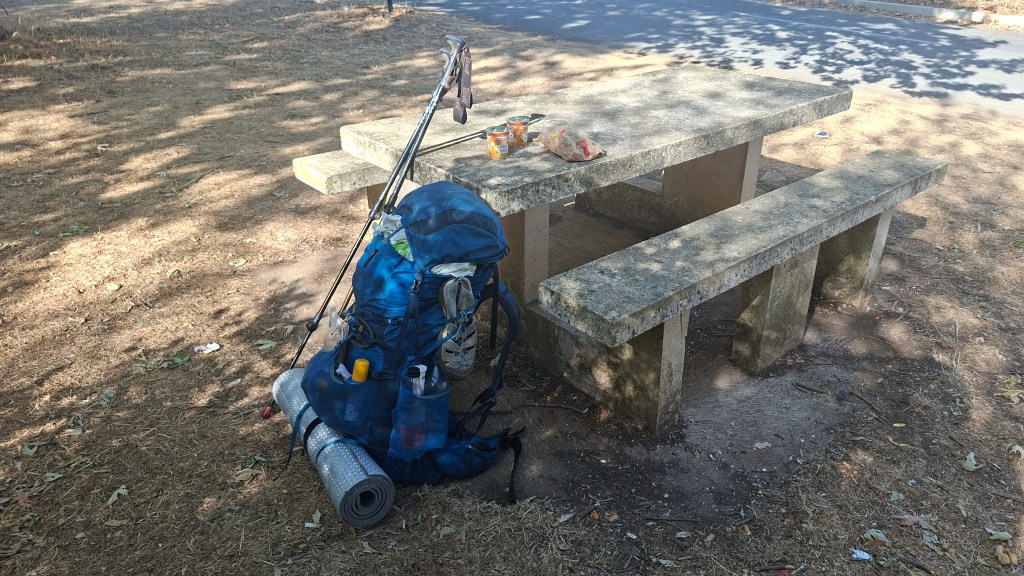
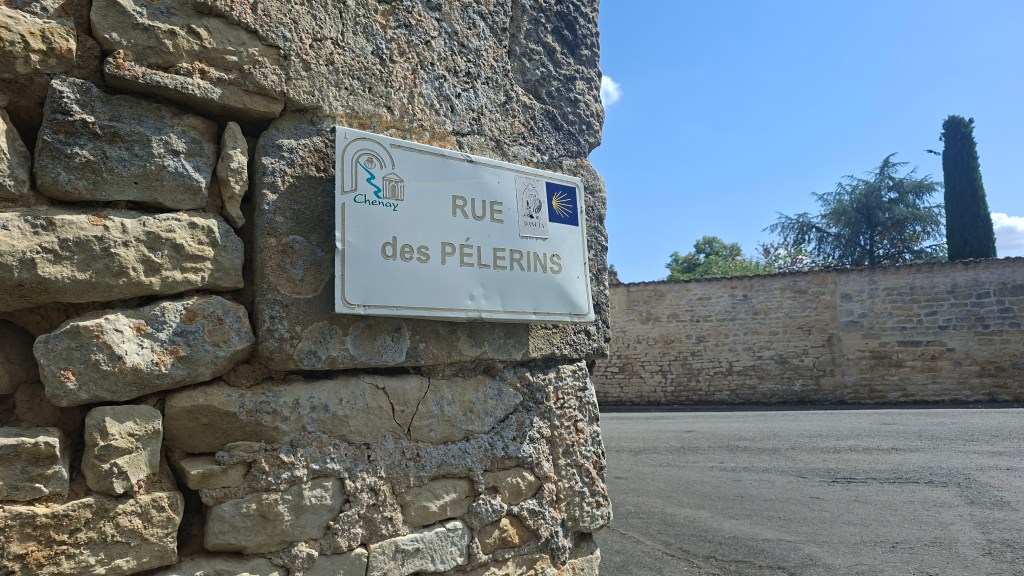
After getting my own breakfast from the boulangerie, I carry on. I’m late this morning, as I’m running out of all the essentials, and the out-of-town Intermarché doesn’t open until nine. What’s more, the mayor of Chenay, where I’ll be staying tonight, has got in touch with the details of the Halte Jacquaire, and warned me there is nothing in her village and I must stock up before I leave. So, with a very packed bag and food overspilling, I set off on my way.
I don’t know if I will see Claire this evening. With the hot weather, she says she may catch a lift part of the way and carry on to Melle. A very sensible way of doing it. Maybe this is what allows her time to always be so elegant and tidy, on a par with the nuns and the monks.
At this moment I could not be less elegant or tidy. I have dusty shoes, dirt stuck to the sunscreen on my legs, a battered old rucksack with a plastic bag for today’s shopping bulging out of the top, the expandable pocket expanded as far as it will go with the socks drying for tomorrow, and the things I need close at hand, mainly water and sunscreen. Even at the best of times, I find it hard to keep myself in good order. On the Camino, I just give up and go with it.
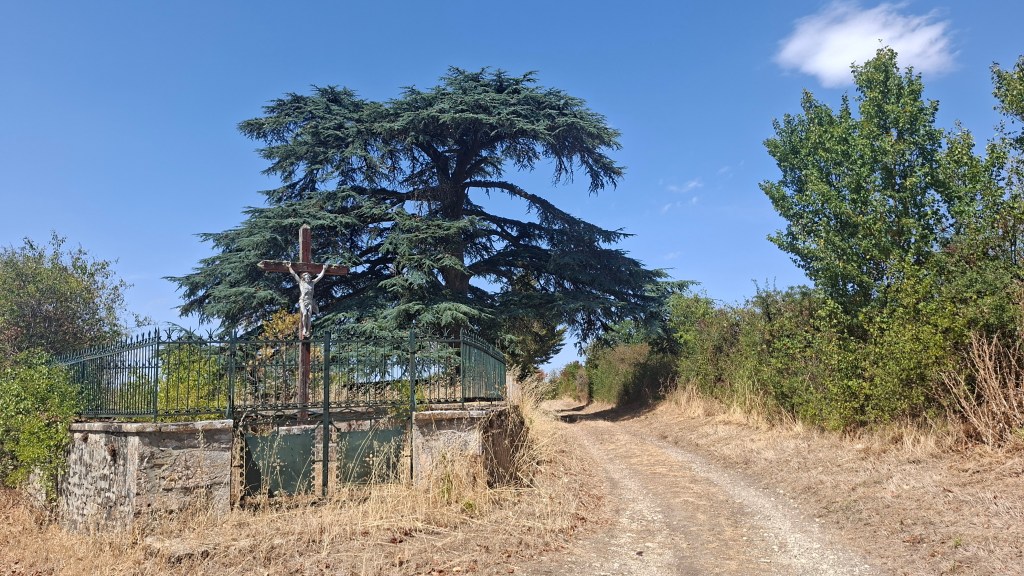
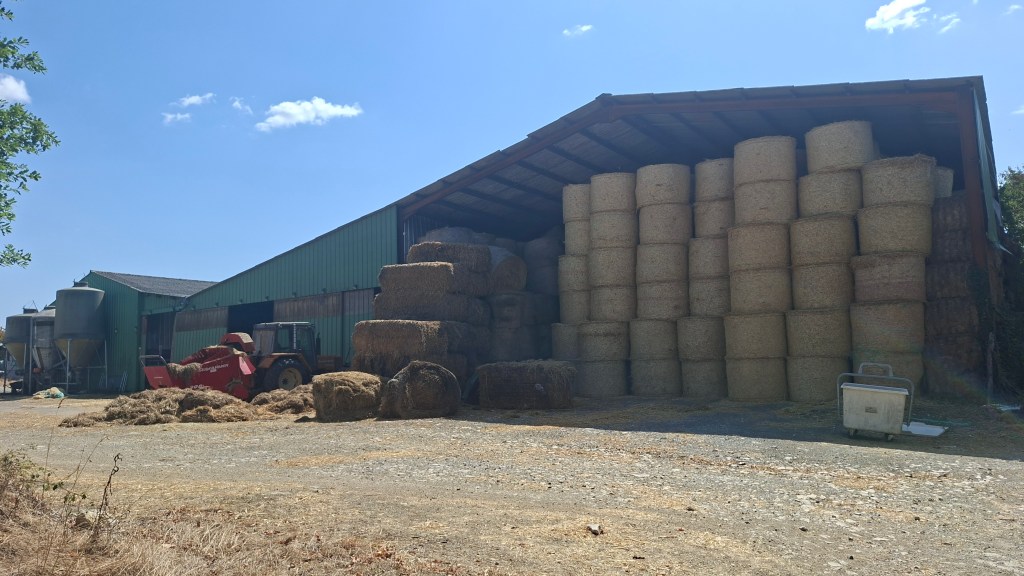
Between Lusignan and Saint-Sauvent, there are wide, track-sized grassy paths with high hedgerows planted either side. These are tracks made for farm vehicles and walkers. Beyond the wooded hedgerows are the open fields, but the fields here are smaller than in the Beauce. They are not tiny, but you can see the edges of them, and you can see on the edge of every field, the same trees and hedgerows planted.
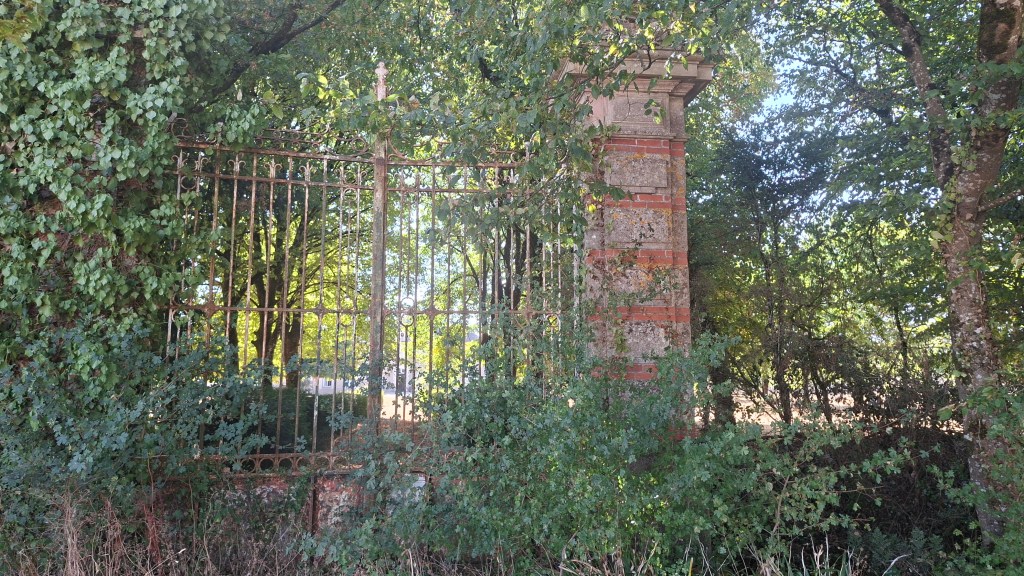
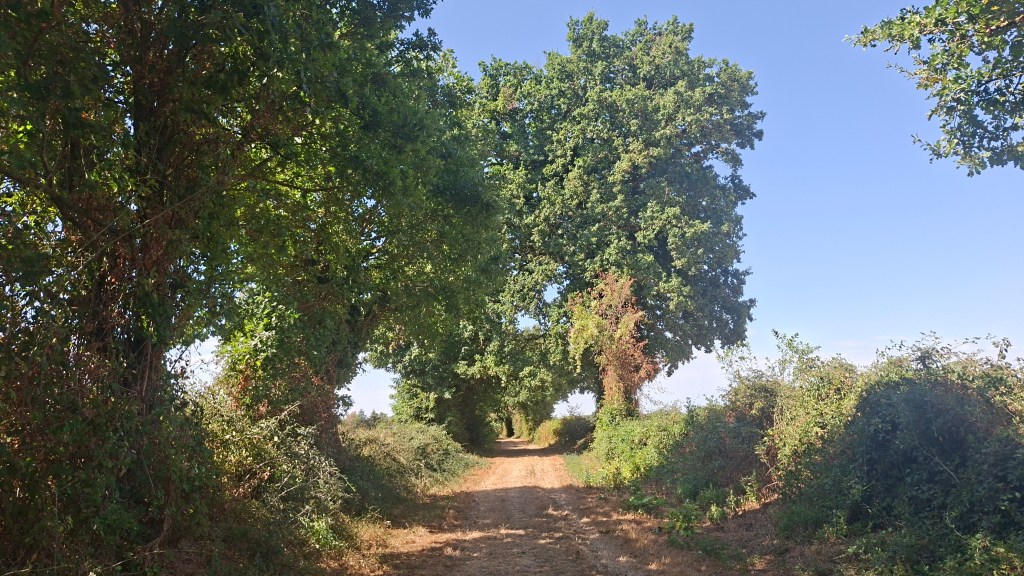
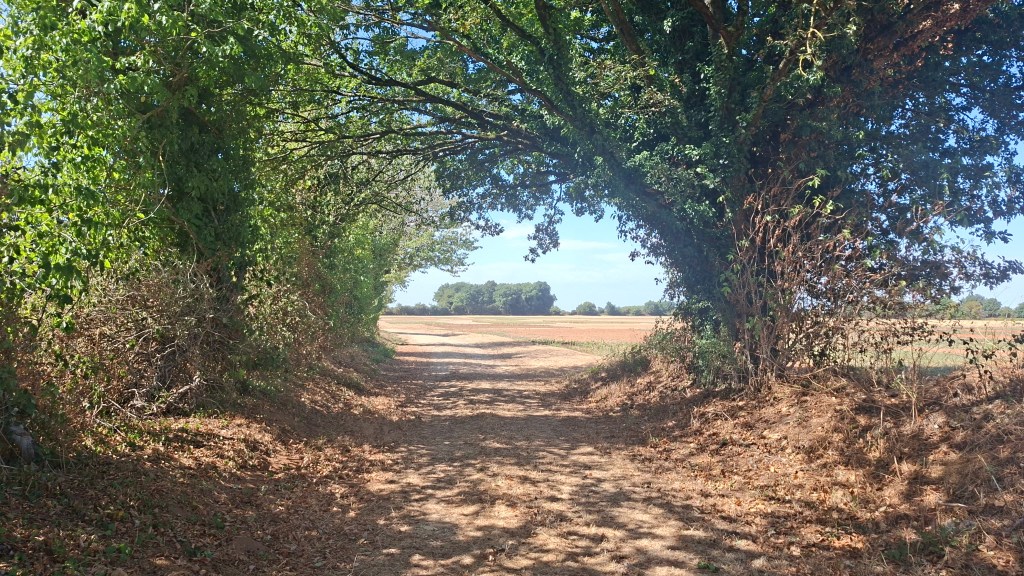
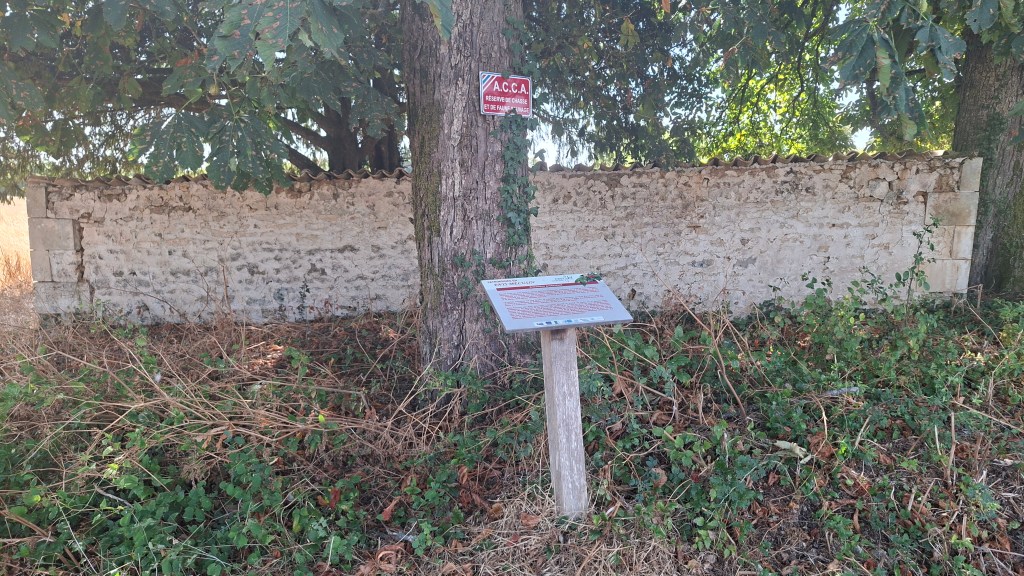
Walking along these paths, there are no flies, but hundreds of tiny butterflies fluttering back and forth in the light, and not in any way preoccupied with me. It’s quite magical. I’m not surprised there are legends of fairies in these lands. I guess they could be fairies. They move so fasr and they’re so small, really, it’s hard to tell.
At lunchtime, I make a small detour into Saint-Sauvent, not expecting anything other than maybe a shady bench. But on turning into this beautifully well-kept village, I see there is a little restaurant, a busy one at that, with chairs outside, and the offer of freshly squeezed apple and quince juice to take away.
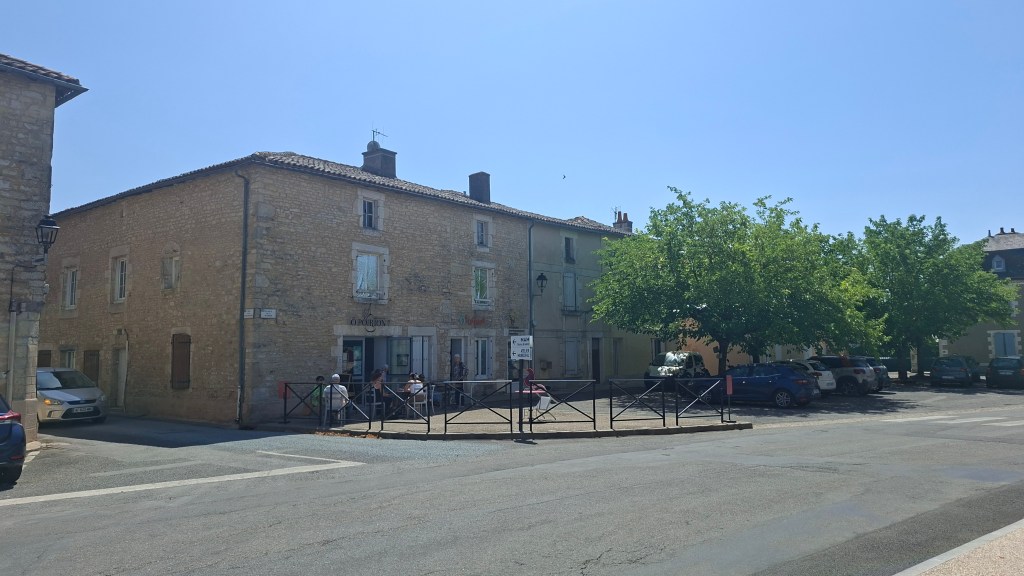
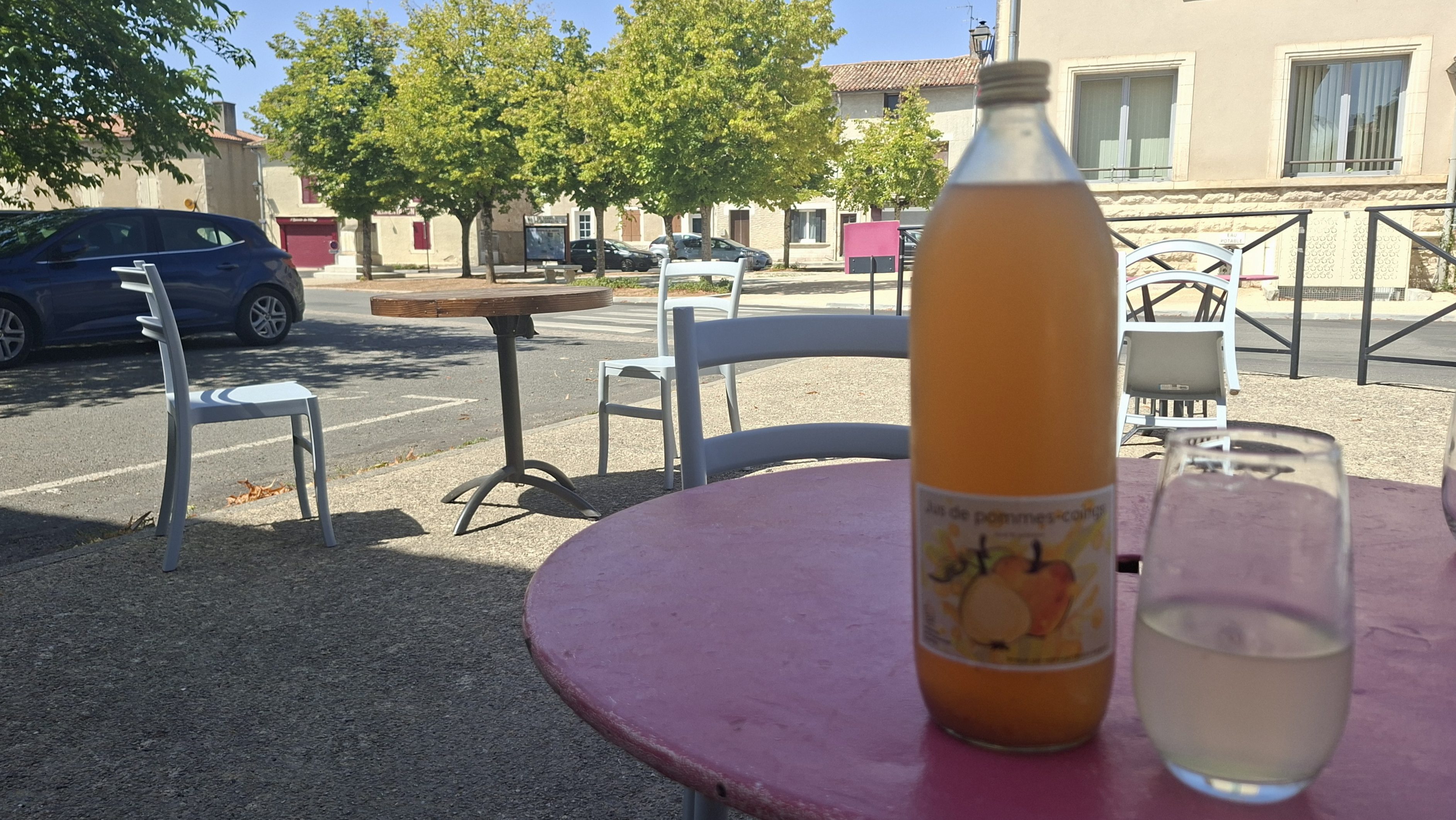
As I have my meals for the day all packed in my rucksack, as advised by the mayor of Chenay, I don’t stop there for lunch. Instead, I buy a litre of freshly squeezed juice, which I drink in one go, and have my picnic lunch on a bench outside the church.
“Isn’t it too hot to walk?” the man living in one of the houses opposite shouts out.
“It would seem not,” I reply.
I carry on through more hedgerowed lanes for the afternoon. As always, the heat ramps up after lunch. When I get to the halte jacquaire at Chenay, there is noone there. Am I the first or am I the only one? I
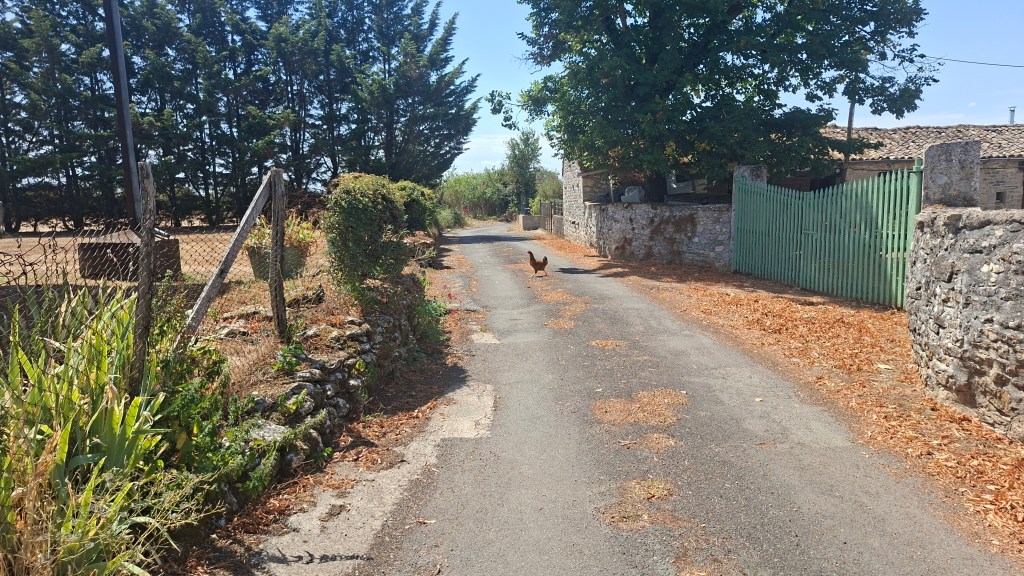
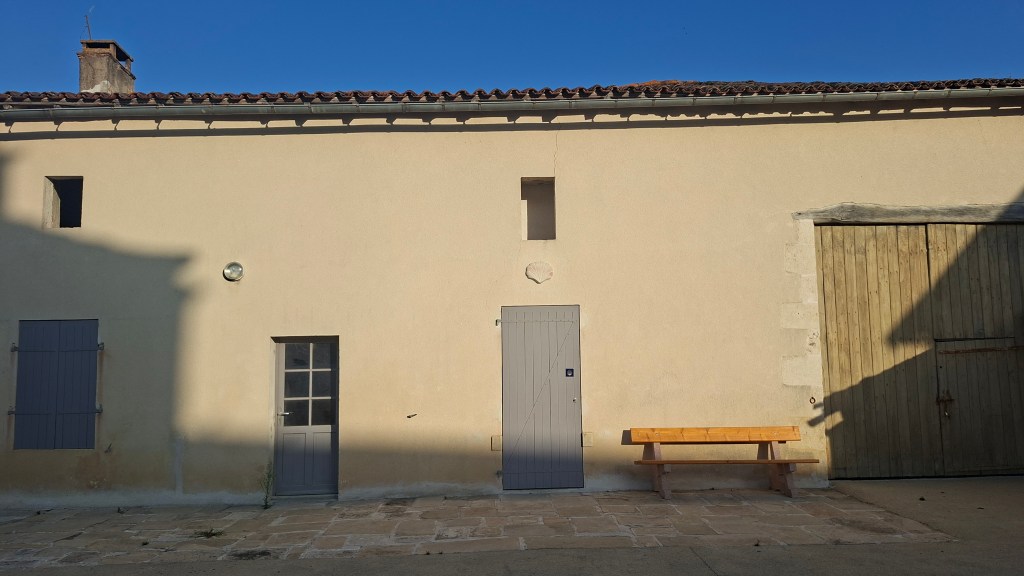
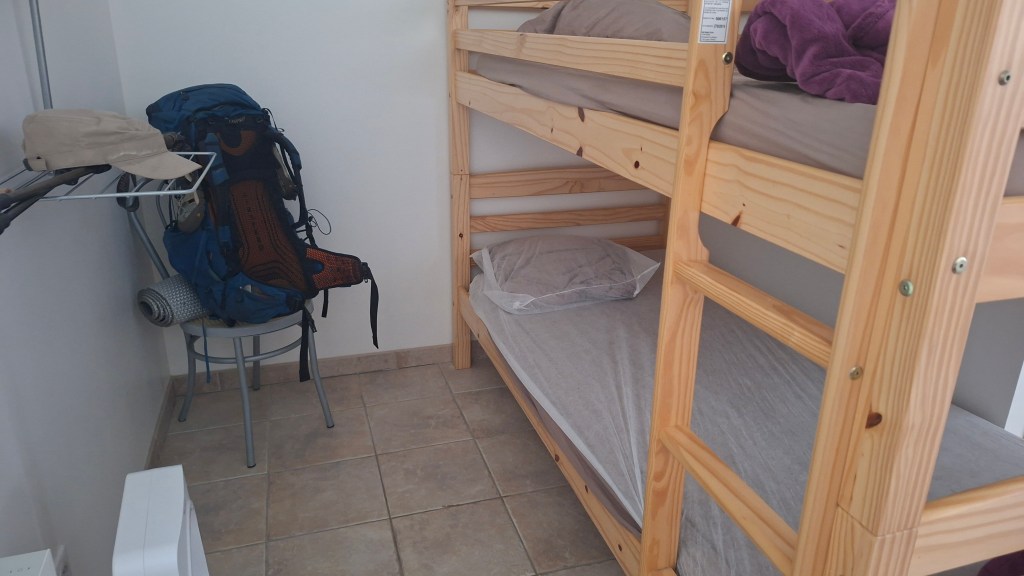
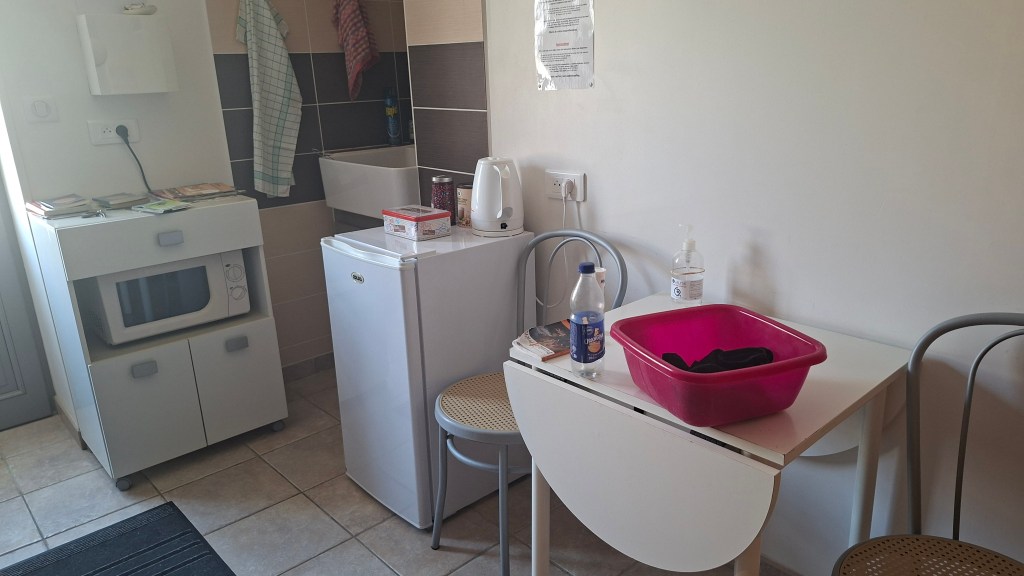
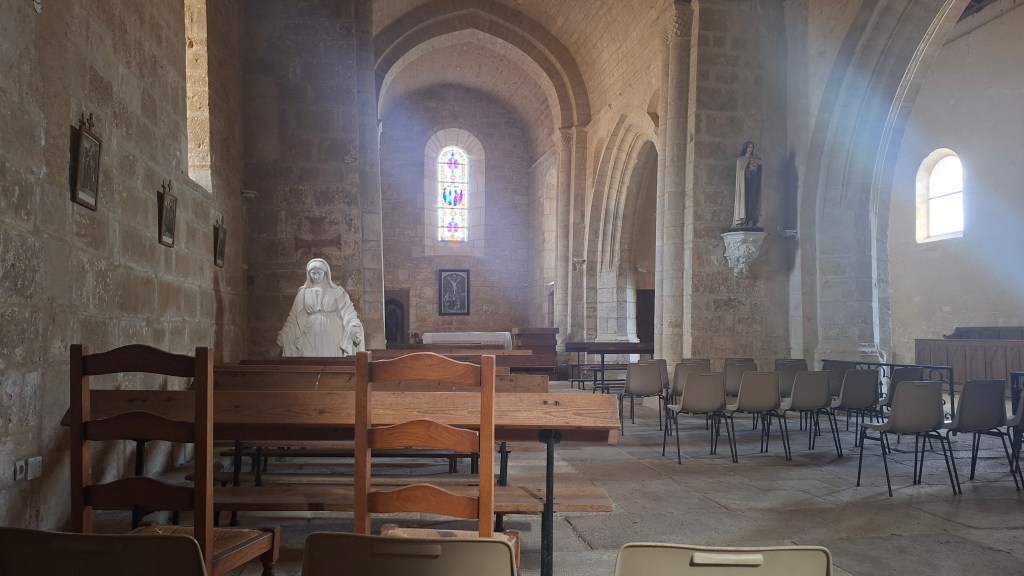
It’s a beautiful little , just one room with beds, but clean and modern and everything you could need, even the keys to the church if you want to visit. I’m settling in an evening on my own, but soon there is a knock at the door, and Claire, elegant as ever has arrived. It seems she has been stopping even more than me today.
She has also spoken to the man at Les Trois Pigeons, who is horrified to hear that the mayor has said there is no opportunity to eat in the village. “I offer a pilgrim menu for 12 euros 50. She knows that!” He’s going to write an angry message to her. As Claire and I have already bought some food for the evening, we decide to get a menu to share between us and have our pre-packed food as an entrée.
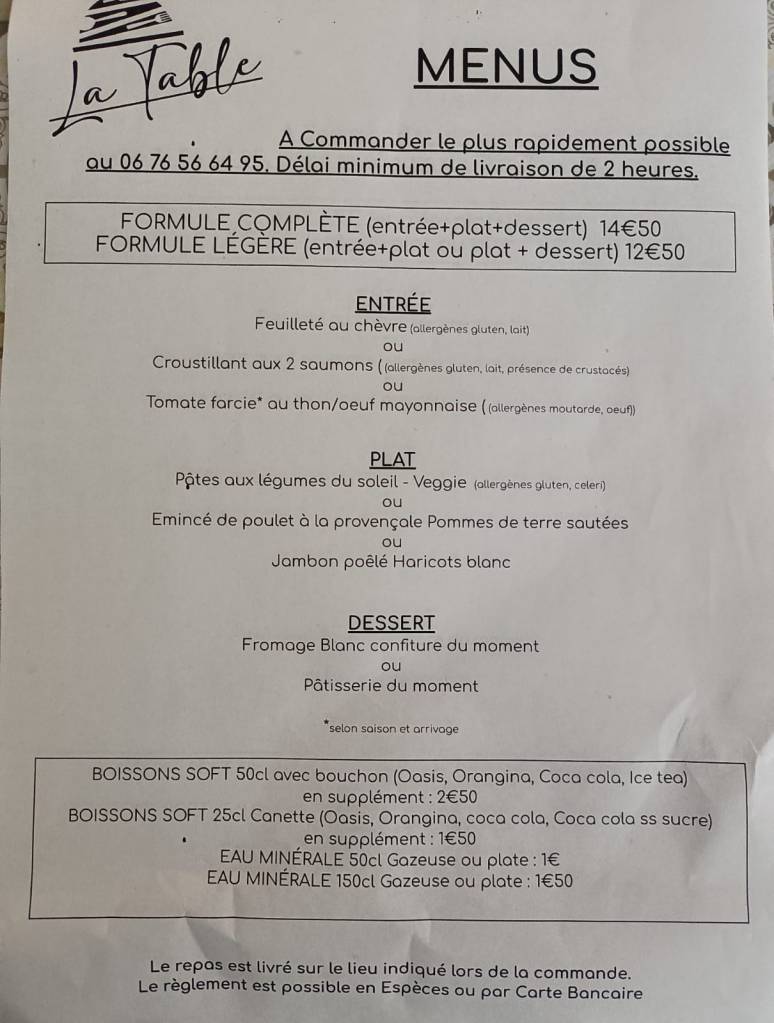
And at 7.30, over they come, the three pigeons in person, the owner and his two sons, maybe thirteen and five years old. Each one carrying one of our drinks. When the littlest one gives me the Orangina, his father tells me to open it with great caution, as he’s dropped it at least three times on the route.
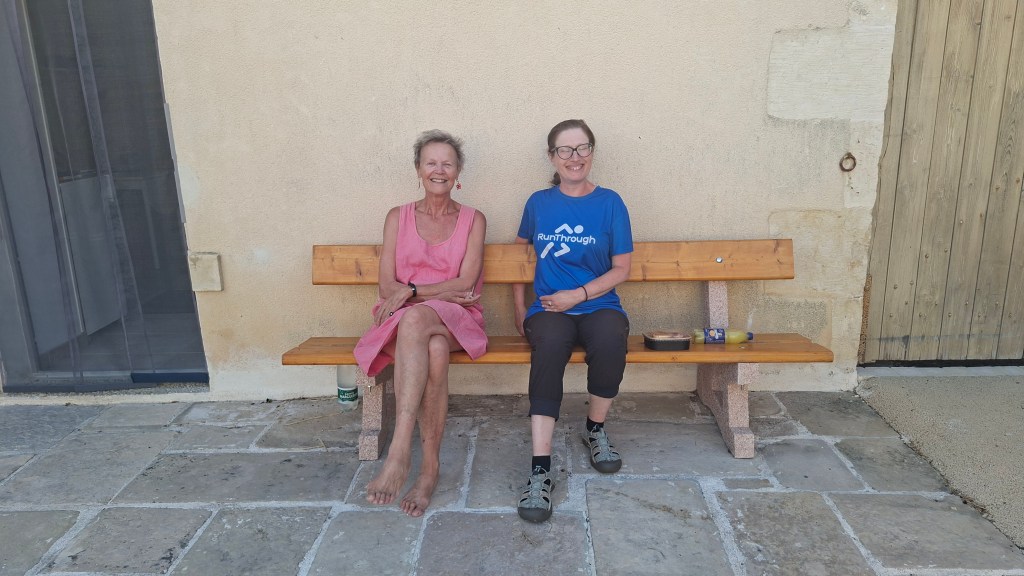
He stays for a while, takes a photo of me and Claire on the little bench, and tells us a little of the history of the area.
“You can tell,” he says, “there was a line drawn from La Rochelle with the Catholic and the Protestant areas divided at one point. And you know what area you’re in by going into the cellars. If you go into a cellar and it looks like a Catholic church, then this was a Protestant area where the Catholics prayed in secret. If you go into a cellar and there is a plain, unadorned church, then you know you’re in a Catholic area where the Protestants had to hide their ”
How strange, these pointless parallel persecutions. And how strange that there were these Protestant tranches France. I had no idea.
Claire and I sit out at the front of the halte jacquaire and eat our fine demi-menu. We speak in a mixture of English and French. Claire is good at correcting my mistakes. And I think this is a good variation of teaching methods for me. Tolerance of errors for fluency, yes, but with Claire I pick up on a few of the mistakes I’ve been happily making every day.
Planer and planifier are two very different things it turns out. But apparently if I planifier, then it is possible for me to planer the whole day.
Ça plane pour moi, I think to myself.


Leave a comment