Home to Santiago – Day 9
Muzy to Berchères-Saint-Germain: 39km
Monday 27th July, first week completed.
I have breakfast with Catherine, who has crumpets, which excites me greatly. She gives me a postcard with a piece of her art on it. I have pears from her garden and a cucumber to eat en route. She shows me her real map and the route the fishmongers used to take from Dieppe to Dreux, which will cut an hour off my very long journey. She’s out watering her garden when I leave. You meet a lot of amazing women when you walk.
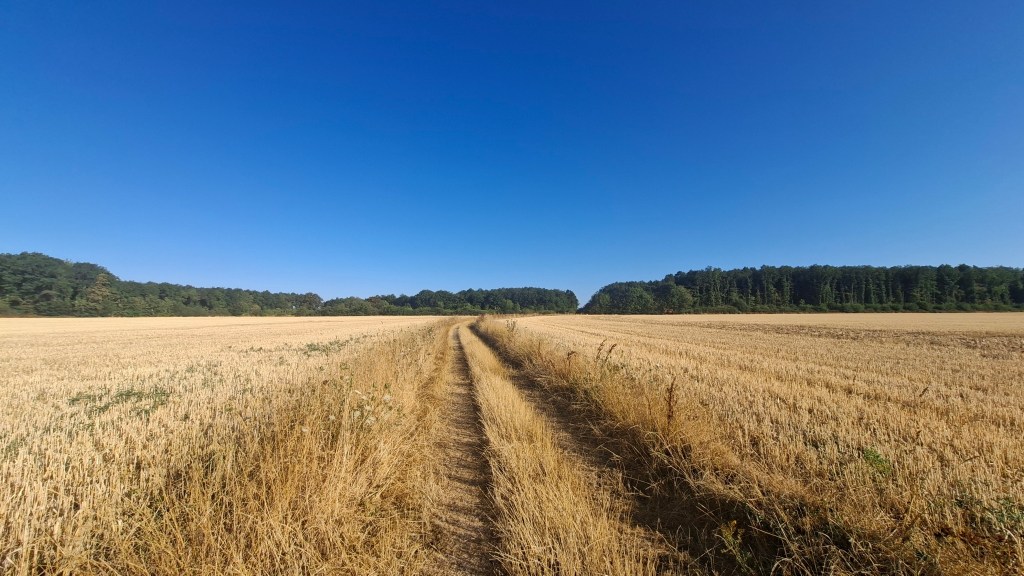
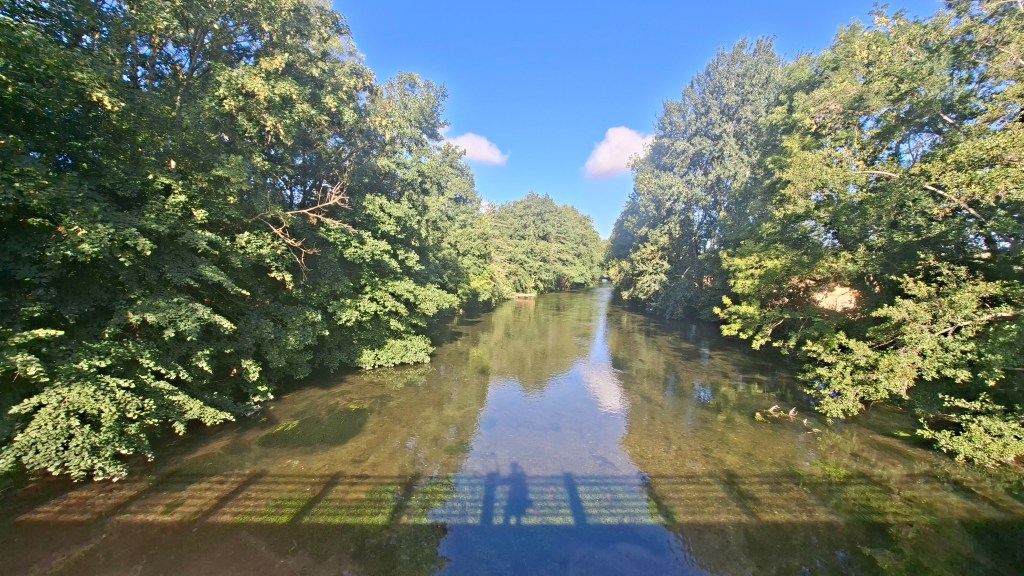
A few fields to cross and a bit of excitement crossing the river, as I finally leave Normandy. Then one last short stretch to join the road into the town.
There is a moment of excitement when I think I’ve lost my phone on the edge of Dreux. My heart skipped a beat this morning when Catherine told me that my shortcut into Dreux would take me through the commercial zone. After having a second breakfast at the out-of-town Aldi and chatting to a passing shopper in the shade of a tree by the side of the roundabout, I realise my phone is gone.
I retrace my steps, cursing myself for the place I keep it, thinking how unsafe it must be and that I’ll never put a phone there again. But, having not found it anywhere, I open my bag, and there it is, where I’d put it inside for safety.
Now I’ll probably spend the next hour or so deciding whether my chosen pocket really is a bad place, or whether, if I’d kept it there, I’d never have had this problem. Such are my daily concerns.

The women in the Dreux tourist information office take a very satisfying interest in finding the right stamp for me. I try to explain to them that it really doesn’t matter. Most I have gathered so far are from patisseries. But they find the right stamp for the Compostelle, they try it a few times to make sure it’s inking properly, and then three of them together stamp my Compostelle. One has come out from her office just to make sure it’s done correctly.
They chatter away and laugh while I tell them about the emptiness of the plains between Rouen and Chartres. They’re very understanding when I tell them it’s made me go a little bit mad. They say nothing to contradict this.

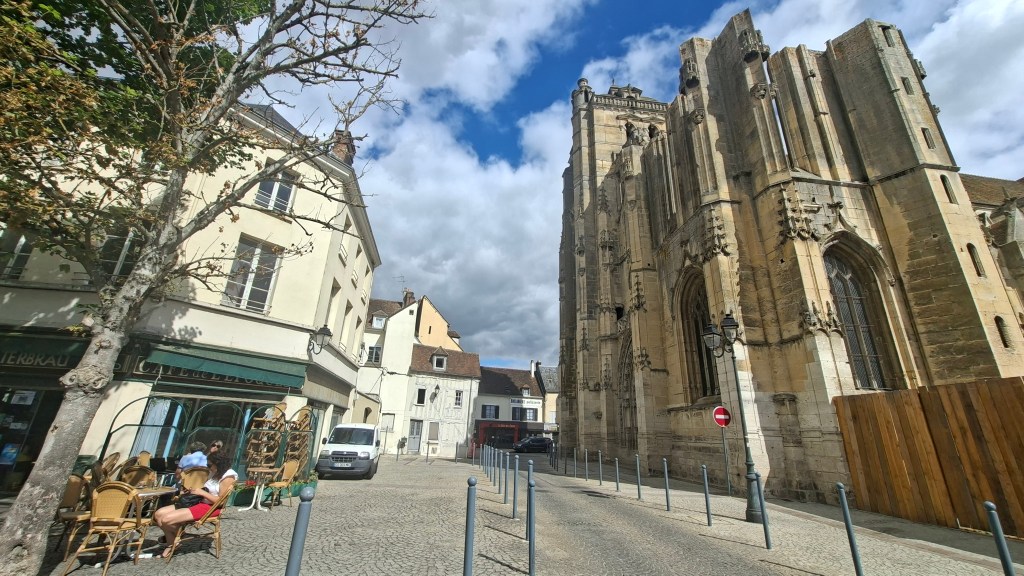
I walk through the town, which is small but beautiful. I pop into the church with its funny uneven towers and say a little prayer for my accommodation options.
I’ve set off this morning for the first time with nothing booked for tonight, having not heard back from my camping enquiry. And having been told that the campsite in Chartres, which I won’t be able to arrive at before nine o’clock, can’t accept anyone after 7.30.
“So you just have to come before then,” says the email.
I don’t think they’ve walked it.
But leaving the church, two opportunities arrive. A cheap Airbnb on the right side of town suddenly becomes available. But even better, I finally get a reply from the lady whose garden I’m hoping to camp in. And it’s a yes, as long as I don’t need a bathroom in the morning. I’ll manage.

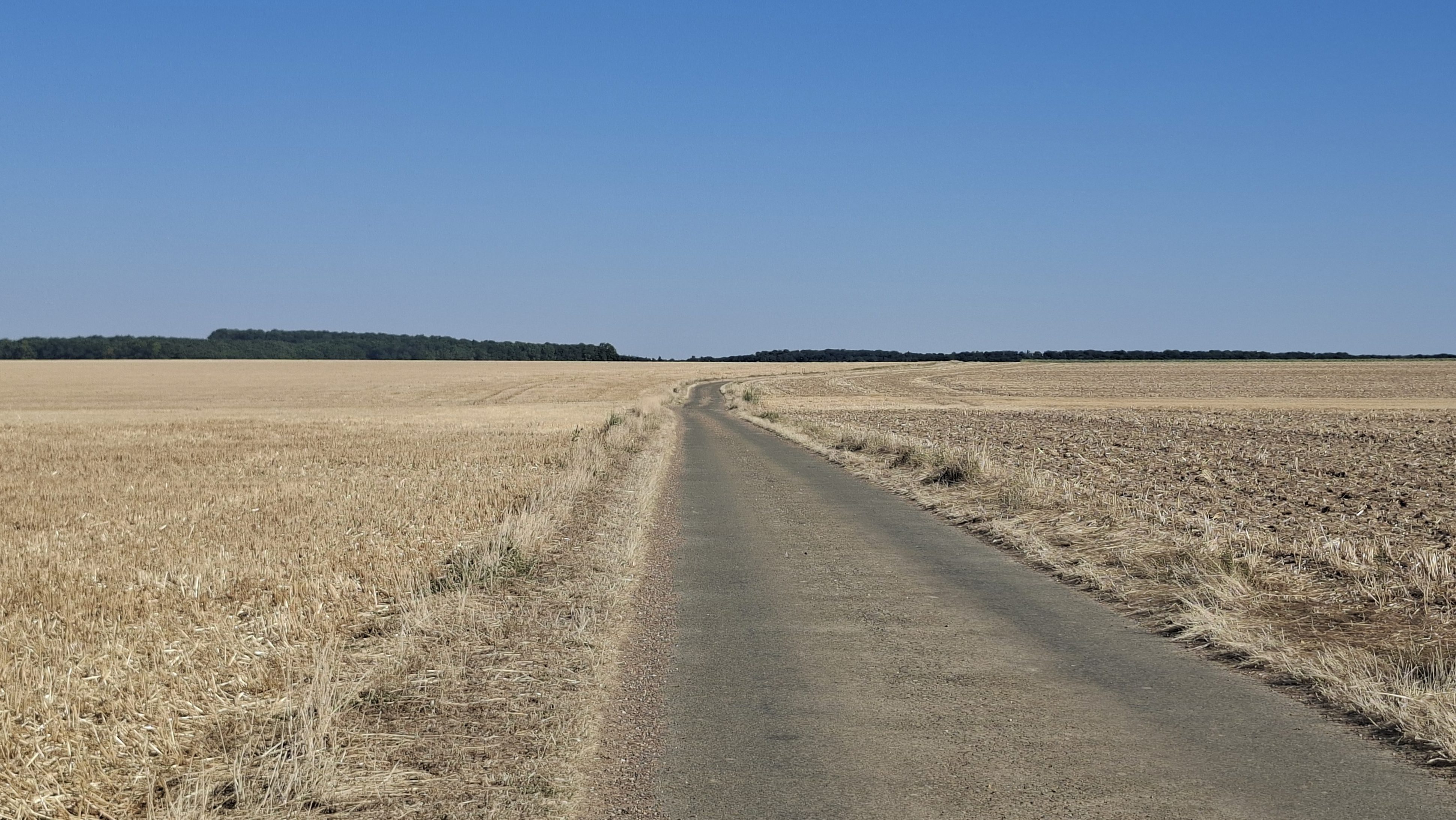
Walking through the wheat is hot, with very little shelter. I’m more grateful than ever that the longest day had clouds. I’ve never been much of a one for drinking water. I know I should drink more, but it’s not been a problem on this one. I carry a litre with me, with the hope of filling up en route. I have a couple of disappointments, but a couple of saviours, as always.
My first stop, the pilgrim’s resting point at the Chapel of St Anne is now cordoned off and part of private property. So I stand in the shade of a wall in the village, because it’s the only shade there’ll be for a while, and set off again, wondering how I’ll make the half litre I have left last.

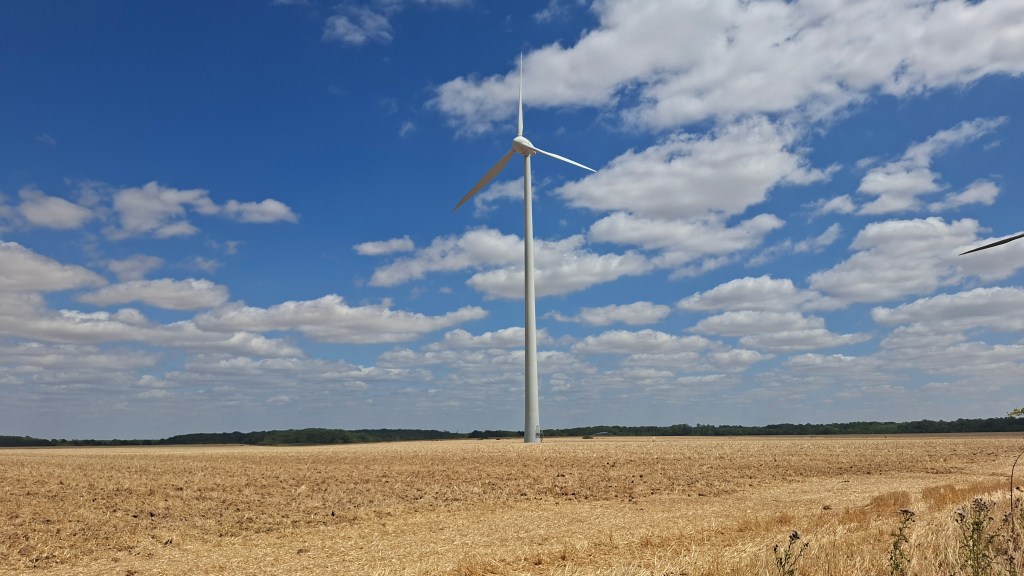
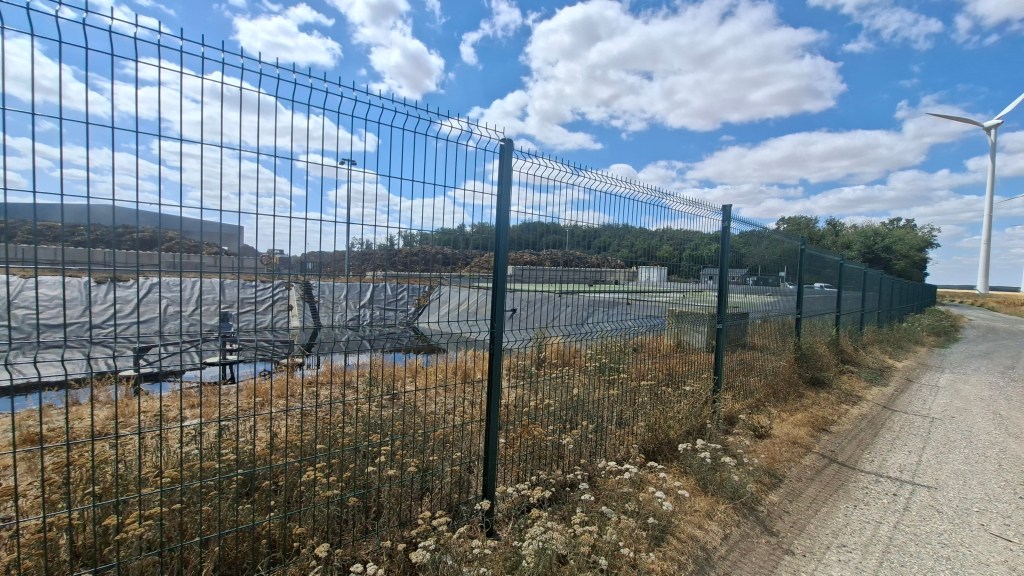
As I’m walking, I admire the huge wind generators, which I’d seen on the map and knew would be one of the few features for this section. To such an extent that I read the information board beside them. But then, a great piece of luck. I start to smell a stronger than usual smell of composting and waste, and as I get closer, I see I have arrived at the biowaste energy plant. I’ve never been happier to smell all that ordure
At the gate to the plant, a truck driver is chatting to a woman at the entrance lodge. I go to join them and ask if she can provide me with any water. She looks at me askance for a moment, but then ushers me through to the back office, where there is a dispenser.
“It’s ice cold,” she tells me, smiling now.
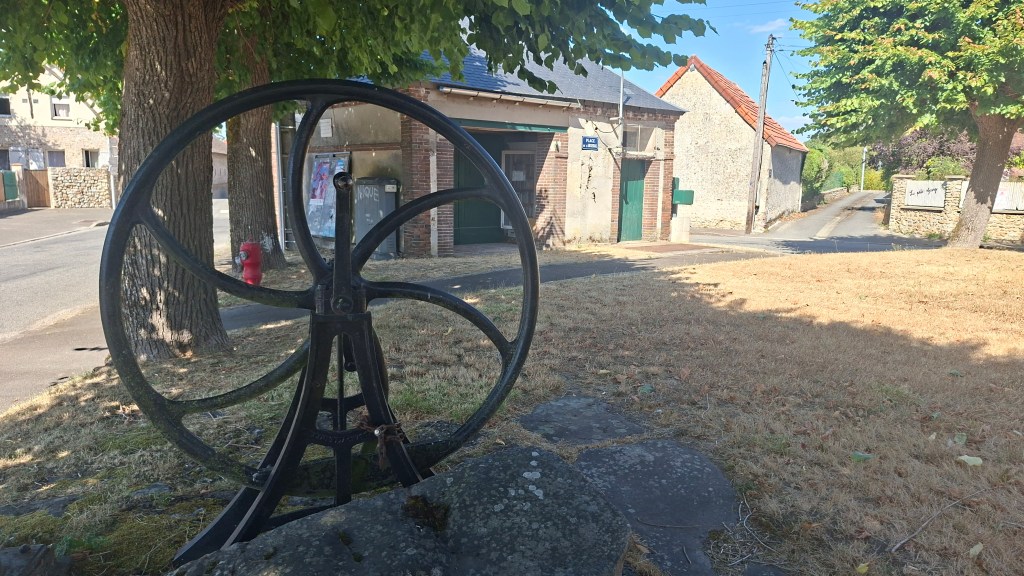
And then it’s more plains, still no shade, and the hottest part of the day. I eventually reach another village where a water pump has been marked on the map. But when I arrive there, despite a whole host of water-pumping paraphernalia, old and new, there’s no water to be had.
I sit down for a while, take a sip from my remaining water, and then, in this empty, dead village, a glamorous woman walks by to take some rubbish to an outside bin. I stop her. Again, the usual first reaction of concern, followed by a smile. And she leads me to her gate.
“You can’t come in”, she tells me. “The dog is big and vicious.”
She comes out with a little bottle filled, again, with ice-cold water. It’s enough to get me to the end.
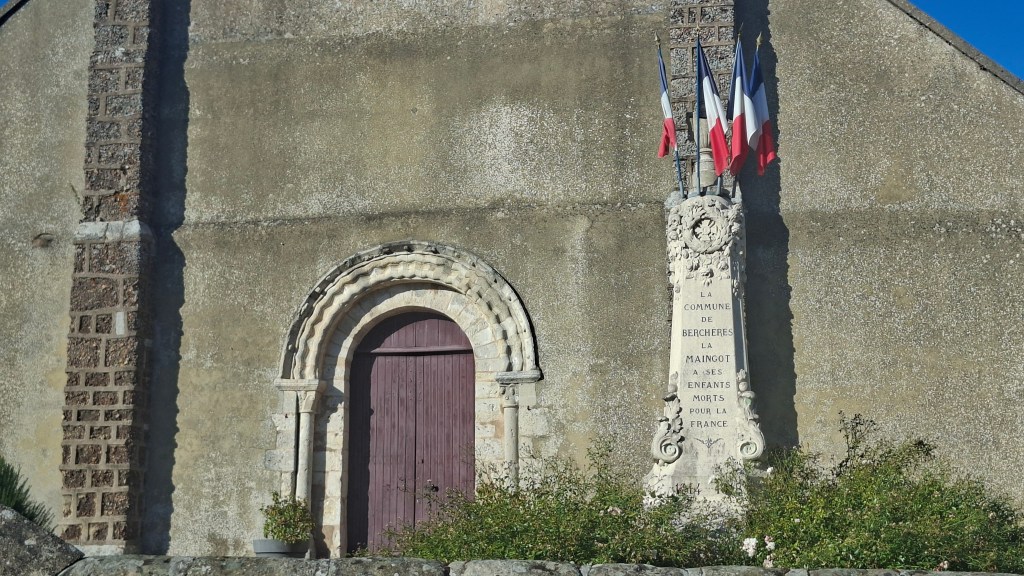
When I arrive in Berchères-Saint-Germain, I’m exhausted. Not from the heat, just from the walking. But I’m welcomed by Floriane. Yet another extraordinary woman. I just seem to be camping in the gardens of nothing but extraordinary women nowadays. Even in the case of Benjamin, I only met his mum.
Floriane will be up at 3.30 in the morning to drive to Paris to work. I ask her what she does for a living, and after a few attempts I gather she is the voice of the station at Montparnasse. And she laughs.
I tell her how grateful I am that she replied and I didn’t have to walk another ten kilometres into Chartres. She points across the plains and says, “Look, you can see it from here.”
“Oh, brilliant. I can go back now then,” I say. And she gets the joke.
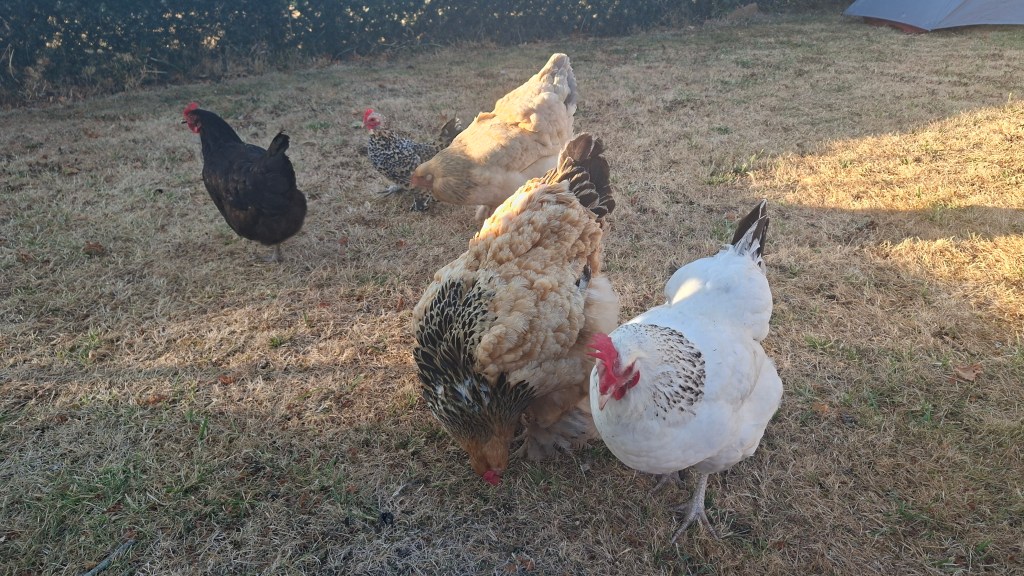
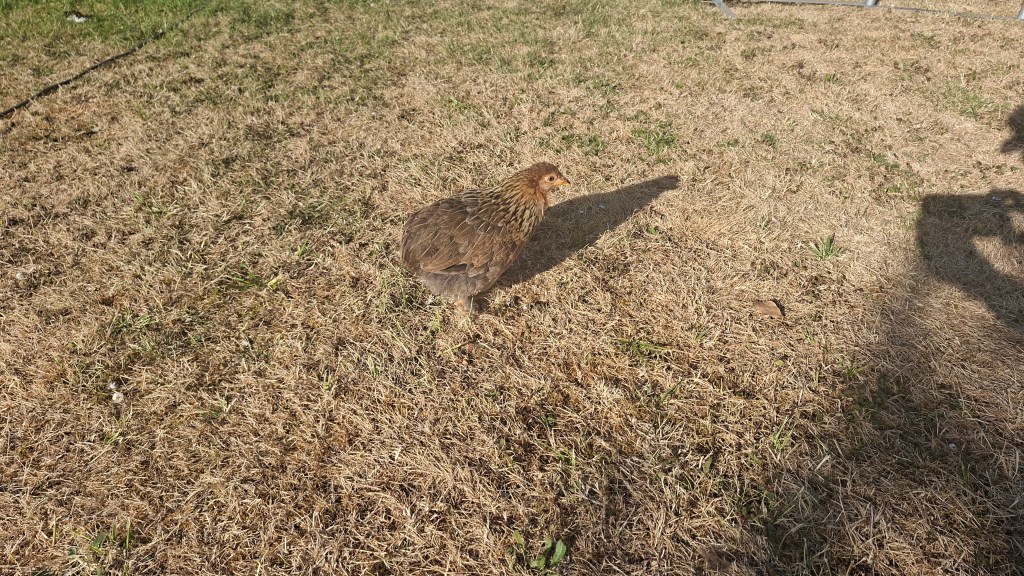
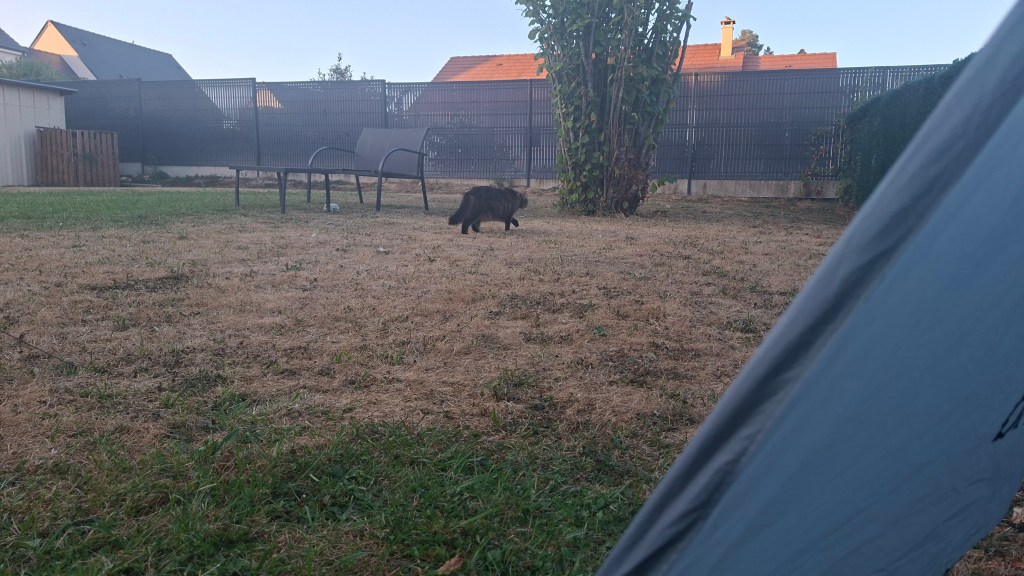
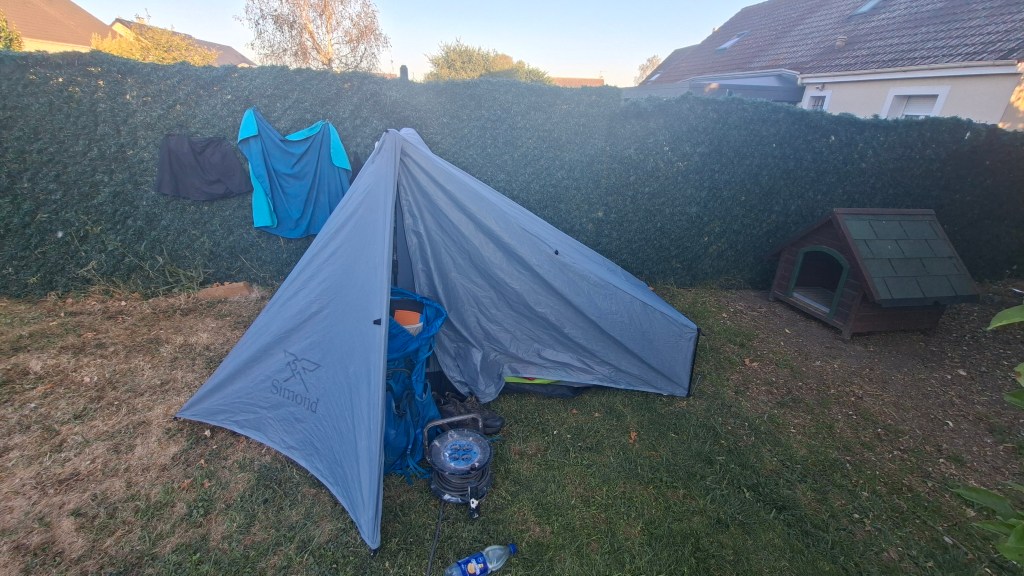
The loveliest surprise of the day is that Floriane has a menagerie. She takes me into the back part of the garden where I can camp, where there are nine chickens wandering free. All different, all friendly, all beautiful. She tells me the names of some of the chickens. All I can remember is the little grey one, Kevin. Her beautiful long-haired cat appears, who she tells me is called Kira.
“Chat-kira,” she laughs. It just gets better and better.
Two beautifully collies look out from the basement downstairs, kept there because I am an intruder, she tells me. The garden is full of training equipment for the dogs, to prepare them for dog shows.
When I tell her I’m impressed she says, “Oh, if you’d come earlier, you would have seen the goats. I took them for a walk through the village. But they’re up in a field now.”
“So many animals. And yet you go bivouacking?” I ask (she’d written on her Campspace profile that she was a keen bivouacker).
“Oh yes,” she says. “I go bivouacking in the mountains. I go up in the mountains for three days and then come down to a campsite to wash.” I think about me camping in a campsite for three days before going to an Airbnb to recover. She’s on another level.
“And the goats?” I ask.
“Oh, they come with me,” she says.
What extraordinary lives people lead and we meet so few of them.
I shower and then have the garden to myself, setting up the tent amongst the chickens.


Leave a comment