Knockree to Glendalough: 30km
Walking the Planks
Today is a hard day, which I decide to treat as an experiment in mind over matter. Yesterday too, I noticed my legs aching in all the places where they haven’t ached for years. I’m stiff going up the hill, stiff going down the hill, and struggle to step over stiles. I’ve decided to put it down to my statins, which I started a short while back, and not the aging process, which has been going on for a bit longer.
I have the full hostel breakfast, which I can’t resist. I eat enough to get me through the day and pocket some fruit, just as my mother taught me.
Over breakfast I chat to the artist from the exhibition, who’s staying with his wife and child. He tells me that the exhibition, named ‘Furze’ is about gorse. I desperately want to say “of gorse”, but I restrain myself and just tell him I have a joke which is too bad to share. Luckily, when I say it anyway, he is delighted, because it gives him the chance to tell me his own joke. He’d been discussing with a farmer friend the best way to lay gorse, which is known as whin where he comes from. Apparently both methods are equally good, so, he says, it was “a whin-whin situation”. I feel validated.
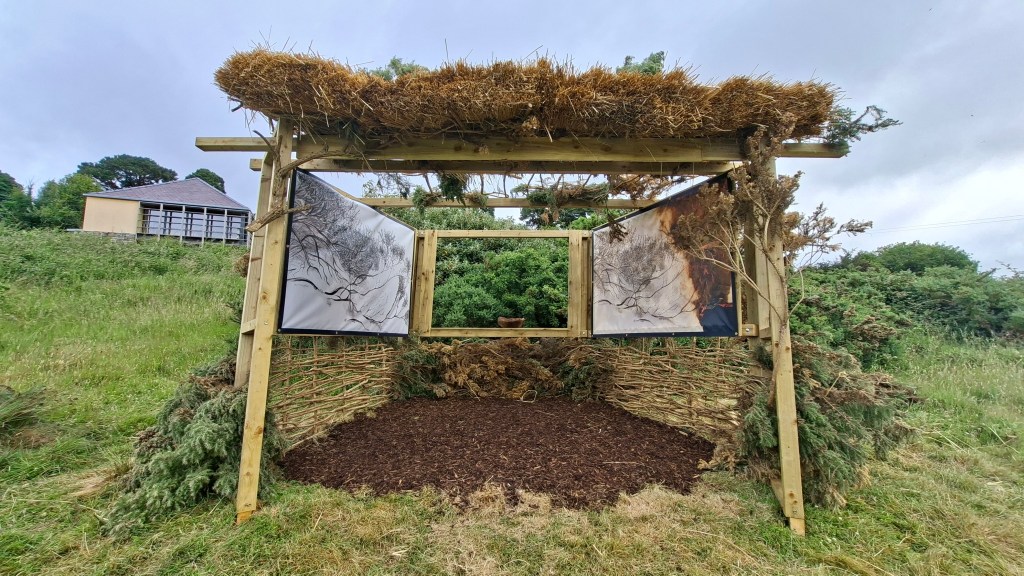
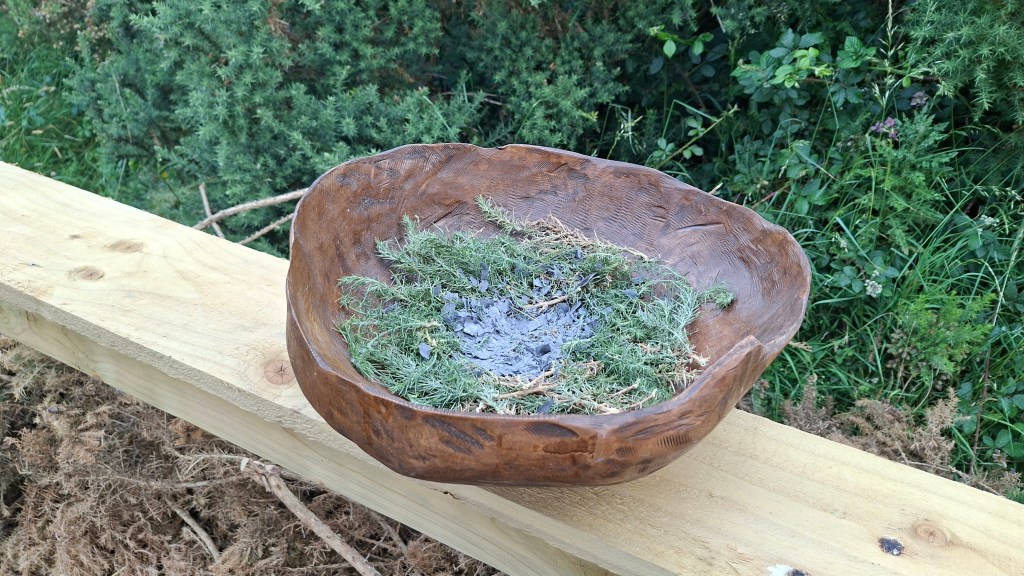
I go and look at the gorse installation. It’s very lovely, all stripped back and used to build a shelter. It ties in perfectly with all my dreams of living under a hedge and I try not to see it as a sign.
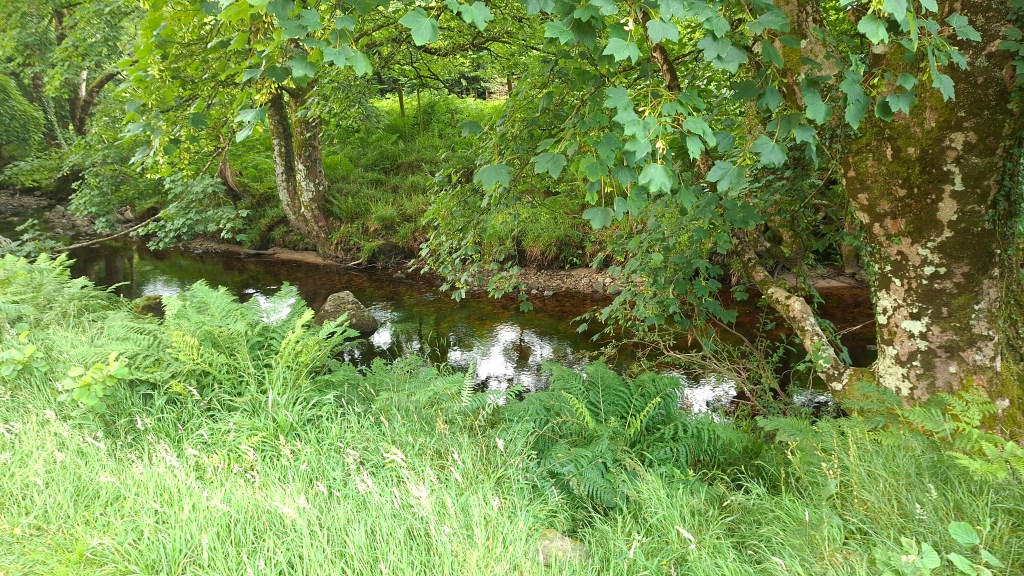
At first the route stays low, winding through beautiful valleys. There are quite a lot of wild campers along the river. I notice during the course of the day that wild camping is a big thing on the Wicklow Way. Occasionally people stop me for recommendations. Yesterday it was a hairy Lithuanian; today it’s a teenage boy asking where the best wild camping spots are. I point at the hills and say “up there, maybe?”
I’m not quite sure how I feel about wild camping yet. I love the idea of it, but so much of what I see isn’t little backpacking tents or leave-no-trace camping. These are people who’ve driven out with cars, chairs and full-sized tents to set up beside a beautiful river. Part of me would love simply to be left alone in sole possession of the glades and riverbanks. But sadly, being so near Dublin and so beautiful, most of the beauty spots have a car park within a short walk. Nevermind. There are still plenty of beautiful places that no one else gets to but me.
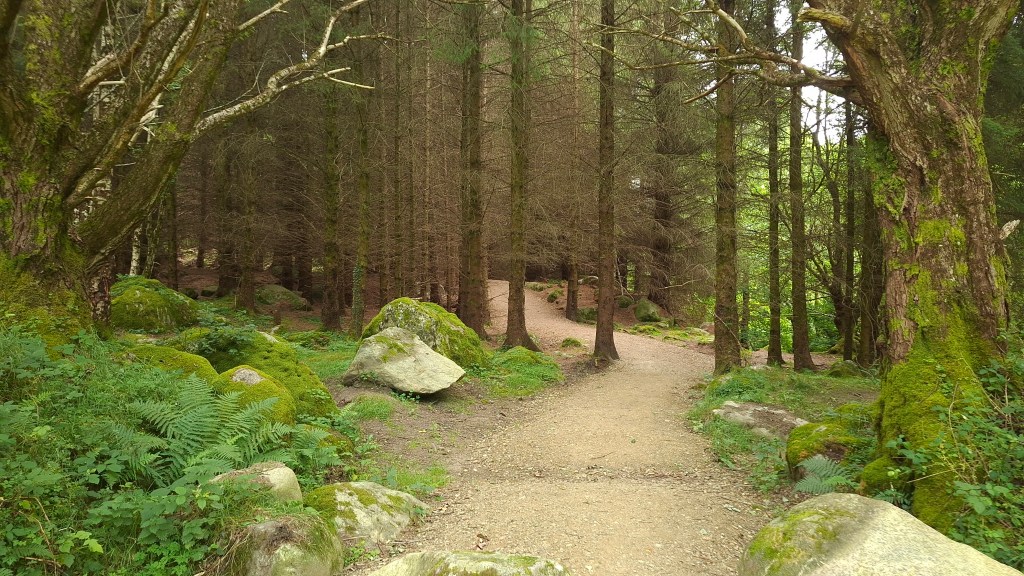
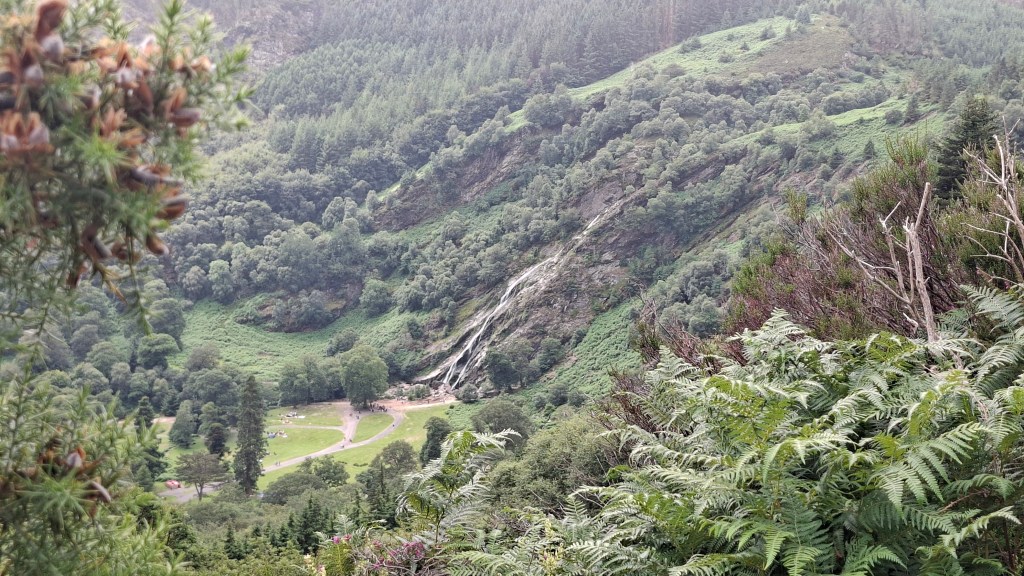
I’m proud of myself today. With few resources, I manage to walk past the coffee shop by the car park before the trail climbs steadily upwards through beautiful woods until I reach views over the waterfall crashing down the mountainside into the little green valley below. There, far below, is the visitor centre, the car park and all the people. Up here, though, it’s just me and a few trail runners, all part of that pleasant little community of hellos and small talk. “How are you doing?” is still throwing me as a greeting though. I have yet to work out the appropriate brief response.
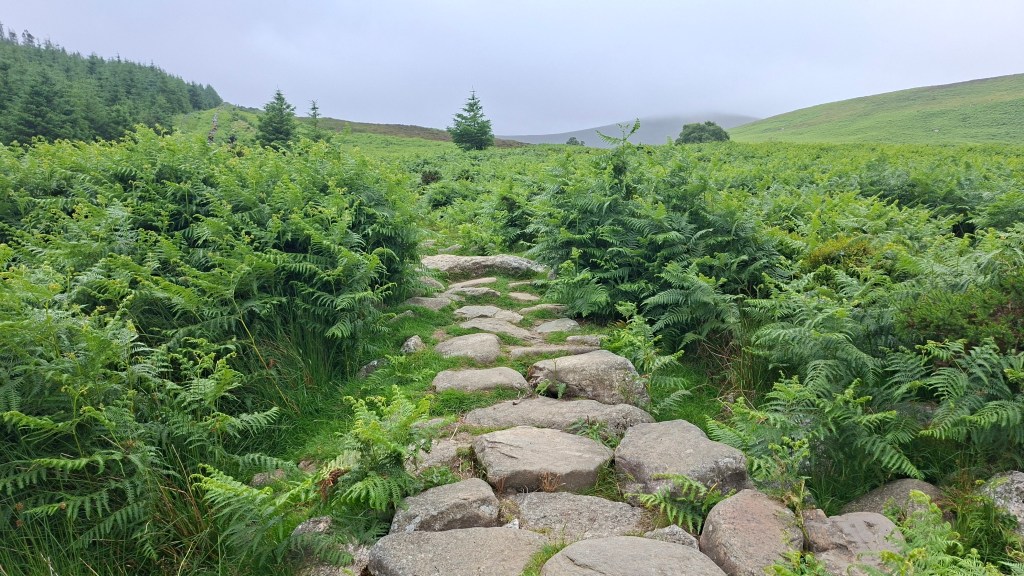
After passing the waterfall, the path climbs onto the upper mountain. The wind is howling exactly as you’d hope it would. I speak to a cyclist whose companion is struggling not to be blown off the bike. I am struggling to imagine why you’d bring a bike up here. There’s a huge party of walkers heading up a nearby summit, whom I later pass, huddled in small groups in a sheltered ravine, eating their sandwiches.
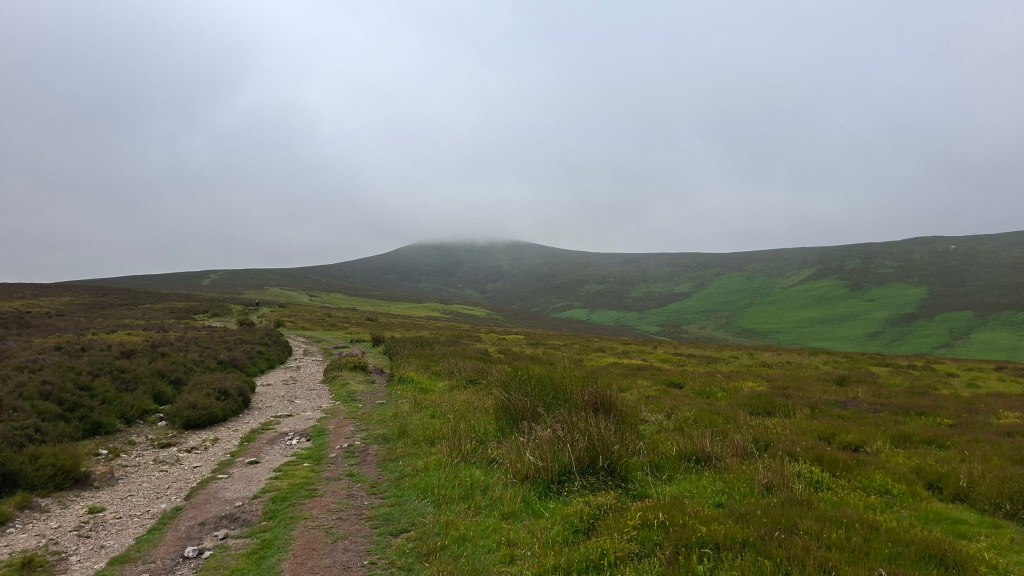
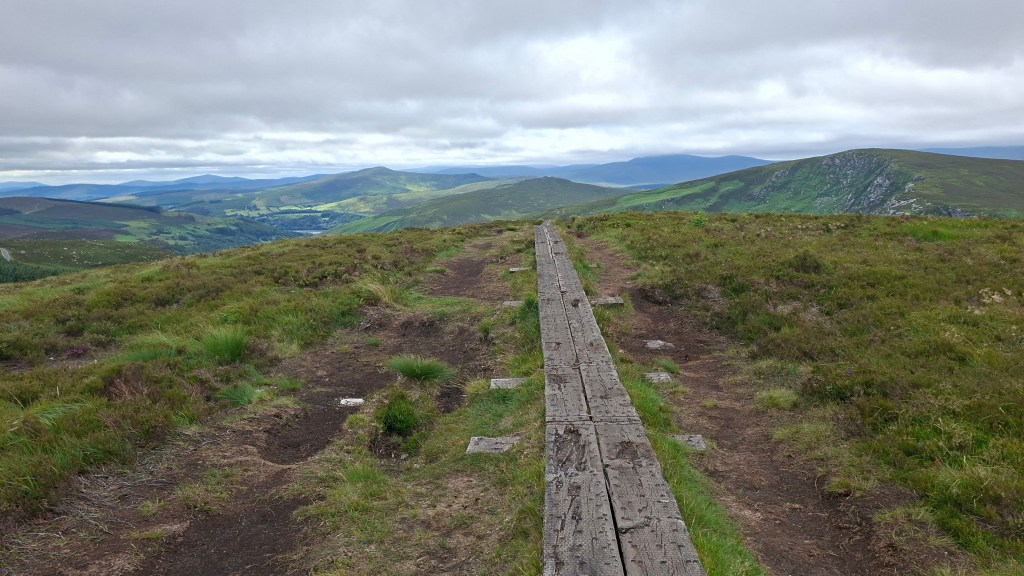
I carry on around the corner to where the wind grows even stronger, reaching the famous boardwalk through the peat bog. There are still quite a few people here; I later discover there’s another car park at the far end. Even so, it’s wild enough that only the braver visitors make the journey. Eventually I take off my hat rather than let the wind claim it, and do my best not to be blown over myself, my rucksack acting as a sail designed to first blow me off the planks and then drag me down into the bog.
The wind drops as I enter the lush lower hills for a while. As it is a pleasant late afternoon, instead of stopping at Roundwood and getting a bus as I’d planned, I decide to carry on the extra eleven kilometres to Glendalough on foot. The original plan had been to come back in the morning to finish this section, but I decided my first entry into the monastic city cannot be by bus.
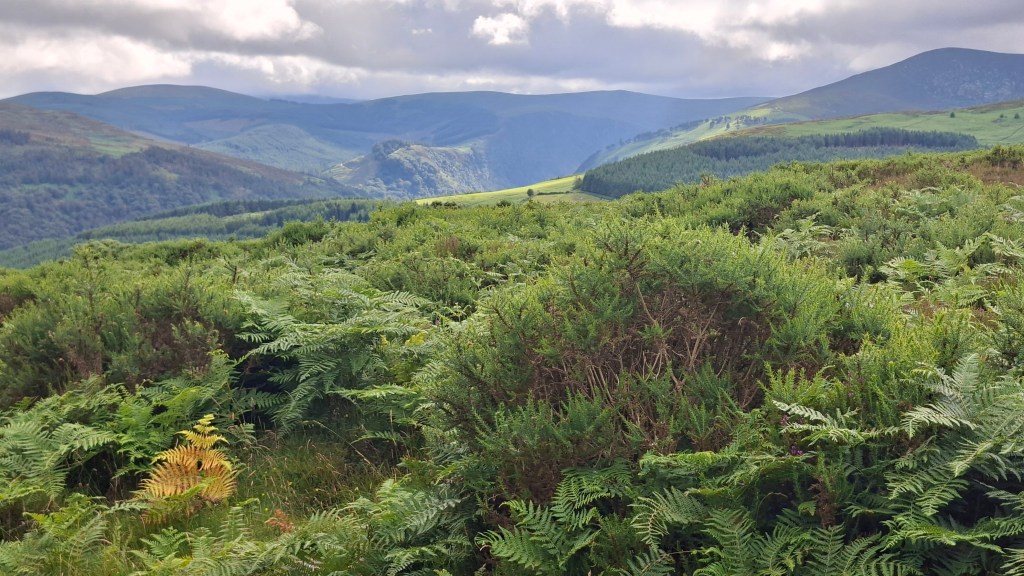
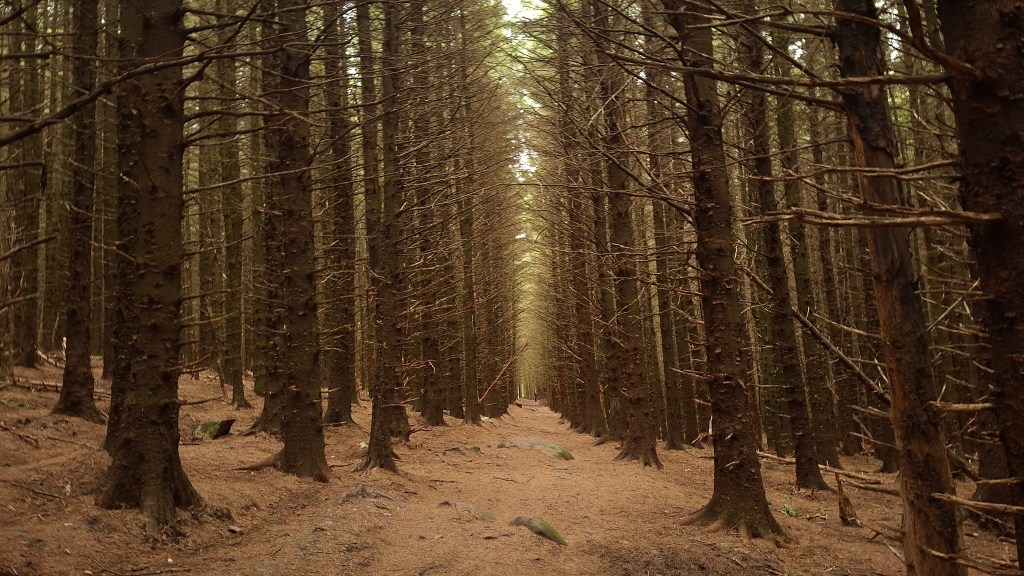
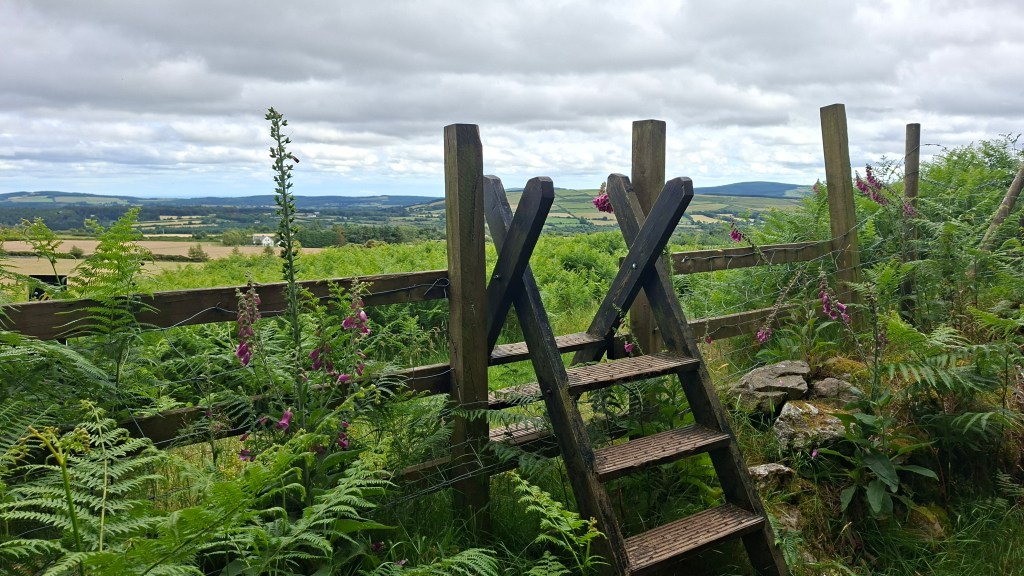
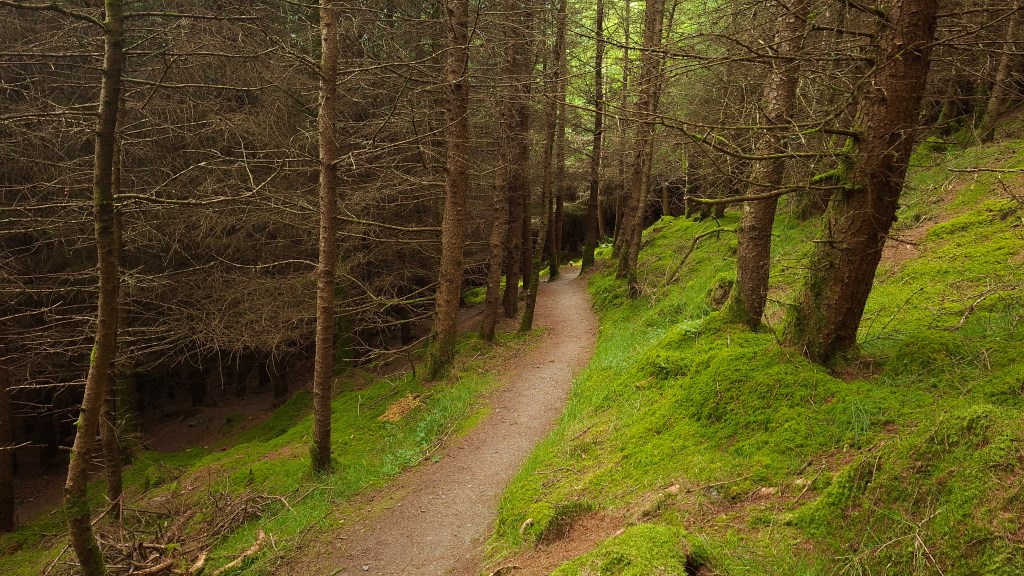
The route continues a while on gravelled forest tracks, which I don’t enjoy so much and then turns into some of the most beautiful footpaths I’ve yet encountered. They descend through almost night-dark pine woods before opening up to the lit glades of the valley.
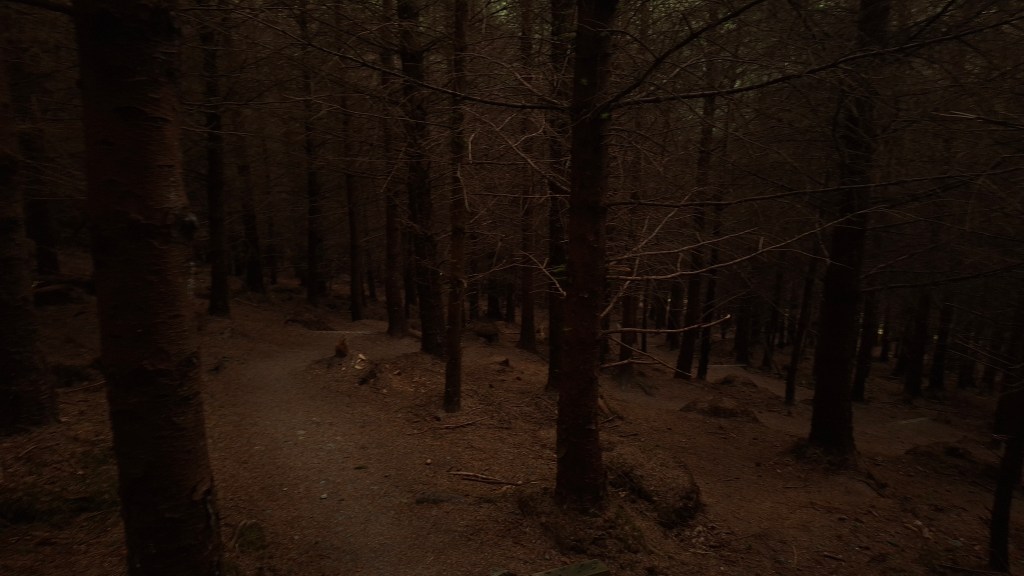
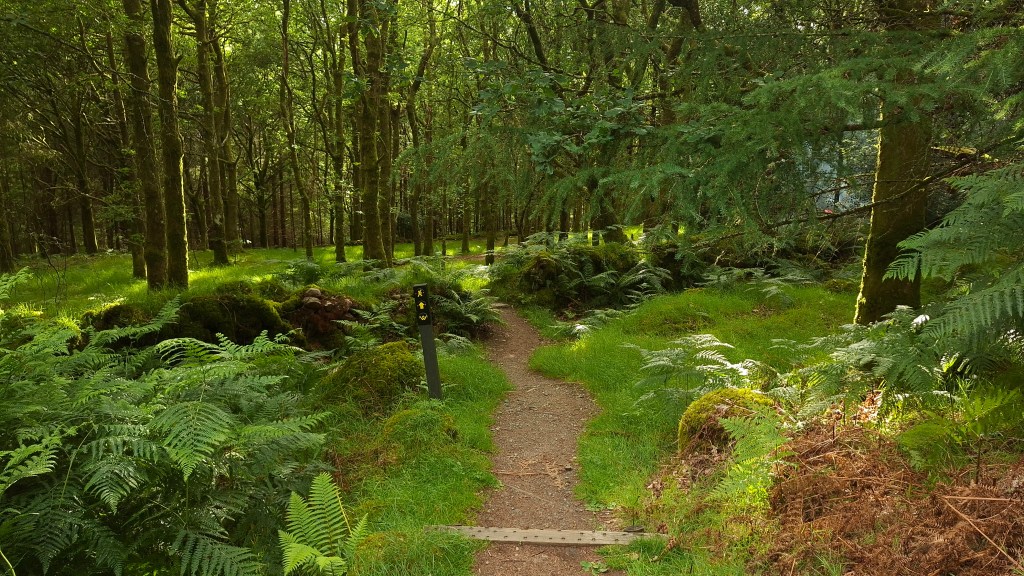
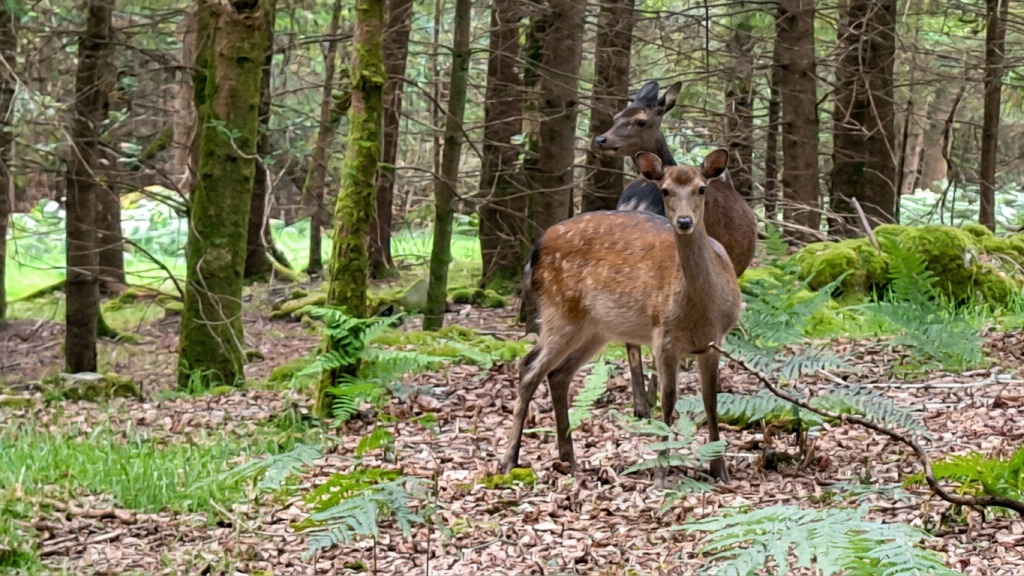
I pass some wild campers cooking over a huge smoky fire. A little further on, two deer stand right beside the path. They don’t run when they see me. They simply stand and stare back. It feels magical.
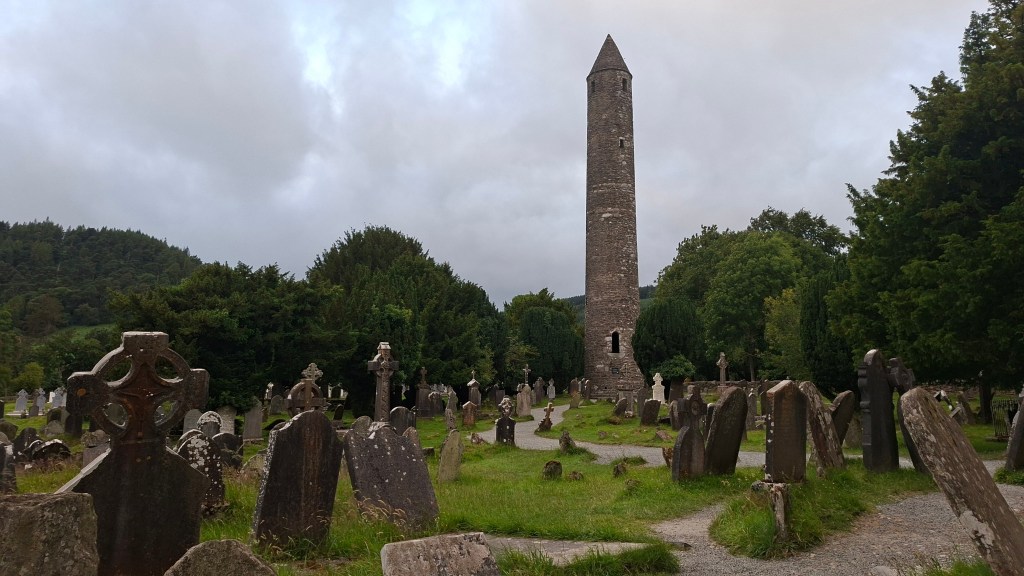
The walk into Glendalough is gentle now. The sun has come out. There are trees and glimpses of the lake. I’m delighted to arrive in the quiet of the evening, check into the hostel – busy, as you’d expect on a Saturday night – have a shower, and then immediately head back out to see the site of the ruins while it’s empty. The antiquity of the place and the quietness are otherworldly. I know that tomorrow, when the buses arrive, the atmosphere will change.
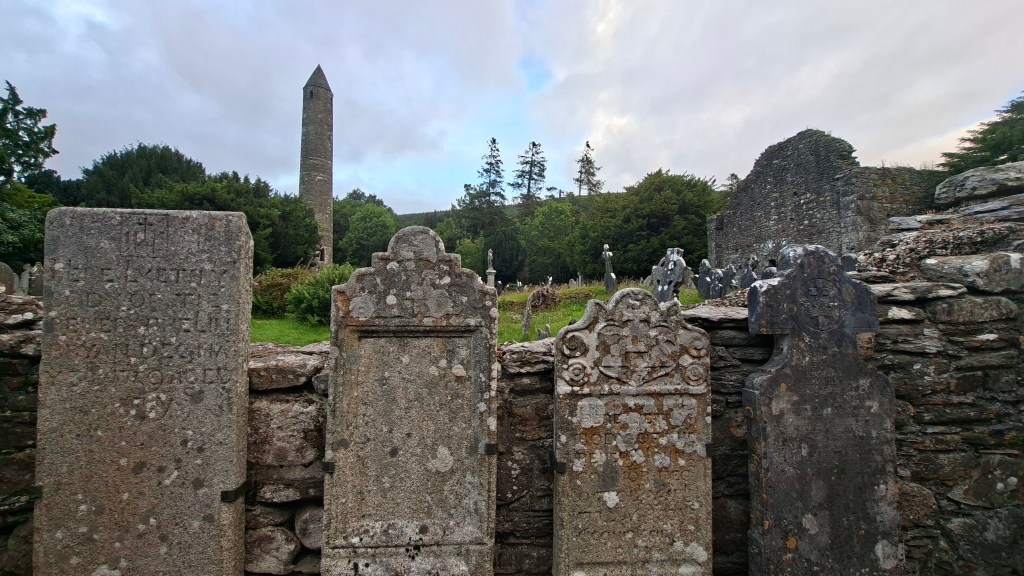
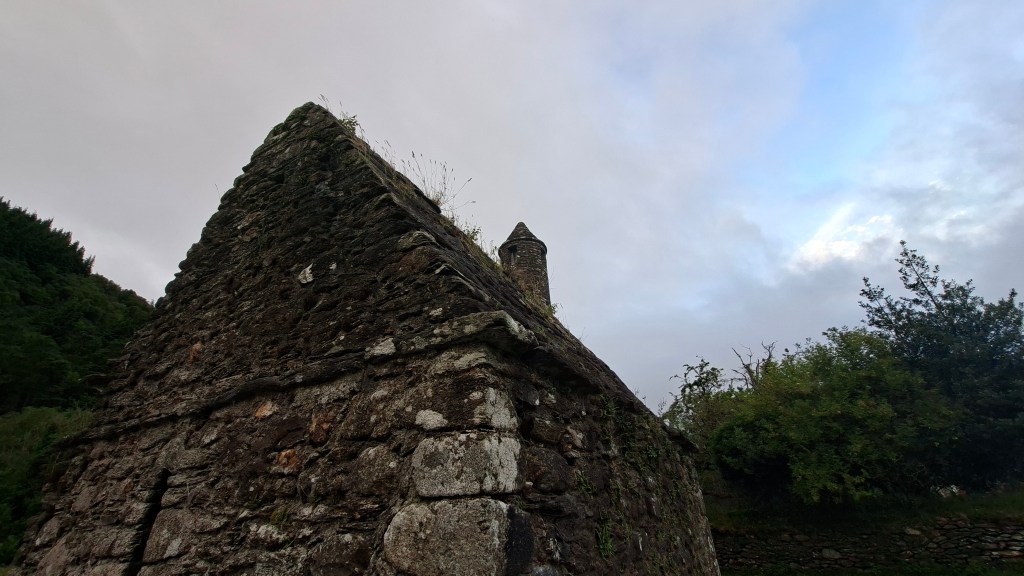
Back at the hostel I heat up my chickpeas in the kitchen, envying the meals of others, then return to the dorm. The evening ends delightfully as I chat with two young Belgian women who are walking the whole Wicklow Way. I am stunned to discover you can sleep in the Atomium in Brussels, and find myself discussing The Umbrellas of Cherbourg and its wonderful recitative. What a wonderful way to end any day.


Leave a Reply